Your first bonsai should be cheap, tough, and matched to where you'll actually keep it. Skip the expensive specimen trees and start with something forgiving.
On the benchbonsai scissorswatering canbonsai soiltraining pot
Do not spend serious money on your first bonsai. Full stop. Your first tree is your crash-test dummy — the one that teaches you how fast soil dries out, what over-pruning looks like, and why "bright indirect light" is vague nonsense. Spend $25-40 on a nursery tree or pre-bonsai and save the refined shohin for year three. (The full cost picture, trees through tools, is at how much do bonsai cost.)
First decision: indoor or outdoor
If you've got a balcony, patio, or fire escape with four-plus hours of direct sun, outdoor species give you more options and faster growth (how much sun each species needs). If you're strictly indoors, go tropical. What doesn't work is a juniper or Japanese maple on a desk — those trees need seasons and cold, and they decline slowly indoors through no fault of yours. Match the tree to the space you actually have; that one decision prevents most first-tree failures.
No tag on a gift tree? Identify the species first — got a bonsai as a gift walks identification and week one. Until you know, keep it in a bright window: a few days of indoor light won't hurt a hardy tree, but one frosty night outside kills a tropical.
What each price tier actually buys
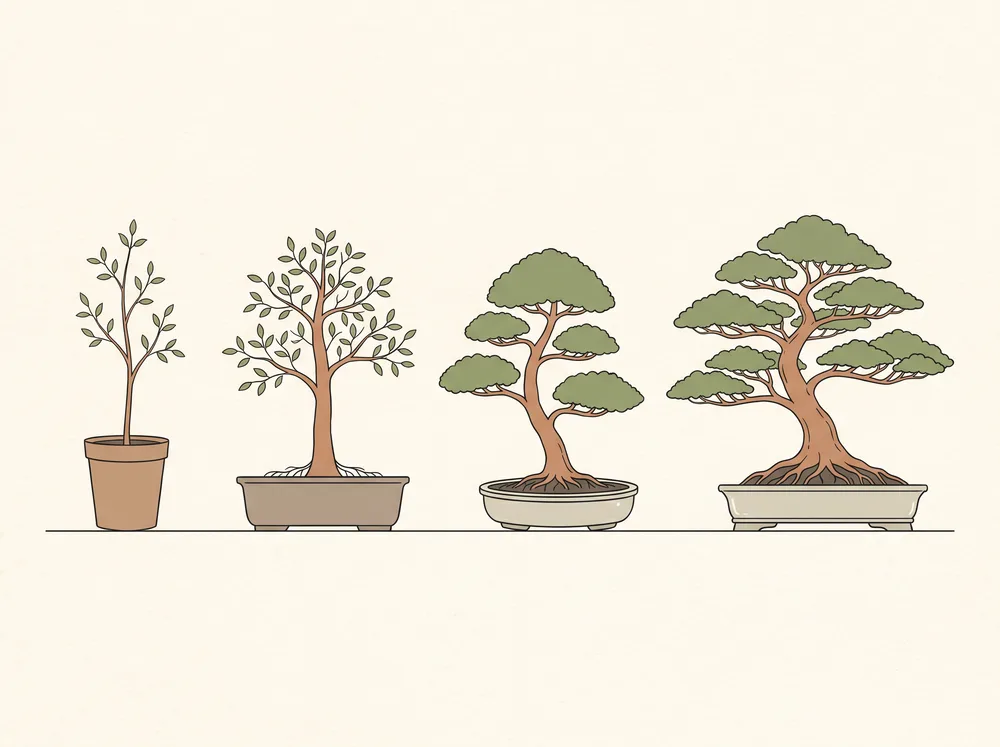
Bonsai pricing sorts into four honest bands.
The four bands on one bench: the $15–30 kiosk whip, the $30–80 pre-bonsai (shop here), the $80–200 styled starter, the $200+ refined tree. Same species, different decades of work.
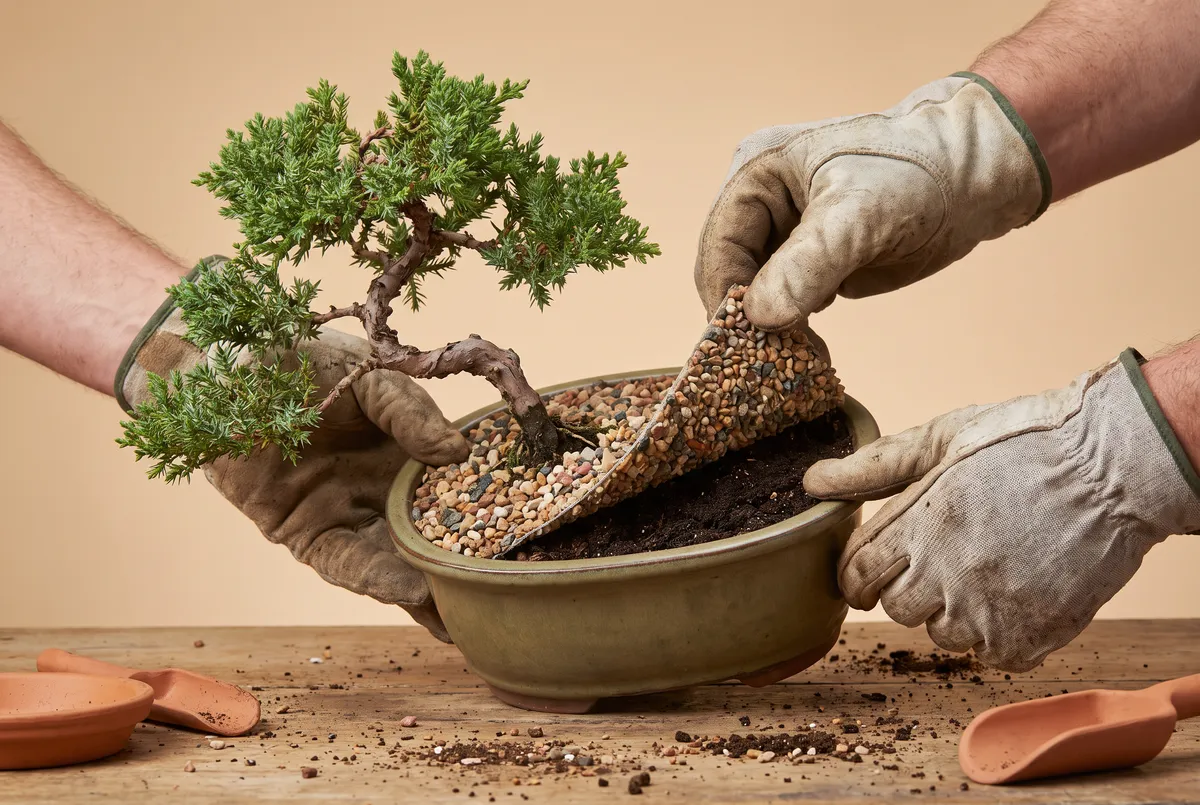
$15–30 — the kiosk tree. A young juniper or ficus in dense peat, often with gravel glued on top. A live tree and an entry into the hobby, not a finished bonsai — a rehab project, covered below.
$30–80 — the nursery pre-bonsai. A few years of trunk and root development, granular soil, a pot with drainage. This is the band to shop — the lower half, even.
$80–200 — the trained starter. First styling already done: a wired trunk line, a chosen front, selected branches. Worth it once you've kept a cheaper tree alive a full year.
$200 and up — refined trees. Developed nebari (the visible surface roots), dense fine branching, a decade or more of work. A year-three purchase.
One tier to skip entirely: the seed kit — a five-year project sold as a five-week gift, when the same $30 buys a live tree that already looks like something.
Outdoor picks
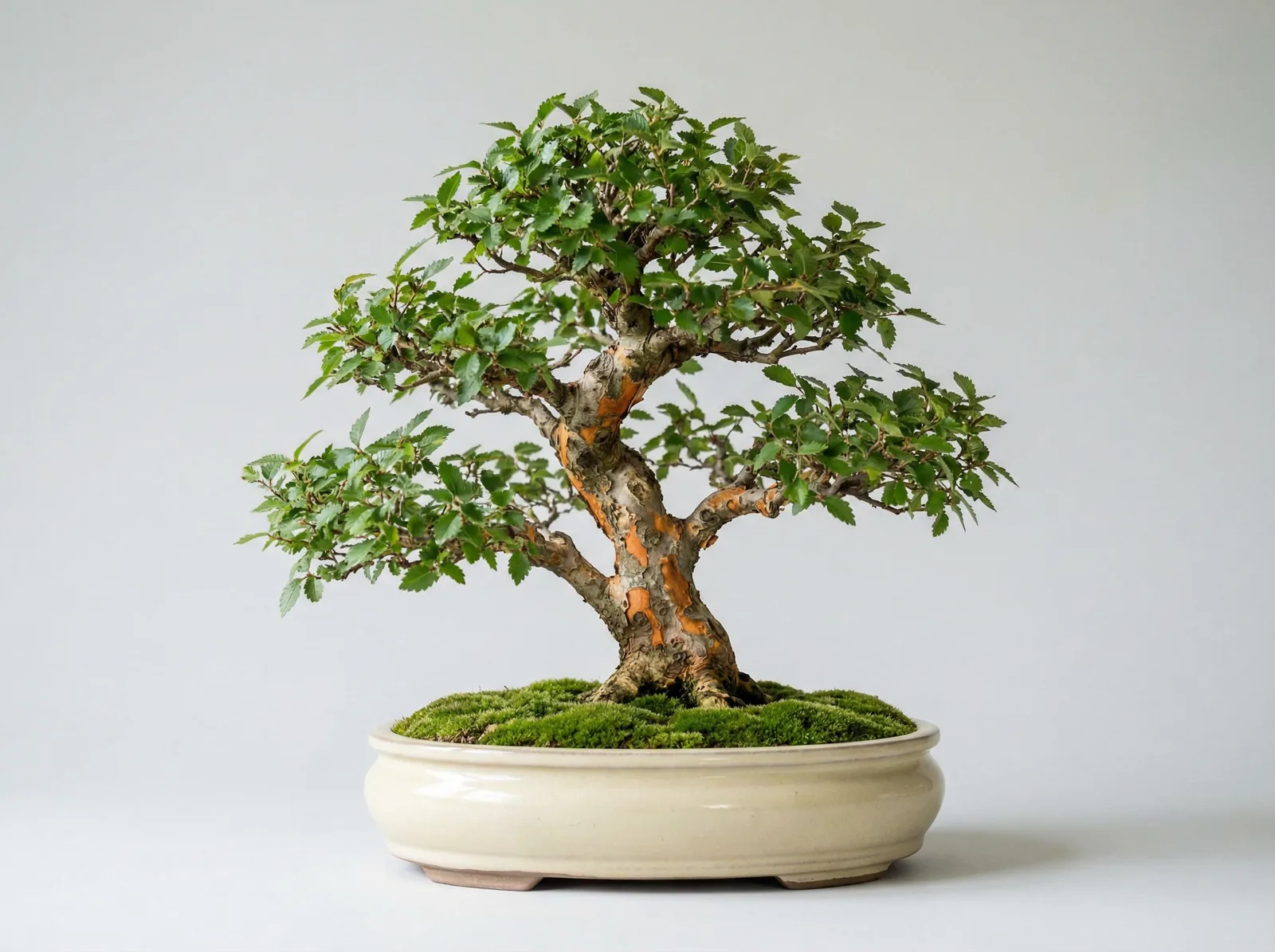
Chinese elm: the answer for 90% of new outdoor growers — tolerant of a huge range of conditions, quick to bounce back from clumsy pruning, fast enough that you see results in weeks, and cheap.
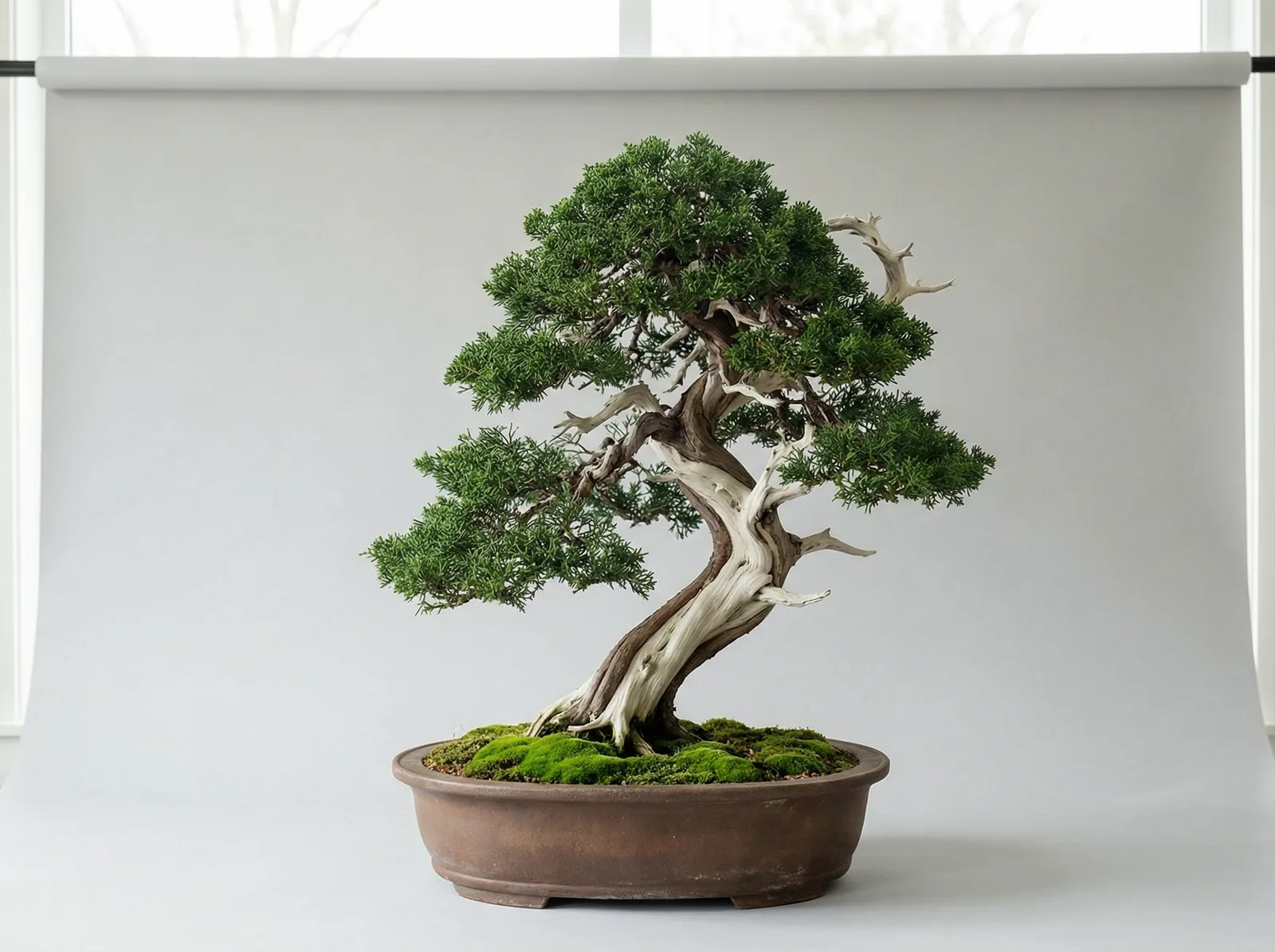
Juniper: the other strong choice if you want an evergreen — tough, widely available, and the classic bonsai silhouette. Outdoors only, always.
Cotoneaster: the sleeper pick — small leaves, spring flowers, red berries, and shrugs off hard pruning.
Japanese maple: gorgeous but pickier about watering and sun; save it for tree two or three.
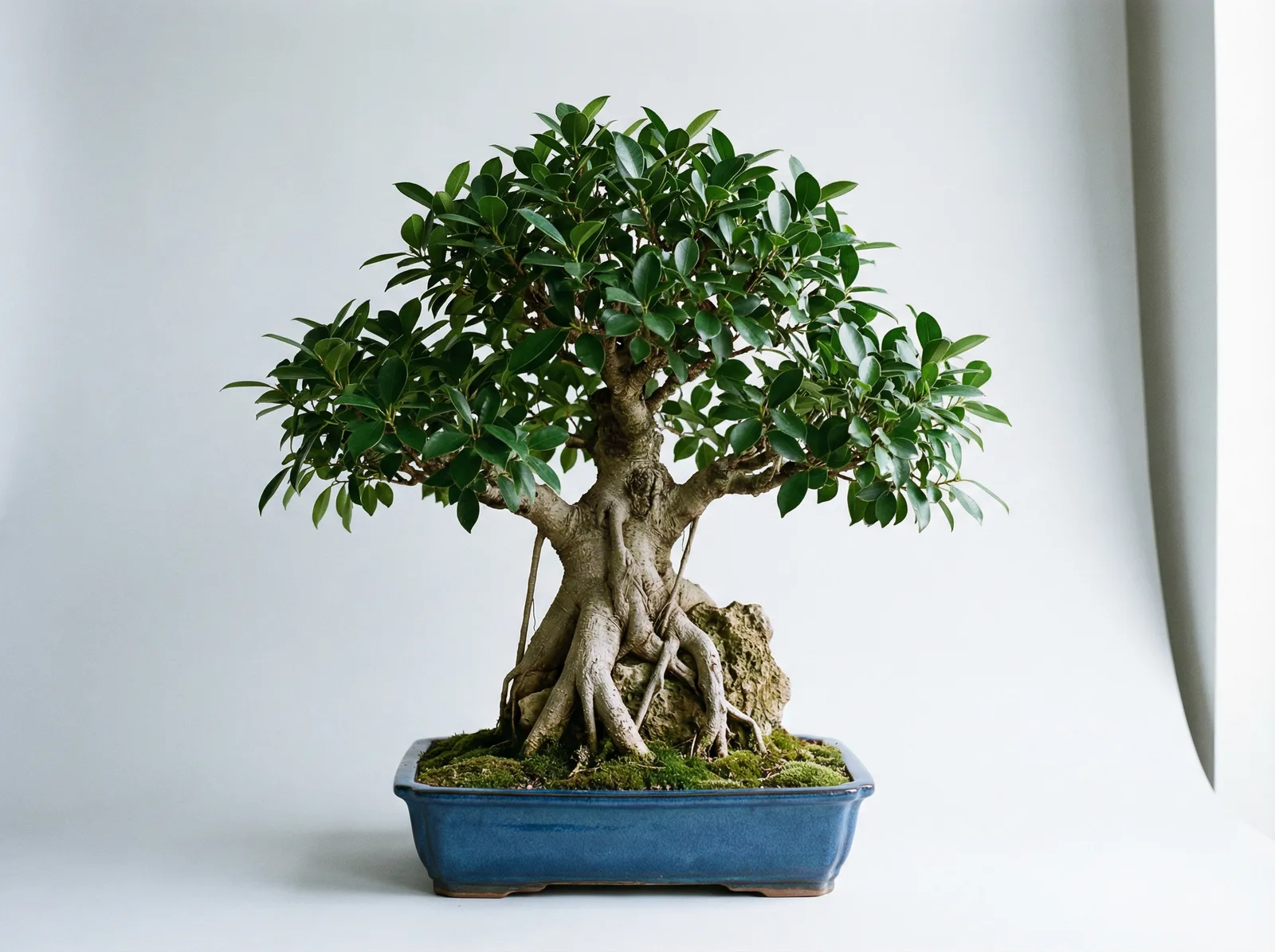
Ficus: retusa or microcarpa — adapts to indoor light and humidity better than almost anything else in a pot, responds well to pruning, and grows spectacular aerial roots in humid conditions.
Jade: nearly unkillable if you forget to water — it stores water in its leaves.
Dwarf jade: develops faster than regular jade, with a more tree-like look.
Schefflera and Hawaiian umbrella: the picks for genuinely dim rooms — they tolerate lower light than anything else on this list.
Skip Fukien tea for now — gifted constantly, looks the part, fussier than everything above; a fine second tree. More options at indoor bonsai.
What to look for at the bench
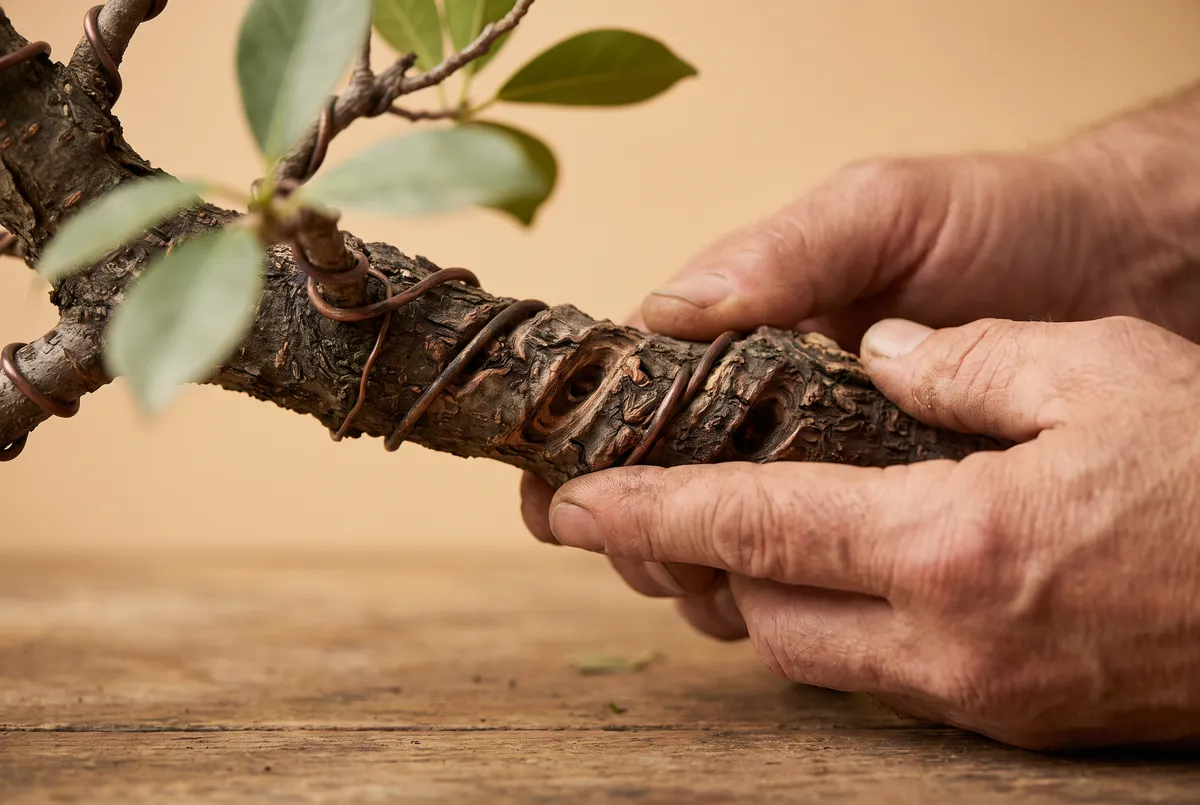
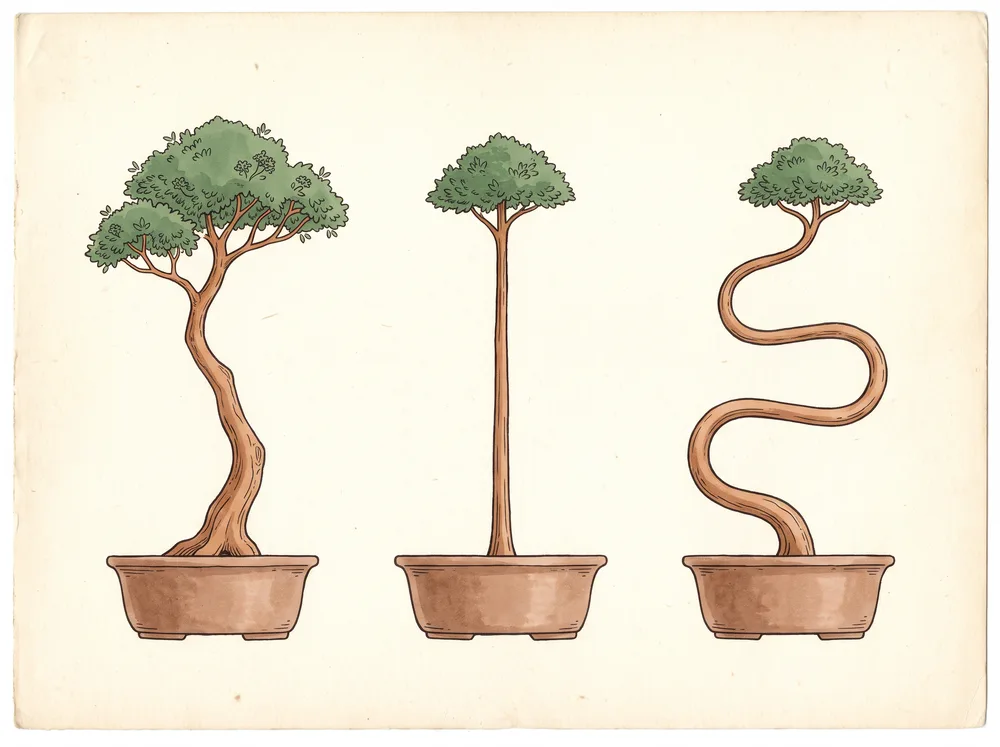
Wire scars: spiral grooves the bark swallowed. They grow out in a few years on an elm, almost never on thin-barked species — check every branch before you pay.Left to right: the trunk to buy (taper plus movement), the stick, and the factory S-curve — a fine first tree, but that shape is set for life.
The bench checktwo minutes, in the store
Eight checks, two minutes — the first four cover the tree's future, the last four catch what shops hide.
Trunk first. A thick trunk with visible taper and some movement is the hardest thing to develop later — branches reshape in months, trunks take years. Look for a base at least pencil-thick that narrows toward the top.
Push the trunk gently. It should feel solid and anchored. A wobbly tree likely has weak roots or was recently shoved into the pot for sale.
Check the base. Surface roots radiating outward (nebari) are a big plus. Avoid roots circling the pot or all bunched to one side.
Scan for pests — webbing, sticky film, bumps on bark (the pest guide shows what each looks like).
Look for wire scars — spiral grooves bitten into the bark. They take years to grow out — faster on elms, nearly permanent on thin-barked species.
Check the soil edge — shrunken 3–5 mm away from the pot walls means chronic underwatering at the shop, and a rootball that dry often repels water outright.
Read the newest growth — pale, stretched shoots with long gaps between leaves mean weeks in dim storage; recoverable, but the tree starts out weakened.
Count the trunks at soil level — cheap pots sometimes hold two thin whips planted together to fake thickness; you want a single base that flares.
The mass-produced S-curve ficus is a fine first tree, but its trunk shape is set for life — know what you're buying. And glued gravel exists to survive shipping; pry it off the day you get home so you can water the soil.
Where to buy, ranked — and when
Local bonsai nursery — the best trees and advice, in real soil with real drainage; you'll pay $10–20 more, and it's worth it.
Bonsai club sale — the best value in the hobby: trees off members' benches, often $20–40, from people who'll tell you exactly what each one needs.
Big-box garden section — great raw material ($15–30 nursery-can junipers and boxwood) in field soil and the wrong pots — a project, not a finished tree.
Online bonsai retailers and Etsy — real selection, but the tree spends 2–5 days in a dark box; buy from sellers with recent reviews, in mild-weather months only.
Grocery stores and mall kiosks — rehab projects in soggy peat and glued gravel; buy one only if you're up for the fix below.
Spring — roughly March through May — is the best buying season: the tree is entering its strongest growth, recovers fastest from the move, and gives you a full season to learn it before winter. Mail order adds weather to box stress — a January tropical can be cold-damaged below about 40°F in transit; an August heat wave cooks a boxed tree just as fast. Local buying works nearly year-round; shipping has seasons.
The first 48 hours: do almost nothing
A newly moved tree is re-tuning itself: leaves grown for one light level work poorly in another, so it runs on stored energy while it adjusts — sometimes shedding leaves it can no longer afford. What it needs is stability, not attention.
Put it in its permanent spot — brightest window for tropicals, an outdoor bench for hardy species — and stop moving it; every move restarts the adjustment clock.
Water by the finger test only: push a fingertip a half-inch into the soil — water thoroughly if dry, wait if damp. Check daily; that's how you learn the tree's rhythm.
That's the whole job for the first month.
When the new tree looks unhappy:
A ficus dropping leaves in week one or two: normal move response — it can shed a quarter of its canopy and push new buds within 3–4 weeks if the light is decent. See why is my bonsai dropping leaves.
Yellow, soft leaves and soil that stays wet for days: overwatering, usually dense kiosk peat — water less often, give more light.
Crispy leaves and a rootball pulling away from the pot walls: bone dry — soak the whole pot in a basin for 10 minutes today, then back to the finger test.
A juniper that looks fine but hasn't grown in weeks: junipers hold green color for weeks after death, so color proves nothing. Scratch a pencil-eraser-size spot of bark — green underneath means alive. Is my bonsai dead walks the full check.
Already own the mall bonsai? Good news
If you're reading this holding a little juniper or Fukien tea from a mall kiosk — that's a real bonsai, and plenty of serious growers started with exactly that tree. It usually ships with two fixable problems: dense peat soil that stays soggy, and sometimes a pot with no drainage hole. Fix the drainage first: if there's no hole, drill one with a masonry or tile bit at slow speed, or move the tree into a cheap training pot. Then, in early spring, slip-pot it out of the muck into granular soil — the repotting guide has a "first repot, low-stakes version" section written for exactly this move. Until then, water by the finger test (that peat stays wet a long time) and give it as much light as you can. The tree got you into the hobby. It deserves the upgrade, and it will usually reward it.
The glued gravel exists to survive shipping, not to help the tree — pry it off the day you get home so water can actually reach the soil.
Set expectations, then enjoy it
A $30 starter tree won't look like the bonsai in exhibition catalogs — those are 30-50 years of development. Your tree is the first page of a long story. Keep it alive and healthy through year one using the beginner's guide; styling and wiring come once the fundamentals are boring.
The quick sheet:
Strictly indoors → ficus; jade if you forget to water; schefflera for a dim room.
Outdoors with four-plus hours of sun → Chinese elm; juniper for an evergreen.
Budget: $25–60 for the tree, $40–80 for first-year supplies.
Buy in spring if you can, from a bonsai nursery or club sale first.
At the bench: tapered trunk, solid in the pot, roots radiating outward, no wire scars, no pests.
First month home: light, finger-test watering, and nothing else.
The concrete next step: decide indoor or outdoor today, then buy the matching tree this week — Chinese elm outside, ficus inside.