Pithecellobium tortumboth
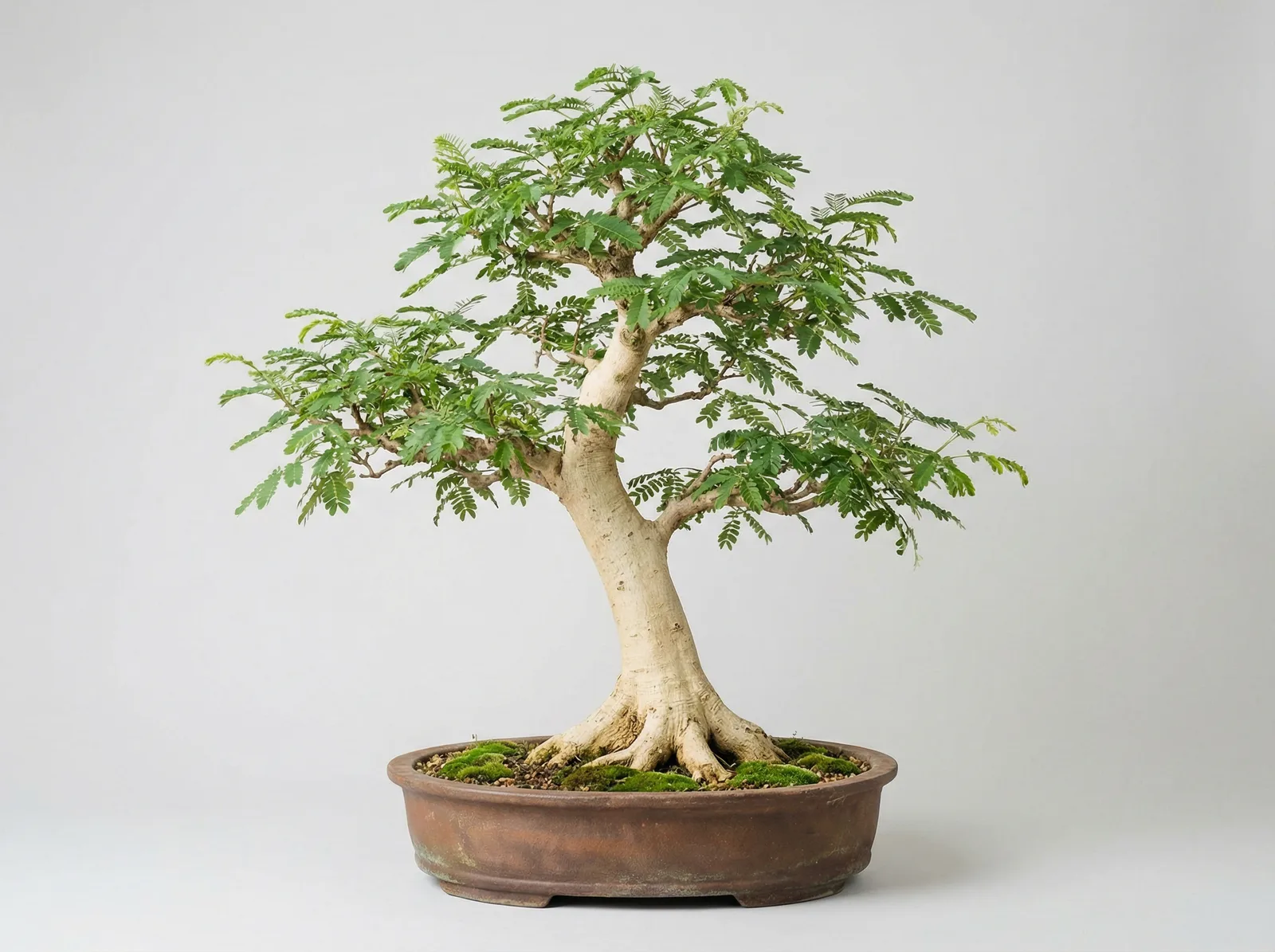
Brazilian Rain Tree Bonsai
- care
- intermediate
- light
- full sun
- zone
- 10–12
Schefflera arboricola · Araliaceae
Why grow it
Schefflera bonsai are the tropical species that nobody takes seriously until they see a good one. Schefflera arboricola grows hard, develops wild aerial roots, and handles indoor conditions that would make a ficus sulk. Those compound umbrella-shaped leaves? Distinctive doesn't begin to cover it.
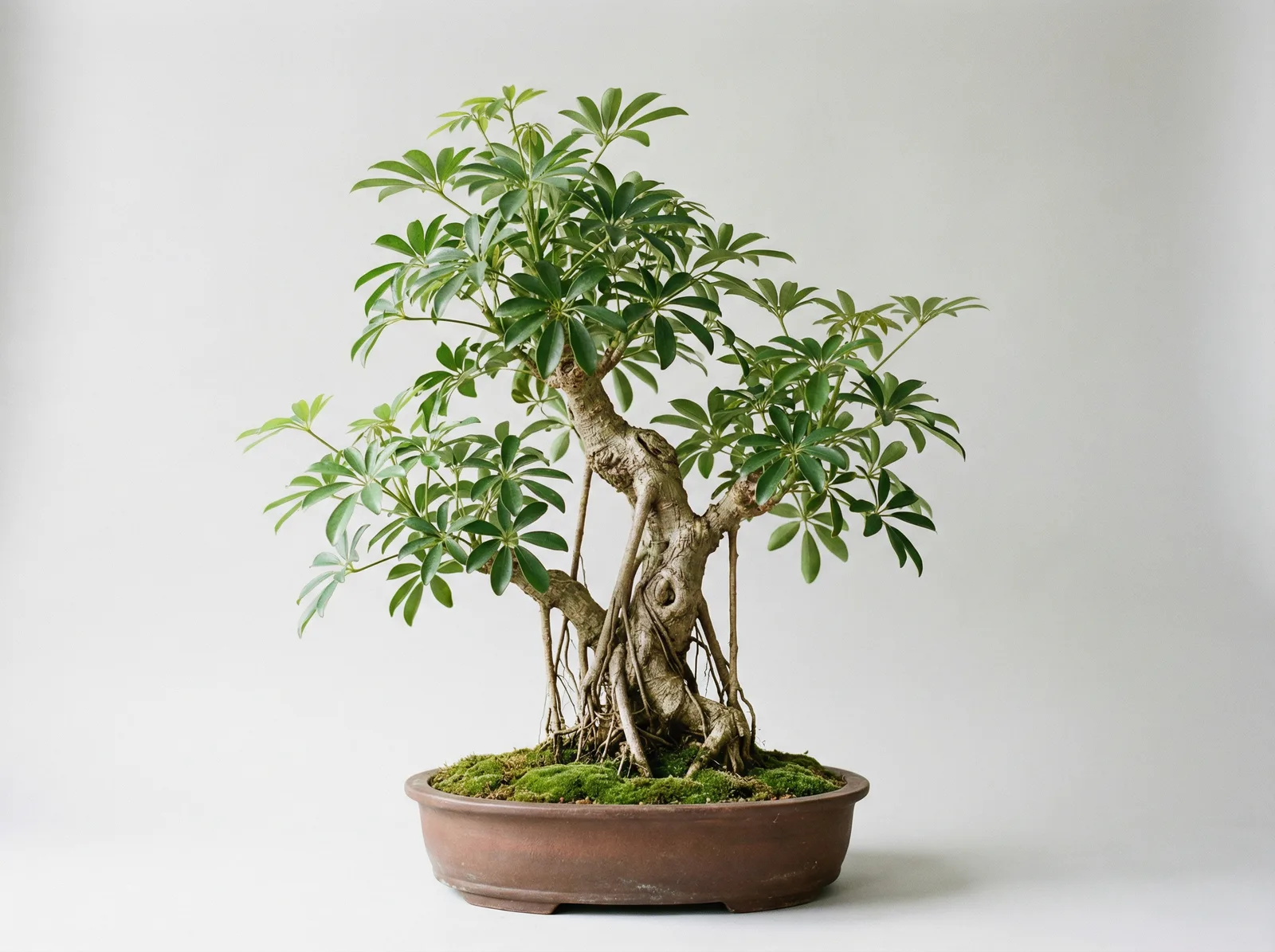
The real draw is the root system. Schefflera naturally throw aerial roots from branches and trunk, and over time those roots fuse into pillars that make the tree look like a centuries-old banyan. Jim Smith, the legendary Florida bonsai artist, built his reputation developing schefflera specifically for this banyan effect. When it works, it's jaw-dropping.
Yes, schefflera are common houseplants. So what? As bonsai, they develop thick trunks, tangled aerial root networks, and canopies with genuine character. Write them off and you're missing one of the most creative species in the hobby. One family note: the Hawaiian umbrella tree sold for bonsai is this same species -- Schefflera arboricola -- in its dwarf 'Luseane' form, which keeps smaller leaves and tighter growth for desk-sized trees.
The routine
Light quality makes or breaks schefflera bonsai. Bright light equals compact growth and smaller leaves. Low light equals long, stretchy internodes and dinner-plate leaflets. If your tree looks leggy, it's begging for more light. South-facing window, or a full-spectrum grow light running 12 hours a day. That's the fix.
Watering? Forgiving. Schefflera droop their leaves when they're thirsty -- it's about as subtle as a fire alarm. Water them and they perk back up in a couple hours. Great for beginners still learning to read soil moisture. But don't use wilting as your regular cue. Check the soil. Let the top half-inch dry between waterings.
Schefflera (Umbrella Tree) looking rough right now?Skip to common problems below, or start with the symptom guide.Aerial root development is the whole game with schefflera. High humidity triggers roots to sprout from branches and trunk. Wrap target areas with damp sphagnum moss, run a humidity tray, or -- the best option -- put the tree outside during humid summer months. Once an aerial root hits soil, it thickens fast. Within a year it looks like it's been there for decades.
Pests are rare indoors. You might see spider mites in dry winter air or mealybugs tucked into leaf joints. Spray the foliage with water weekly and you'll prevent most problems. Insecticidal soap cleans up anything that slips through.
Shaping
Schefflera can be pruned any day of the year and they'll push new growth like nothing happened. Cut long shoots back to one or two leaf nodes. You'll get multiple new shoots below each cut, building density in a hurry. During peak summer growth, you can honestly prune every week.
Don't be afraid to go hard. If the tree's lost its shape, chop it back to stumps -- bare stumps. Schefflera bud from old wood like it's their job. Do heavy cuts in spring for the fastest bounce-back, but even midwinter cuts indoors will push growth.
Leaf size shrinks naturally over time with pruning, good light, and a smaller pot. Mature, well-maintained schefflera produce leaves half the size of their houseplant cousins.
Here's a technique most people don't know: you can trim individual leaflets from a compound leaf. If one leaflet is oversized, remove just that one. The remaining leaflets keep growing normally. It's fine-tuning that makes a real difference on shohin-sized trees.
Leaf size is the styling constraint. Schefflera leaflets never shrink to classic bonsai scale, so a schefflera styled like a maple always looks off. Style it as what it is -- a tropical banyan. Encourage aerial roots from the trunk and lower branches with tubes of damp sphagnum wrapped in plastic, guide them to the soil, and let them fuse into the pillar-like supports that make old specimens look ancient. This is where schefflera leave every other indoor species behind.
Exposed-root and root-over-rock designs play to the same strength: an aggressive, fleshy root system. Wire young roots over lava rock or featherstone and they harden into position within a season.
Branches, meanwhile, answer to scissors. Young green shoots take wire, but growth is fast enough that it bites within weeks -- check often and size it with the wire gauge tool at /tools/wire-gauge. On older woody branches skip wire entirely; guy wires and directional pruning are safer.
Multi-trunk compositions happen naturally since schefflera produce basal shoots readily. Let two or three develop, remove the rest, and style the group together. The shared root system keeps every trunk vigorous.
When things go wrong
Leggy growth with oversized leaves is the number one complaint, and it always comes down to light. Always. Move the tree to a brighter spot, prune back the stretched growth, and watch the new shoots come in compact. If your brightest window isn't enough, add a grow light.
Dropping leaves means overwatering or cold. Check the soil -- if it's staying wet for days between waterings, let it dry more. Also make sure the tree isn't parked near an AC vent or a drafty window. Schefflera don't like anything below 55 degrees Fahrenheit.
Scale insects show up as hard brown bumps glued to the stems and leaf undersides, slowly sapping the tree's vigor. Dab small colonies with rubbing alcohol on a cotton swab; for a heavy infestation, work through our pest control guide at /guides/pest-control.
Root rot from chronic overwatering reveals itself as a mushy, soft trunk base and overall decline. Unpot, cut away the rotten roots with clean shears, and repot in a fast-draining mix -- 60% pumice and lava rock, 40% bark. Then water less. And before you prune off a bare branch as dead, scratch it with a thumbnail -- green under the bark means it will rebud; brown means cut back until you hit live wood.
Any garden center or Home Depot sells schefflera for $5-20. Buy the one with the thickest trunk and the most compact growth. Ignore the leggy ones. You're getting tropical vigor at houseplant prices -- there's no cheaper entry point into indoor bonsai.
For pre-styled schefflera with developed aerial roots, Wigert's Bonsai in Florida is the go-to. They specialize in tropical bonsai and their schefflera material is consistently excellent. Expect $40-200 for general stock, $100-300 for banyan-style specimens with mature aerial root structure. That root development alone represents years of work you're skipping.
Some links may become affiliate links; our picks don't change.
Also on the bench