Why is my bonsai turning brown?
Short answer
Two checks tell you most of it. Feel: crispy brown means the tree dried out or the air is too dry; soft, dark brown means too much water. Location: browning from the inside of the canopy outward is often normal shedding; browning from the tips inward is an active problem. And if it's a juniper living indoors — that's the cause, and it needs to be outside.
First: is this a juniper kept indoors?
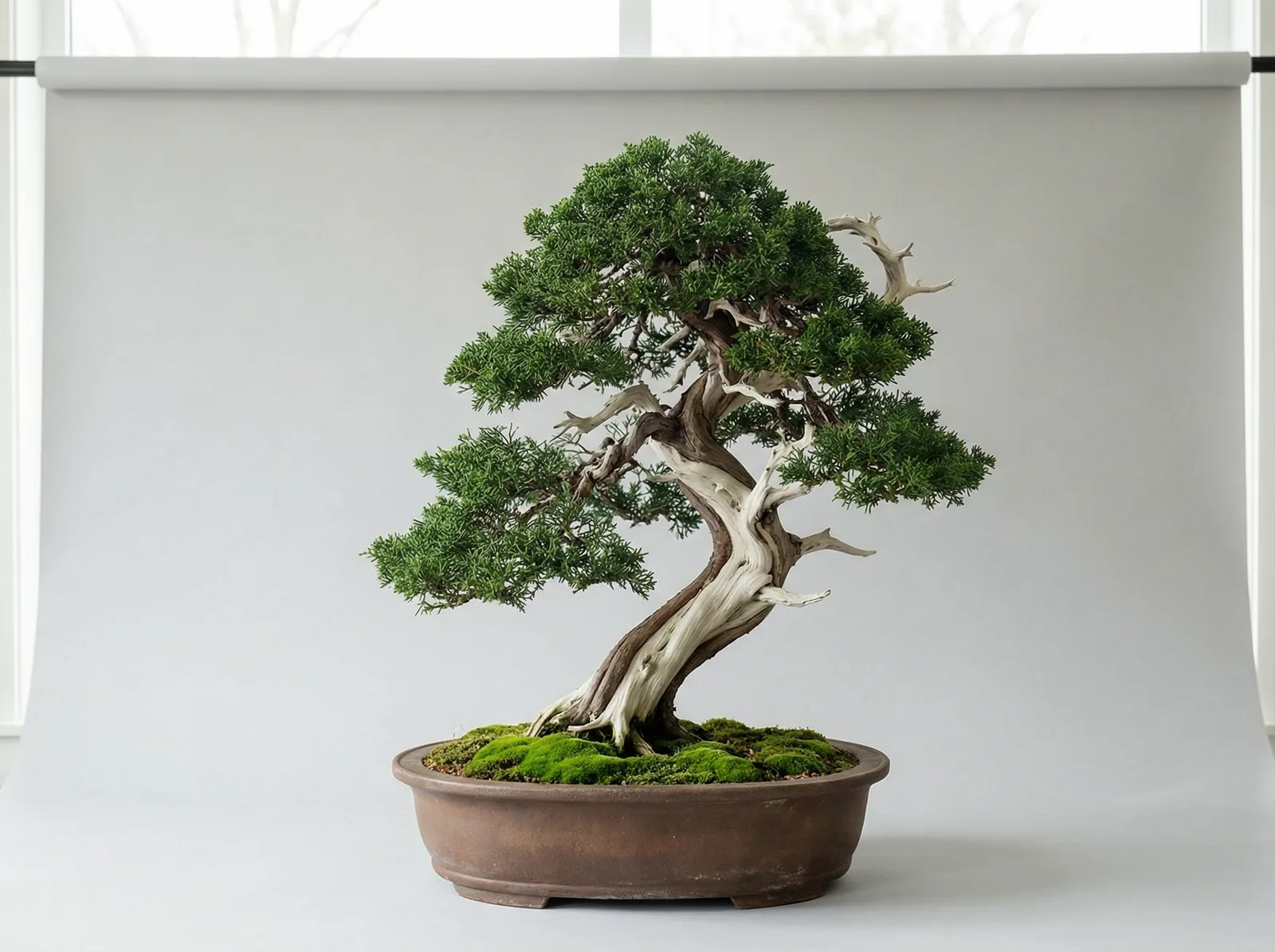
Start here, because it's the single most common brown-bonsai story. Junipers are outdoor trees — they need direct sun and a cold winter dormancy — but they're sold on indoor shelves with nothing on the tag to say so. Kept inside, a juniper starves slowly and browns over 2-3 months, usually from the interior out. The label set you up; none of this is your failure.
The fix depends on the calendar. In the growing season, move it outside to a spot with morning sun — today. In winter, don't swing it from a 68°F living room straight into a 20°F night; a warmth-softened juniper can be finished by cold it would normally shrug off. Stage it through an unheated garage or shed at 25-45°F for two to three weeks first — the full walkthrough, including the no-garage apartment version, is in got a bonsai as a gift.
And before reorganizing anything, check whether the tree is still in the game: the scratch test settles it in ten seconds — with one juniper-specific catch covered on that page.
Crispy brown vs. soft brown
Rub a browned leaf or needle between two fingers.
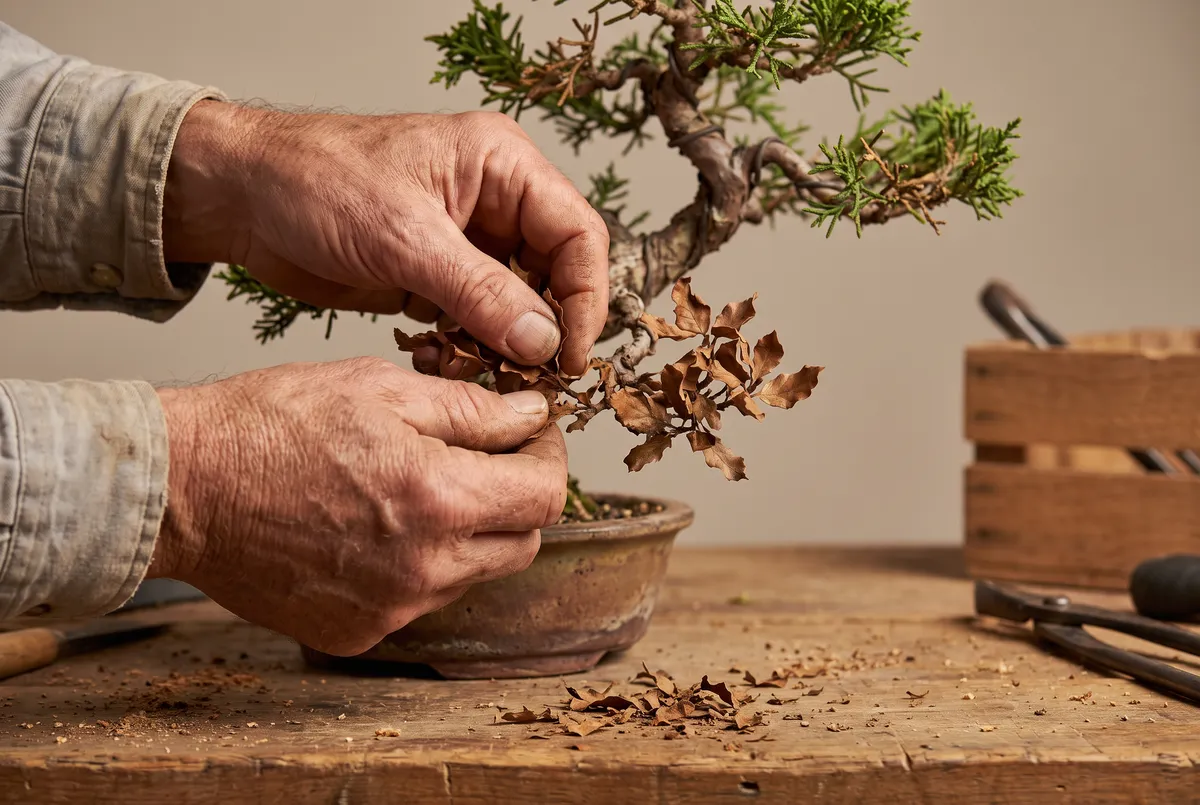
Crispy, dry, crumbling means the tree ran out of water — a missed watering, a heatwave, or winter indoor air sitting at 20-30% humidity around a tropical. Check the soil: if it's bone dry and pulling from the pot walls, soak the whole pot in a basin of water for 10 minutes today, then tighten your watering rhythm. Crispy tips with green behind them usually recover. The browned parts themselves never re-green, and that's fine — new growth replaces them.
If dry winter air is the culprit, fix it with numbers, not guesswork: tropical species hold their foliage at 40-50% humidity, while a heated living room often sits at 20-30%. Set the pot on a pebble tray (a saucer of pebbles and water, with the pot resting above the waterline), group your plants so they share a humid pocket, and keep the tree at least 3 feet from any radiator or heat vent — a vent blowing across the foliage crisps leaves faster than a missed watering does. Misting is the one fix growers argue about: it raises humidity for minutes, not hours, so treat it as a pleasant ritual, not a solution.
Soft, limp, dark brown — sometimes with a swampy smell from the pot — points the other way: overwatering and root rot. Roots drowning in soggy soil die, and the foliage they fed browns above them. Stop watering until the surface dries, get the pot draining freely, and give the tree maximum light. Soft brown is the more serious pattern of the two — act on it the day you notice it.
Where the brown starts matters
From the inside of the canopy, outward: on junipers, pines, and other conifers, interior needles that no longer receive light go yellow-brown while the outer foliage stays green. Trees shed shaded interior growth on purpose — if the branch tips are green and flexible, this is maintenance, not decline. Pluck out the dead interior and move on.
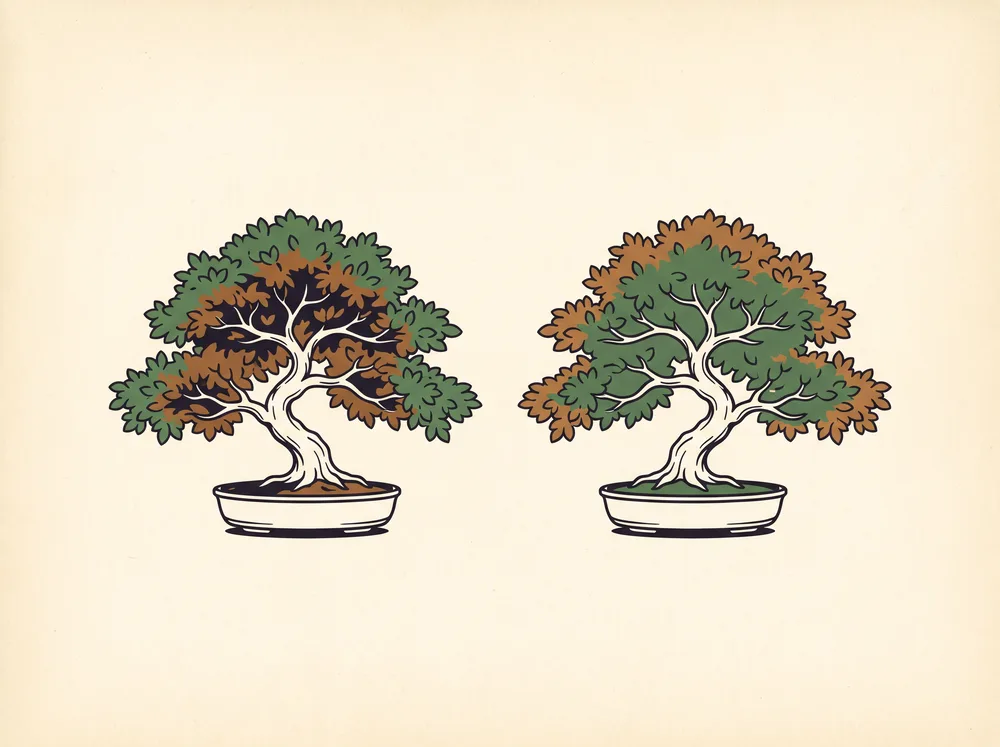
From the tips, inward: tip-burn is active damage — underwatering, dry air, fertilizer burn, hot afternoon sun on a species that wants protection, or the water itself. A white crust on the soil surface is the fertilizer tell: flush the pot with two or three times its volume of water, let it drain fully, and feed at half strength from now on. And if leaf edges keep burning on a fukien tea despite consistent watering, look at the tap — softened water runs high in sodium, and heavily treated water bothers the touchier tropicals. Run a few weeks on rainwater or filtered water and judge by the new growth. Tip browning that advances toward the trunk week over week needs its cause found and fixed; it doesn't stop on its own.
One more pattern worth reading: brown on one side only usually means something environmental on that side — a radiator, a heat vent blowing across it, afternoon scorch through glass, or winter windburn on the exposed flank.
Brown that keeps moving: mites and blight
Two causes brown a tree that's being watered correctly, and both keep advancing until you treat them.
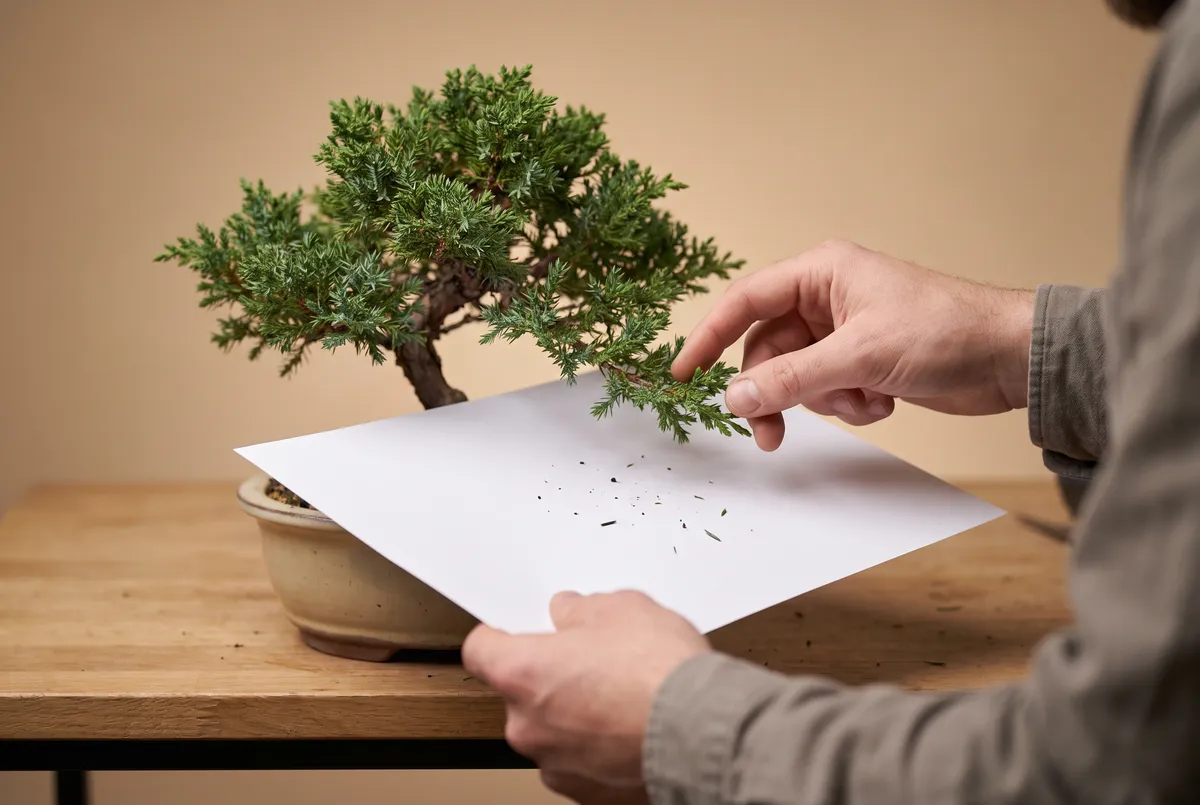
Spider mites are the top pest suspect, especially on junipers and anything wintering indoors in warm, dry air. Before foliage turns outright brown it goes dull and stippled — a faded, bronzy cast — often with fine webbing at branch junctions. Confirm with the paper-tap test: hold a sheet of white paper under a branch, tap the branch sharply, and watch for pinhead-sized specks that start walking. Moving specks mean mites. Hose the whole tree down hard, undersides included, then spray neem oil or insecticidal soap every 5-7 days for three rounds — a single spray misses the eggs, and the colony rebounds within a week. The full playbook is in the pest and disease guide.
Juniper tip blight (phomopsis) is the fungal version: new shoot tips turn gray-brown after a wet spring, with a sharp line between the dead tip and live green behind it, and the dieback creeps down the shoot no matter how well you water. This is the one brown where the usual advice backfires — misting and overhead watering spread it. Prune each dead tip back into clean green tissue, wiping the shears with rubbing alcohol between cuts, bin the clippings, and keep the foliage dry when you water. Stubborn cases get a copper fungicide at the exact label dilution.
The split is simple: moving specks on paper get soap or oil; advancing gray-brown tips with no bugs after wet weather get shears and a fungicide. Neither treatment touches the other problem.
Sunburn: browning you caused in one afternoon
One kind of browning can be dated to a single afternoon: a tree that wintered indoors or lived in shade, moved straight into full sun. Foliage that never built sun tolerance bleaches to papery tan within a day or two — concentrated on the top and the sun-facing side — and conifers scorch on the exposed flank. It reads like drought, but the soil is damp and the shaded side is untouched.
Move the tree to bright shade today, then harden it off over 7-10 days: start with 2-3 hours of morning sun, add an hour or two of direct sun every 2-3 days, and let it take full sun only after a week or more of ramping. Scorched foliage won't recover, but a healthy tree pushes replacement growth within a few weeks.
Glass pulls the same trick indoors — a south window in high summer can scorch a tropical even though more light is usually the right instinct. Which species want full sun and which want protection is covered in do bonsai need direct sunlight.
Browning that's just the season
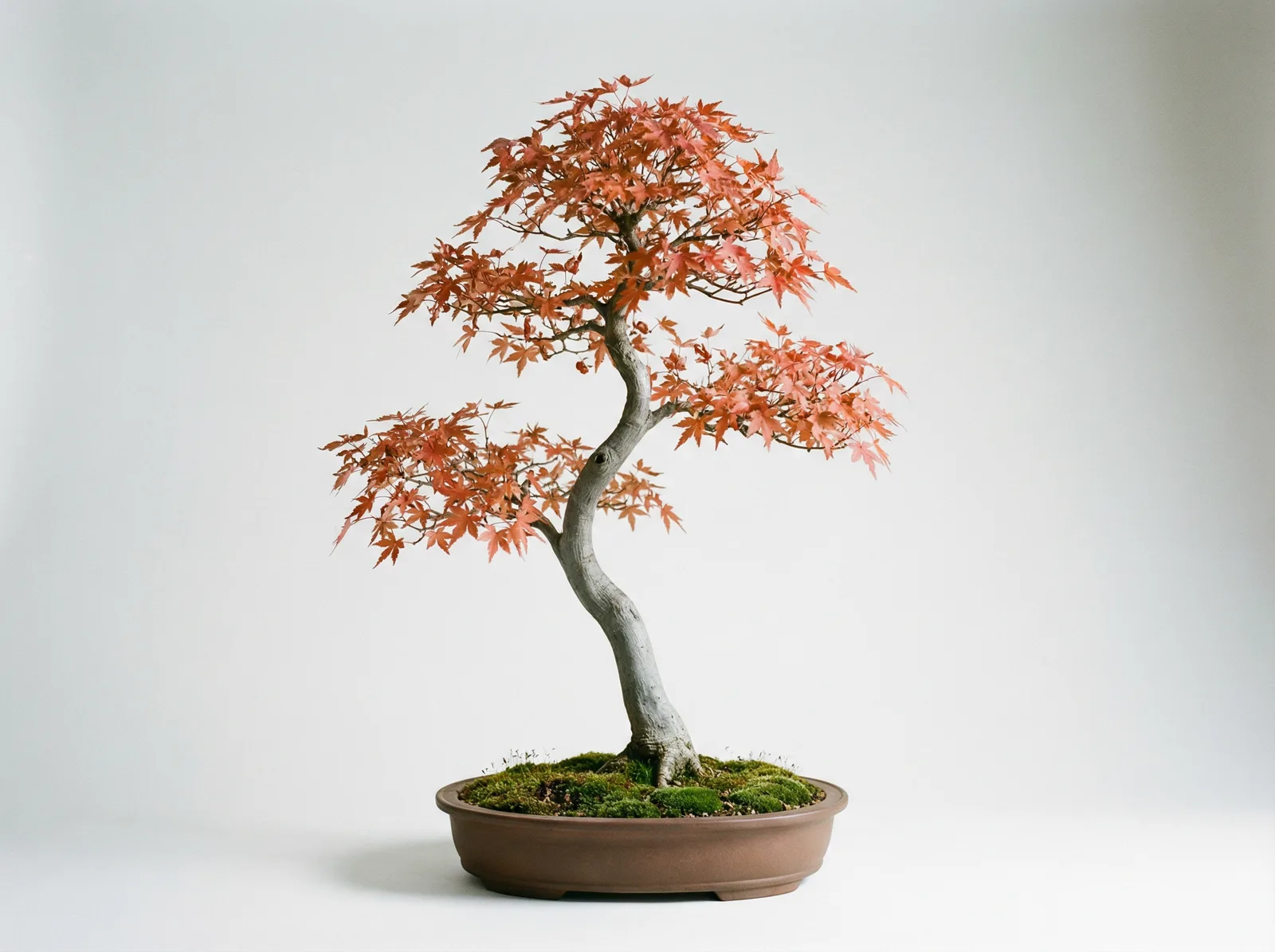
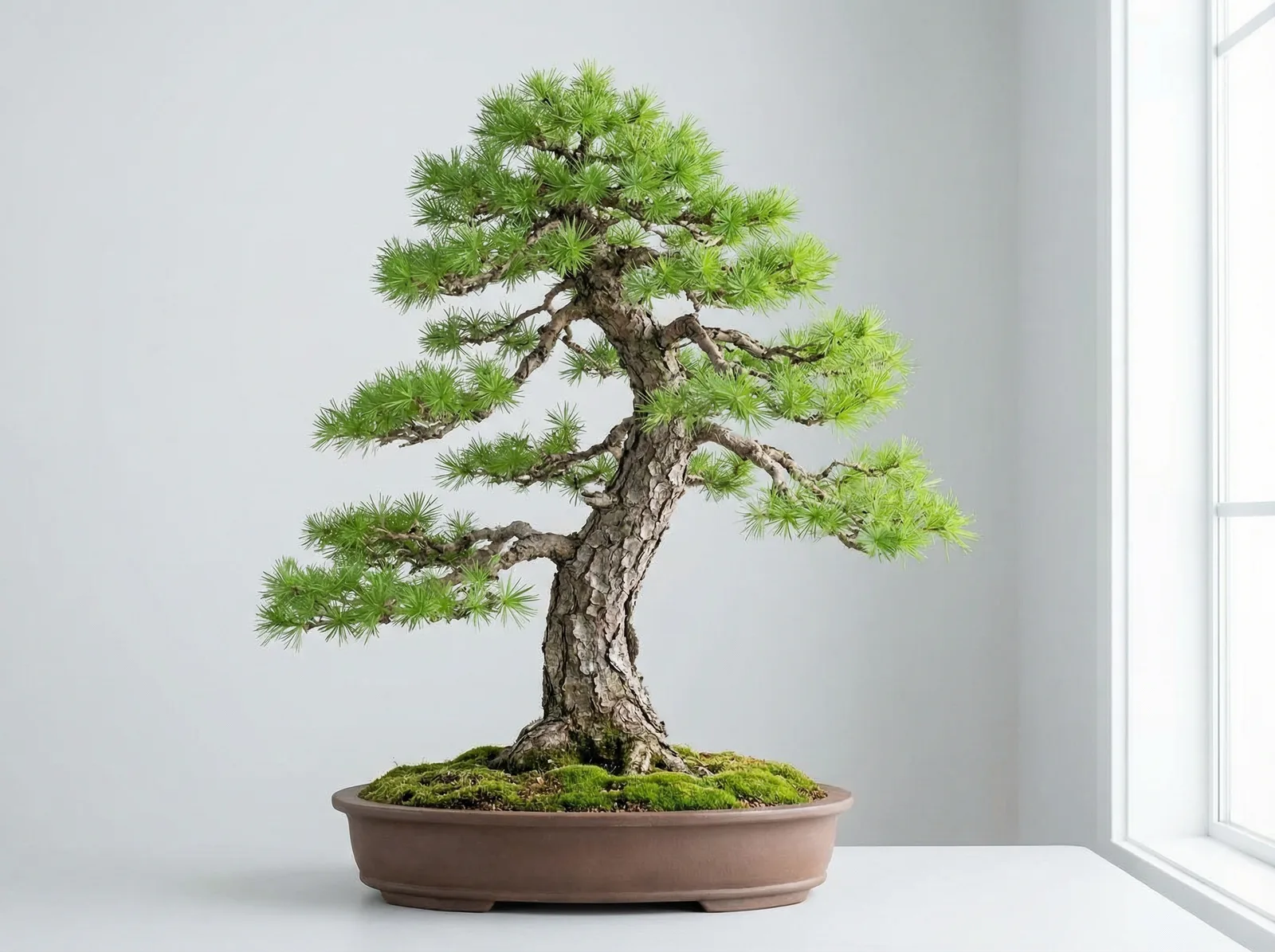
Not all brown is trouble. Deciduous species brown and drop everything in fall — a Japanese maple going orange-brown in October is doing exactly what it should, and larch is a conifer that does the same, which surprises people every November. Some junipers also bronze in cold weather: a purplish-brown winter tint across otherwise healthy foliage that greens back up in spring.
The difference from real trouble: seasonal color arrives on schedule, evenly, across the whole tree, and the branches stay flexible with green under the bark. Trouble arrives any time, advances week by week, and turns branches brittle.
What this means for your tree
Once the triage above has named the cause, three rules cover the aftermath.
Brown never re-greens. A browned leaf or needle is spent — recovery shows up as new growth, not as repaired old growth. Judge your fix by what the tree pushes over the next 4-6 weeks, not by whether the damage fades.
Scale your response to the spread. A few brown tips on an otherwise green tree is ordinary life and needs nothing. Browning across a quarter of the canopy, or anything advancing week over week, needs its cause fixed now. More than half brown: map what's still alive with the scratch test before spending a season nursing dead branches — there's usually more green left than the panic suggests.
Prune the dead late, not early. Crispy leaves and tips can be picked off any time for looks. Whole branches wait until they prove dead — scratch a sliver of bark and only remove wood that shows tan and dry underneath, giving a dried-out deciduous tree 4-6 weeks to push new buds first. A stressed tree needs every leaf it has left to recover; a hard "balancing" prune right after damage is a classic way to finish a tree that would have made it. When it is time to cut, the pruning guide covers where and how.
Species mentioned here
More on “Why is my bonsai turning brown?”
Keep reading