Rhododendron spp.outdoor
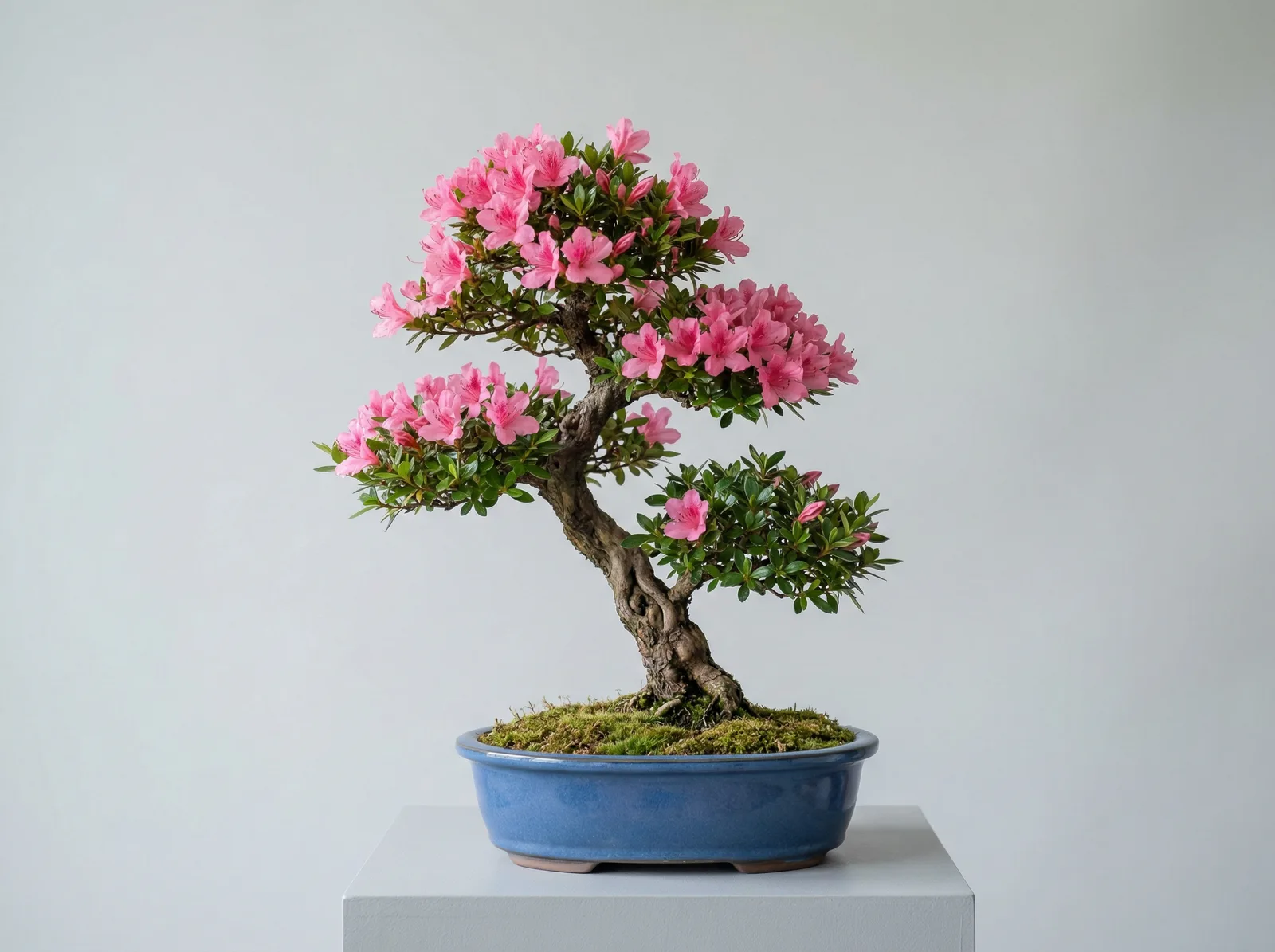
Azalea Bonsai
- care
- intermediate
- light
- partial shade
- zone
- 6–9
Acer palmatum · Sapindaceae
Why grow it
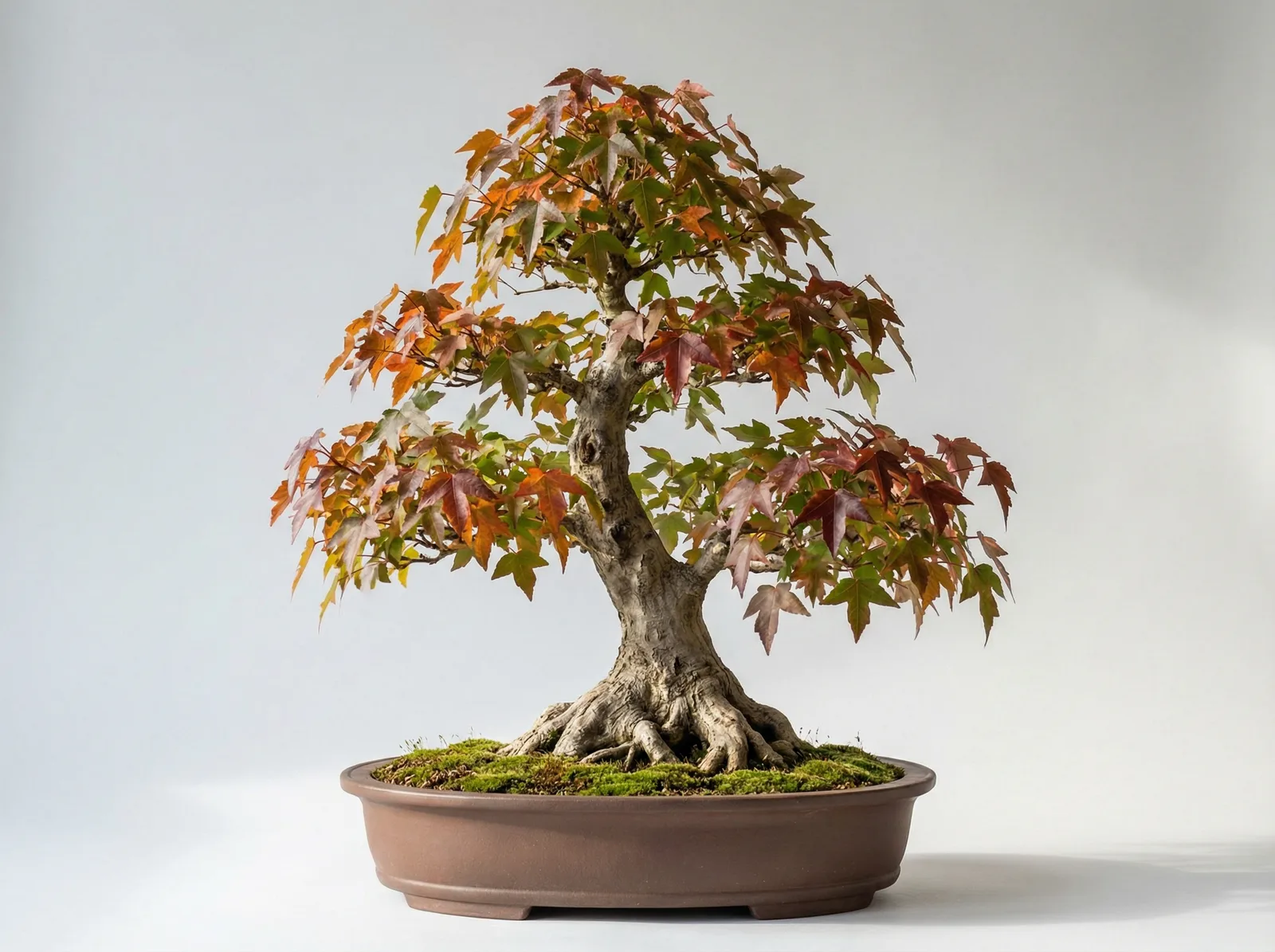
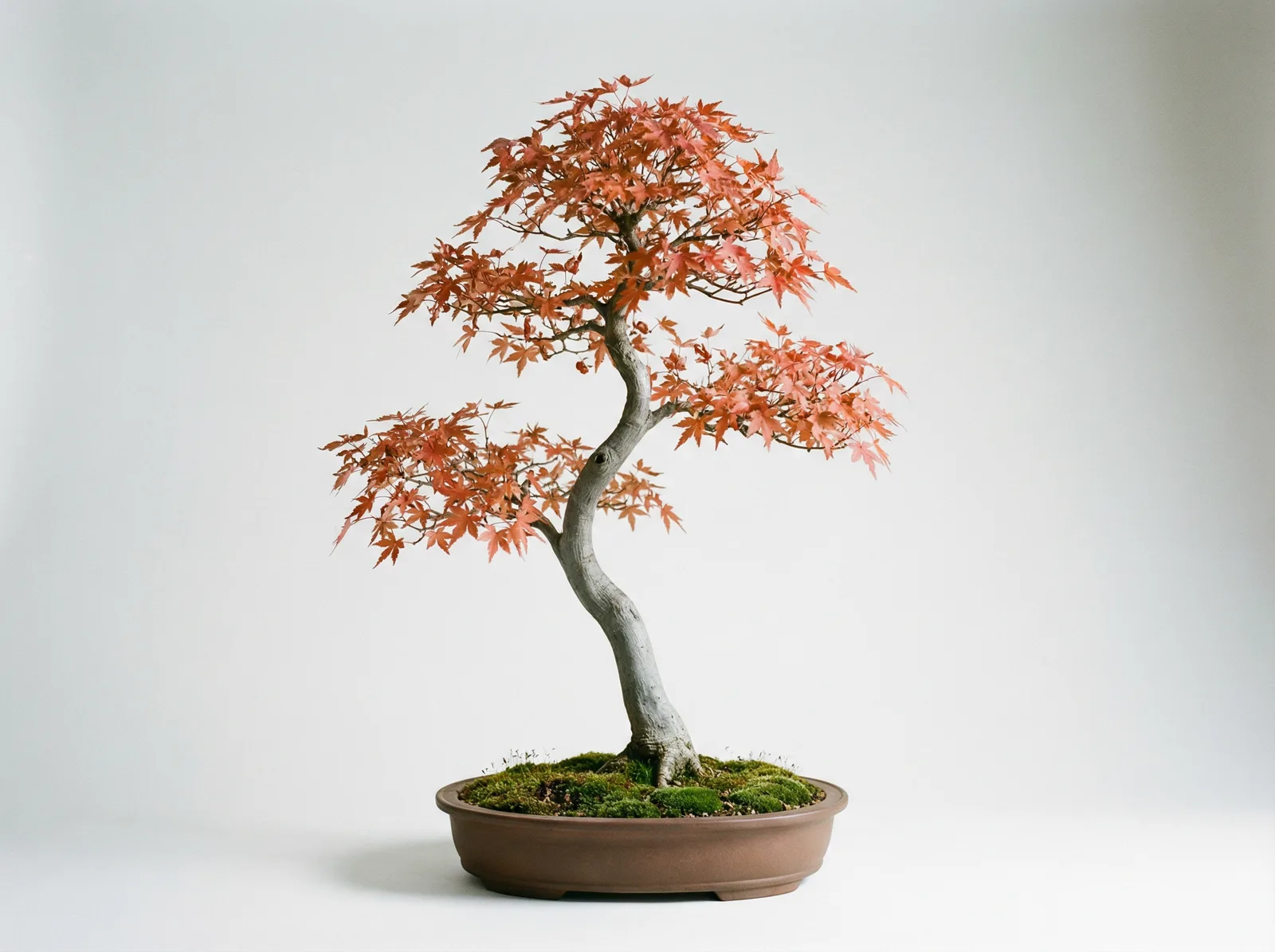
A Japanese maple in full autumn color will stop you mid-sentence. Acer palmatum has this quality that no other bonsai species matches—the leaves shift from spring's electric lime through summer's deep green into October's crimson and gold. It's living theater, and it happens every single year.
The cultivar rabbit hole goes deep. 'Deshojo' opens spring with fire-red leaves. 'Kiyohime' stays small enough for shohin work with leaves barely an inch across. 'Shishigashira' has thick, crinkled foliage that builds dense canopies without much effort. Your choice of cultivar matters more here than with almost any other species.
Fair warning: this tree does not forgive. Forget to water on a 95°F afternoon and you'll lose branch tips. Give it too much wind and the leaf edges shred. But the growers who stick with maples? They never go back to anything else.
The routine
Here's a question most people don't ask before buying a Japanese maple: do you have shade? Not "the patio gets some shade around 4pm" shade. Real dappled shade, the kind you'd get under a larger tree. Morning sun until noon, then filtered light the rest of the day. That's the sweet spot. Full afternoon sun in zone 7+ will scorch the leaves by July, guaranteed.
Watering is the part that separates maple growers from maple killers. The fine, hair-like roots dry out fast but rot just as fast in standing water. You're walking a tightrope. Check the soil twice a day in summer—once in the morning, once around 3pm. If the top quarter-inch is dry, water deeply. If it's still damp, leave it alone. In a heat wave, you might water twice daily. In spring and fall, once is enough.
Japanese Maple looking rough right now?Skip to common problems below, or start with the symptom guide.Wind matters more than people realize. A strong gust can shred those delicate palmate leaves in seconds. Place your maple behind a wall, under a pergola, or among other trees that break the wind. The leaves will thank you.
Fertilize weekly at half strength with a liquid organic during the growing season, or scatter Biogold pellets every 3-4 weeks. Here's the trick for autumn color: cut nitrogen completely by early August and stop feeding entirely by mid-September. The tree needs to slow down and harden off. High nitrogen into fall produces muddy brown leaves instead of that screaming red.
Soil should be akadama-heavy—40% akadama, 30% pumice, 30% composted pine bark. Maples like slightly acidic conditions and need both moisture retention and drainage. Pure inorganic mix dries out too fast for those fine roots.
Shaping
Two pruning windows, and you need to respect both. Late winter—before the buds swell but after the worst cold passes—is for structural work. Removing branches, establishing your primary scaffold, cutting back to redirect growth. Use sharp concave cutters and keep cuts under 10mm diameter whenever possible. Maples compartmentalize wounds slowly, and big cuts can die back inches past where you intended.
The second window opens in early June, after the first flush of spring growth has hardened. This is refinement time. Pinch or cut back shoots to one or two leaf pairs. Every cut here produces two new buds, doubling your ramification each season. Three years of consistent summer pinching transforms a leggy whip into a convincing canopy.
Defoliation is the power move. In early June, cut every leaf off the tree, leaving just the petiole stubs. Within three weeks, a healthy tree pushes a complete second flush—and the new leaves come in 30-40% smaller. But only do this on trees that are growing strongly. A weak tree can't afford the energy cost. And never defoliate two years in a row.
Apply cut paste to any wound over 5mm. Maples bleed sap in spring, so if you can, do your heaviest cuts in late winter while the tree is still dormant.
Japanese maples want to look like Japanese maples. Don't fight their nature with heavy cascade or windswept designs—it'll always look forced. Informal upright, broom, and multi-trunk styles let the species shine. The goal is grace, not drama.
Wiring demands caution. Wrap the branch with damp raffia first, then apply aluminum wire over the top (size it to the branch with /tools/wire-gauge). Maple bark is paper-thin and scars within days during active growth. Check every branch every 5 days from May through September. The moment you see the wire starting to press into the bark, cut it off. Wire scars on maples take years to fade and can permanently disfigure a branch.
Branch positioning should emphasize horizontal lines with a slight downward angle. Think of how old park maples hold their branches—broad, layered, reaching outward rather than up. Remove any shoots growing straight up (they fight the silhouette) or straight down (they look unnatural). Guy wires anchored to the pot with a turnbuckle system give you more control than spiral wiring for primary branches, and they don't risk bark damage.
The best maple bonsai all share one trait: restraint. Minimal wire scars. Clean ramification from years of pinching, not from bending. The canopy looks effortless. That's the standard worth working toward.
When things go wrong
Crispy leaf edges in July? That's scorch, and once it happens, those leaves don't recover. They'll hang on the tree looking brown and sad until they drop in fall. Prevention is the only fix: more shade in the afternoon, more water, less wind. If you're already seeing scorch, move the tree to deeper shade immediately. Scorch looks fatal but almost never is -- scratch a suspect twig with a thumbnail and you'll usually find green, live wood under the bark. Dry brown under the scratch means that twig really did die (common after a missed watering in a heat wave); prune back to green and the next flush will come in healthy.
Aphids swarm the tender new shoots in April and May. You'll spot them as clusters of tiny green or black insects on the tips, often with a trail of ants running up the trunk farming them. A strong spray of water knocks most of them off. For heavy infestations, insecticidal soap works but needs reapplication every five days for two weeks.
Leaf spot fungus—dark splotches on the foliage—shows up in wet years or when you water the leaves instead of the soil. It's mostly cosmetic. Pick off the worst leaves, improve air circulation, and keep the foliage dry when you water. Don't panic about it.
Wire scars are the self-inflicted wound: three extra weeks of forgotten wire can undo five years of development. Set a phone alarm. Check every five days. This isn't optional advice—it's the difference between a beautiful tree and one with permanent grooves in every branch.
Named cultivars from a real nursery beat generic "Acer palmatum" from a garden center every time. You want 'Deshojo' for red spring color, 'Kiyohime' for tiny leaves, 'Arakawa' for corky bark character. Expect $30-80 for 1-3 gallon nursery stock with decent trunk bases.
For pre-bonsai with ramification already started, Evergreen Gardenworks has some of the best maple stock in the country -- they select for low branching, trunk movement, and fine twig structure, not just whatever grew fastest in the field. Budget $60-300 depending on age and development. Beyond that, a good local nursery beats mail-order: Japanese maples are everywhere in the landscape trade, and a one-gallon cultivar you pick by hand for $40 is a better start than an unseen box.
Some links may become affiliate links; our picks don't change.
Also on the bench