Prunus serrulataoutdoor
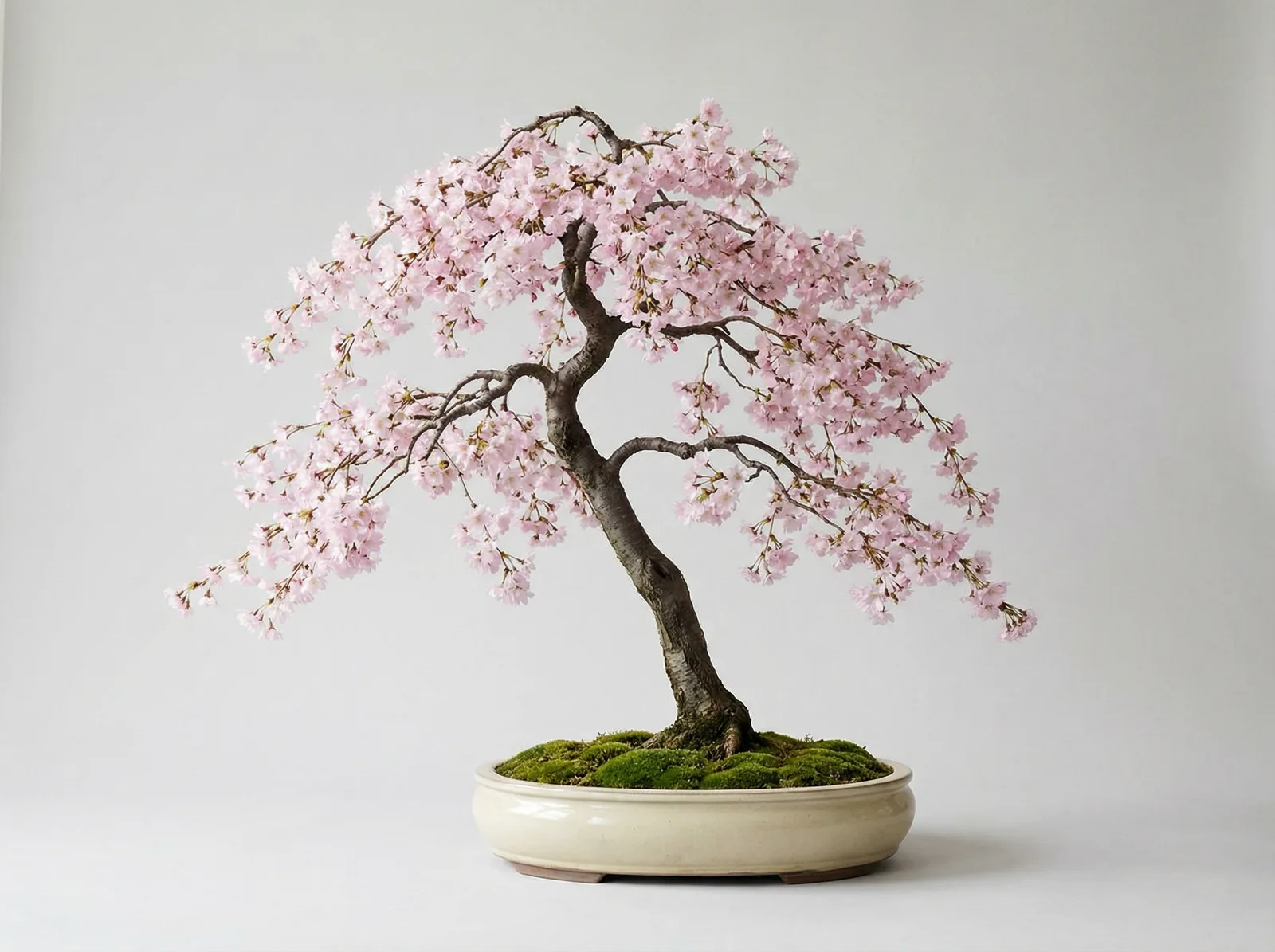
Cherry Blossom Bonsai
- care
- advanced
- light
- full sun
- zone
- 5–9
Rhododendron spp. · Ericaceae
Why grow it
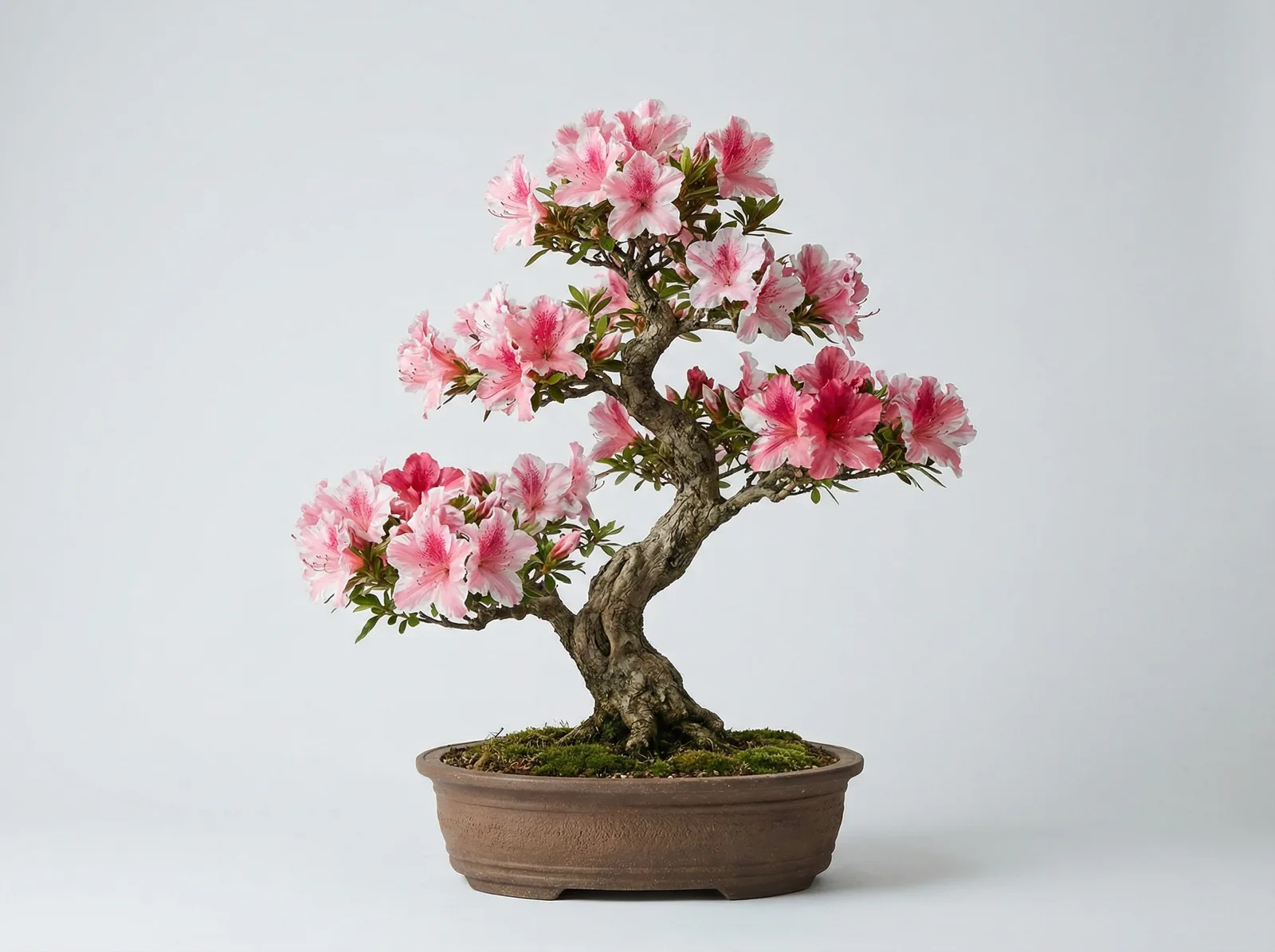
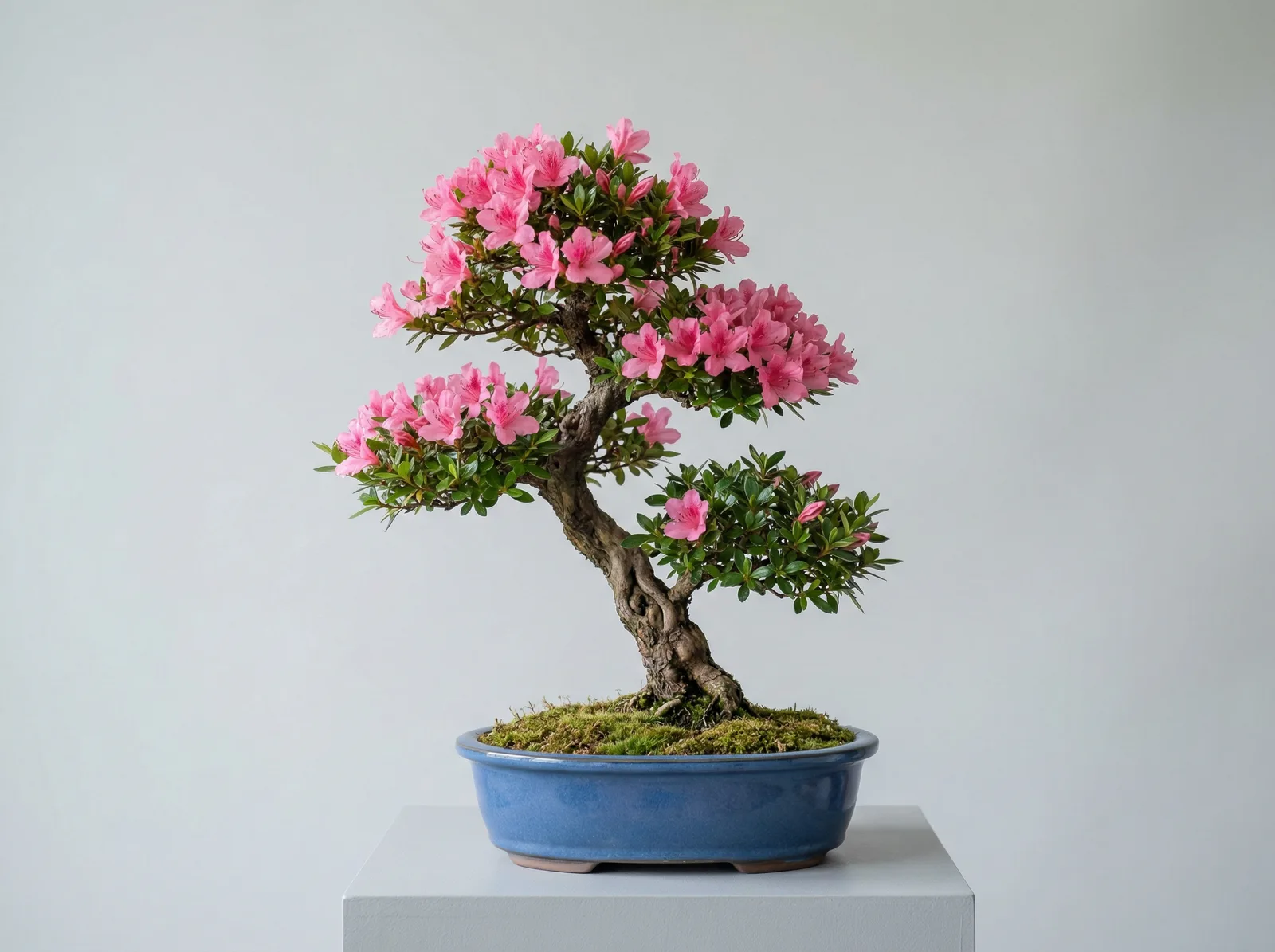
Nobody buys an azalea bonsai for the foliage. You buy it for those two weeks in May when the entire tree disappears under a blanket of flowers—whites, magentas, corals, deep purples—so dense you can't see a single leaf. Then the show ends, the petals fall, and you spend the next 50 weeks keeping the tree happy enough to do it again.
This page covers the evergreen azaleas as a group -- the Kurume, Girard, and other hardy hybrids under Rhododendron that fill every garden center each spring. They share small leaves, dense twiggy growth, and the same total-coverage bloom habit, and a $15 nursery can is honestly one of the best cheap bonsai starts there is. The refined show branch of the family is the Satsuki azalea, bred in Japan for pot culture over 400 years -- larger flowers, later bloom, hundreds of named cultivars, and a bit less cold-hardiness. If yours came with a Japanese cultivar name on the tag, use our Satsuki azalea page; the fundamentals below still apply.
This is not beginner territory. Azaleas are opinionated about soil pH, water chemistry, and pruning timing. Get any of those wrong and you'll get green foliage with zero flowers. Get them right and you'll own the most eye-catching tree in any collection.
The routine
Soil pH is where azalea care starts and where most people fail. These trees need acidic conditions—pH 4.5 to 5.5. Standard bonsai soil mix is too alkaline. Kanuma, the soft yellow Japanese pumice specifically mined for acid-loving plants, is the go-to. Use it pure or mixed with peat and pine bark. Nothing else works as well.
And your water matters too. Municipal tap water is typically alkaline—pH 7 or higher. Pour that on kanuma for a year and you've neutralized the acidity. The result? Yellow leaves with green veins. Iron chlorosis. The fix is rainwater or distilled water. Yes, it's extra effort. That's what you signed up for with azaleas.
Azalea looking rough right now?Skip to common problems below, or start with the symptom guide.Light shifts through the year. Spring blooming benefits from bright, open light. But once summer heat arrives, move to morning sun with afternoon shade. Full afternoon sun in zone 7+ scorches the thin leaves and stresses the tree into dropping flower buds for next year.
Flowering is a long game. The buds you see opening in May were actually set the previous August. So that fertilizer you skipped last July? That afternoon of forgotten watering last September? You're paying for it now. Every care decision echoes 6-12 months later.
Deadhead spent flowers promptly. Pinch them off as they fade to redirect energy from seed production into new growth and next year's bud development. Leave the seeds forming and you'll get fewer flowers next spring. Simple math.
Shaping
Your pruning window is narrow and non-negotiable: right after flowering ends, through early June. Azalea set next year's flower buds in late summer. Prune after June and you're cutting off next spring's show. Miss the window? Wait a full year.
Right after the last petals drop, do your structural work. Remove branches that cross, grow downward, or clutter the interior. Cut back vigorous shoots to 1-2 leaves. Use sharp scissors, not concave cutters—azalea wood splits oddly with concave tools.
Summer pinching continues through August. As new shoots extend, pinch the tips back to encourage branching. Each pinch point becomes a potential flower bud location. More pinch points equals more flowers. That's the equation.
Wiring azalea is possible but delicate. Thin bark scars at the slightest pressure. Wrap branches in damp raffia before wiring, use the thinnest wire that holds the bend (/tools/wire-gauge), and check every 5-7 days during the growing season and remove immediately if the wire begins pressing into the bark. Many experienced azalea growers skip wiring entirely and use clip-and-grow instead.
The styling battle with azalea is that it's a shrub pretending to be a tree. A nursery can arrives as a thicket of equal stems with no trunk line, so job one is a decision: pick the best single stem (or a dominant pair), cut the rest to the base, and let one trunk own the design. From there, build a layered, spreading scaffold -- flowers display along the tops of horizontal branches, so a low, wide silhouette shows twice the color of a tall, narrow one.
Cascade styles create drama when the tree blooms—flowers draping over the pot edge in a waterfall of color. It takes aggressive training to get an azalea into cascade form, but the payoff during that two-week window is extraordinary.
Older azaleas often develop gnarly surface roots and interesting trunk movement. Don't bury these features. Expose the nebari. Feature the trunk's natural lean. Root-over-rock plantings work particularly well with azaleas—the fine root system grips stone tightly.
Pot selection matters more for azaleas than most species. The flower colors should complement the glaze. A deep blue pot under coral flowers. An unglazed earth tone under white blooms. The wrong pot color fights the display instead of framing it. Think about this before you commit to a container.
When things go wrong
Yellow leaves with green veins is chlorosis, and it ruins more azalea collections than any pest. The soil pH has drifted too alkaline, locking out iron. Test your soil with a cheap pH meter. Below 5.5? Apply chelated iron as a foliar spray for a quick fix. At the root, switch to rainwater and repot in fresh kanuma. This problem compounds over time—catch it early.
Lace bugs are azalea enemy number one among insects. You'll notice the damage before you see the bugs: leaves turn silvery and stippled on top, with black specks of frass on the undersides. They love hot, dry conditions. Spray with insecticidal soap every 5 days for three weeks to break the life cycle. Neem oil works as prevention if applied monthly from June through September.
No flowers this year? Think back to last summer. Did you prune after June? Did the tree get enough light in August and September when buds were forming? Was it stressed by drought or disease? Flowering is the report card for the previous year's care. There's no quick fix—just better practices going forward.
Root rot from soggy soil kills azaleas quietly. They want moisture, but they also need air at the roots. Kanuma drains well when fresh but breaks down over 2-3 years into mush. Repot on schedule and you avoid this entirely. And if a branch wilts and stays wilted, scratch a sliver of bark before pruning: green underneath means it can still recover; dry brown means cut back to live wood.
The best azalea starter material is sitting at your local garden center every spring: Kurume, Girard, and other evergreen hybrids in 1-2 gallon cans for $15-40. Shop while they're blooming so you know exactly what flower you're getting, then look past the flowers at the base. You want the thickest single trunk you can find -- or a multi-stem plant with one dominant stem that could become the tree. Small leaves and dense, twiggy growth matter more than this year's show.
Skip anything sold as a finished "azalea bonsai" at big-box prices. You're paying triple for a rooted cutting in a ceramic pot, and the same money buys a landscape can with five times the trunk.
If you're after named Japanese cultivars with real pedigree -- striped flowers, known bloom dates, show potential -- that's Satsuki territory. See our Satsuki azalea page for what those cost and where specialists source them.
Also on the bench