Rhododendron spp.outdoor
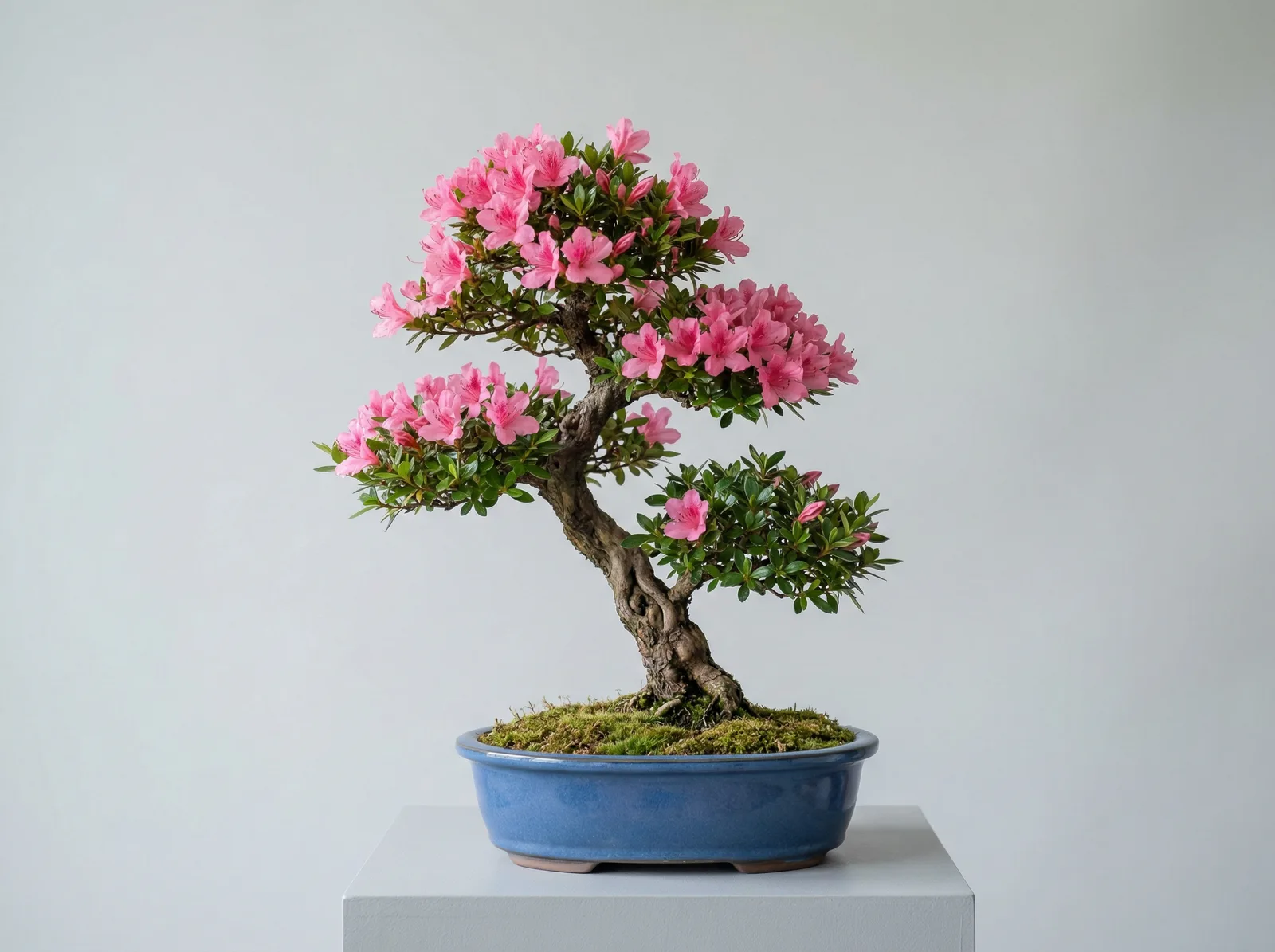
Azalea Bonsai
- care
- intermediate
- light
- partial shade
- zone
- 6–9
Malus sylvestris · Rosaceae
Why grow it
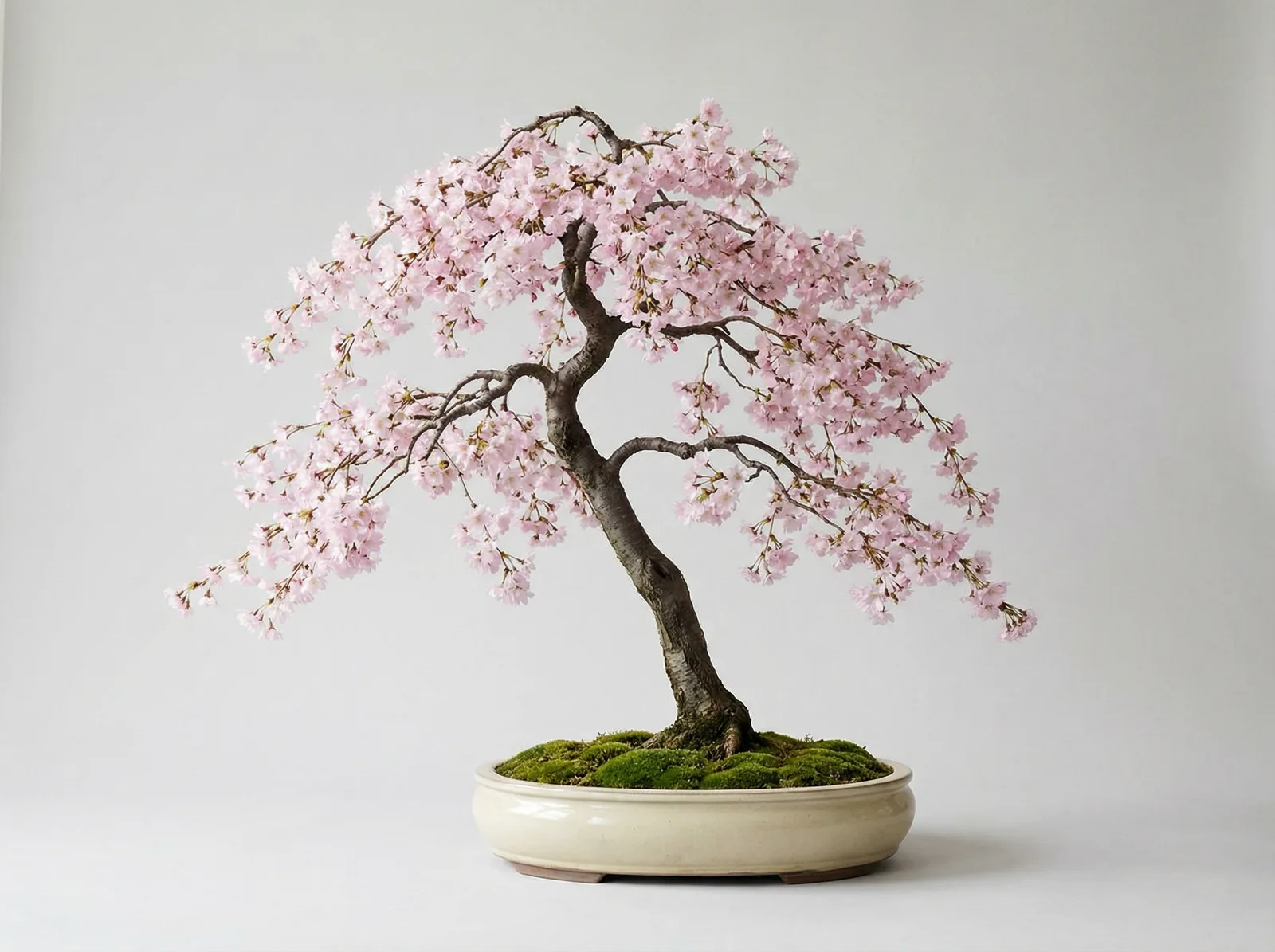
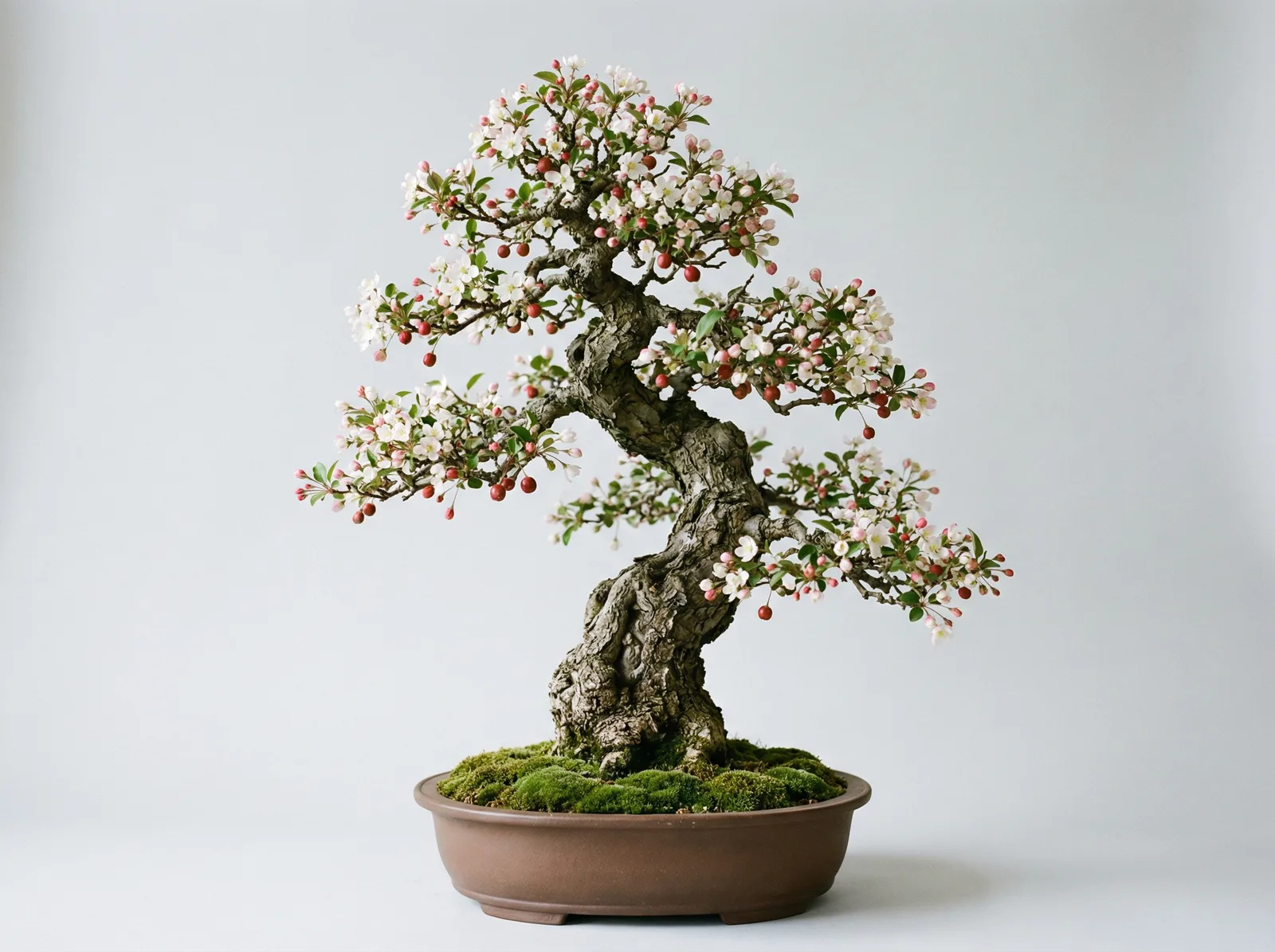
Crabapple bonsai don't just look nice. They stop you cold. Clouds of pink or white flowers in spring, so dense the branches bend. Marble-sized fruit in red and yellow that persist into December. And then the winter silhouette -- bare branches holding the last few frozen crabapples like ornaments. Malus sylvestris packs more seasonal drama into 18 inches of tree than most species manage at full size.
If you're in a northern climate where tropical flowering bonsai are impractical and azaleas are risky, crabapples fill that gap perfectly. They're cold-hardy to -30°F. That's not a typo. They don't just survive winter; they need it. Without 6-8 weeks of chill below 45°F, they won't flower.
The tiny fruit attract birds eventually, but you'll get weeks of display after leaf drop before anything finds them. On a heavy fruiting year, the branches droop under the weight. It's the kind of bonsai that makes non-bonsai people understand what the hobby is about.
The routine
Put it in the sun. Not near the sun. Not where the sun hits for two hours. Full, unapologetic, all-day sun. Crabapples in partial shade produce plenty of leaves and almost zero flowers. Six hours of direct light is the minimum for bloom. Eight or more is better. Air circulation around the tree helps prevent the fungal problems this species is prone to.
Water consistently during flowering and fruit set -- this is the one window where you can't afford to let the soil dry out. A missed watering while fruit is developing means dropped fruit. After the crop has ripened and leaves are turning, you can relax your schedule as the tree heads toward dormancy.
Crabapple looking rough right now?Skip to common problems below, or start with the symptom guide.Disease management is part of the deal with crabapples. Apple scab, fire blight, powdery mildew -- they're all on the table. Choose resistant cultivars upfront ('Callaway,' 'Sargent,' 'Adirondack' are good picks) and you'll dodge most problems. Water the soil, not the foliage. Remove fallen leaves promptly. Good airflow around the canopy goes a long way.
Winter chill isn't a suggestion. Leave the tree outside. An unheated garage if you're worried about extreme cold, but most crabapples laugh at anything above -20°F.
Shaping
Timing is everything with crabapples because they bloom on short spurs that develop on last year's wood. Prune right after flowering in late spring and you preserve next year's bloom potential while shaping this year's growth. Heavy structural work -- removing crossed branches, dead wood, suckers -- waits for winter dormancy when you can see the full skeleton. Use concave cutters on anything thicker than 5mm and apply cut paste to wounds larger than a pencil diameter.
Summer pinching is how you build more flowering spurs. When long vegetative shoots extend past 4-5 leaves, pinch back to 3 leaves. This tells the tree to redirect energy from extension growth to spur formation. More spurs, more flowers. It's the single most impactful technique for improving bloom density.
One detail that trips people up: don't prune heavily in late summer or fall. You'll remove the very spurs that were going to flower next spring. Structural pruning in winter is fine because you can see and intentionally preserve your spur wood. Summer pinching targets vegetative growth only.
A crabapple's framework has one job: hold up the show. Keep the branch structure simple—gentle curves, open pads, nothing fussy—because light has to reach the interior spurs where flowers form. Shade a spur for a season and it stops blooming. An over-styled, dense framework literally costs you flowers, which are the reason you're growing this tree.
Multi-trunk and group plantings amplify the spring display. Three or five crabapples flowering simultaneously in one pot creates a scene single trees can't match. Use odd numbers, vary the heights, and space the trunks asymmetrically. The combined fruit display in autumn is equally impressive.
Wire during dormancy, and check often—crabapple bark is smooth and scars easily, so remove wire before spring growth swells against the wraps. The wood turns rigid with age; position branches while they're young enough to respond, and use guy wires anchored to the pot for anything heavy. Match wire to branch with the wire-gauge tool at /tools/wire-gauge.
When things go wrong
Apple scab is the big one. Olive-green spots appear on leaves in spring, turn brown, and the leaves drop early. Unchecked scab can strip a crabapple bare by August. Prevention beats treatment: choose resistant cultivars, rake up fallen leaves to break the disease cycle, and spray with a copper-based fungicide in early spring if your area is scab-prone. Good air circulation helps enormously.
Fire blight is scary. Branches turn black and curl into a shepherd's crook shape. It's bacterial, it spreads fast in wet weather, and there's no cure -- only removal. Cut infected branches at least 12 inches below visible symptoms. Sterilize your tools with rubbing alcohol between every single cut, or you'll spread it. Not sometimes. Every cut.
Powdery mildew shows up as white fuzz on leaves when humidity is high and airflow is poor. It looks worse than it is, but it weakens the tree over time. Improve spacing, thin dense canopy areas, and spray with neem oil or a sulfur-based fungicide at first sign.
After winter, don't write off a bare branch too early. Scratch the bark with a thumbnail: green underneath means it's alive and just waiting on spring; brown and dry means prune back to living wood.
Landscape nurseries are your best starting point. Crabapples in 1-5 gallon pots run $20-60. Look specifically for compact cultivars -- 'Sargent' stays naturally small, 'Callaway' resists scab, and 'Adirondack' has a columnar habit that adapts well to formal styles. Always prioritize disease-resistant varieties. A gorgeous tree that defoliates from scab every August isn't worth growing.
Specialty bonsai vendors sell developed crabapple bonsai for $80-300, with Japanese flowering imports occasionally appearing for $400+. Brussel's and Wigert's stock them seasonally. Buy in spring when you can see the flower display, or buy in winter when the bare branch structure tells you what you're actually getting. Both strategies work -- just know what you're evaluating.
Some links may become affiliate links; our picks don't change.
Also on the bench