Bonsailist
SpeciesCategoriesGuidesQuestionsToolsStylesAbout
Bonsailist

The field guide for your first bonsai — care with real numbers, honest species picks, and tools that do the math for you.

Browse

  • All Species
  • Categories
  • Bonsai Styles
  • Compare Species

Learn

  • Care Guides
  • Bonsai Tools
  • Common Questions
  • Best For
  • Climate Zones

About

  • About Us
  • Sitemap
© 2026 BonsaiList. All rights reserved.
Privacy PolicyTerms of ServiceAccessibility
  1. Home
  2. /
  3. Guides
  4. /
  5. Bonsai Soil Guide
Field guide

Bonsai Soil Guide

Bonsai soil has nothing in common with garden dirt. Drainage and aeration come first — your tree's roots literally need to breathe.

On the benchsoil sieve setakadamapumicelava rockdrainage meshchopstick

On this page

  1. Three properties, in order
  2. The core mix
  3. A mix for every species group
  4. Particle size and the sieve stack
  5. Buying the ingredients
  6. What to avoid
  7. When soil goes wrong
  8. Potting day
  9. Quick soil sheet

Pot a bonsai in regular garden soil and you've got maybe six months before root rot sets in. Potting mix compacts into a dense, airless mass inside a shallow container, trapping water around roots that need oxygen. Bonsai soil is a different animal entirely: granular, free-draining, and built to hold just enough moisture while air moves through the root zone.

Three properties, in order

Drainage, aeration, water retention. Water should pour through the pot and exit the drainage holes within seconds. Air pockets between particles let roots breathe — root tips absorb oxygen directly from the soil, and a waterlogged pot suffocates them long before anything else goes wrong. And the particles themselves absorb enough water that roots don't parch between sessions — which is what makes the daily finger test in the watering guide work. Get these three right and you can grow almost anything.
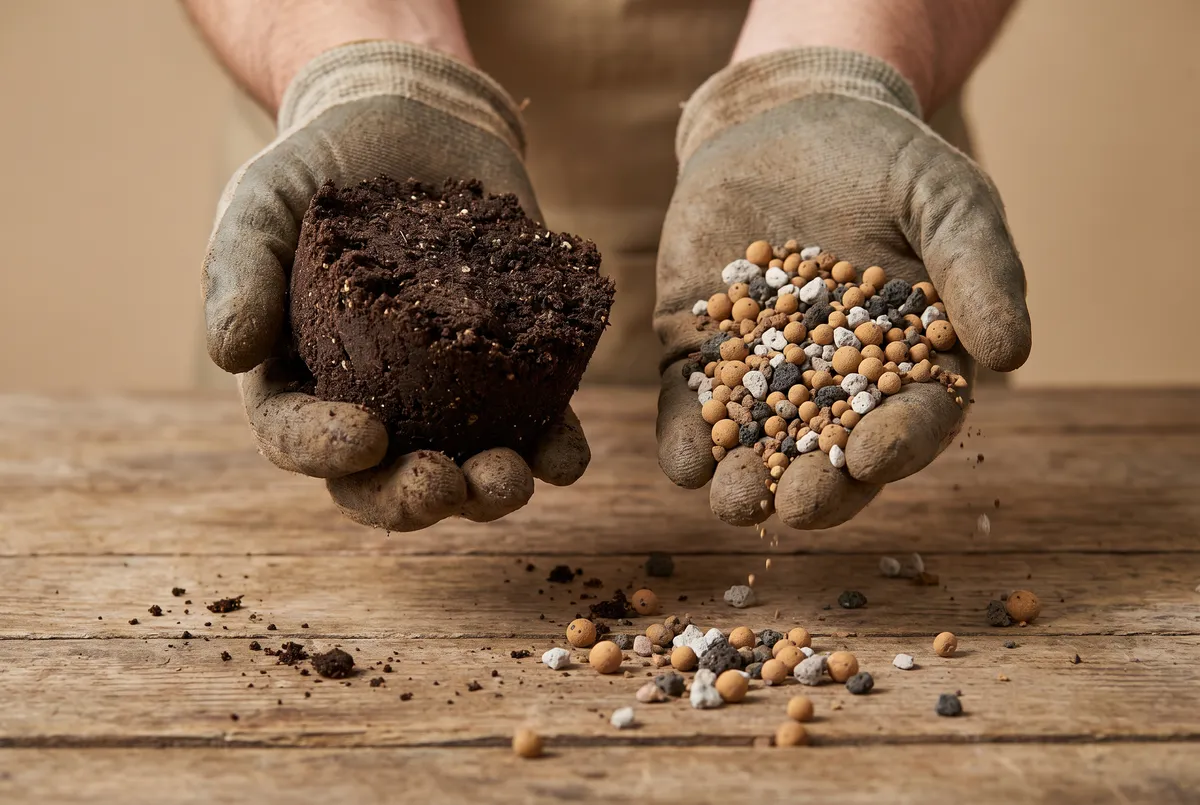
Two hands compared side by side: one holding a compacted clump of potting soil, the other holding loose granular bonsai soil trickling between the fingers.
Same job, different physics. The clump on the left suffocates roots in a shallow pot; the loose grains on the right are what "free-draining" means in the hand.

One consequence worth knowing up front: a granular mix holds almost no nutrients. Everything your tree eats, you supply — which is why the fertilizing guide matters more for a bonsai than for anything else you grow.

The core mix

The classic trio is akadama, pumice, and lava rock. Akadama is a fired Japanese clay that absorbs water into the particle itself, then breaks down over two to three years — conveniently the same interval as repotting, so spent soil and root work land on the same day. Pumice holds moisture and keeps its structure for ages. Lava rock adds drainage and never decomposes.

How much do you need? A typical 10-inch oval pot takes roughly two to three quarts of finished mix once you account for sifting waste. The pot size calculator converts your exact measurements to quarts, and the soil calculator turns species plus pot into a shopping list.

A mix for every species group

Different trees make different water demands — a maple in full leaf drinks hard all summer; a juniper's roots want air more than water. The ratio bars below are the whole system in one picture; every recipe is akadama : pumice : lava.

The mixes, by species groupparts by volume
Conifers · juniper, pineconifer roots want air more than water
33%33%33%
Deciduous · maple, elmleafy trees drink harder through summer
50%25%25%
Tropical & indoor · ficussteady indoor conditions, steady moisture — bark swap OK
40%30%30%
Succulents · jadethe plant stores its own water — the pot shouldn't
25%50%25%
Azalea · satsukistraight kanuma — the acid-loving exception
100%
akadamapumicelava rockkanumabark fines

How the bars map to actual trees on your bench:

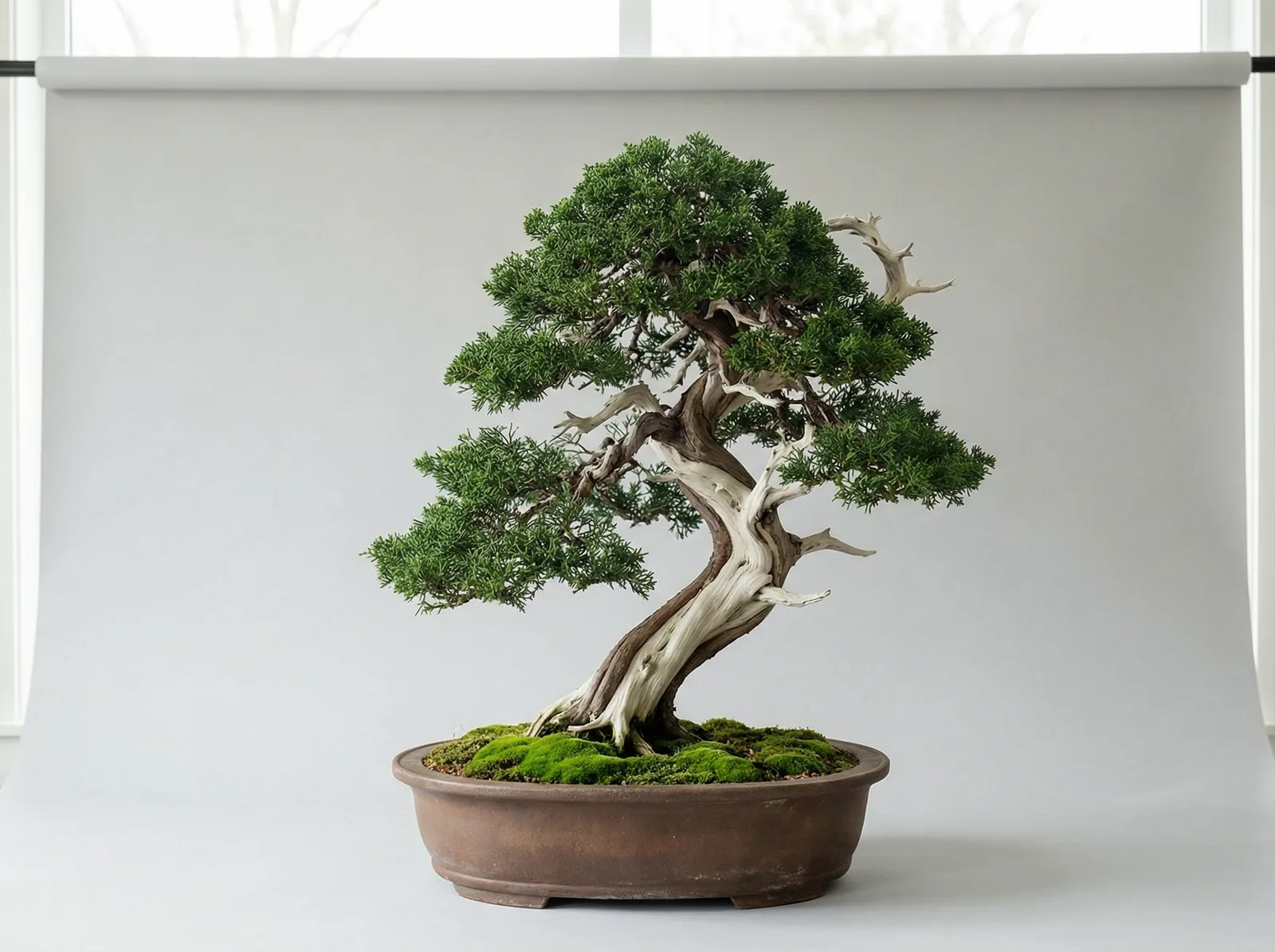
  • Juniper and black pine: 1:1:1 — conifer roots prioritize air. Plenty of growers run pines and junipers sharper still, up to two parts lava per part akadama, and both camps keep healthy trees. Start even; let your watering habits push you drier.
  • Japanese maple, trident maple, Chinese elm: 2:1:1 — deciduous trees in full leaf pull serious water through summer, so the extra akadama buys you margin between waterings.
  • Ficus and the indoor tropicals: 40/30/30, optionally with up to 20% composted fine pine bark folded in. Indoor conditions are steady, so the moisture should be too.
  • Bald cypress, willow, wisteria: 2:1:1 wet-lovers' blend — these are swamp and waterside species that want their feet damp on purpose.
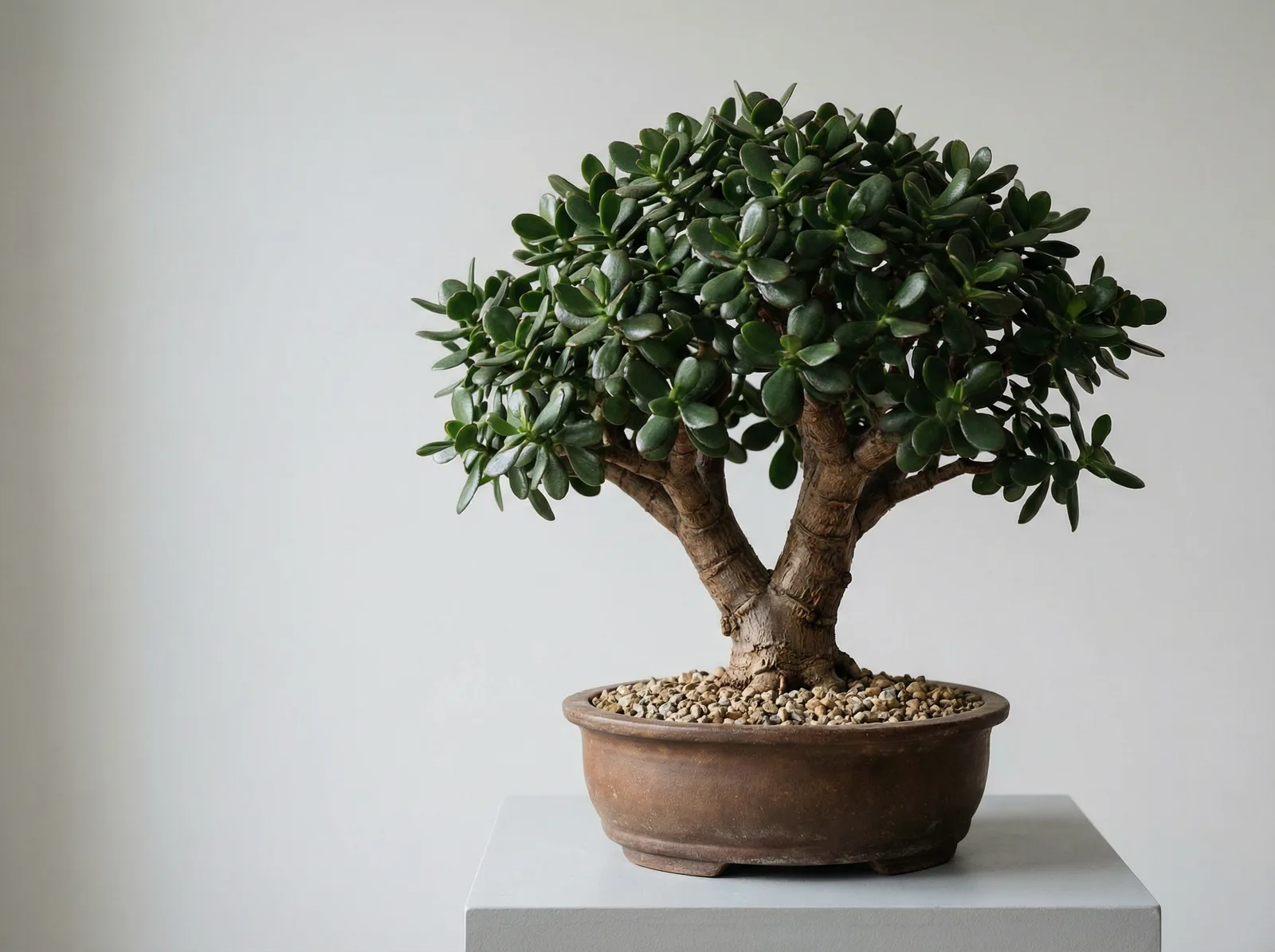
  • Jade and dwarf jade: 1:2:1, pumice-heavy — the plant stores its own water, so the pot shouldn't.
  • Azalea and satsuki azalea: straight kanuma, an acidic Japanese clay that holds pH around 4.5-5.5. In standard mix an azalea yellows and declines fast; in kanuma it thrives.
  • Development trees in grow boxes or pond baskets: straight pumice, or two parts pumice to one part lava. You're chasing root mass, not refinement, and pumice is the cheapest structural particle — nothing wasted when you up-pot.

The soil calculator applies these same ratios, shifts them for hot-dry or humid climates, and prices out a budget version.

Particle size and the sieve stack

Dust and fines are the enemy — they settle into the gaps between particles and create airless dead zones where roots rot. For standard bonsai, you want particles between 3mm and 6mm. Shohin trees under eight inches do better with 2-4mm; large trees in deep pots can run 4-8mm.
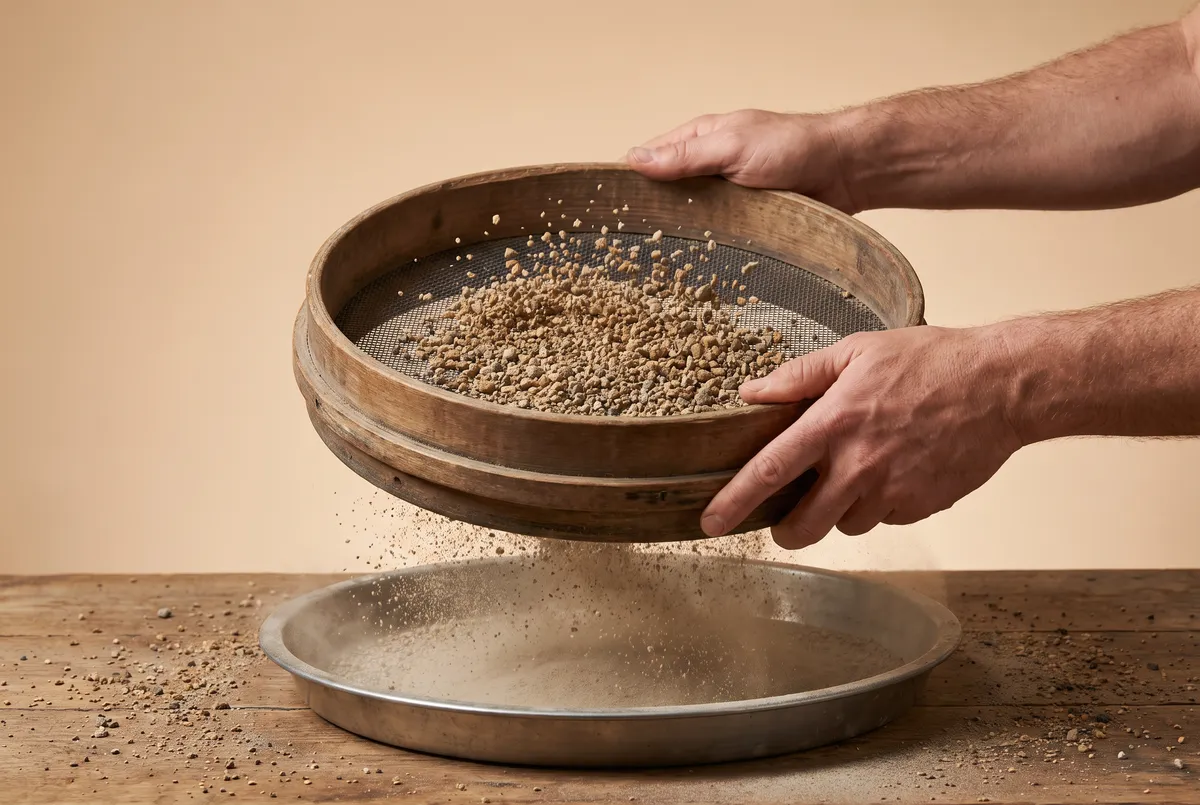
Hands shaking a stacked three-screen bonsai soil sieve horizontally over a collection pan on a workbench.
The grip: shake sideways, never press — akadama is soft enough to crush against the mesh. The full five steps are below.

Getting there takes a three-screen bonsai sieve set — roughly 6mm, 3mm, and 1.5mm mesh, about $15-25 — and ten minutes:

  1. Sift dry. Damp soil smears fines across the mesh instead of dropping them through; spread wet components on a tray for a day first.
  2. Stack the screens coarse to fine — 6mm on top, 3mm in the middle, 1.5mm at the bottom, a pan or tarp underneath.
  3. Pour in a quart at a time and shake horizontally. Don't press or grind — akadama is soft enough to crush.
  4. Sort the fractions: whatever sits on the 3mm screen is your standard 3-6mm soil. The 1.5mm screen catches your shohin fraction. Oversize from the top screen goes to big, deep pots.
  5. Rinse lava in a colander until the water runs clear if it's shedding red dust — but never wet-wash akadama, which starts breaking down the moment you agitate it wet.

The fines in the pan aren't trash — they're just not bonsai soil. Use them in garden beds or seed-starting trays.

Bench rule

If a bag of soil hasn't been sifted — pre-mixed bags included — it doesn't go in a pot; ten minutes at the sieve buys two to three years of drainage.

Buying the ingredients

Akadama is the expensive one: expect $25-35 for a 14-liter bag from bonsai nurseries or online specialty suppliers, and check that it's labeled hard or double-red-line if you can — soft grades collapse faster. Pumice and lava are the cheap half of the mix; horticultural suppliers and landscape yards sell them for roughly a third to half of akadama's price, less again if you buy by the cubic foot.

The bagged "bonsai soil" at big-box stores is a different product: read the label and you'll usually find bark, peat, and a little grit. That's a container mix, not a granular substrate — bad on its own, but serviceable cut 50/50 with pumice for a tropical in development. Don't build a collection on it.

Buy pre-mixed or DIY? A quality two-quart bag of real granular pre-mix runs $15-20 and is the right call for one or two trees. Three component bags cost $60-90 up front but yield 30+ quarts, so the per-quart cost collapses somewhere around your fourth tree.

And the famous budget substitute holds up: calcined diatomaceous earth, sold as unscented oil absorbent at auto parts stores — NAPA part #8822 is the one growers know. Similar particle structure at a fraction of the price; just confirm it's the calcined, unscented type. It holds more water than akadama, so cut its share by about a third and make up the difference with pumice. This is the whole-collection move — save real akadama for your best trees.

Two more ways to stretch the budget: at repot, sift the old mix and reuse the pumice and lava after a rinse — only the akadama is spent, and the mushy remains can go to the garden. Leftover components store dry in a sealed bucket indefinitely.

What to avoid

Substrate checkpick one
What's in your hand?

Peat holds far too much water and decomposes into sludge — it's the "muck" most mall bonsai arrive in. Vermiculite compresses flat and waterlogs. Perlite floats to the surface with every watering. Stick with hard, fired, or volcanic particles that keep their structure through years of watering cycles.

Cactus soil is the most common "close enough?" question, and the honest answer is: better than potting mix, still not right. It drains faster but it's mostly organic fines that compact within a season. As a stopgap for a jade until repot day, fine. As a long-term substrate for anything else, no.

Never

Never pot a bonsai in garden soil or straight potting mix — in a pot two inches deep it compacts into an airless block, and oxygen-starved roots begin dying within weeks, long before the top of the tree shows it.

When soil goes wrong

Soil fails slowly, then all at once. Three signs to check on watering rounds, each with its fix:
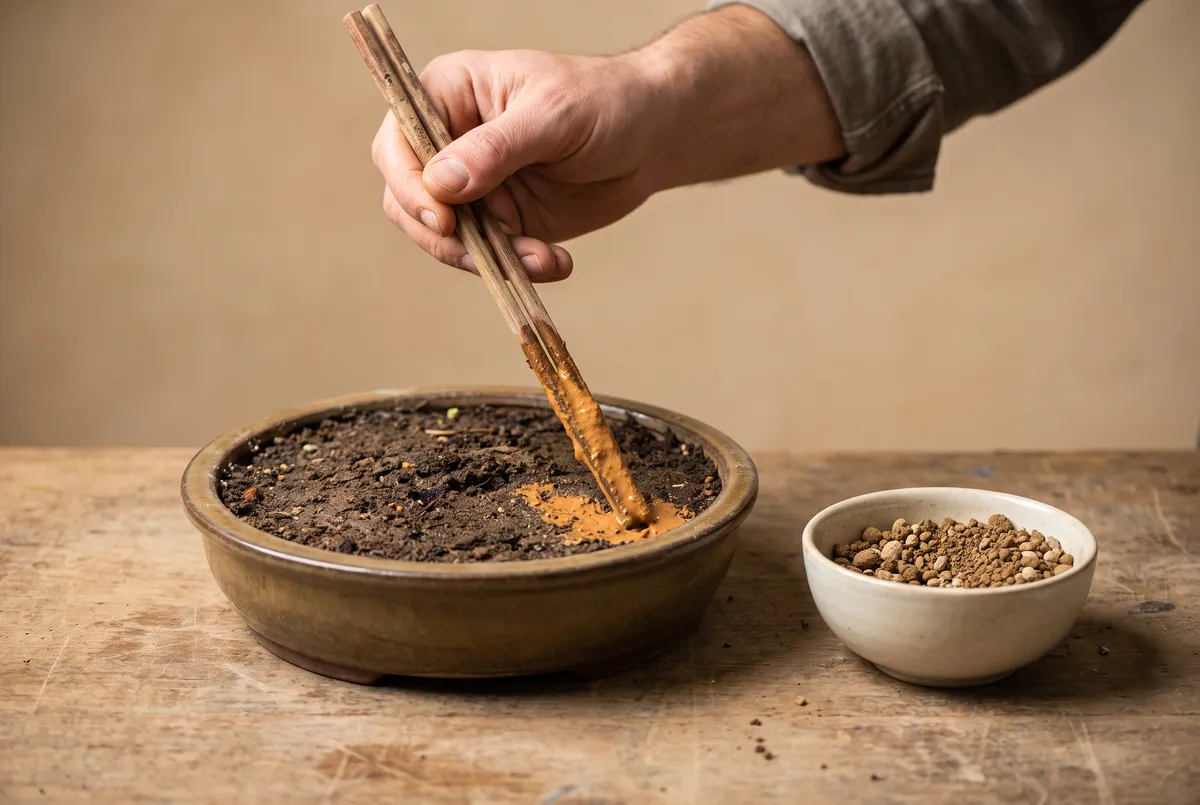
A chopstick pulled from bonsai pot soil showing an orange clay smear, next to a dish of fresh granular soil for comparison.
The probe test, failed: granules riding the stick mean the soil is still alive — an orange smear like this means the akadama is spent, usually year two or three.
  • Water pools on the surface for more than 10 seconds before soaking in. First aid: rake the top half-inch loose with a chopstick. If pooling returns within a week, the collapse runs deeper — slip-pot into fresh mix now, and plan the full repot with root work for early spring.
  • Akadama has mushed to clay. Probe near a drainage hole; if the chopstick comes out smeared orange rather than carrying granules, the akadama is spent — usually year two or three. A tree still growing strongly can wait for spring. One that's stalling or yellowing gets slip-potted now, any season, roots undisturbed.
  • Moss has sealed the whole surface. A full carpet sheds water to the rim and hides a bone-dry core underneath. Peel it back to a patch or two, rough up the exposed surface, and go back to checking moisture with your finger, not your eyes.

Bench rule

If water sits visibly on the soil surface for more than 10 seconds, treat it as a soil failure, not a watering quirk — the fix is at repot, not in the watering can.

Potting day

Lay mesh over the drainage holes and fill with your sifted mix. You'll still see advice to add a coarse "drainage layer" at the bottom — growers disagree on this one, and the physics leans against it: in a shallow pot, an abrupt change in particle size can perch a band of water above the layer instead of draining it. A single consistent particle size top to bottom is at least as safe. Work soil around the roots with a chopstick to collapse air pockets, water until it runs clear, and leave the surface about a centimeter below the rim so water pools briefly instead of sheeting off. The full procedure — root work included — is in the repotting guide.
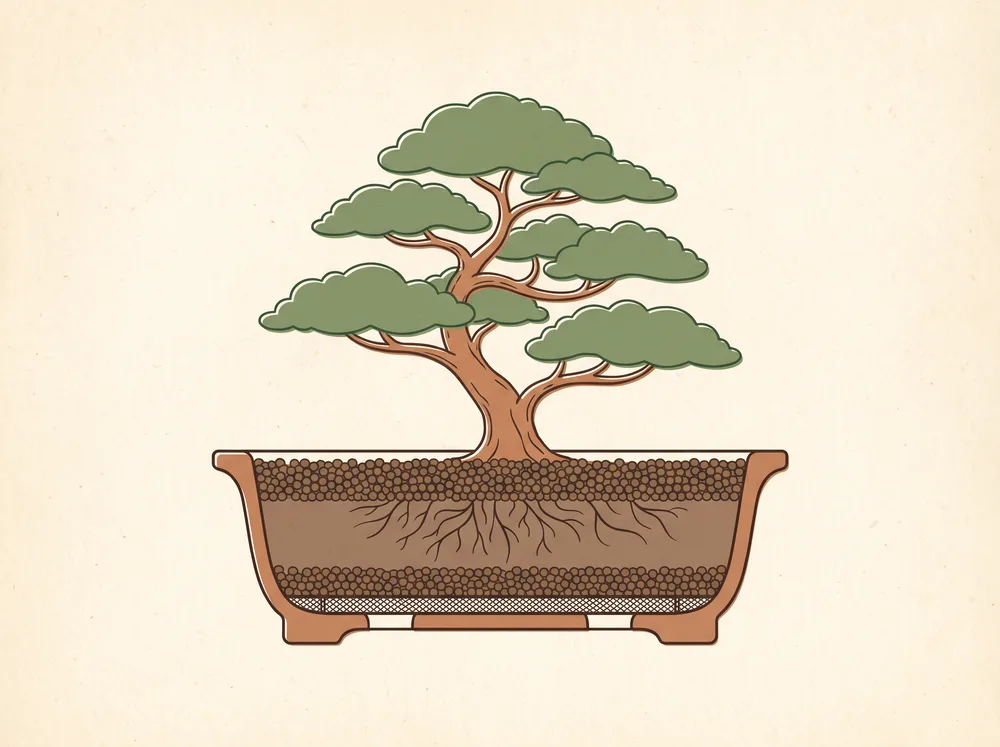
Cross-section illustration of a bonsai pot showing roots threading between uniform granular soil particles from surface to drainage holes.
One consistent particle size, top to bottom — a coarse "drainage layer" in a two-inch pot can perch water above it instead of shedding it. Roots run the gaps; the air pockets are the point.

Never

Never bare-root a pine or juniper to give it all-new soil in one pass — conifer roots depend on mycorrhizal fungi living in the old root ball, and stripping every trace can kill the tree, so replace half the soil this repot and the other half next time.

Quick soil sheet

Ratios (akadama : pumice : lava)
conifers 1:1:1, deciduous 2:1:1, tropicals 40/30/30, wet-lovers 2:1:1, jades 1:2:1, azaleas straight kanuma — or run your species and pot through the soil calculator.
Particle size
3-6mm standard, 2-4mm shohin, 4-8mm large deep pots. Always sift out the dust — dry, through a stacked sieve set.
Quantity
a 10-inch oval takes roughly 2-3 quarts; exact numbers from the pot-size calculator.
Cost
akadama $25-35 per 14L bag; pre-mix $15-20 per 2 quarts; components win past three or four trees; calcined DE (NAPA 8822) at collection scale.
Failed-soil signs
pooling over 10 seconds, akadama smearing orange, moss sealing the surface — slip-pot now, full repot in spring.
Never
garden soil, peat-heavy mixes, vermiculite, perlite, cactus mix long-term.

Bonsai Soil Guide: FAQ