Rhododendron spp.outdoor
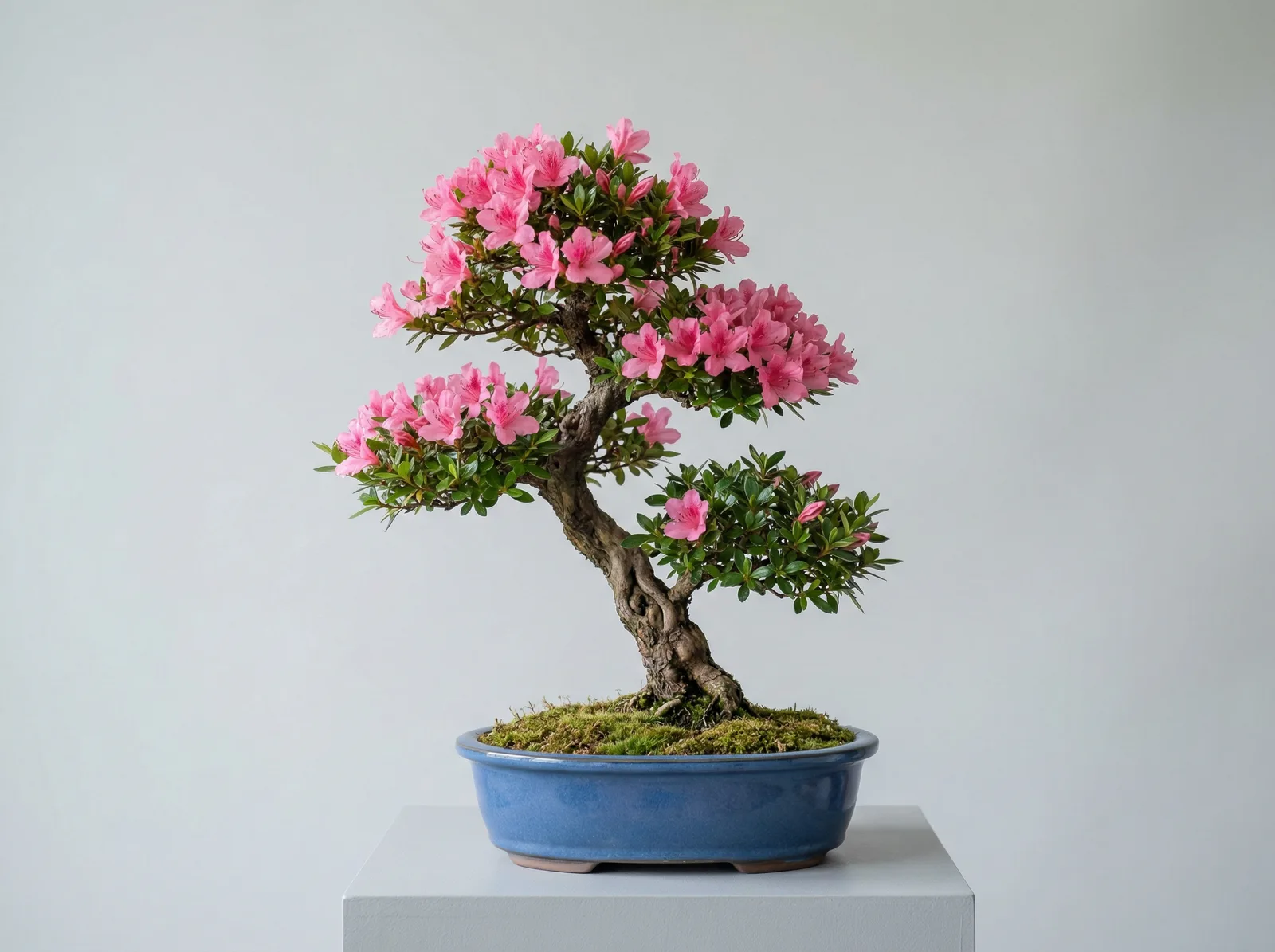
Azalea Bonsai
- care
- intermediate
- light
- partial shade
- zone
- 6–9
Rhododendron indicum · Ericaceae
Why grow it
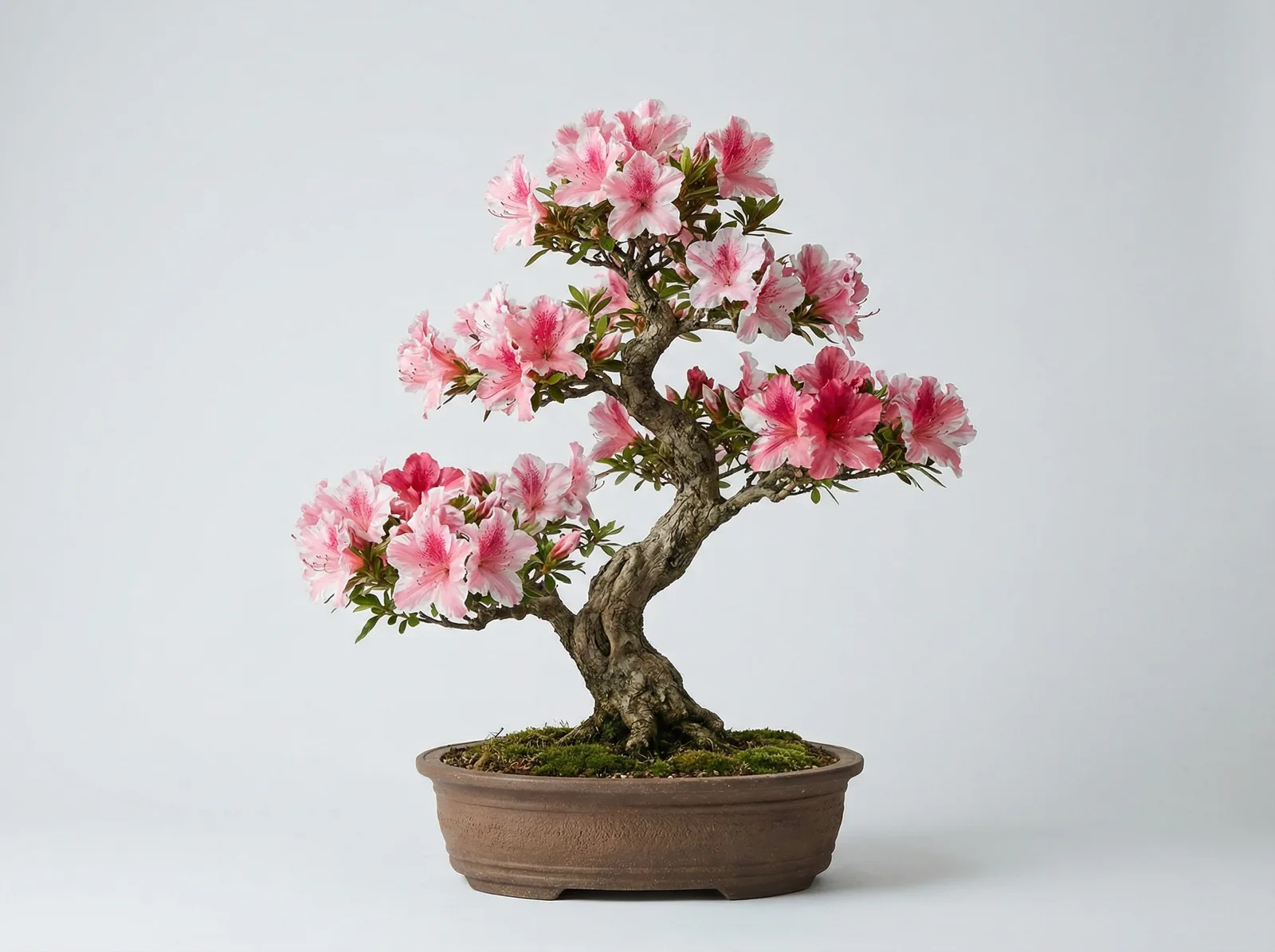
Satsuki azaleas are the crown jewels of Japanese bonsai and they've earned that title over 400 years of cultivation. When a mature Rhododendron indicum blooms in late May, it's one of the most spectacular sights in the entire hobby. Satsuki are the refined branch of the evergreen azalea family -- if yours is an unnamed garden-center azalea, start with our general azalea page instead. Some specimens produce multiple flower colors simultaneously -- striped, spotted, and solid blooms all on the same tree.
This is not a beginner species. Fair warning. Satsuki demand acidic soil, precise watering with the right water, and pruning timed to the week. Get the timing wrong, lose next year's flowers. Get the soil wrong, watch the tree decline over months. They reward patience and attention with increasingly impressive annual blooms.
The named varieties are addictive. 'Kinsai' produces vivid red-orange flowers. 'Eikan' has soft pink blooms edged in white. 'Nikko' shows dramatic red-and-white striping. Once you start collecting cultivars, it's hard to stop.
The routine
Water quality will make or break your Satsuki. Full stop. The fine roots are extremely sensitive to alkaline conditions. If your tap water tests above pH 7, you need to acidify it -- a drop of citric acid per gallon, or collect rainwater. This isn't a nice-to-have. Alkaline water kills Satsuki slowly and irreversibly.
Never let the soil go completely dry. Those fine fibrous roots die fast without moisture, and once damaged, recovery takes months. On the other hand, kanuma drains well enough that overwatering is rarely a problem. When you're unsure, give it water.
Satsuki Azalea looking rough right now?Skip to common problems below, or start with the symptom guide.Protect from afternoon sun in summer and harsh wind year-round. Satsuki leaves burn easily. Morning sun plus afternoon shade is the sweet spot. In zones 8-9, shade cloth is practically mandatory from June through September.
Don't fertilize during bloom. Wait until the last flower drops, then feed through fall. Cottonseed meal is the traditional Japanese choice -- it's naturally acidic and releases slowly. Biogold acid formula works well too. Stop feeding by October to let the tree harden for winter.
Shaping
Timing is everything. Prune within two weeks of the last bloom dropping. Not three weeks. Not a month later. Two weeks. Flower buds for next year form in late summer on new growth, and if you prune too late, you cut off next year's show.
Remove spent flowers carefully -- pinch out the entire flower structure including the seed pod at the base. Seed production drains energy that should go toward bud formation. This is tedious on a tree with 200 flowers, but it matters.
Thin overcrowded shoots after flowering. Satsuki push multiple buds from each node -- reduce to two shoots per node for better airflow and even energy distribution. Strong shoots at the top get cut shorter than weak ones at the bottom. This redistributes vigor downward where you need it.
Hard pruning is possible but sets back flowering by a year or two. If restructuring is needed, do it right after bloom and accept the sacrifice.
Style a Satsuki around the two weeks it flowers. Every structural decision -- branch spacing, pad depth, canopy outline -- either frames the bloom or fights it. Build distinct, cloud-like foliage pads with air between them: when hundreds of flowers open along the pad surfaces, that spacing is what keeps the display readable instead of collapsing into a solid ball of color. Informal upright and semi-cascade forms carry the show best.
Wiring requires care because the bark is thin and scars easily. Wire after flowering in June or July, pad older branches with damp raffia first, and remove everything by fall before it bites. Guy wires are often safer than wrapped wire on heavy branches -- less bark contact, easier to adjust. Match wire to branch size with /tools/wire-gauge.
The trunk on Satsuki develops extraordinary character over decades. Thick, gnarled bark that peels and flakes. But this takes time. Don't rush trunk development. Focus on building a strong root system and healthy branch structure first. The trunk follows on its own schedule.
When things go wrong
Chlorosis -- yellow leaves with green veins -- screams "wrong pH." The soil is too alkaline. Switch to 100% kanuma immediately and start acidifying your water. Iron chelate provides short-term relief, but fixing the soil chemistry is the only real solution.
Petal blight turns flowers into brown mush during wet springs. Remove affected blooms, improve air circulation, and never overhead-water during bloom season. Preventive fungicide sprayed before blooms open helps in problem years.
Lace bugs are the bane of azalea growers. They feed on leaf undersides, leaving stippled white damage on top and black frass underneath. Spray with horticultural oil or systemic insecticide in late spring when they first appear. Check weekly from April through June.
Root rot from alkaline soil shows as wilting despite moist soil. By the time you notice, significant root damage has happened. Repot into fresh kanuma and dial back watering until new roots establish. Prevention -- proper soil from the start -- is always easier than the cure. Before giving up on a wilted branch, scratch a sliver of bark: green underneath means live wood that can recover once the roots do.
Specialty bonsai vendors are the best source for quality Satsuki material. Azalea-focused importers like International Bonsai in Rochester, NY carry stock from Japanese growers with real pedigree. (Bonsai Plaza is another well-known name, but it ships from the Netherlands -- US buyers should check shipping and import rules before ordering.) Expect $80-400 for pre-bonsai with trunk development and a known cultivar name. You're paying for decades of breeding and years of growing -- it's worth it.
Domestic nurseries sell Satsuki as landscape plants for $20-40. These work as starter material, but verify the cultivar and expect to develop the trunk from scratch. Look for plants with low branching and some trunk movement. Avoid straight, leggy specimens -- the trunk you start with is largely the trunk you're stuck with.
Also on the bench