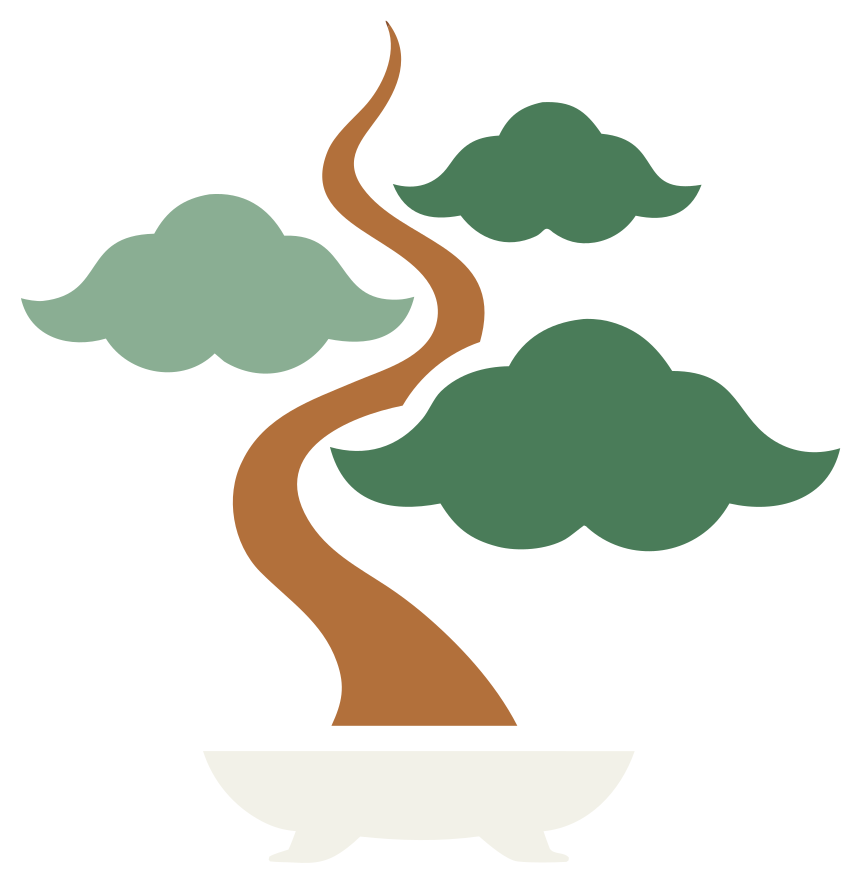
Han-Kengai
Semi-cascade sits in the sweet spot between slanting and full cascade. The trunk or a major branch extends outward — horizontally or angling slightly below the pot rim — but doesn't drop below the pot's bottom. Think of a tree reaching out over a riverbank, or leaning from a lake shore toward reflected light on the water.
This style shows up more often in nature than full cascade, which makes it feel more immediately believable. It works on standard bonsai display benches without needing a tall stand, and the horizontal extension creates a sense of calm forward motion rather than the dramatic plunging energy of a full cascade.
Semi-cascade is also a practical gateway if you want to explore cascade-style design without committing to the more extreme bending angles and intensive maintenance a full kengai demands. The principles overlap, but the angles are gentler and the tree cooperates more willingly.
The anatomy
What makes a semi-cascade read as one — judge any tree against these rules.
How to build it
Choose material with a trunk that already leans strongly or a vigorous low branch extending sideways. Unlike full cascade, you don't need exceptionally flexible wood — the bending required is much more moderate. Collected yamadori that grew on slopes often naturally suit this style. Nursery stock with a pronounced lean or a strong lateral branch can be wired into position with 2-3mm aluminum wire.
The critical design element is the bend where the trunk transitions from upright to horizontal. This transition has to look organic, not kinked. If you're working with thicker material (over one inch in diameter), wrap the bend point with raffia before wiring to prevent bark cracking. Make the bend gradual — an abrupt 90-degree angle looks forced.
Develop three to five foliage pads along the extending portion, decreasing in size toward the tip. Even though the trunk moves sideways or slightly downward, angle each pad slightly upward — each one is reaching for light, which is what makes the design feel alive and real. Use 1-1.5mm wire to position individual branches within each pad.
Keep the apex above the pot rim compact and slightly asymmetrical, leaning toward the extension side. The apex shouldn't compete with the cascade for the viewer's attention — it's there for compositional balance, not as the focal point. Regular pinching on both the apex and the cascade tip maintains proportional harmony. If you let the apex run unchecked, it steals energy from the cascade and the horizontal extension loses vigor.
Best species for Semi-Cascade
Versatile and forgiving -- bends easily into the moderate angles semi-cascade requires without splitting.
Elegant horizontal branching suits the reaching-toward-light story. Stunning fall color on the extending branch.
Small leaves stay in scale, and the berries add color to the horizontal extension.
Flowering along a semi-cascade branch creates a waterfall-of-blooms effect that's hard to beat.
Vigorous horizontal growth with bright berries that dangle below the extending branch -- built for this style.
Fast growth lets you develop the cascade shape quickly, and the fine ramification builds dense pads.