Rhododendron spp.outdoor
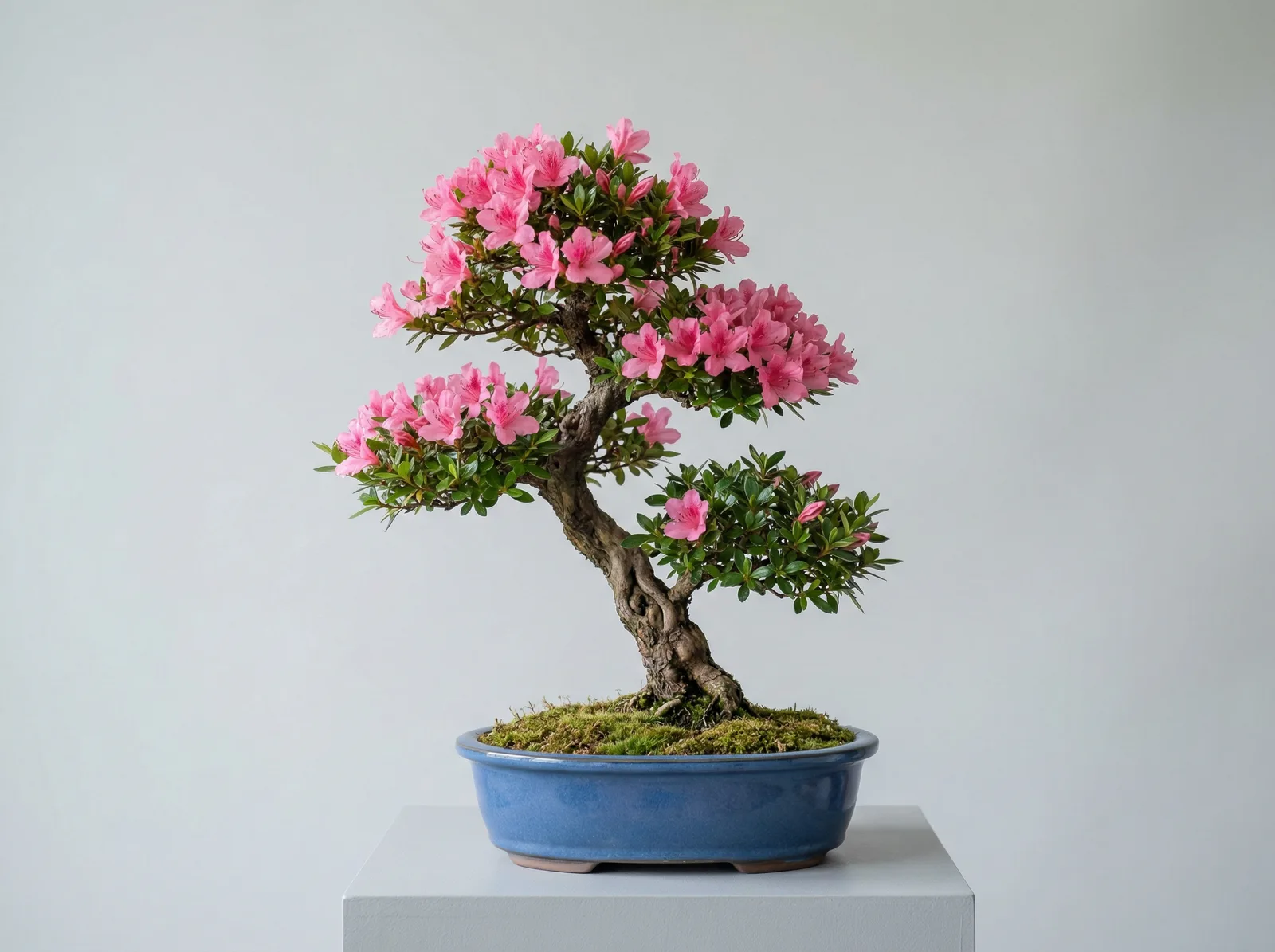
Azalea Bonsai
- care
- intermediate
- light
- partial shade
- zone
- 6–9
Cotoneaster horizontalis · Rosaceae
Why grow it
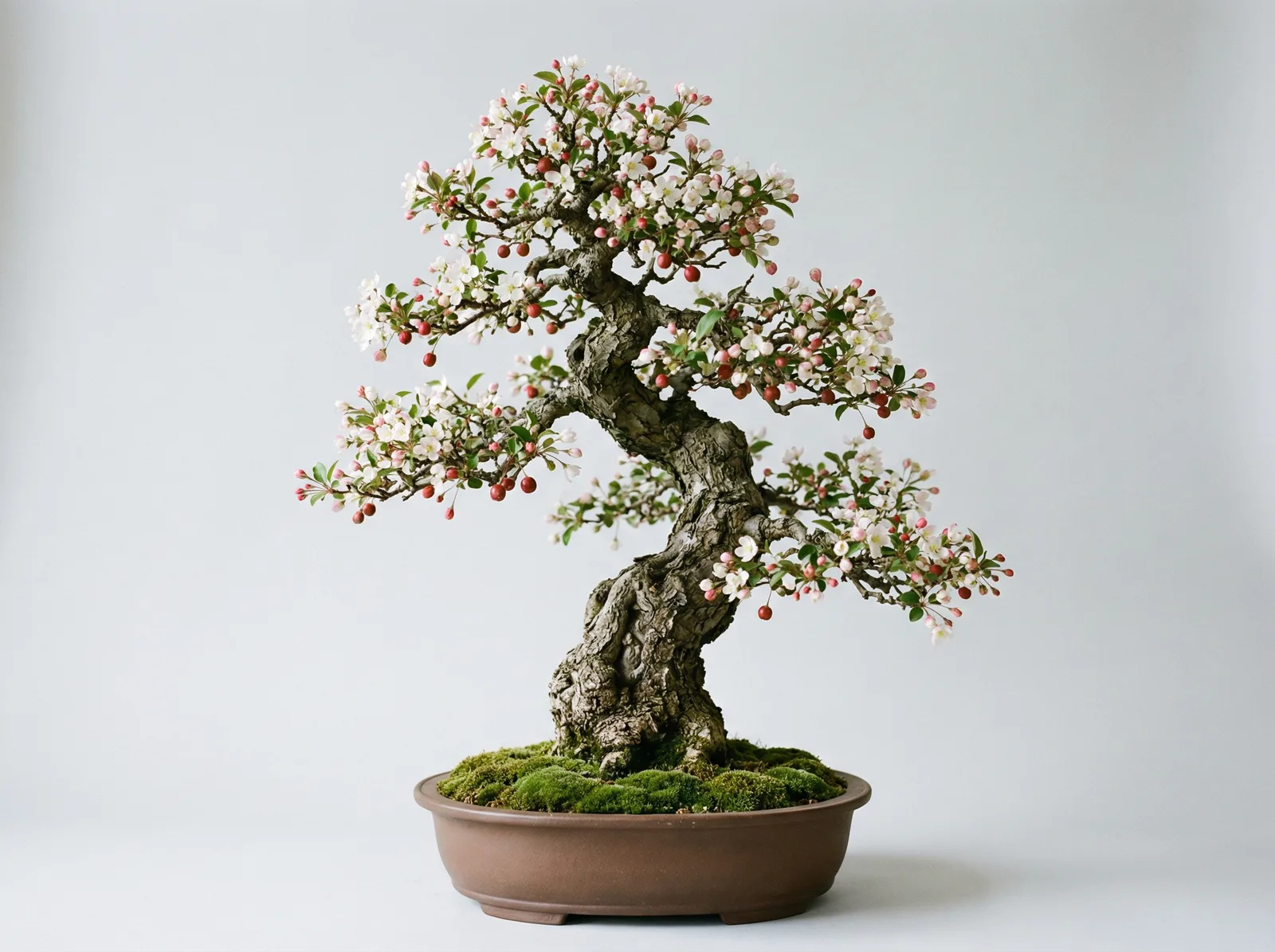
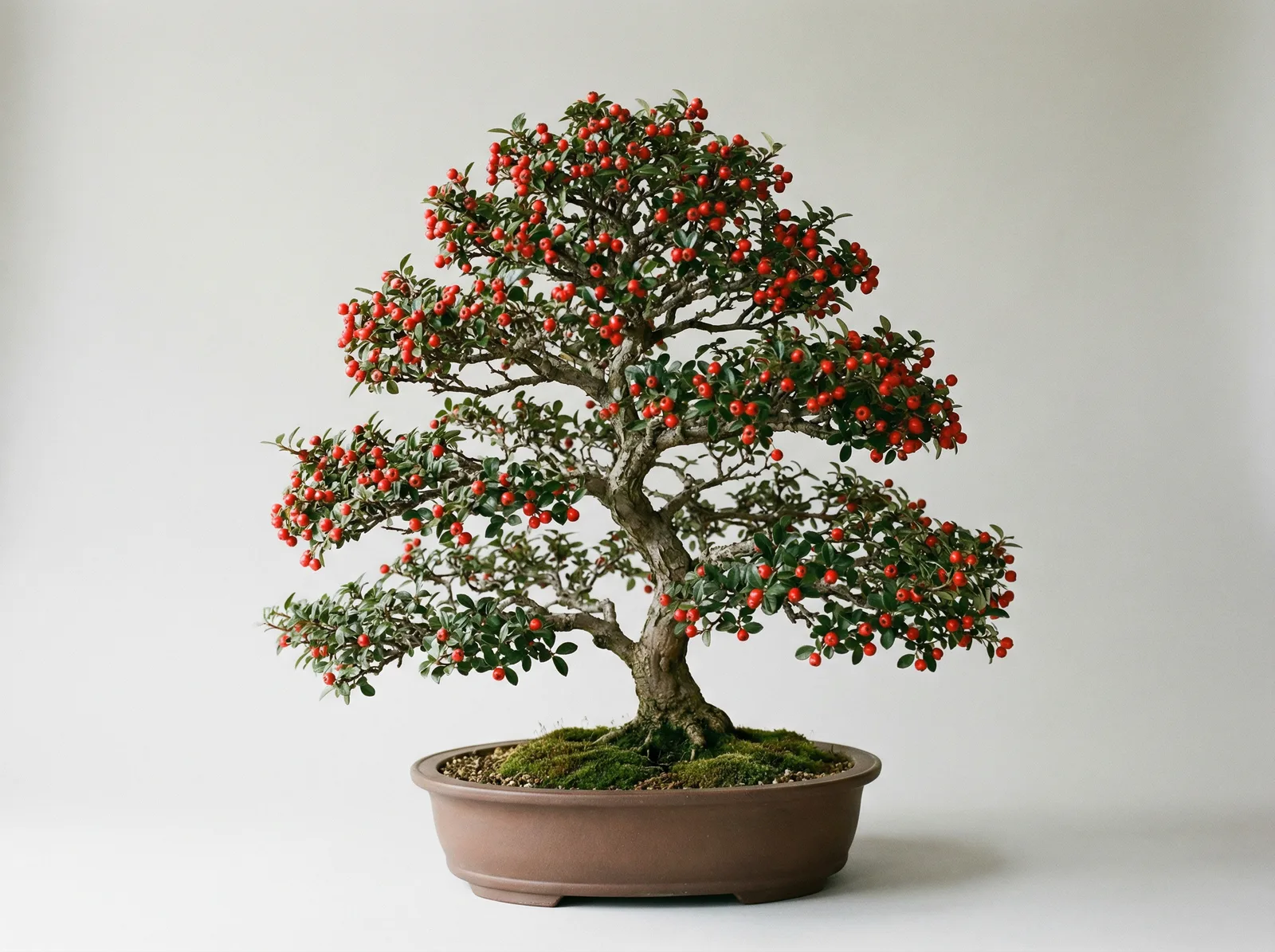
Three seasons of interest from one small tree. That's the cotoneaster pitch, and it delivers. Cotoneaster horizontalis covers itself in tiny white-pink flowers in spring, goes glossy green through summer, then lights up with bright red berries in fall that hang on well into winter. On top of all that, the herringbone branching pattern looks styled even when you haven't touched it.
That natural branching is practically purpose-built for bonsai. Branches fan out in neat, horizontal layers without intervention. Less wiring, less fussing, more enjoying. It's one of those species where working with the tree's natural tendencies produces better results than fighting them.
Birds will find your berries. Display your cotoneaster outdoors -- which you should, it's a hardy outdoor tree -- and expect some visitors. Quick note: the berries are mildly toxic to humans and pets, so keep that in mind around young kids and berry-stealing dogs.
The routine
Cotoneaster ask very little of you. Full sun, regular water, a feeding schedule, and they handle the rest. No tantrums, no mystery leaf drop, no drama. They're among the lowest-maintenance outdoor bonsai you can grow.
Watering is intuitive because the small, glossy leaves actually show you when they're thirsty -- they wilt slightly and lose their sheen. Water when you notice the soil surface drying. Daily in peak summer. Every other day in spring and fall. Weekly or less in winter dormancy.
Cotoneaster looking rough right now?Skip to common problems below, or start with the symptom guide.Here's something people forget: flowers and fruit form on the previous year's wood. If you go heavy with scissors after summer, you're cutting off next spring's flower buds. Time structural pruning for late winter, before growth starts, and leave the flowering shoots alone after bloom.
Fall color is a bonus you don't expect from a species known for berries. The tiny leaves turn red and orange before dropping, and those bright berries stay on bare branches all winter. A cotoneaster in December, with red berries on a bare silhouette, is one of the prettiest sights in bonsai.
Shaping
After flowers fade, do a light trim to hold the shape -- but leave shoots that just bloomed. Those are busy forming berries. Clip anything that's pushing past your design outline, and resist the urge to shorten the fruiting wood. You can prune those branches back after berries drop or in late winter.
Structural pruning goes in late winter when the bare branch architecture is totally visible. Remove crossing branches, downward growth, and anything crowding the interior. Cotoneaster back-bud well from older wood, so if you need to cut a branch back to a two-inch stub, go for it.
Work with the herringbone pattern, not against it. It's the species' best design feature. Enhance those horizontal layers by removing anything that breaks the rhythm -- vertical shoots, awkwardly angled branches, anything fighting the natural flow.
Need to start over? Cotoneaster handle hard pruning without complaint. Cut back to a bare framework of main branches in late winter and the tree flushes hard in spring, filling back in within a single season.
Cotoneaster styles itself if you let it. The herringbone branching of C. horizontalis fans out in flat, layered planes that other species need years of wiring to fake -- so the real skill here is editing, not bending. Remove what breaks the rhythm (vertical shoots, crossing twigs, awkward angles) and leave the natural geometry alone.
Cascade and semi-cascade are where the species comes alive. That spreading habit spills naturally over a pot edge, and when the berries turn red in fall, a cascade cotoneaster is a genuine showpiece worth building a display around.
Informal upright works too, with the herringbone layers emphasized on each side of the trunk. The tiny leaves and berries hold perfect scale from shohin up to medium sizes.
Young shoots take wire readily from spring through summer and set within a few months; older branches go rigid, so shape those with pruning cuts. If you do wire, /tools/wire-gauge pairs wire size to branch.
Root-over-rock compositions are a natural fit. Cotoneaster throw strong roots that grip stone aggressively -- combine that with cascading branches and you've got drama.
When things go wrong
Fire blight is the real threat, as it is for most of the rose family. Shoots wilt, blacken, and curl over like a shepherd's crook. There's no cure in the infected wood -- prune well below the damage, sterilizing tools between cuts, and bag the prunings. Skip overhead watering, which spreads the bacteria. The pest control guide (/guides/pest-control) covers the sterilizing routine.
Aphids pile onto new growth in spring. Outdoors, natural predators usually handle them. If they're building up, a hard spray of water knocks most of them off. Insecticidal soap for anything that's left. They rarely cause lasting damage to an otherwise healthy tree.
No berries? Three possible reasons: not enough sun, too much nitrogen fertilizer pushing leaf growth instead of fruit, or you pruned off the flower-bearing wood. Fix: more sun, switch to a low-nitrogen feed after flowering, and stop cutting shoots that just bloomed.
Woolly aphids look like little white cotton tufts on the branches, and they shrug off the water-spray trick that handles regular aphids. Check weekly in the growing season; if a colony persists, horticultural oil smothers what the hose can't reach.
Bare branches in winter are normal -- this is a deciduous species, and December judgments about dead wood are usually wrong. If a branch skips spring leaf-out, thumbnail-scratch the bark: green means give it more time, brown means prune back to live wood.
Garden centers sell cotoneaster in 1-gallon pots for $8-20. That's some of the cheapest bonsai material on the planet. Look for specimens with interesting trunk movement and low branching. C. horizontalis is the standard choice, but C. microphyllus and C. dammeri are also solid options with even smaller leaves.
Online vendors carry pre-bonsai cotoneaster for $40-120 -- Evergreen Gardenworks stocks them seasonally. For the best trunk character, ask around at local bonsai club meetings about collected cotoneaster from old gardens. Established landscape plants can have incredible bases.
Some links may become affiliate links; our picks don't change.
Also on the bench