Bougainvillea glabraboth
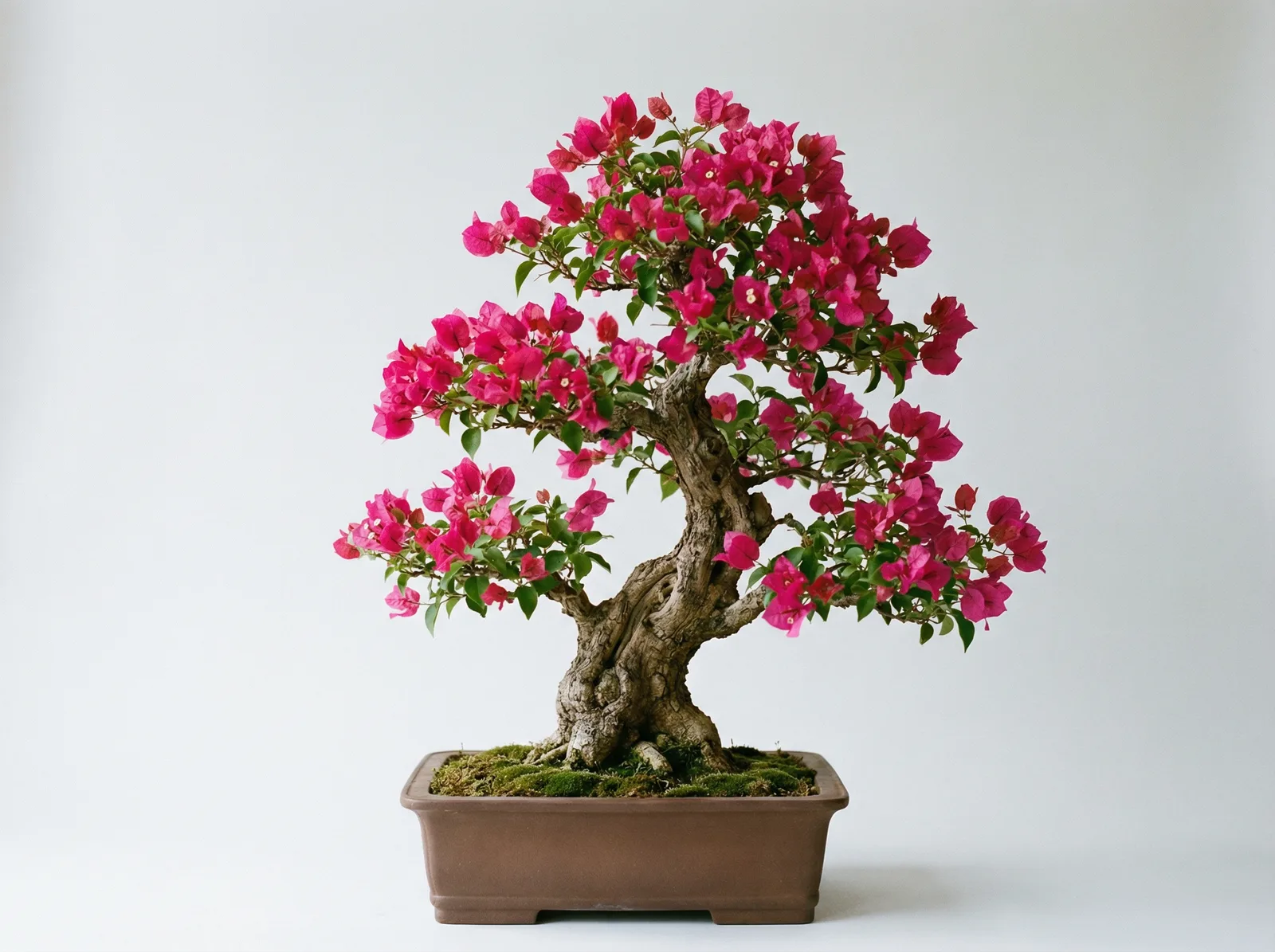
Bougainvillea Bonsai
- care
- intermediate
- light
- full sun
- zone
- 9–11
Punica granatum · Lythraceae
Why grow it
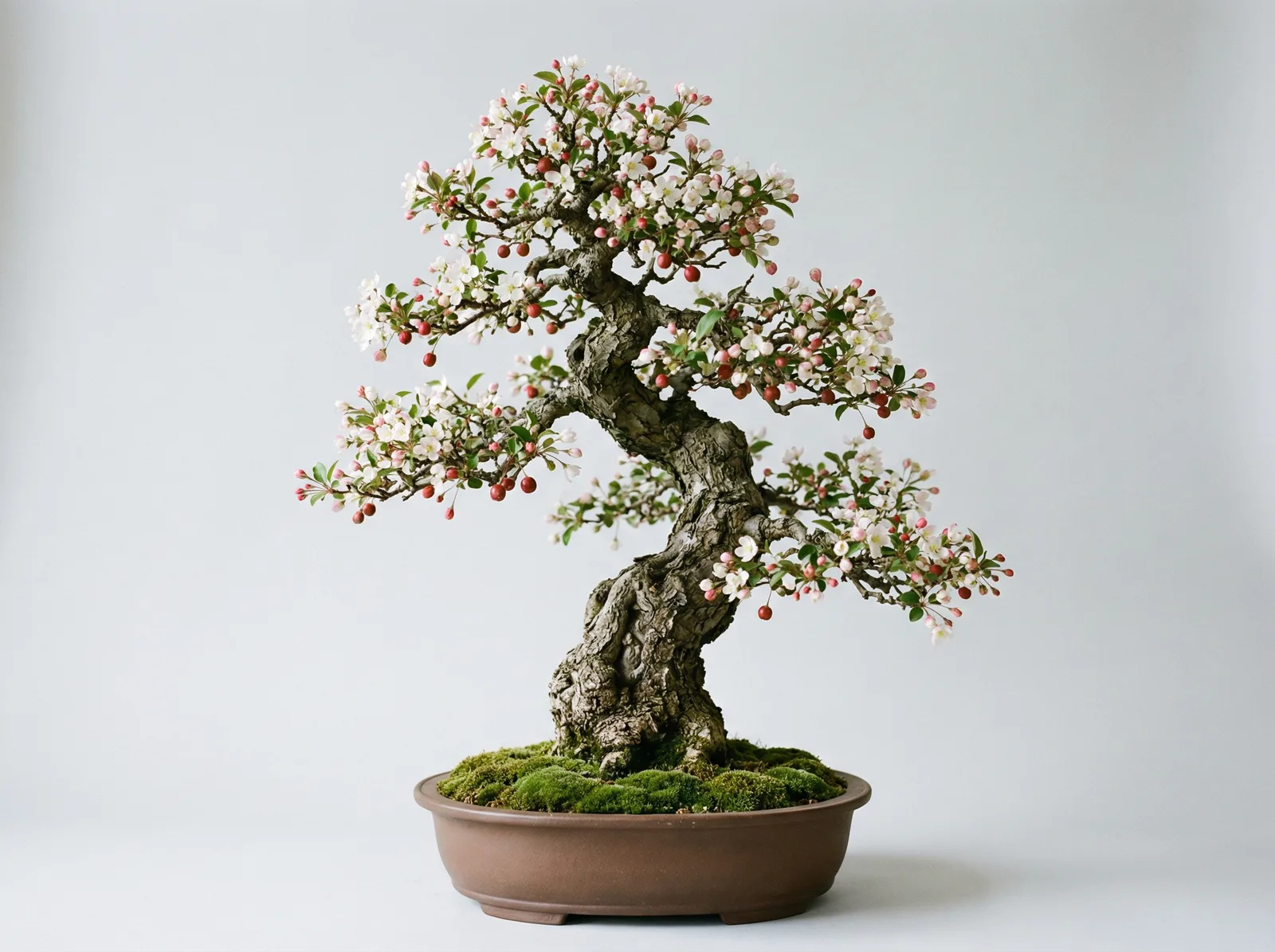
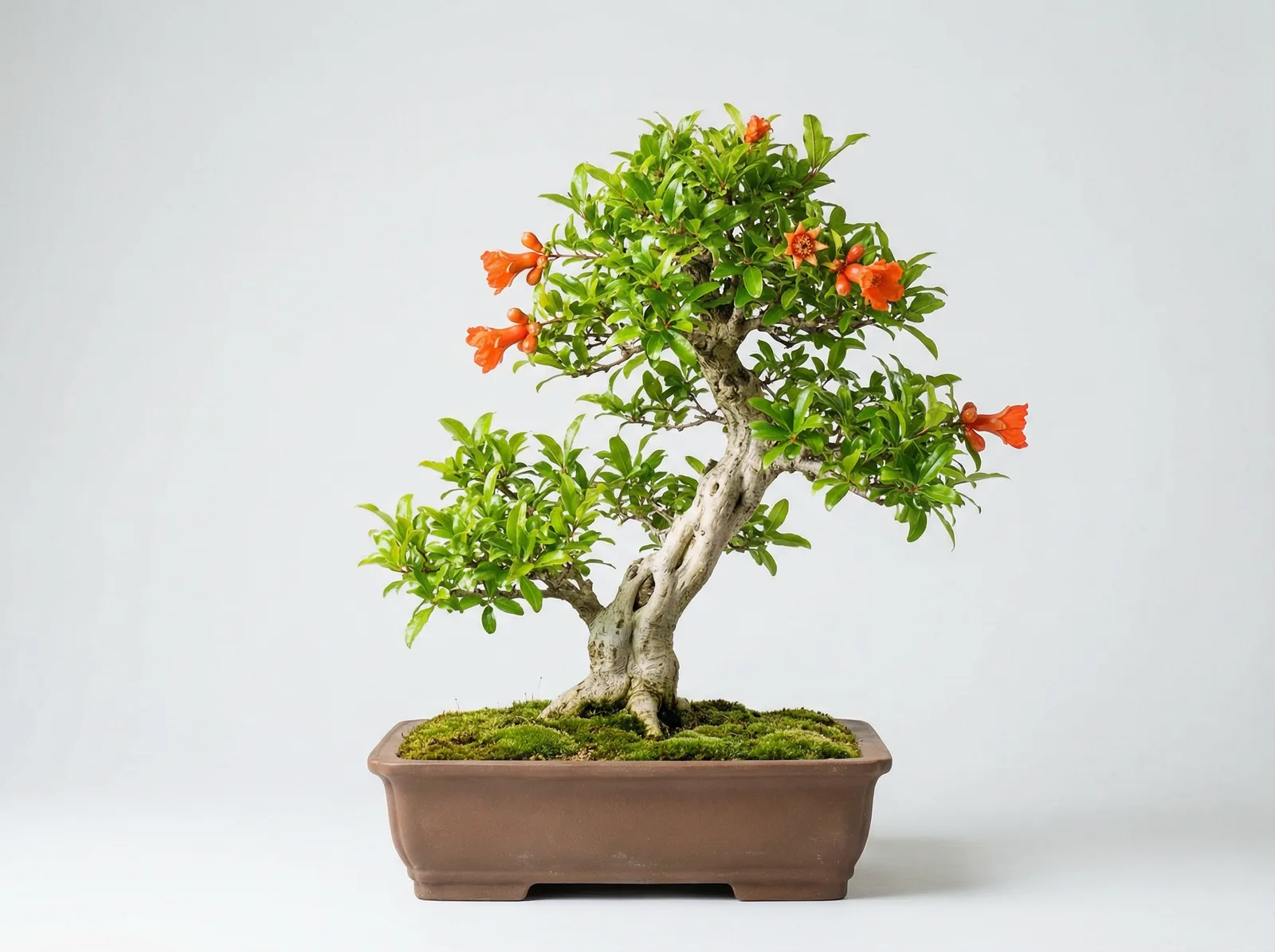
Pomegranate bonsai are a triple threat. Bright orange-red tubular flowers in summer. Miniature fruit that actually ripens on the tree. Golden-yellow fall color before the leaves drop. Three seasons of visual payoff from a single Punica granatum. Name another bonsai species that delivers that range.
The dwarf cultivar 'Nana' was practically designed for bonsai work. Proportionally smaller flowers and fruit that don't look comically oversized on a 12-inch tree. Standard pomegranates work too, but the scale is off unless you're growing a large specimen.
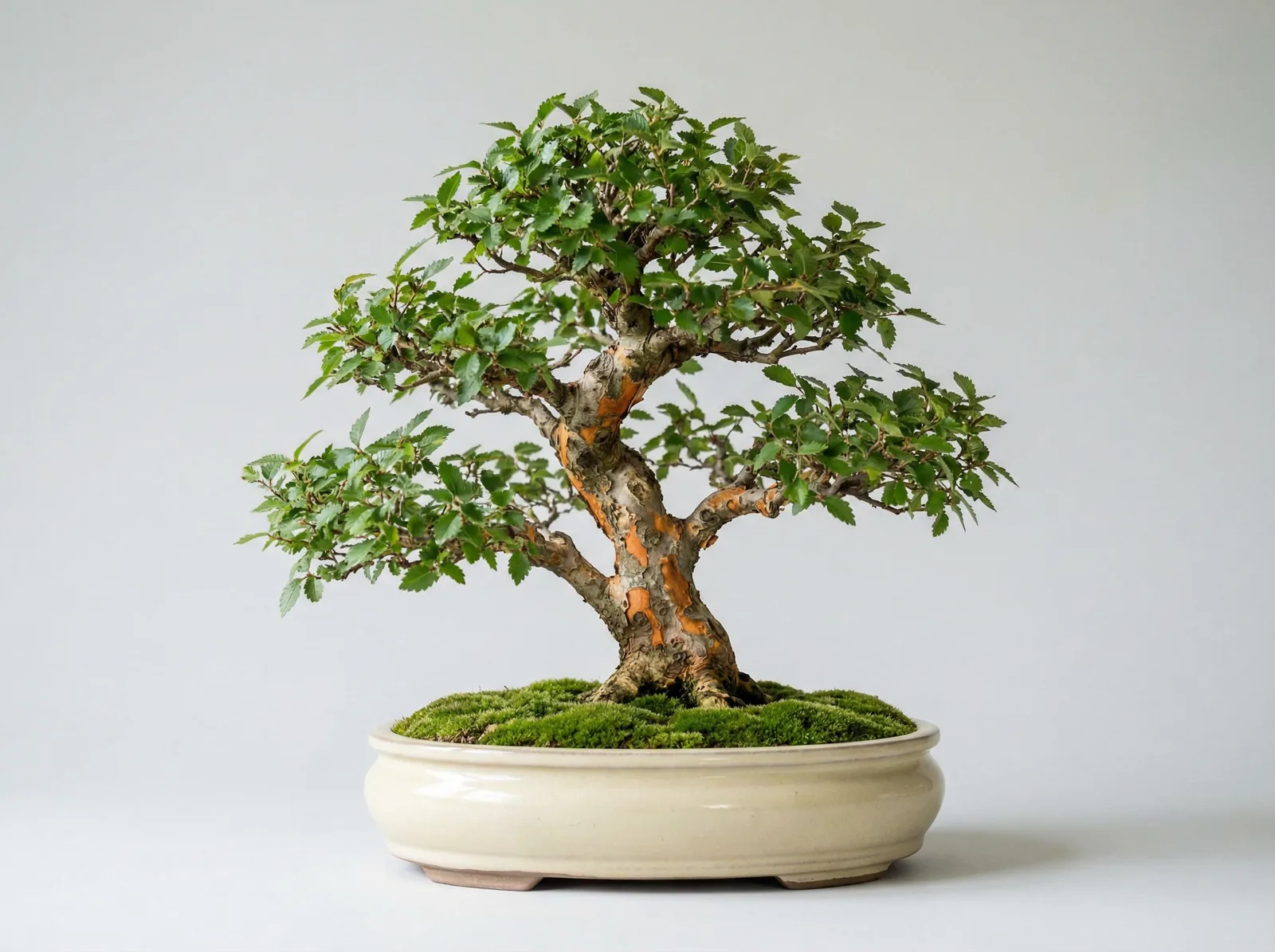
And then there's the bark. Mature pomegranates develop this flaky, reddish-brown surface that peels away to reveal pale wood underneath. The trunks twist and hollow naturally -- no carving needed. A 20-year-old pomegranate bonsai can look genuinely ancient without any artificial aging techniques. That's rare.
The routine
No sun, no flowers. It's that simple. Pomegranates are desert-edge plants that bloom in response to heat and intense light. If your tree isn't flowering, the answer is almost always "more sun." Park it against a south-facing wall that radiates heat in the afternoon. Six to eight hours of direct light daily is the starting point, not the goal.
During flowering, your watering game needs to be tight. Inconsistent moisture causes buds and developing fruit to abort. Keep the soil evenly moist -- not soggy, not dry -- from the moment you see flower buds until the fruit has set. A single dry-out during this window can cost you the entire year's display. After fruit is established, you can relax a bit.
Pomegranate looking rough right now?Skip to common problems below, or start with the symptom guide.Winter dormancy isn't optional. Pomegranates must lose their leaves and rest for 6-8 weeks in cool temperatures. An unheated garage that stays between 20-45°F is perfect. A cold frame works. A heated living room does not. Skip dormancy and you'll get weak spring growth and few flowers.
The fruit is edible, by the way. Tiny and mostly seeds on a bonsai, but edible. Most growers leave a few fruit for display and remove the rest to redirect energy into the tree's development.
Shaping
Late winter, before buds break -- that's your structural pruning window. Pomegranates flower on new wood, so winter cuts don't sacrifice blooms. They actually encourage them by stimulating more new growth. Remove crossing branches, dead wood, and anything that muddles your design.
Once growth is underway, pinch new shoots back to 2-3 leaf pairs after they've extended 4-6 inches. This builds density and creates more potential flowering points. More pinch sites mean more flowers next year. It's simple math.
Watch for basal suckers. Pomegranates throw them constantly. Snap them off at the base as soon as you spot them -- they steal energy from your primary trunk and wreck the design. Unless you're developing a multi-trunk style, in which case, select the strongest two or three suckers and remove the rest.
Pomegranate hands you the hardest part of styling for free. The trunk twists on its own, the reddish-brown bark flakes and peels naturally, and older trunks hollow without a carving tool ever touching them. Your job is to frame that trunk—informal upright and multi-trunk designs with an open canopy let the bark and movement carry the image. Don't fight the tree's natural lean.
Literati suits pomegranate better than most people expect. A tall, slender trunk with minimal branching—just a few pads near the top and one or two orange flowers catching the light—shows off the peeling bark along all that exposed wood. Set the trunk line while the tree is young and still bends.
That's the catch with this species: the wood goes brittle with age. Wire young branches early, check monthly during the growing season, and expect them to set in 4-6 months. For repositioning anything thick or rigid, skip wrapping entirely and run a guy wire to the pot rim—much safer, same result. For sizing, /tools/wire-gauge does the math.
When things go wrong
No flowers is the most common pomegranate complaint. Nine times out of ten, it's a light problem. The other time, it's too much nitrogen pushing vegetative growth at the expense of blooms. Move the tree to full sun and switch to a low-nitrogen fertilizer—and skip the 'bloom booster,' because extra phosphorus doesn't make buds; light does. Flowers should appear within one growing season.
Fruit drop frustrates everyone the first time. You watch the flowers set fruit, get excited, and then half the tiny pomegranates fall off. Usually it's watering inconsistency during fruit development. Could also be temperature swings. Lock in steady moisture and stable conditions during that critical window.
Aphids show up in spring like clockwork, clustering on fresh shoot tips and flower buds. Blast them off with a hose. If they come back, hit them with insecticidal soap. Don't use systemic pesticides on a fruiting tree -- you might eat those pomegranates.
Dark spots on leaves? That's leaf spot fungus, almost always from watering the foliage instead of the soil. Water at the base, improve air circulation, and pick off affected leaves. Problem solved.
One spring warning: pomegranates leaf out late after a cool dormancy, and a bare branch in April is usually sleeping, not dead. Scratch a little bark with a fingernail—find green and the branch is only resting; find dry brown and it's gone, so cut back to live wood.
The dwarf pomegranate 'Nana' is your best bet for bonsai, and it's widely available at nurseries for $15-30 in 1-gallon pots. The proportionally smaller flowers and fruit look right on a miniature tree. Standard pomegranates work but the fruit can look like a basketball on a sapling.
For developed material, Wigert's, Brussel's Bonsai, and Eastern Leaf sell trained pomegranate bonsai in the $60-250 range. Japanese imports with serious trunk character pop up occasionally for $300+, but they're worth it if the nebari and bark development are strong. With pomegranate, the trunk tells you everything about the tree's age and quality. Pay attention to bark texture and natural hollows when shopping.
Some links may become affiliate links; our picks don't change.
Also on the bench