Portulacaria afraboth
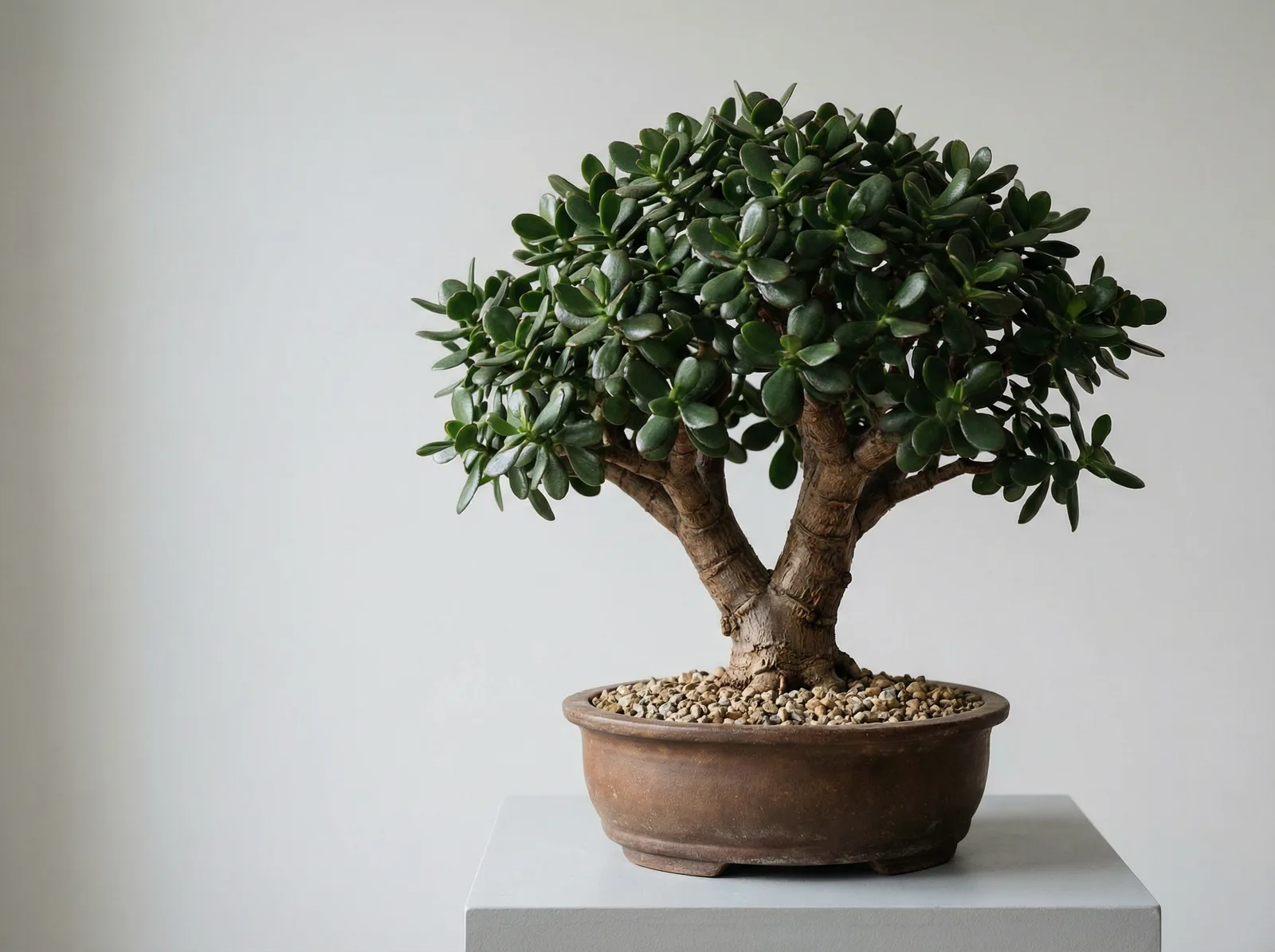
Dwarf Jade Bonsai
- care
- beginner
- light
- full sun
- zone
- 9–11
Olea europaea · Oleaceae
Why grow it
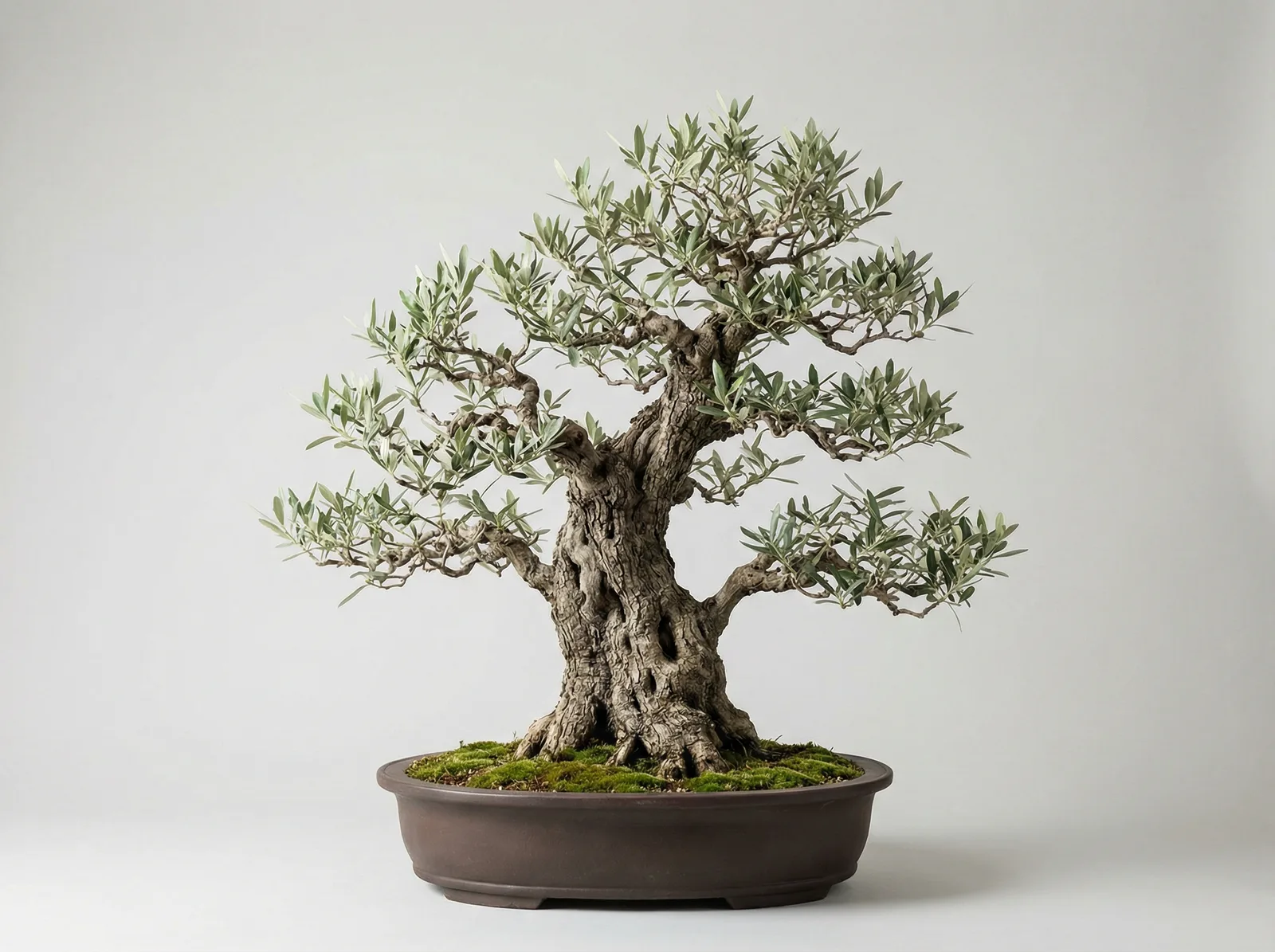
An olive bonsai looks a hundred years old before it turns ten. Olea europaea develops cracked, fissured bark, natural hollows in the trunk, and that silver-green foliage that catches light differently than any other species. Put one on your bench and it immediately looks like it belongs in a hillside village on the Mediterranean coast.
Olives are survivors. Drought, poor soil, scorching heat, general neglect—they handle all of it. The trade-off is speed. These trees grow slowly. You won't be pruning every week or wiring new growth monthly. An olive bonsai is a long game, and the growers who appreciate that pace tend to love the species.
They can work indoors in a bright spot, but they're at their best outdoors in zone 8 and above. In colder climates, treat them like a semi-tropical: outside from May through October, inside near a south-facing window for winter.
The routine
Overwatering kills more olive bonsai than anything—drought, pests, cold snaps, you name it. These trees evolved on rocky Mediterranean hillsides where it doesn't rain for four months straight. They store water in their wood and thick leaves. Let the soil dry an inch deep before you water, then drench it and let it drain completely. In summer, that cycle runs every 2-3 days. In winter, once a week or less.
Yellowing leaves? Almost certainly too much water. Not too little. This trips people up constantly because with most bonsai species, yellow means underwater. With olives, it's the opposite. Cut back on watering and check that your soil drains within seconds.
Olive looking rough right now?Skip to common problems below, or start with the symptom guide.Light determines whether your olive thrives or merely survives. Full outdoor sun is ideal—six hours minimum. Indoors, south-facing window at minimum, and even then, growth will be slow and the tree may stretch toward the glass. A full-spectrum grow light makes a real difference for indoor olives. Run it 10-12 hours daily.
Soil should be gritty and fast-draining. 70% inorganic—pumice, lava rock, and coarse sand in roughly equal parts—with 30% pine bark. Think rocky hillside, not forest floor. If your mix holds moisture for more than a day, it's too dense.
Feed monthly with a balanced fertilizer from April through September. Osmocote slow-release pellets work well and take the guesswork out of the schedule. Olives aren't heavy feeders—they're adapted to nutrient-poor soils. Don't push them with high-nitrogen fertilizer or you'll get soft, leggy growth.
A cool winter rest (50-60°F for 8-12 weeks) produces stronger spring growth. It's not strictly required, but trees that get it look better. An unheated garage, cool sunroom, or enclosed porch works perfectly.
Shaping
Olives grow slowly enough that pruning isn't a constant task. Let new shoots extend to 6-8 leaf pairs, then cut back to 2-3 pairs. Growth emerges from the leaf axils. In peak summer, you might do this every 3-4 weeks. In winter, not at all.
Hard pruning is where olives really cooperate. They back-bud from old, bare wood—even thick trunk sections. Want to completely restructure a tree? Chop it back to 6 inches of trunk in April and new shoots appear within a month. Not many species let you start over this cleanly.
The silvery leaves grow in opposite pairs. Always cut to a leaf pair or visible node. Internodes on olive are short, so your cuts are naturally close together. This builds compact branching without much effort.
Deadwood develops naturally as branches die back, and you should encourage it. Any removed branch is a candidate for jin. Olive deadwood weathers to a pale silver-gray that's beautiful against the dark bark. Carve it with hand tools or a Dremel and apply lime sulfur to bleach and preserve. The contrast between live wood and dead wood defines the best olive bonsai.
The trunk makes the tree. Olive trunks develop hollows, splits, and twisting grain that tell a story of age and endurance. Your styling job is to frame and emphasize the trunk, not hide it behind foliage. Keep the canopy open. Let the bark show. Less is more.
Informal upright and literati styles work best. Windswept is a natural fit—olives grow on exposed hillsides in nature, shaped by constant wind. Wire branches to one side, create shari on the "windward" face, and the illusion of a tree battered by decades of coastal wind is immediate.
Wire young branches while they're still flexible. Olive wood becomes brittle as it matures—anything thicker than a pencil snaps rather than bends. Apply wire in spring and check monthly for bite; branches set in 6-12 months. Guy wires are safer for positioning anything larger, and the wire-gauge tool at /tools/wire-gauge will size whatever you do wrap.
Root-over-rock suits olives perfectly. In nature, olive roots thread through cracks in limestone. Wire young roots over a textured stone and plant the assembly. The roots grip and thicken over 2-3 years. Eventually the root and rock become inseparable—a permanent feature of the design.
Pot selection should complement the Mediterranean character. Unglazed earth-tone pots—reds, browns, terracotta—match the species. Avoid glazed pots in bright colors. The tree should look like it belongs in dry, warm, dusty terrain.
When things go wrong
People water their olive every day and then wonder why it looks sick. Yellow leaves, soft stems, eventual root rot—all from killing the tree with kindness. Olives don't want moist soil. They want to dry out. This is the single most important thing to understand about the species. Let. The. Soil. Dry.
Scale insects are the primary pest concern. Small brown bumps on stems and leaf undersides that look like part of the bark. Scrape one with a fingernail—if it pops off and leaves a wet spot, it's scale. Wipe scattered ones off with rubbing alcohol; for a real infestation, the pest-control guide at /guides/pest-control covers treatment.
Leggy growth with long spaces between leaves means the tree needs more light. Prune back the stretched sections and improve lighting—either a brighter window or a grow light. New growth in better light will be compact and in character.
Slow growth isn't a problem. It's the species. Olive bonsai operate at their own pace. Expect 4-6 inches of growth per year, not the foot-plus you'd get from a Chinese elm. The upside? That slow growth produces dense, hard wood and aged character at a fraction of the actual age. Patience is the price. The payoff is a tree that looks 80 years old at 15.
And if your olive ever drops every leaf after a rough patch, don't bin it. The species back-buds from bare wood like almost nothing else. Scratch the trunk low: green-white under the bark means it's alive—keep it bright, water sparingly, and wait for new buds.
In California, Arizona, Texas, or Florida, local nurseries sell olive trees in 1-5 gallon pots for $20-80. Look for trunk character above all else—bark texture, natural hollows, any sign of taper. Young olives with straight, smooth trunks need years of development before they look interesting. Dwarf cultivars like 'Little Ollie' or 'Arbequina' work well for smaller bonsai sizes.
Wigert's and Bonsai Jack carry olive pre-bonsai with developed trunk character for $60-200. These are good starting points if you don't want to wait a decade for bark texture.
Imported European olives are the serious option. Trees with ancient-looking trunks, natural deadwood, and years of character sell for $300-1000+ from specialty importers. If the trunk is genuinely old and characterful, these can be worth the money. You're buying decades of development in a single purchase. Just make sure the tree is healthy—check for active growth, firm wood, and no signs of rot in the trunk hollows.
Some links may become affiliate links; our picks don't change.
Also on the bench