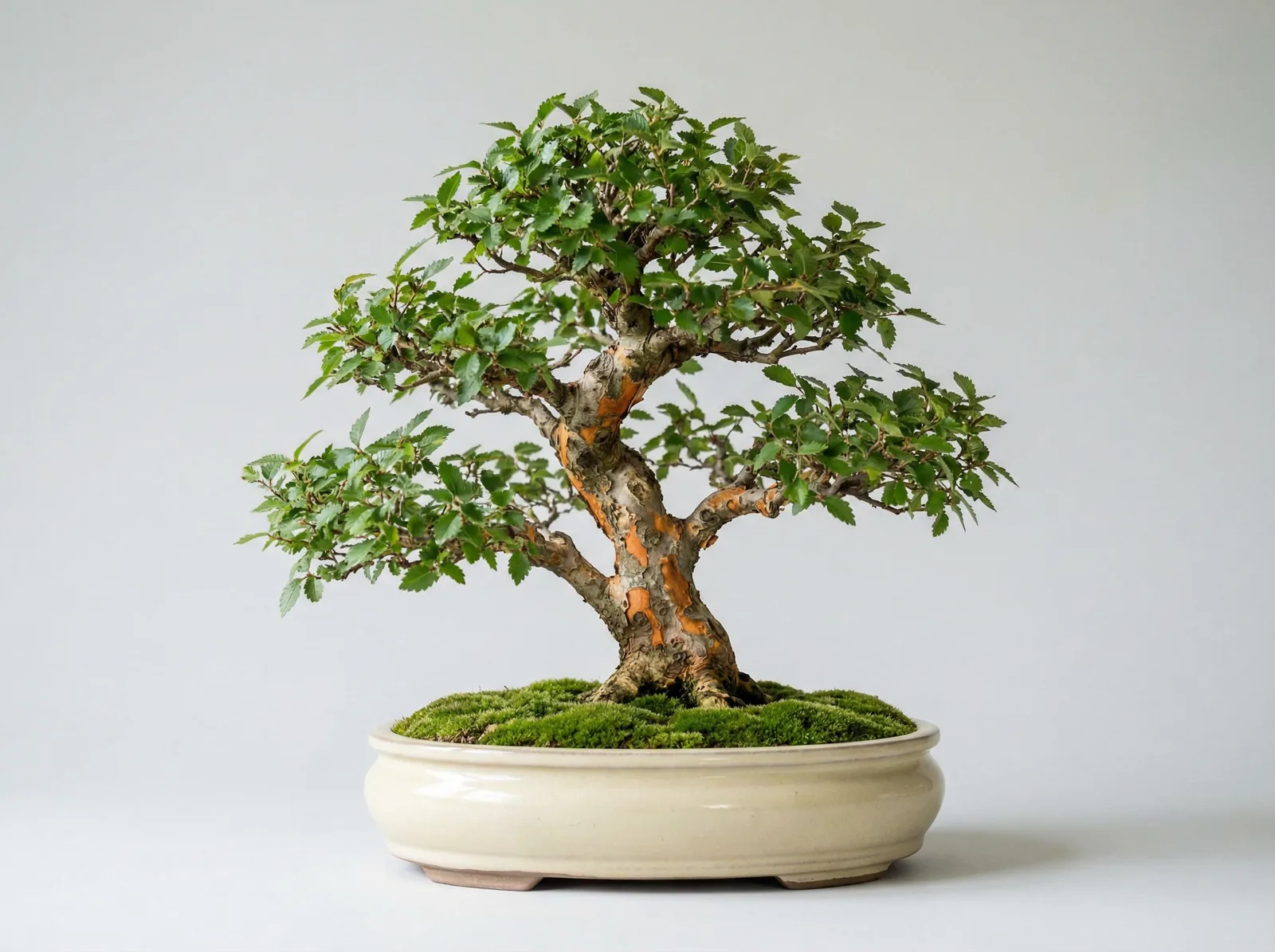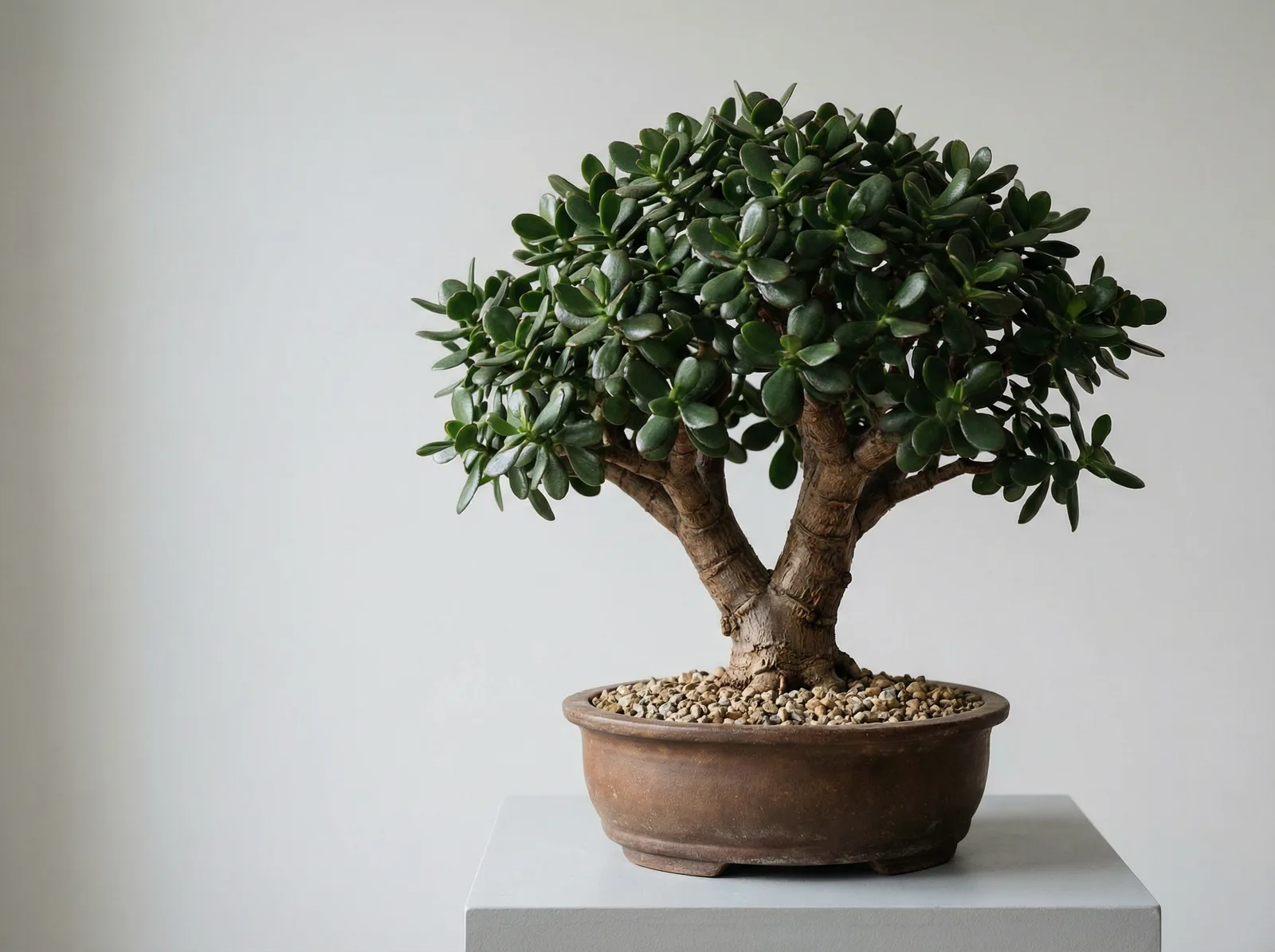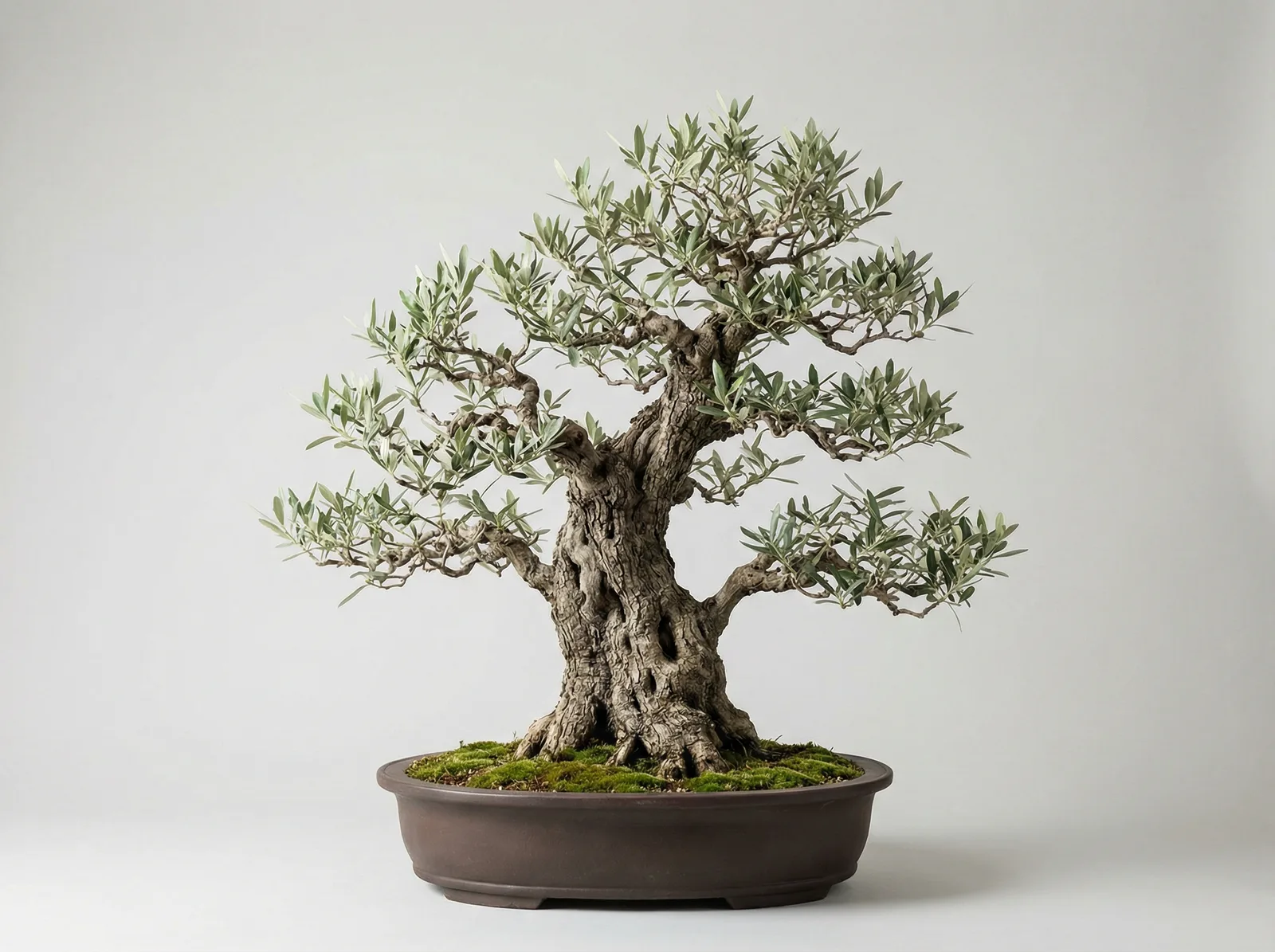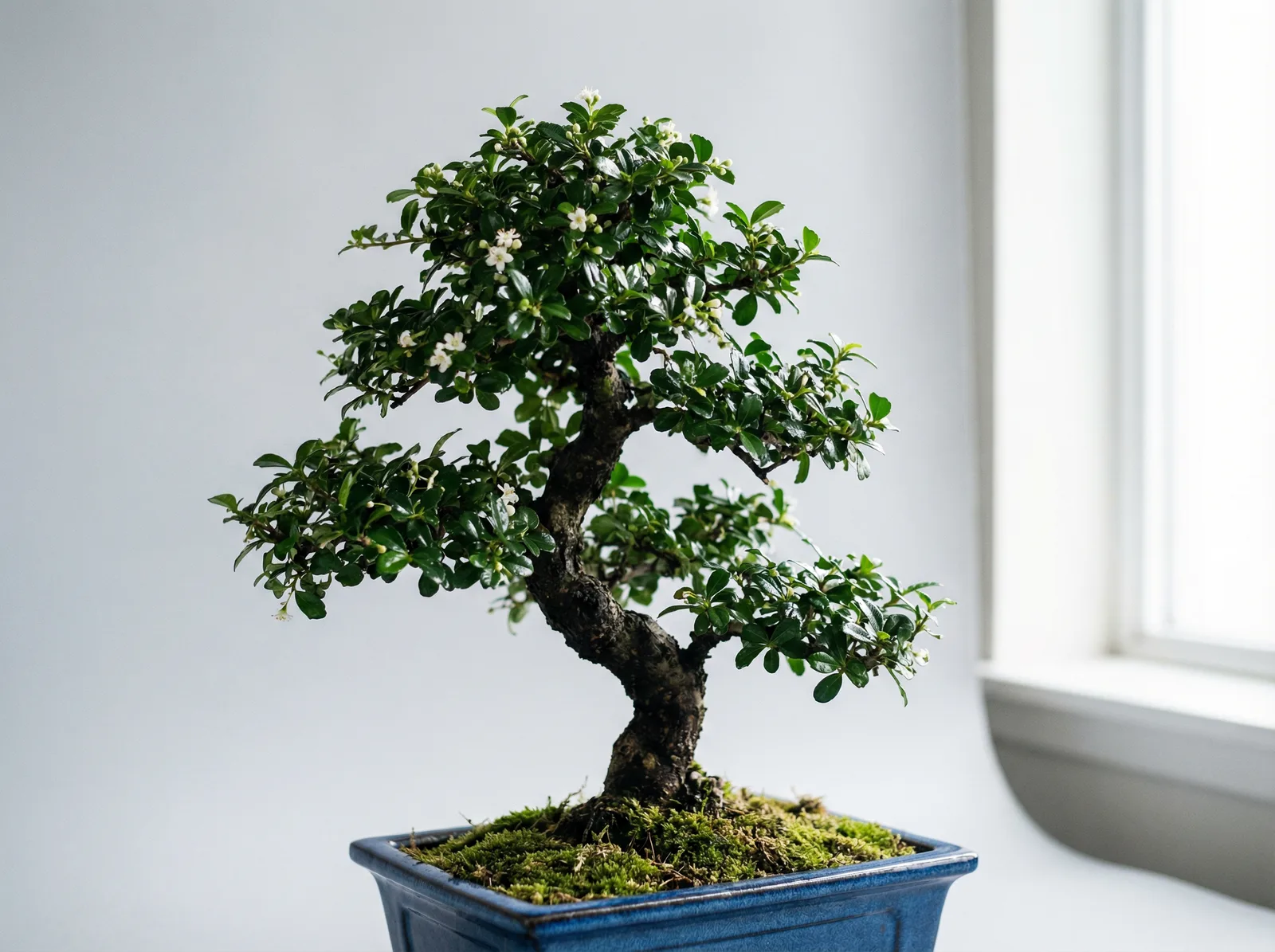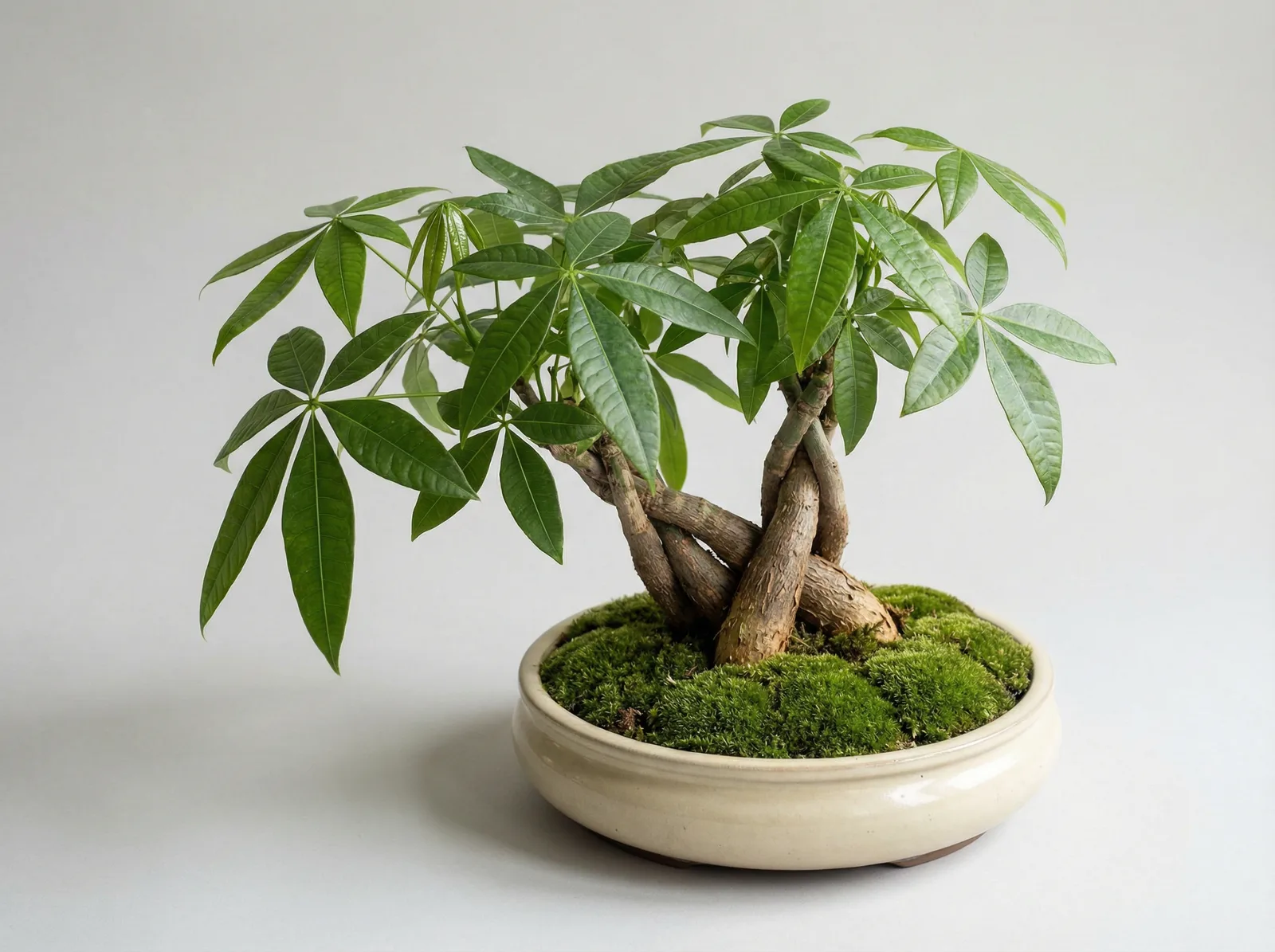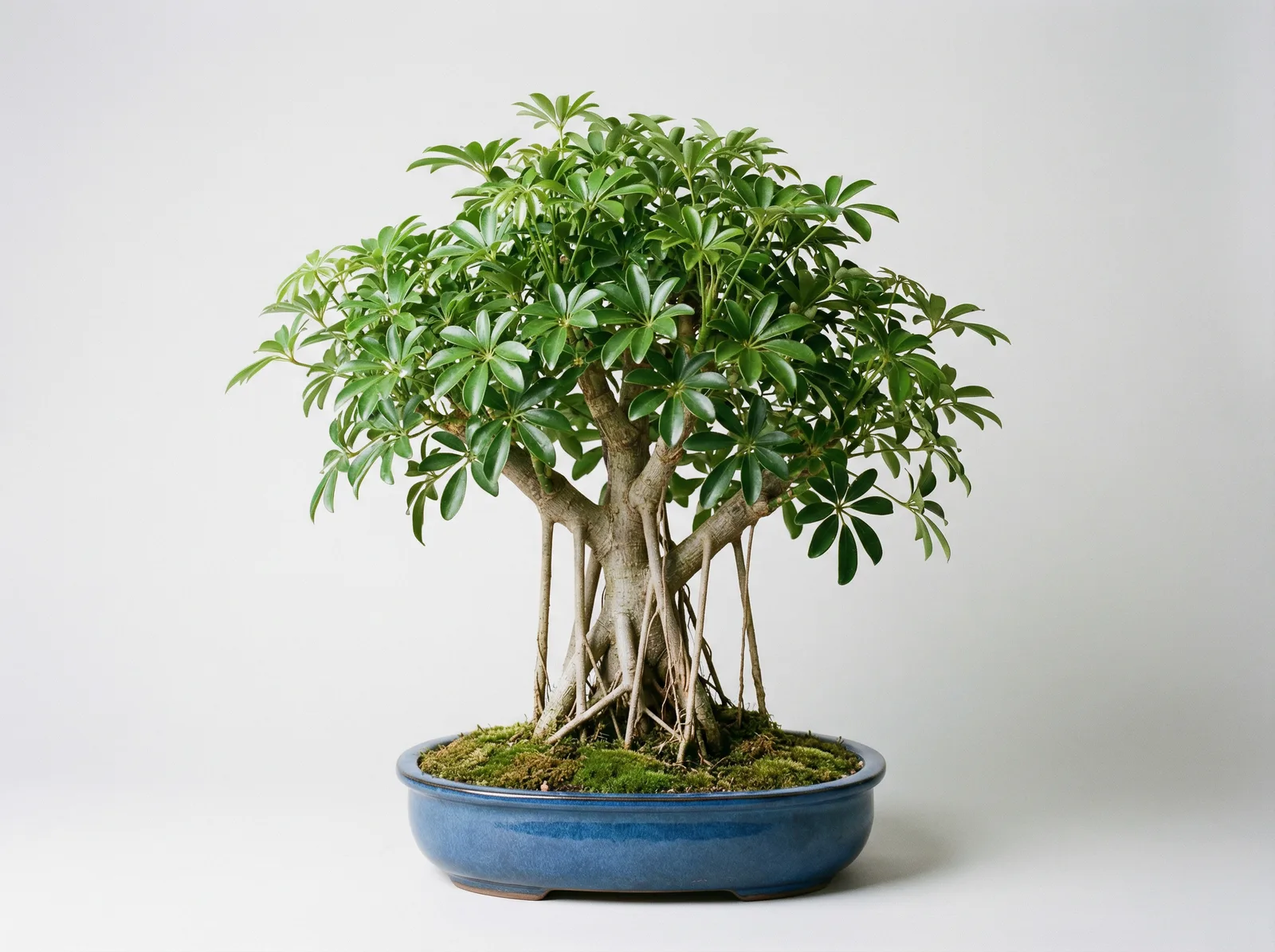
Ficus microcarpaboth
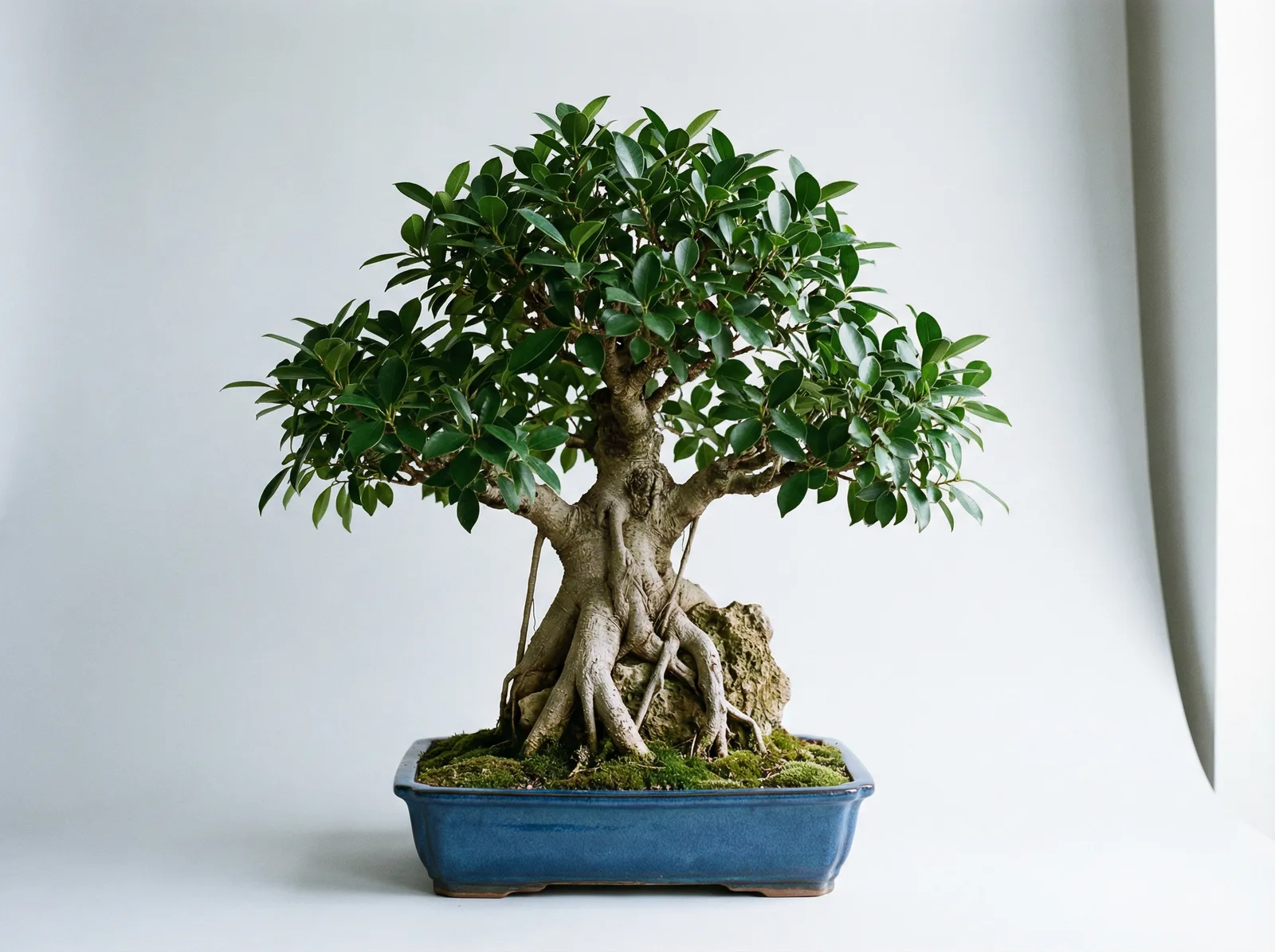
Ficus Bonsai
- care
- beginner
- light
- bright indirect
- zone
- 10–12
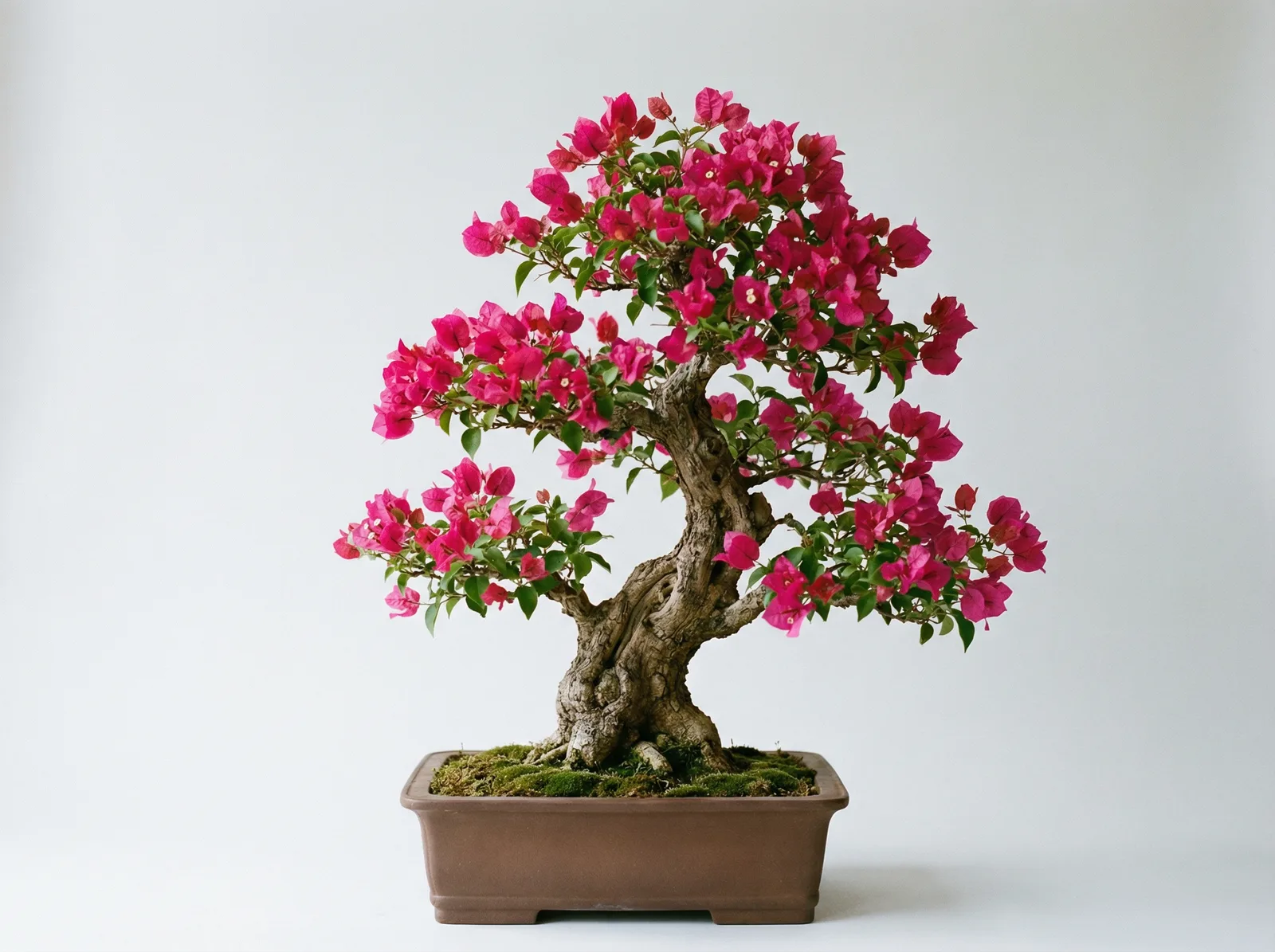
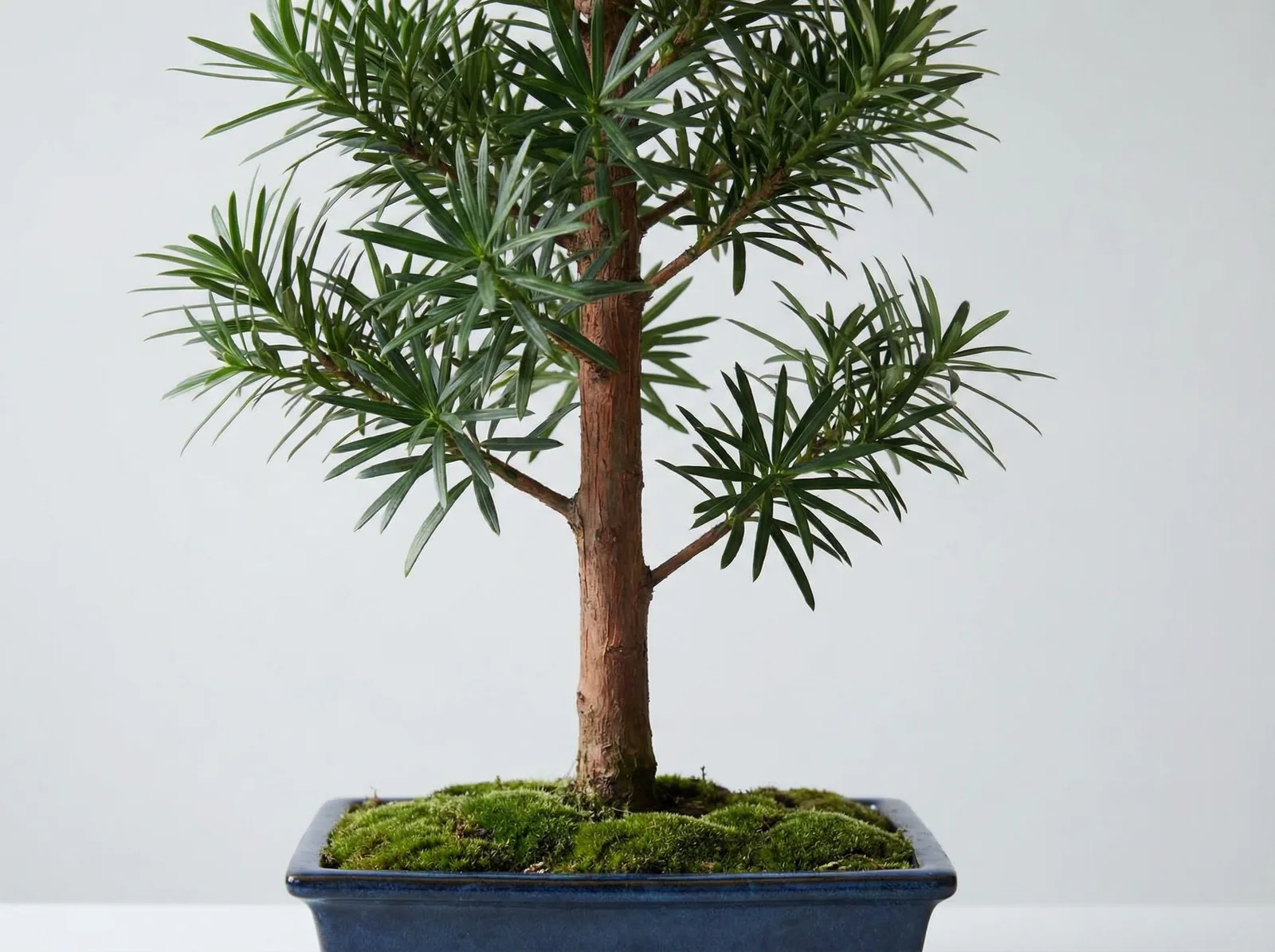
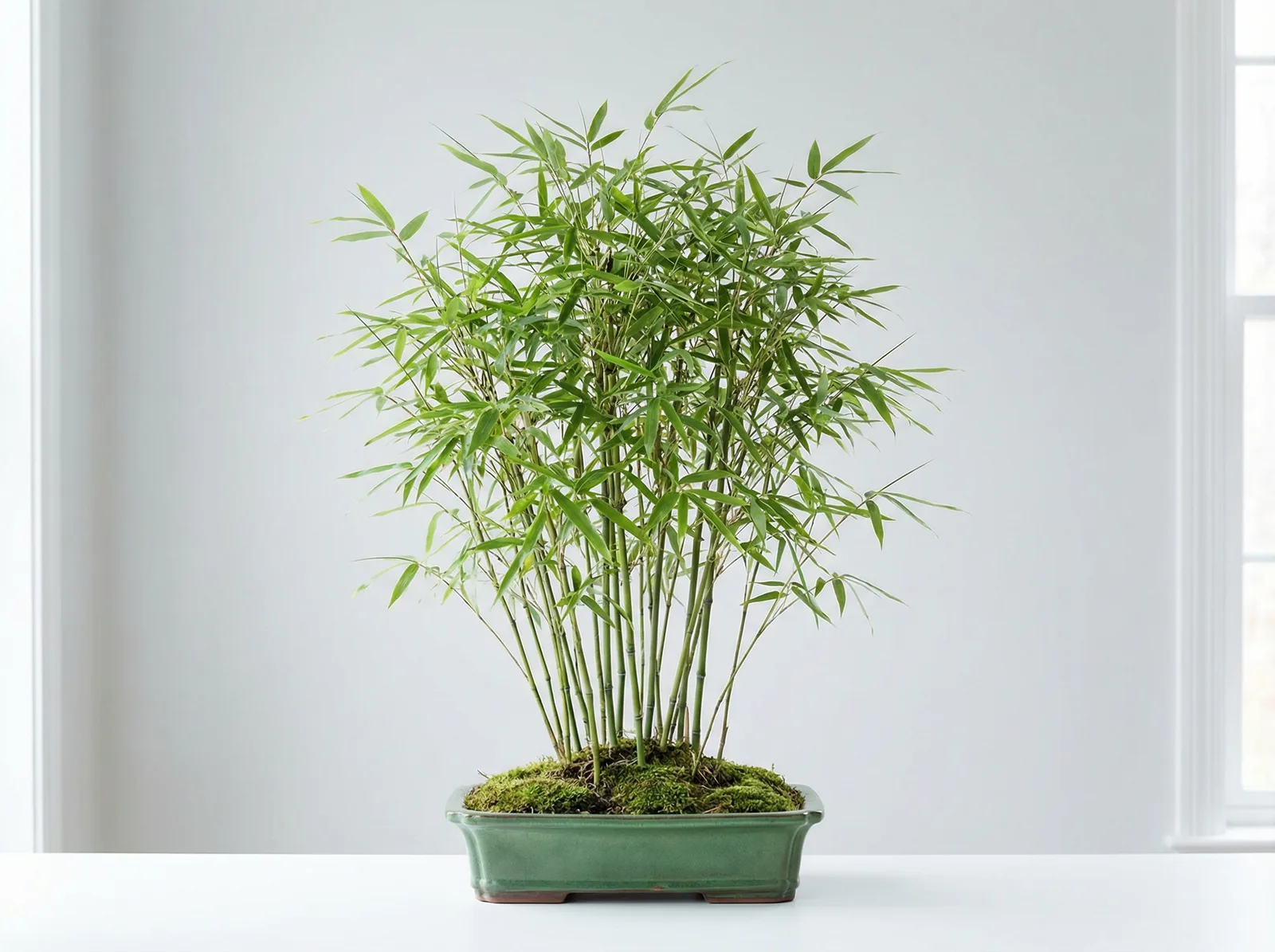
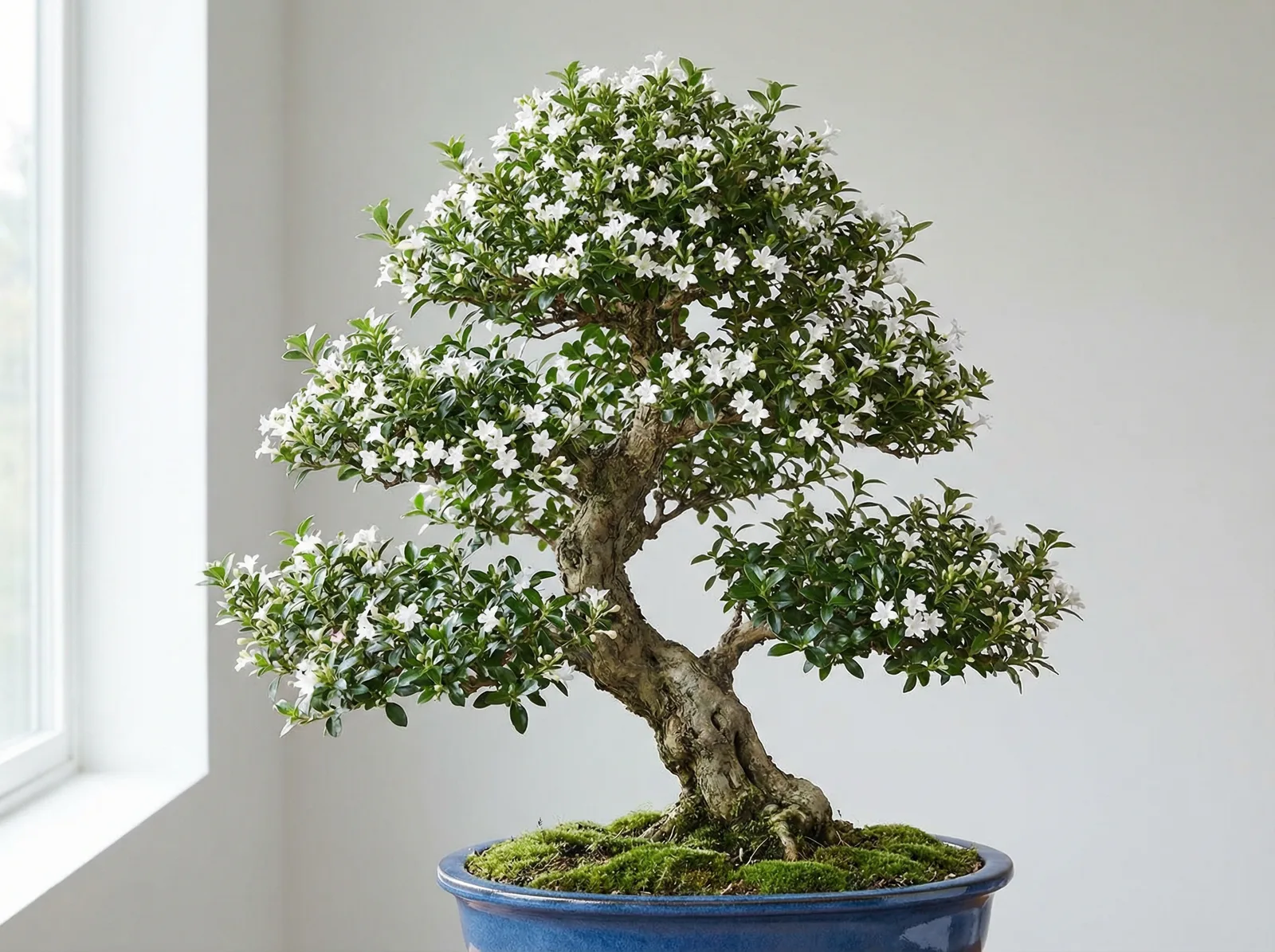
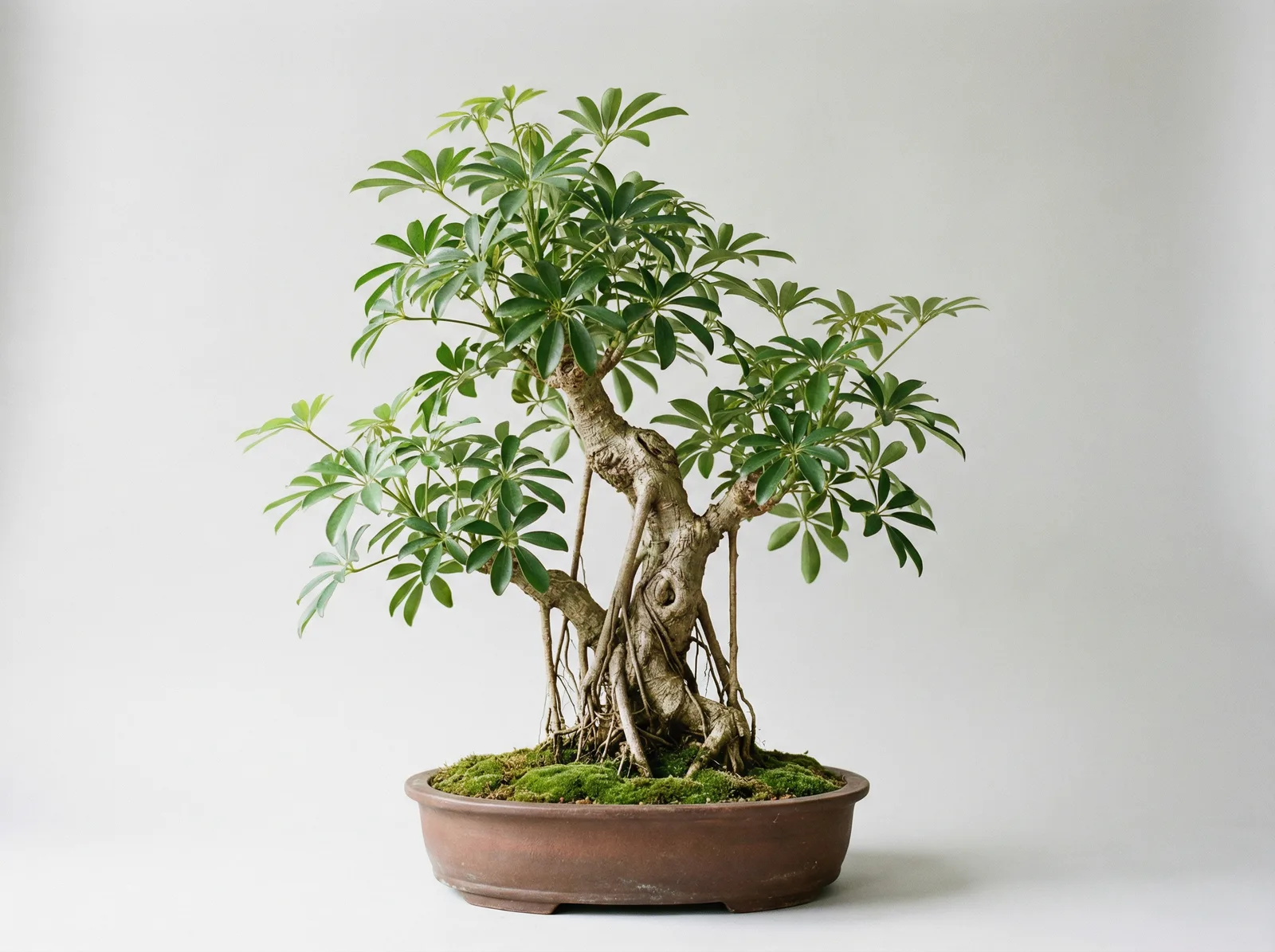
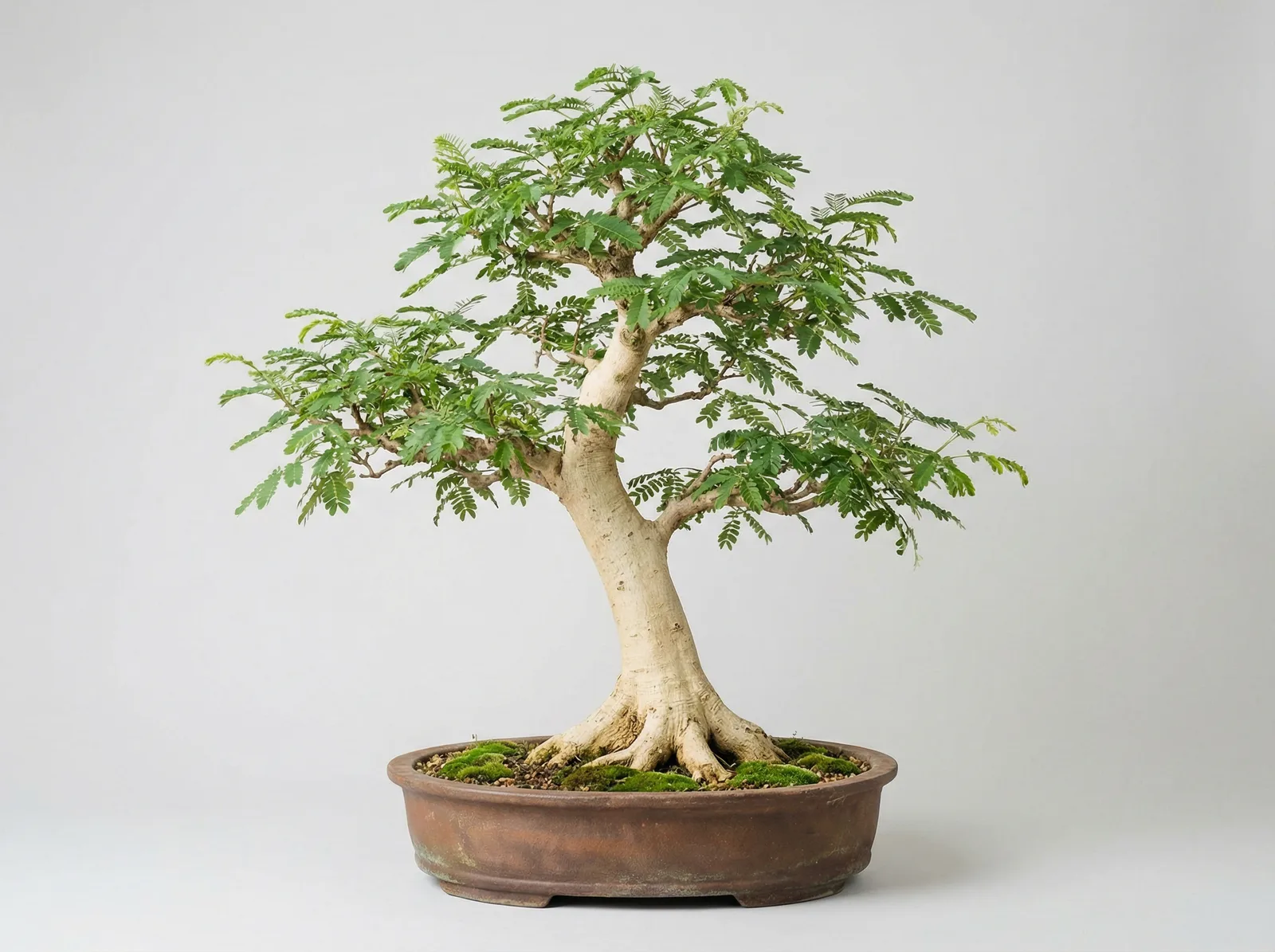
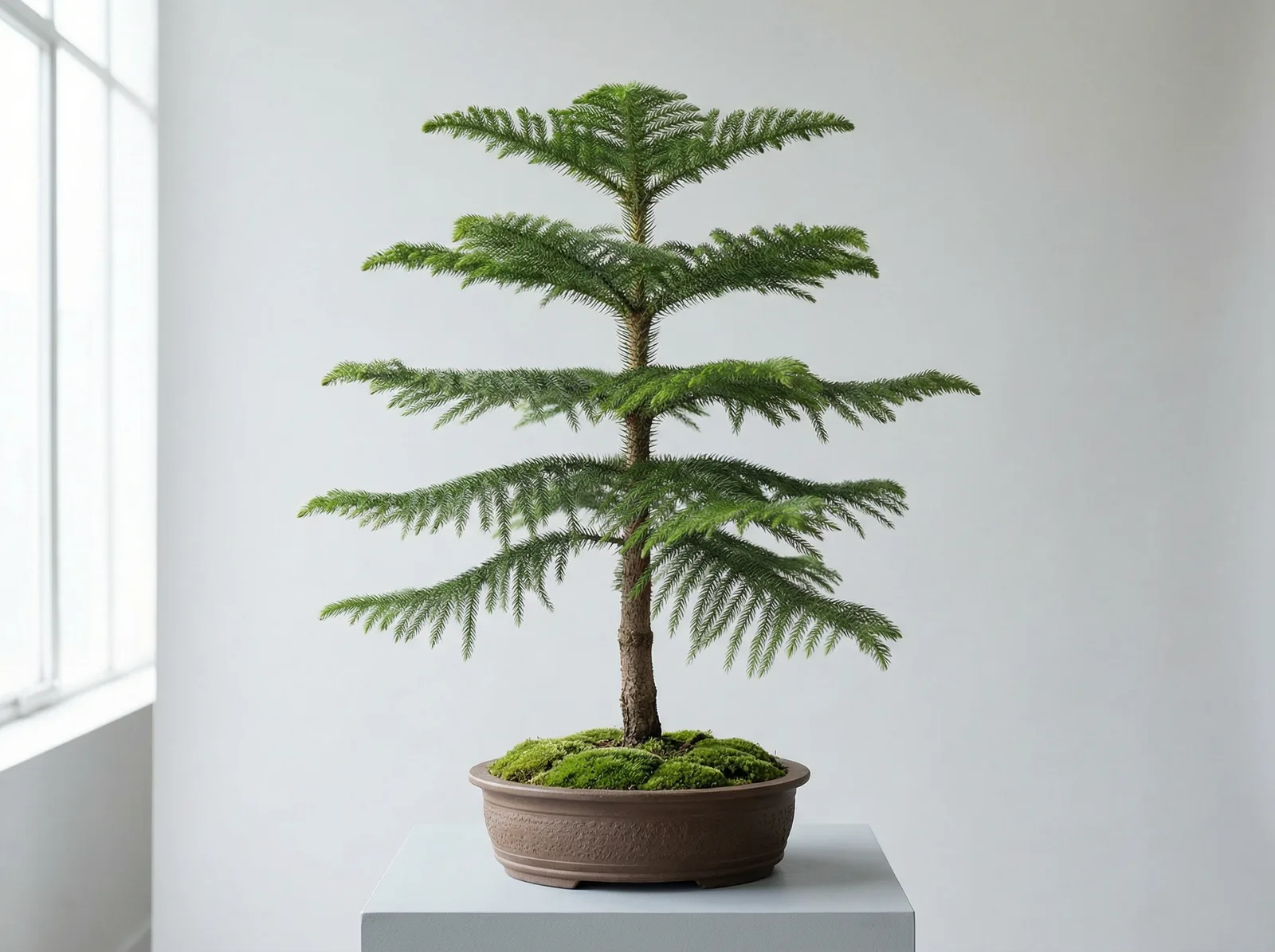
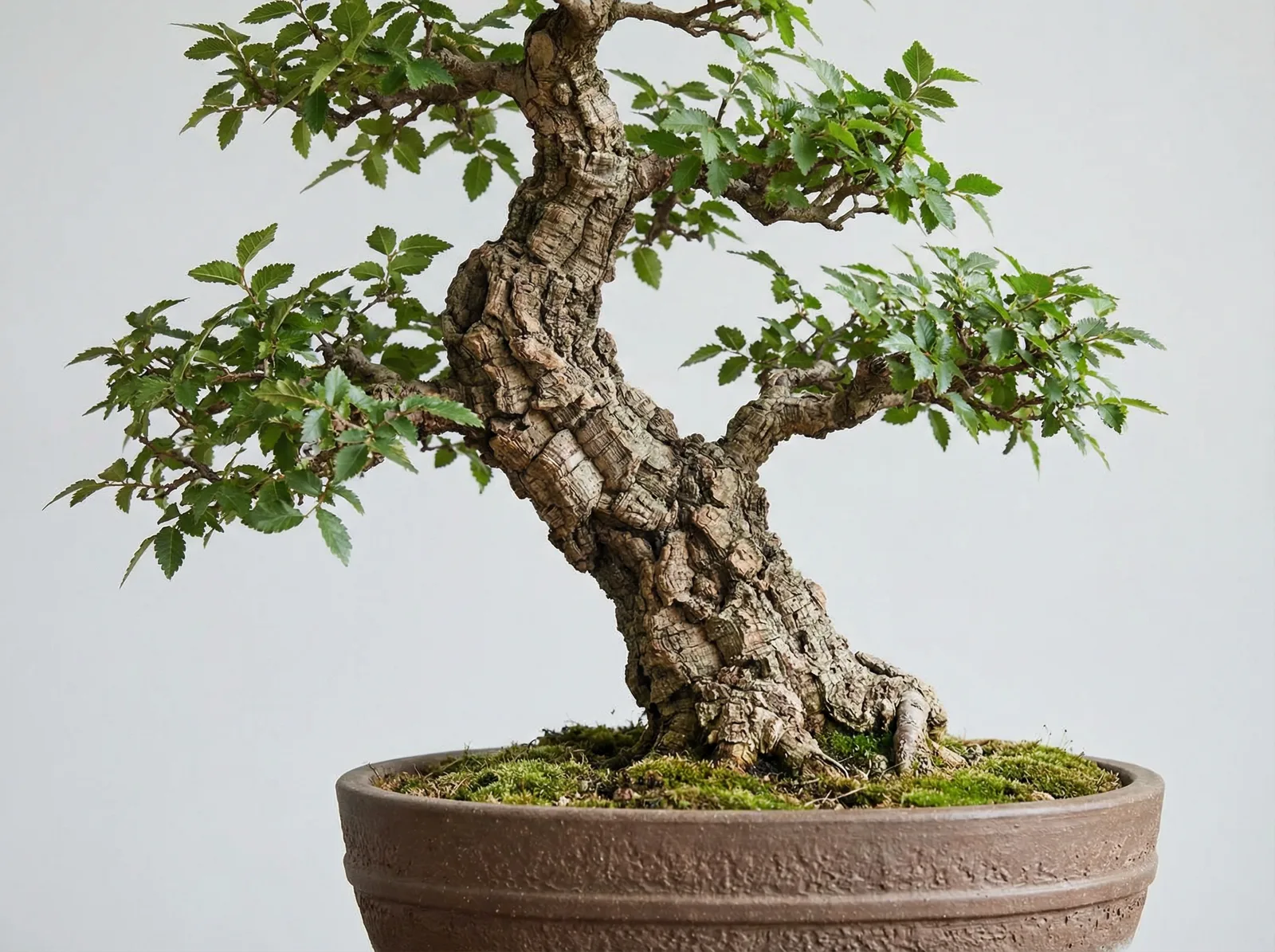
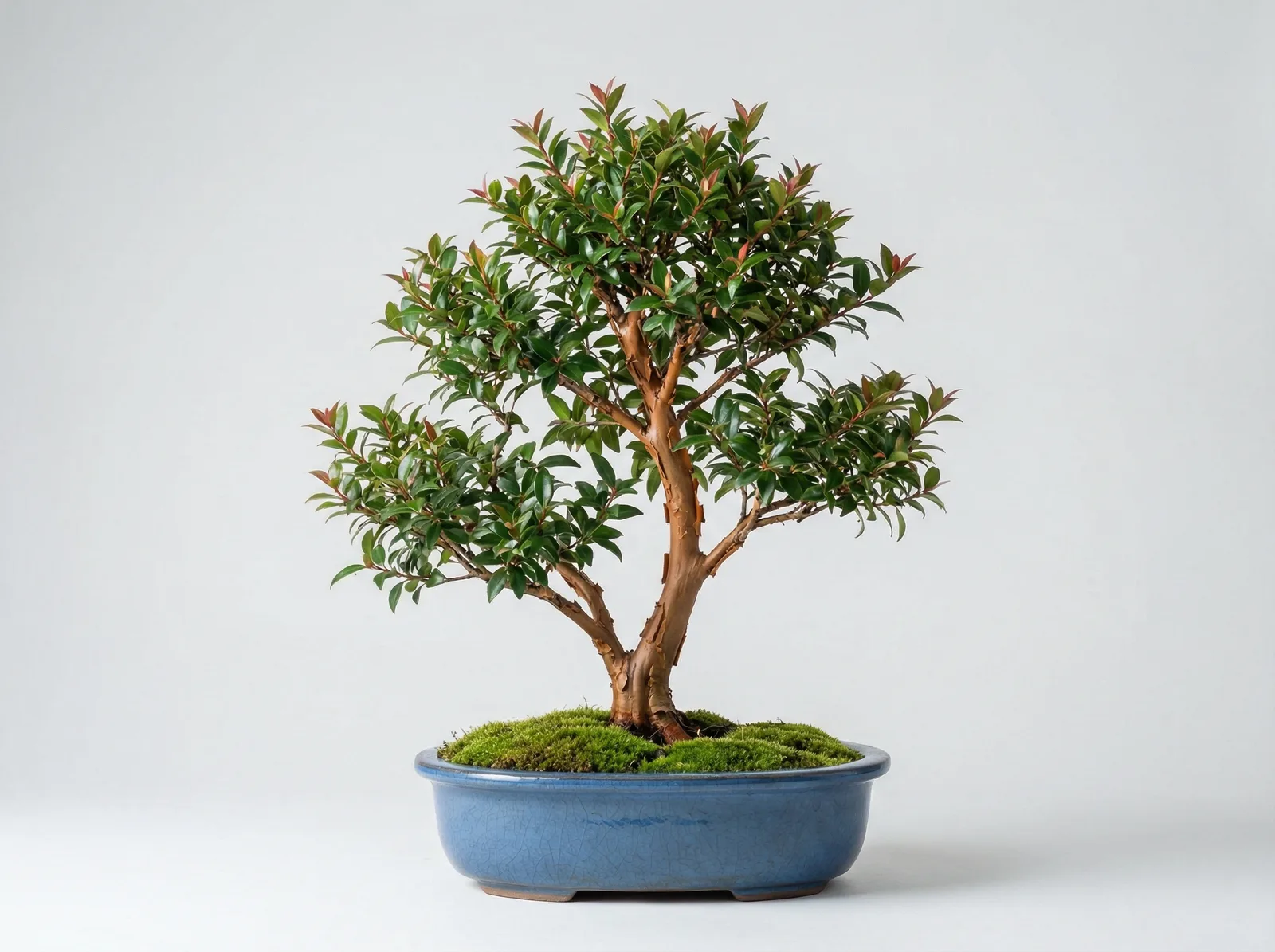
Not everyone has outdoor space, and that's fine. These tropical and subtropical species do well indoors with bright indirect light and consistent temperatures. They don't need a winter dormancy period, which makes them ideal for apartments, offices, and climates where outdoor growing isn't practical year-round.
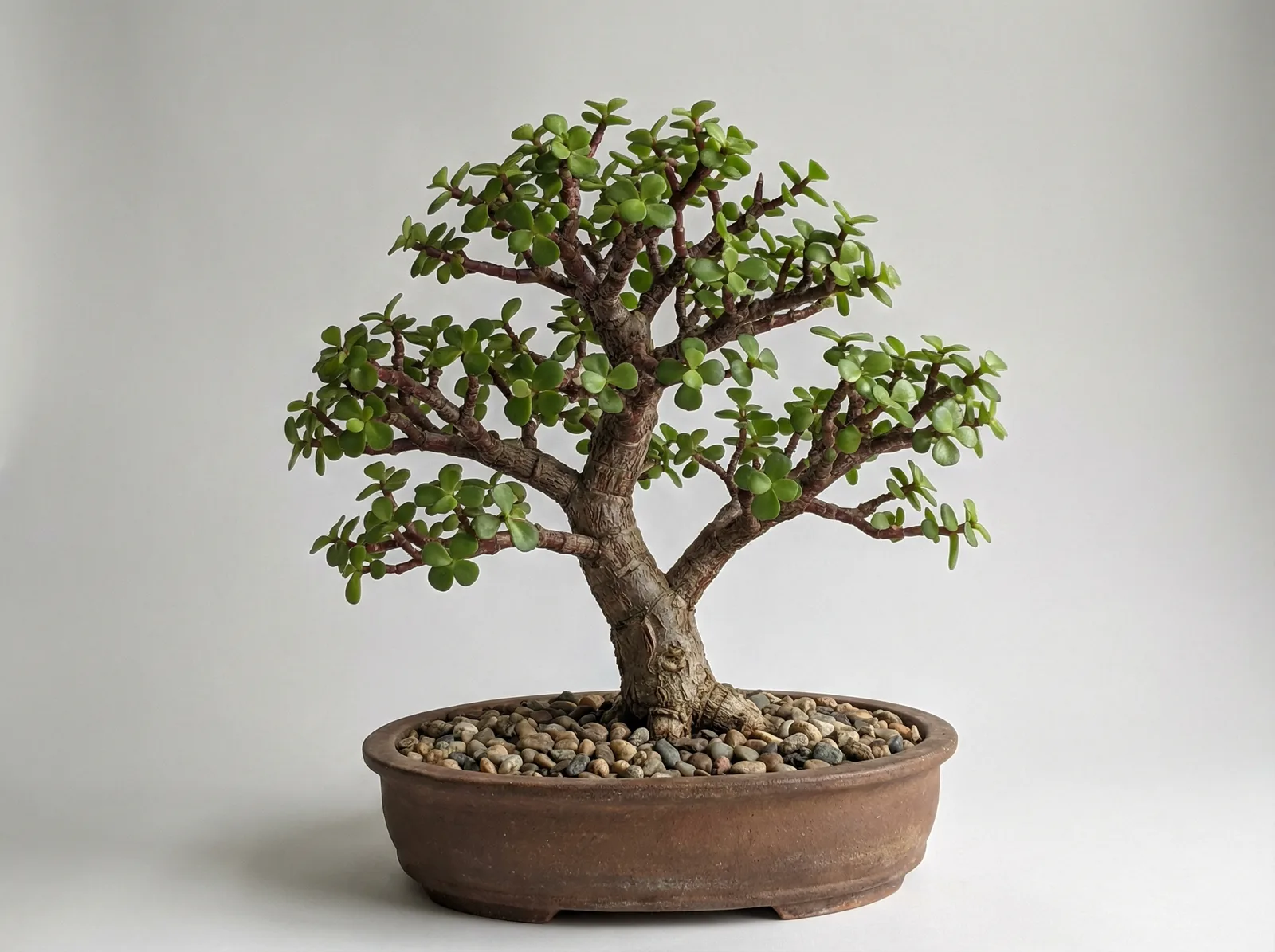
The catch nobody mentions on the product page: "indoor" means a bright window, not a room. A south-facing sill carries any tree on this list. East or west works for ficus, jade, and the Hawaiian Umbrella. A desk three feet back from the glass is a grow light or a slow decline — usually blamed on watering, almost always the light. Check your own spot before you pick a species.
Two trees get sold as indoor bonsai and aren't: juniper and Japanese maple. Both need a cold winter dormancy, and both stay green for weeks after they've died indoors, which is why the mall-kiosk juniper has such a bad reputation. If you want a conifer, it lives on a balcony — see outdoor bonsai trees.
New to this entirely? Start with the best bonsai trees for beginners — most of that list overlaps with this one. Then read how often to water a bonsai and winter care, the two things that decide whether an indoor tree makes it to year two.