Ficus microcarpaboth
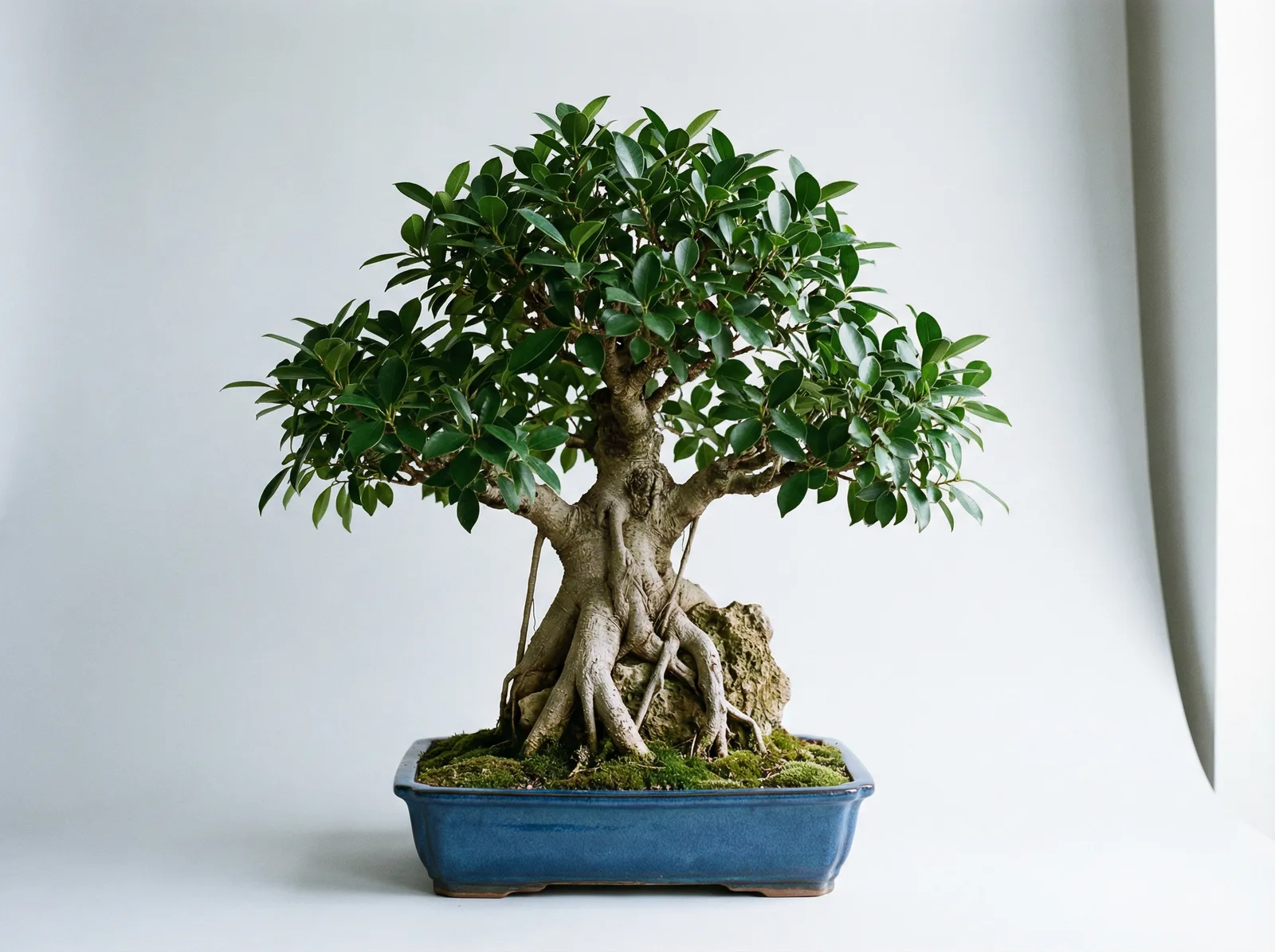
Ficus Bonsai
- care
- beginner
- light
- bright indirect
- zone
- 10–12
Syzygium australe · Myrtaceae
Why grow it
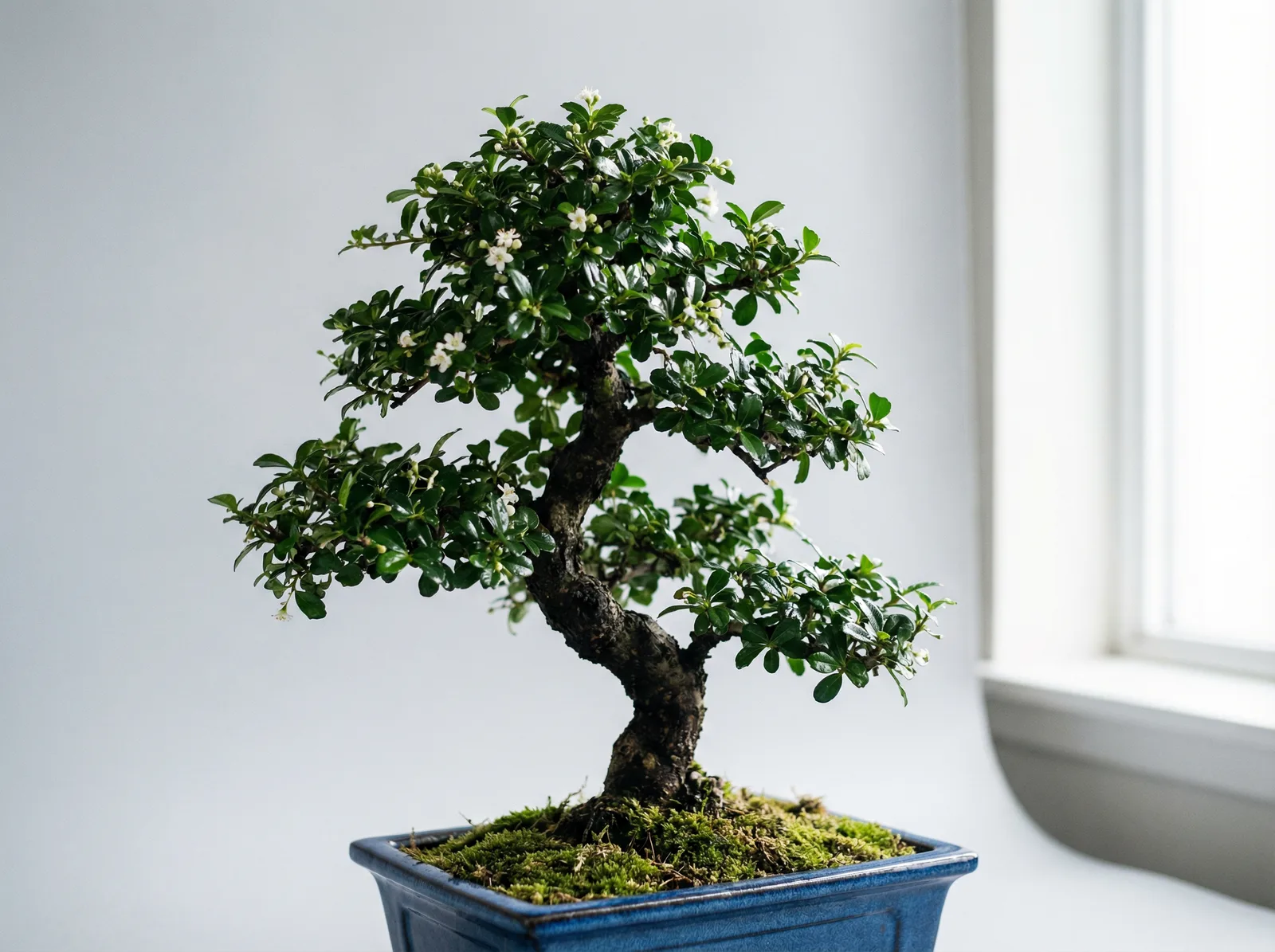
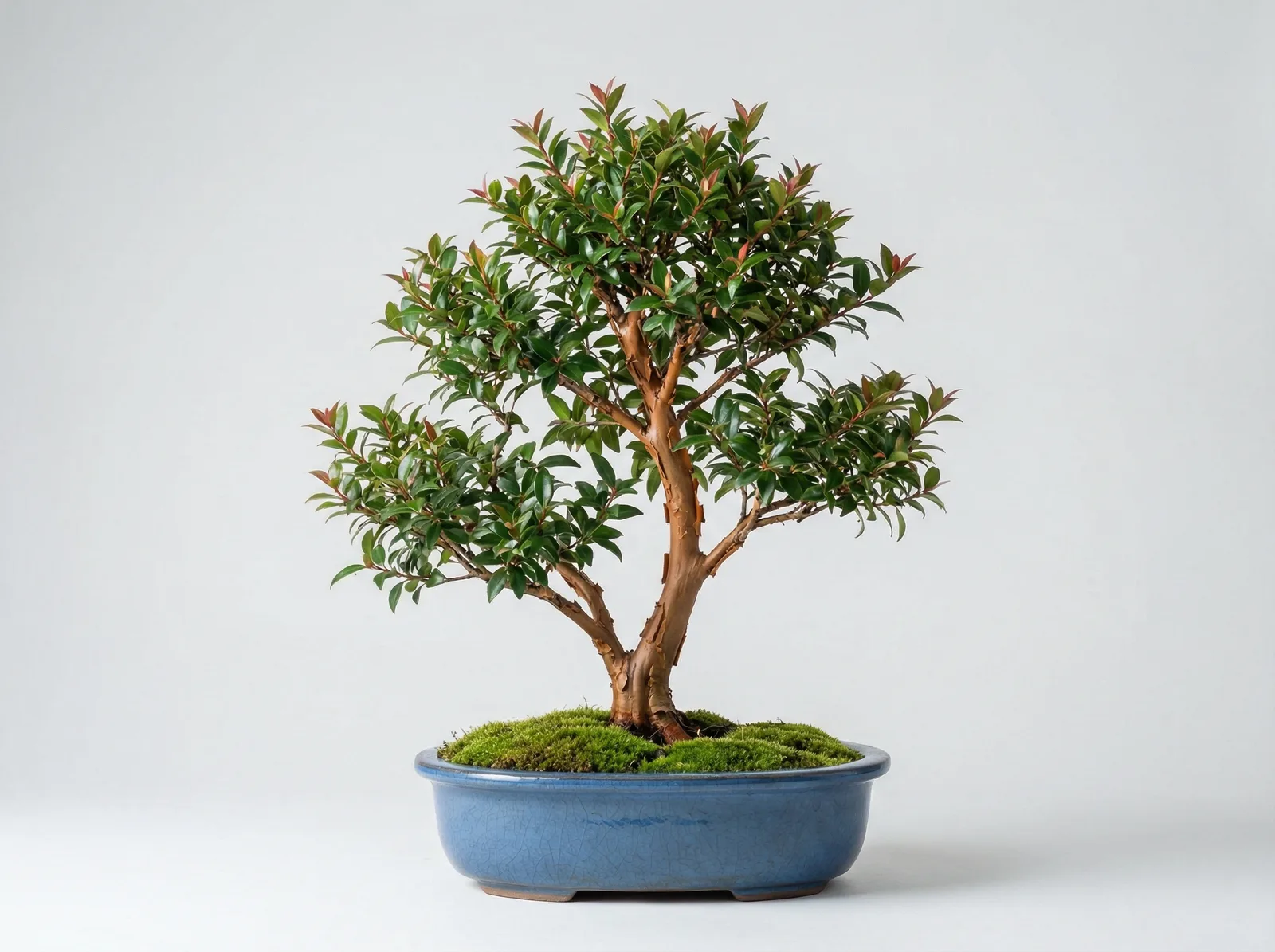
Brush cherry runs a color show with every growth flush -- new leaves break bronze-red, then mature to glossy deep green over a few weeks. Syzygium australe, an Australian rainforest-margin native, adds tiny white flowers in spring, and if pollinated, edible purple berries follow. That's a lot of visual interest from one tree.
Ramification builds fast. The dense compact growth responds beautifully to regular pinching. Within two or three years of consistent work, you can build impressive foliage pads. Mature bark smooths to a pale, slightly peeling surface that adds another layer of character.
Brush cherry works indoors and outdoors in frost-free zones. It's more cold-sensitive than Chinese elm or ficus, so if frost visits your area, plan on bringing it inside for winter. Think of it as a tropical that earns its keep outdoors from May through October.
The routine
Consistent moisture is the single most important factor for brush cherry. These trees come from Australian rainforest margins where soil stays damp. Let the top quarter-inch dry between waterings but never let the root ball go completely dry. Check daily in summer, especially outdoors in full sun. A bone-dry brush cherry drops leaves within hours. Not days. Hours.
Growth comes in flushes. You'll see a burst of bronze-red leaves that harden to green over two to three weeks, then a pause before the next wave. Each flush is an opportunity to pinch and shape. Expect three to four flushes per season with good care and consistent feeding with half-strength liquid fertilizer every two weeks.
Brush Cherry looking rough right now?Skip to common problems below, or start with the symptom guide.Bring the tree indoors before any hint of frost. Even a light freeze damages or kills brush cherry. Transition gradually -- shade outdoors for a week before moving inside, and reverse the process in spring. The gradual shift prevents shock.
Indoor winter humidity matters. Heating systems dry the air and brush cherry notices. A humidity tray or small room humidifier keeps the leaves looking healthy through the dry months.
Shaping
Pinch constantly during the growing season. Shoots extend to four to six leaf pairs? Pinch back to one or two. Brush cherry responds with back-budding along the entire branch, building density fast. This is the quickest path to fine ramification -- don't skip it.
Structural pruning in late winter or early spring before the first growth flush. Remove crossing branches, clean up the interior, and set your branch framework. Brush cherry heals cuts well. Use cut paste on anything larger than pencil thickness.
Defoliation works in early summer for leaf reduction and ramification boost. Strip all leaves and the tree pushes a new set within two to three weeks. Only do this on healthy, well-fed, established trees. The new leaves come in noticeably smaller and back-budding is impressive.
Want berries? Stop pinching some branch tips in early spring to allow flowers. You sacrifice compactness on those branches but gain flowers and fruit. A worthwhile trade on a mature tree.
Brush cherry's styling clock runs on its growth flushes. Every few weeks a wave of bronze-red leaves breaks, hardens to green, and pauses -- and each flush is a shaping window. Pinch at the flush and the pads tighten; design the silhouette so new bronze growth flashes at the pad edges, because that two-tone moment is the best thing this species does.
Informal upright and broom forms suit the naturally rounded canopy. Multi-trunk and clump plantings are the other direction worth exploring -- a small grove showing off that smooth, pale, slightly peeling bark.
Wire young wood only, and check it monthly: branches thicken fast during a flush, and wire scars the bark before you expect it. Match wire to branch with the tool at /tools/wire-gauge, set it in spring, plan to remove it by late summer, and let pinching handle the fine work from there.
When things go wrong
Drought stress kills fast. If leaves crisp and fall, you let the soil dry out too much. Soak the root ball thoroughly and maintain consistent moisture going forward. The tree recovers if a thumbnail scratch on the branches shows green and the wood still flexes. Branches that scratch brown and dry are gone -- prune back to live wood.
Scale insects are the most persistent pest -- small brown bumps clustering on stems and leaf undersides, easy to miss in the dense foliage until the population explodes. Check every two weeks during the growing season; dab scattered ones with rubbing alcohol, and treat anything more per our pest control guide at /guides/pest-control.
Fungal issues in overly humid conditions with poor airflow. Black spot on leaves or fuzzy mold at branch junctions means you need better ventilation. Thin the canopy, back off the misting, and treat with copper fungicide if it spreads.
Frost damage shows as blackened mushy leaf tips and branch ends. There's no recovering frost-killed tissue -- prune it off and protect the tree going forward. Even a few hours below 32°F causes real damage to this species.
Brush cherry bonsai are available online for $30-80 from tropical bonsai vendors. Wigert's Bonsai in Florida specializes in tropical species and usually carries excellent brush cherry material -- their stock tends to be well-developed and healthy. Eastern Leaf and Bonsai Boy also stock them regularly.
Nursery stock for landscaping is available in warm-climate garden centers for $15-30. These work as starter material if you pick carefully. Look for compact plants with multiple branches low on the trunk. Air-layering from larger landscape-size plants is another way to get thick trunks quickly.
Some links may become affiliate links; our picks don't change.
Also on the bench