Ulmus parvifoliaboth
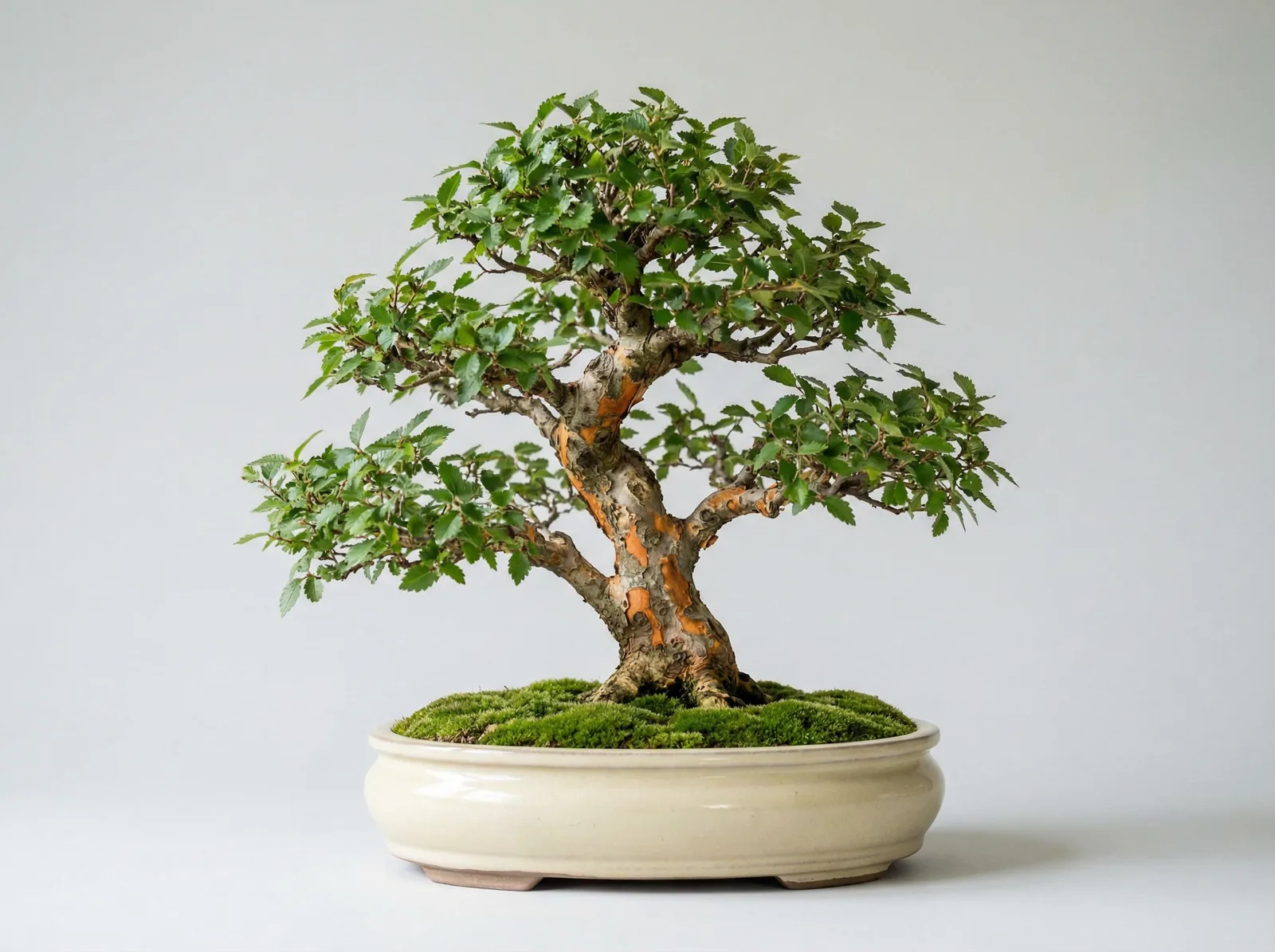
Chinese Elm Bonsai
- care
- beginner
- light
- full sun+
- zone
- 5–10
Carmona retusa · Boraginaceae
Why grow it
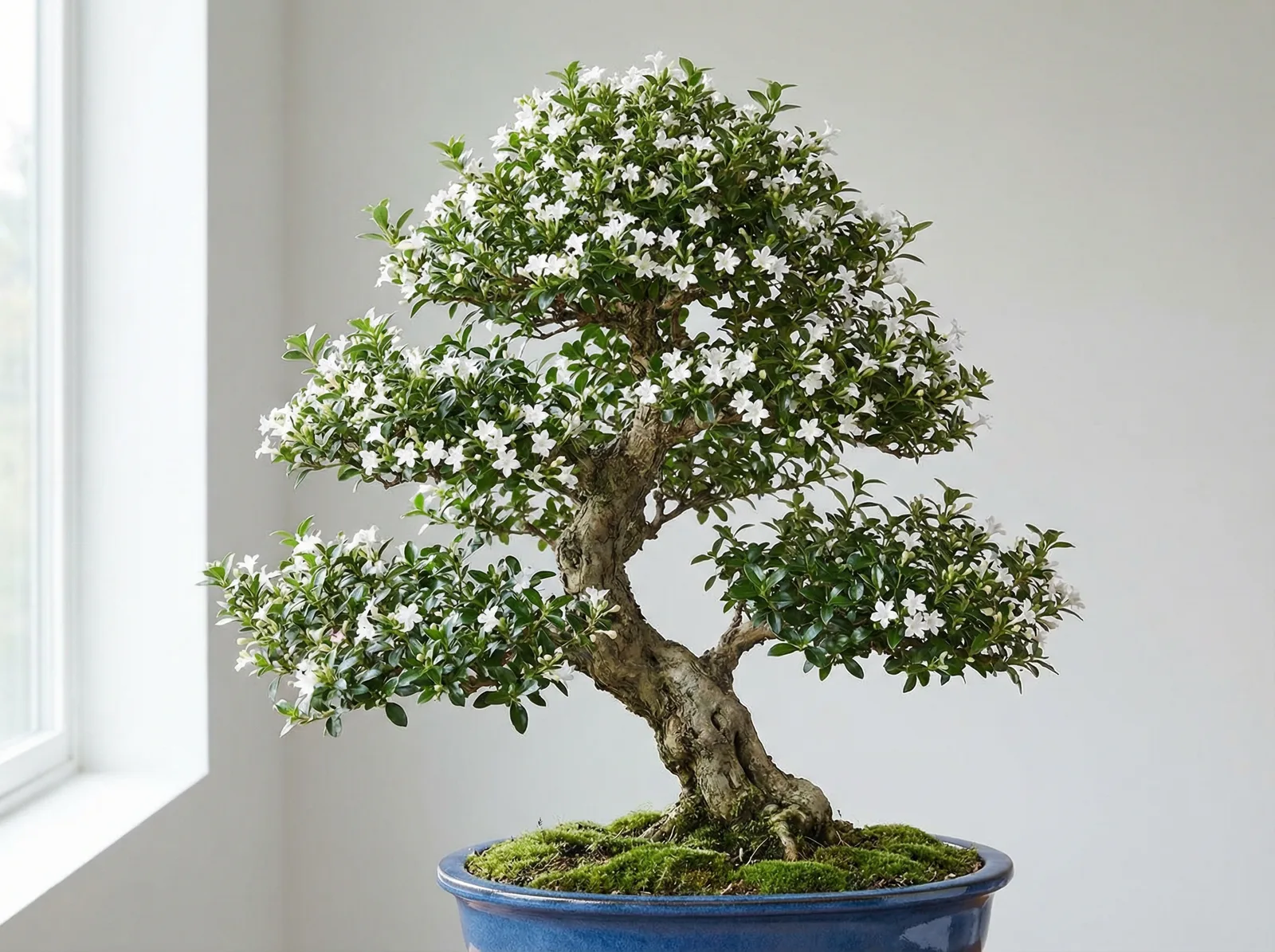
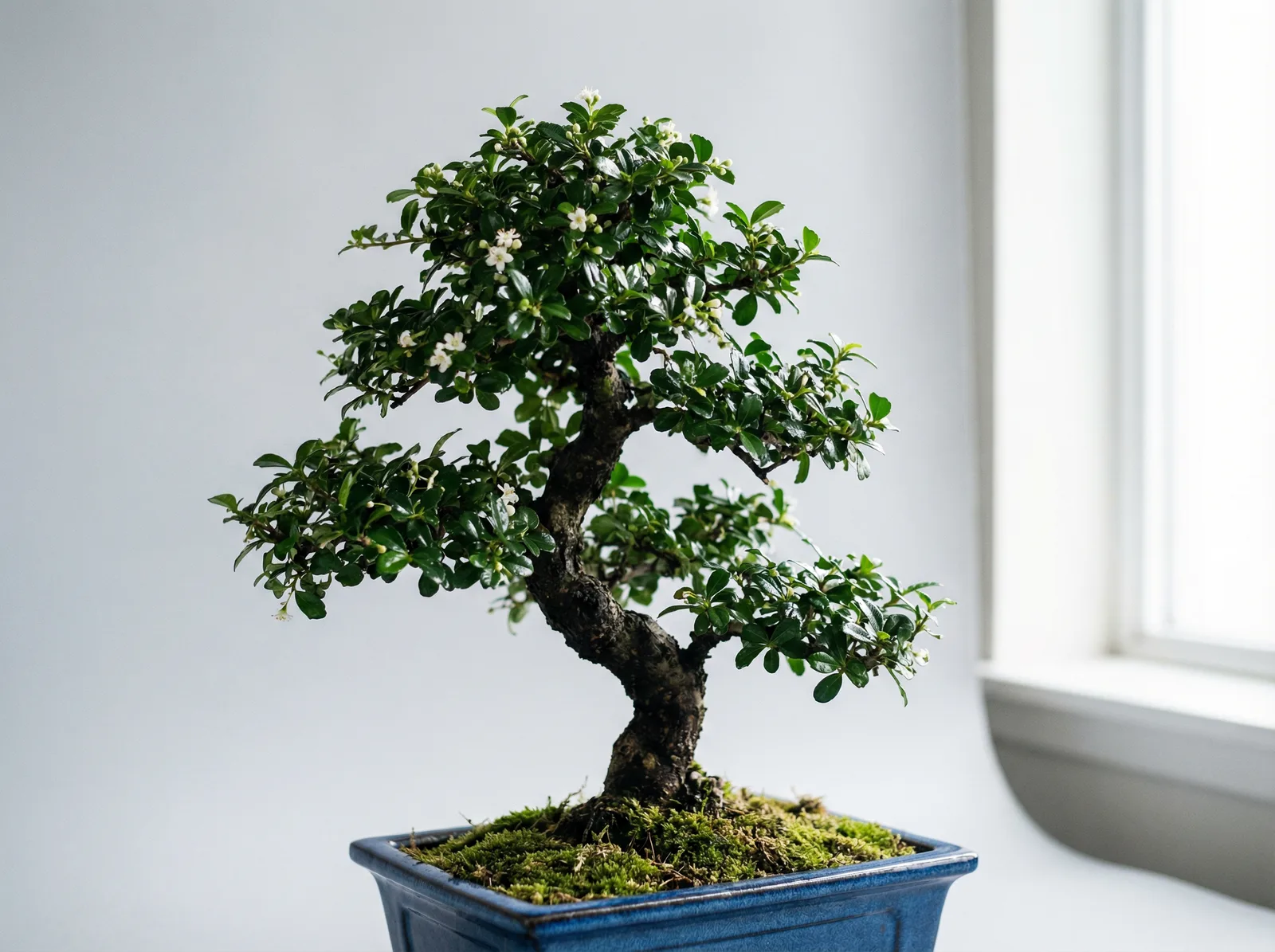
Fukien tea bonsai have a reputation problem. Every big-box store sells them as "great beginner indoor trees," and that's a flat-out lie. Carmona retusa is finicky, dramatic, and will drop every leaf if you look at it wrong. So why bother? Because when you get the conditions dialed in, this tree flowers year-round with tiny white blooms, produces miniature red berries, and develops bark that looks centuries old. One naming note: Fukien tea, Carmona retusa, Carmona microphylla, and Ehretia microphylla are all the same plant -- botanists currently file it under Ehretia microphylla, and vendors use whichever name is on the tag.
The small, dark green leaves have a rough, sandpaper-like texture from the tiny hairs covering their surface. That mottled gray-tan bark? It only gets better with age. And those flowers aren't seasonal -- they pop up whenever the tree is happy, which tells you a lot about how your care is going.
Think of fukien tea as a step up from ficus. Not the hardest tropical you'll ever grow, but definitely not the forgiving houseplant the labels suggest. If you've kept a ficus alive for a year, you're ready. Just don't expect the same tolerance for neglect.
The routine
Here's what nobody tells you about fukien tea: they don't want bright light so much as consistent light. A south-facing window with a sheer curtain works. Direct afternoon sun? That'll scorch the leaves faster than you can say "brown spots." Morning sun is your friend. Afternoon sun is the enemy.
Watering is where most people kill these trees. Not from overwatering or underwatering specifically -- from inconsistency. Fukien tea would rather you water on a predictable schedule at 80% accuracy than nail the perfect moisture level randomly. Find a rhythm. Stick to it. Your tree will tell you it's working by keeping its leaves attached.
Fukien Tea looking rough right now?Skip to common problems below, or start with the symptom guide.Do you have dry indoor air? A humidity tray helps -- just set the pot on pebbles in a shallow dish of water. Misting is fine too, but it's more for your peace of mind than the tree's health. What really matters is avoiding the two killers: heating vents and AC drafts.
Temperature stability beats temperature perfection. Fukien tea thrive in a steady 68°F office and struggle in a house that bounces between 62°F nights and 78°F afternoons. Pick a spot with steady conditions and leave the tree there. Moving it around to "optimize" is the worst thing you can do.
Shaping
Fukien tea grow continuously indoors, so you can prune any month of the year. Pinch new shoots back to 2-3 leaves once they've extended past your design outline. Two or three new buds will typically break from the leaf axils below your cut. That's how you build density.
Keep your shears sharp and clean. Wound healing on this species is slow -- we're talking weeks to months for cuts larger than 3mm. A dull cut that crushes tissue heals even slower. Cut paste on anything bigger than a pencil lead is worth the effort, though smaller nicks will callus on their own.
Want to restructure the tree? Brace yourself for sulking. Hard pruning triggers leaf drop that can last 2-4 weeks before recovery kicks in. Do your heavy cutting in May or June when the tree has maximum energy to bounce back. And skip defoliation entirely -- fukien tea don't recover from full leaf removal the way ficus do. Partial defoliation of oversized or damaged leaves is fine. Stripping the tree bare is a death sentence.
Most fukien tea arrive already "styled" -- the S-curve trunk from the big-box store -- and the smartest first move is restraint. That S relaxes into something more natural as the trunk thickens and the crown fills out, so edit rather than restyle. This species grows dense and twiggy on its own, and its real assets are the mottled bark and the year-round flowers, not dramatic movement.
Wiring demands a light touch. Branches are semi-brittle and snap clean when forced, and the thin bark scars easily -- scars that stay for years. Wire only young, flexible growth, check every five to seven days for bite, and remove within 8-10 weeks; the wire gauge tool at /tools/wire-gauge matches wire size to branch thickness. If a branch hasn't set by then, rest it and re-wire next season. Anything stiff gets shaped by pruning.
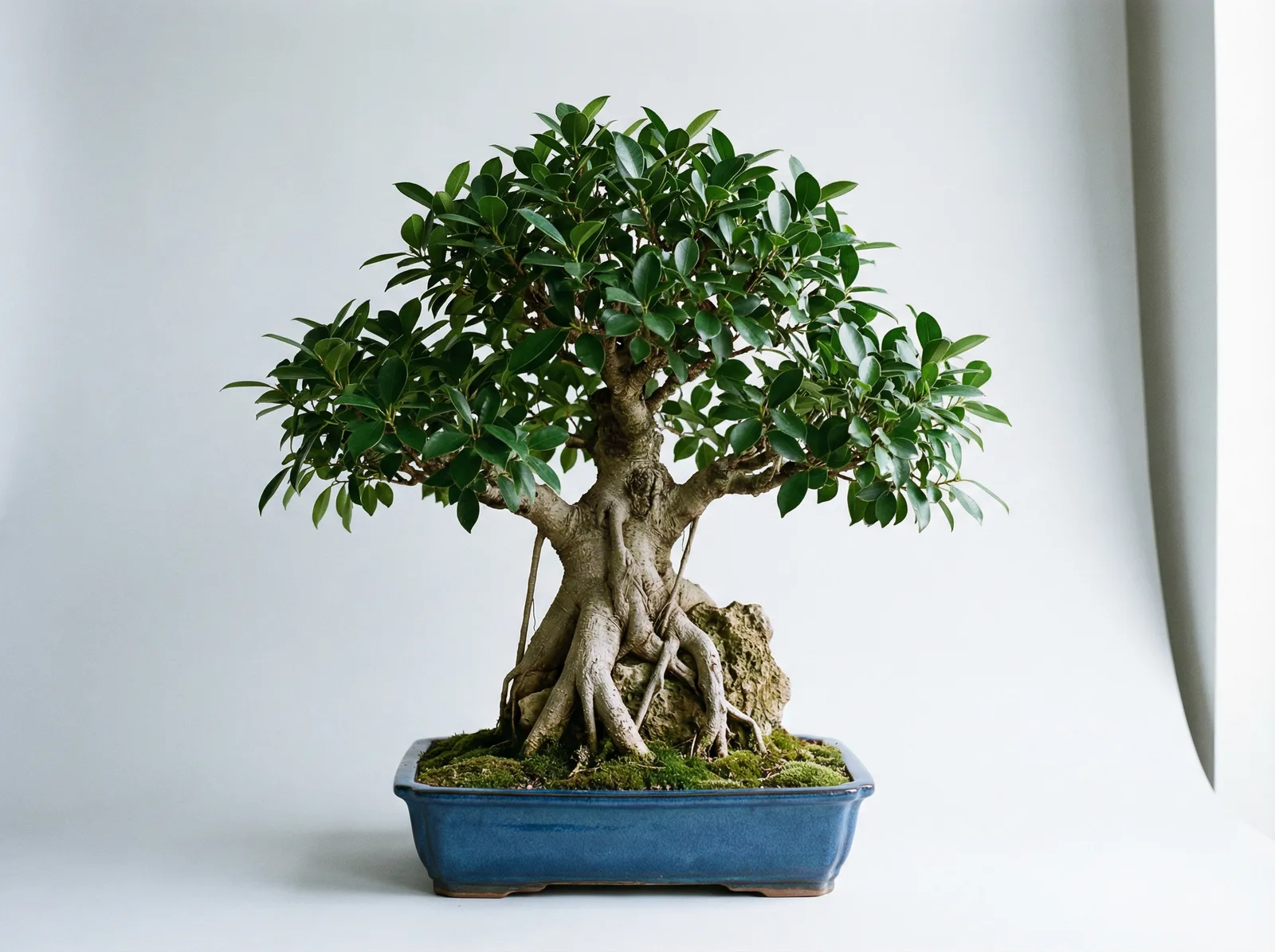
Root-over-rock works surprisingly well if you start young. Position juvenile roots over a good piece of rock and bury the whole assembly; the roots grip and thicken over 3-5 years. Patience pays off with this technique.
Don't hide that mottled trunk behind a wall of foliage. As the bark matures, it flakes and develops character you can't fake. Thin the lower canopy to expose it.
When things go wrong
Leaf drop. That's it. That's the whole fukien tea experience for most people. They drop leaves when you water inconsistently, when the temperature shifts, when you move the pot, when Mercury is in retrograde. Anxious owners rearranging the pot kill more fukien tea than any actual disease does. Keep conditions stable and the leaves stay put. If the tree goes bald, run the scratch test before you grieve: scrape a sliver of bark with a thumbnail, and green, moist tissue underneath means it's coming back. Be patient.
Brown, crispy leaf edges usually mean too much direct sun or erratic watering. Damaged leaves won't repair themselves, but new growth comes in healthy once you fix the underlying issue. Move to bright indirect light and get your watering schedule locked in.
Scale insects are sneaky on fukien tea because the rough leaf texture makes them hard to spot. Run your fingers along the stems -- if you feel small bumps that shouldn't be there, that's scale. Wipe each one off with a cotton swab dipped in rubbing alcohol. Check every few days until they're gone.
No flowers? Your tree is telling you it needs more light and more food. Bump it to a brighter location and feed with half-strength Biogold or fish emulsion every two weeks. Blooms should follow within a month or two.
Big-box stores like Home Depot and Lowe's sell fukien tea for $25-50, but quality is a lottery. Most have been sitting in low light for weeks, stressed and half-defoliated. If you buy retail, inspect every branch for pests and check that the trunk has some movement -- not just a straight stick.
Specialty bonsai nurseries are worth the premium at $80-200+. Tropical specialists like Wigert's Bonsai in Florida and Eastern Leaf regularly list fukien tea with actual trunk character and established ramification. You're paying for years of development you'd otherwise do yourself. For this species, starting with healthy, well-grown material saves you months of recovery time.
Some links may become affiliate links; our picks don't change.
Also on the bench