Ulmus parvifoliaboth
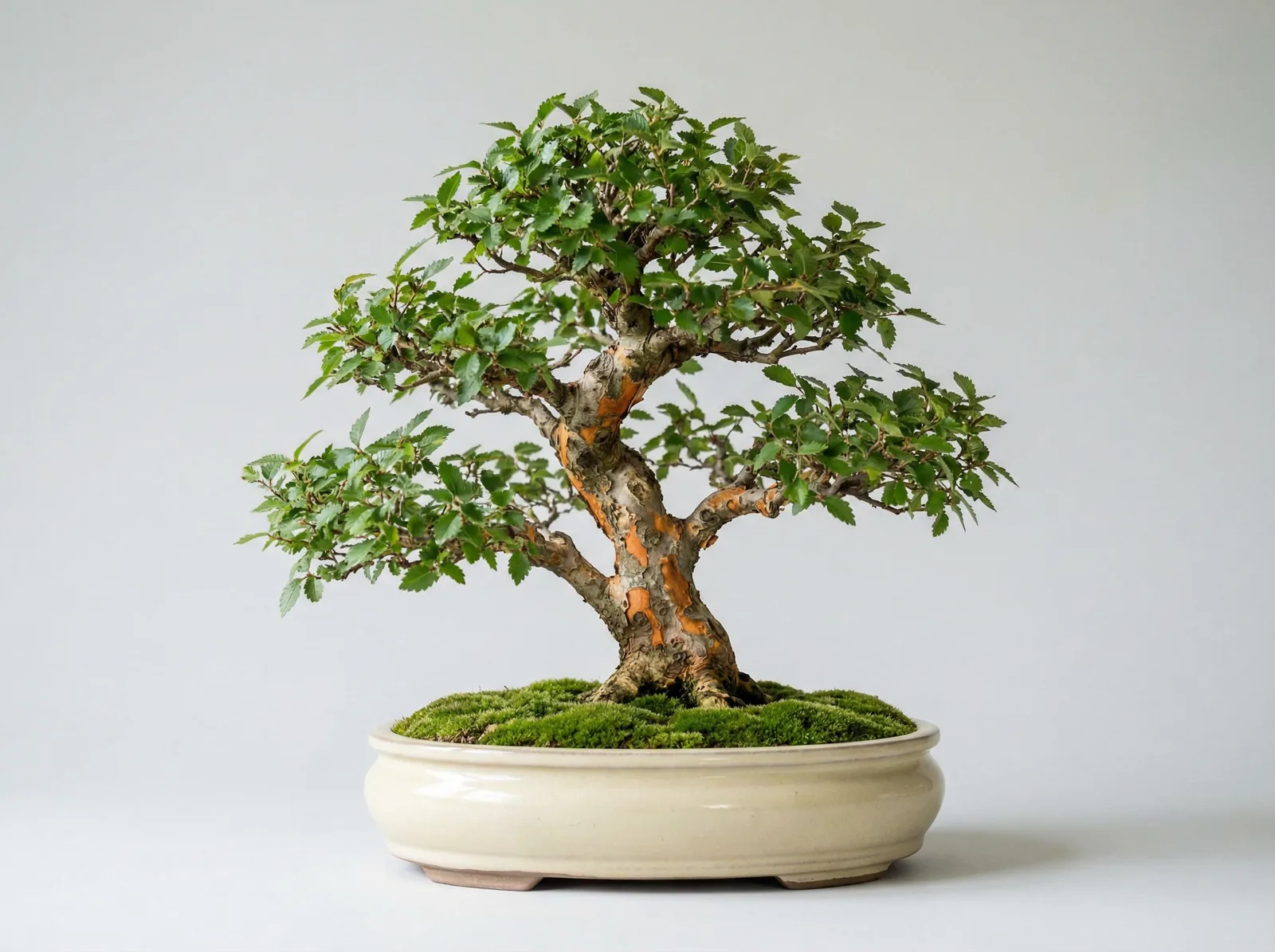
Chinese Elm Bonsai
- care
- beginner
- light
- full sun+
- zone
- 5–10
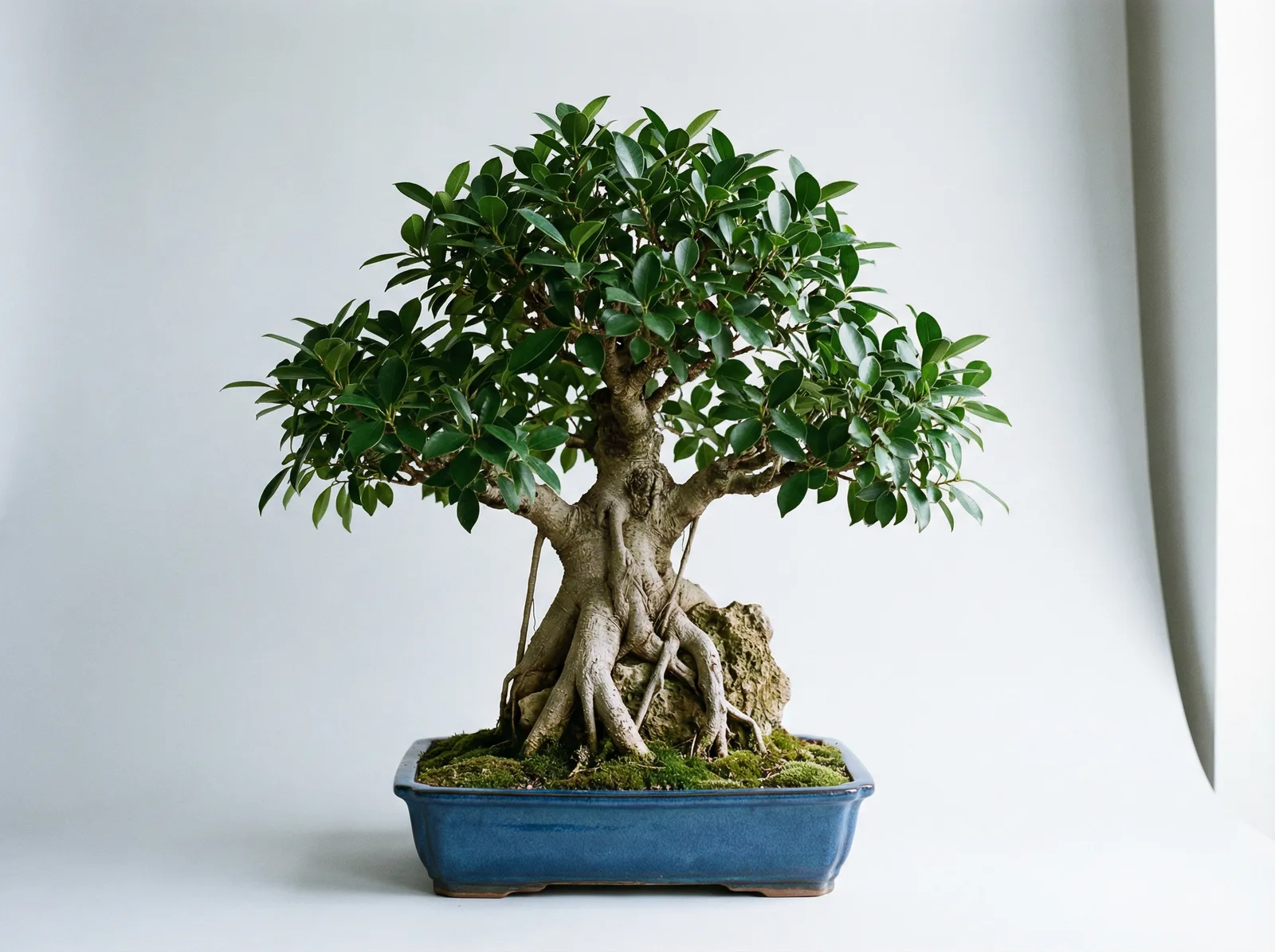
Ficus microcarpa · Moraceae
Why grow it
If every other indoor bonsai has died on you, get a ficus. Ficus microcarpa (long sold as Ficus retusa, and as "Ginseng Ficus" when grafted onto swollen roots) handles low light, dry air, and the kind of inconsistent watering that kills most tropical trees. It won't just survive your mistakes—it'll grow through them.
The speed surprises people. A ficus can push 8-10 inches of new growth in a month during summer. You'll prune it back, and two weeks later it's right back where it started. This makes ficus perfect for practicing technique. Bad cut? It grows over. Ugly wire scar? Gone in a season. You learn faster on a tree that forgives fast.
Aerial roots are the signature trick. In high humidity, ficus drop roots from their branches that grow down to the soil and thicken into secondary trunks. That banyan look—with a canopy supported by a web of root-trunks—is achievable in your living room. Takes patience, but it happens.
The routine
Light runs everything with a ficus. Not enough light and you get long, leggy stems with big gaps between leaves. Enough light and you get compact growth, smaller leaves, and a tree that actually looks like a tree. South-facing window is ideal. West-facing works. East-facing is marginal. North-facing? Get a grow light or get a different hobby.
Here's what nobody tells you about ficus: they hate change more than they hate neglect. Move one from a bright window to a dim shelf and it'll drop every leaf in protest. Change the watering schedule suddenly—leaf drop. Turn up the AC in summer—leaf drop. Find a spot that works and leave the tree there. Rotate it a quarter turn weekly so growth stays even, but that's it.
Ficus looking rough right now?Skip to common problems below, or start with the symptom guide.Watering is simple. Press a fingertip half an inch into the soil: dry means water until it runs out the bottom, damp means wait a day. In a bright spot with warm temps, that's every 2-3 days. In winter or low light, maybe weekly. Ficus handle slight underwatering far better than overwatering. A dry ficus drops leaves and recovers. A waterlogged ficus rots from the roots up.
Use a soil mix of 40% akadama, 30% pumice, and 30% pine bark. This holds enough moisture for the tropicals while still draining fast. Straight potting soil compacts into a brick and suffocates the roots—big-box ficus regularly arrive potted in soil so dense the roots are effectively growing in modeling clay.
Feed with half-strength liquid fertilizer every two weeks from spring through fall, then drop to monthly in winter -- ficus never go fully dormant indoors, but shorter days still slow them down. Biogold pellets every 4-6 weeks work too if you don't want to think about it.
Shaping
Ficus bleed white latex when you cut them. It drips everywhere, stains clothes, and makes your tools sticky. Keep a damp rag handy. The latex actually seals the wound on its own, so you don't need cut paste—but it can irritate skin and eyes, so wash your hands after a pruning session and keep the trimmings away from pets.
For maintenance pruning, let a new shoot run out to six or eight leaves, then cut it back to two. New buds break from the leaf axils within a week. In peak summer growth, you'll be doing this every 10-14 days. Each cut doubles the branch tips, building ramification fast.
Don't be afraid of hard pruning. Ficus back-bud from old, bare wood better than almost any species. Got a leggy mess with leaves only at the tips? Chop it back to 4 inches above the soil line in May. You'll have a bush of new growth by August. Ficus cut back to bare stumps routinely resprout into decent pre-bonsai in a single growing season.
Defoliation works but isn't necessary for most growers. If you want to force smaller leaves, strip all the foliage in late May. The replacement leaves come in 30-40% smaller. Only do this on a tree that's been growing strongly for at least a year.
Banyan style is where ficus belong. Those aerial roots dropping from branches, thickening into trunk-like pillars, spreading the canopy wider and wider—it's what the species does in nature, and it's what looks most convincing in a pot. To encourage aerial roots, wrap sections of branch with damp sphagnum moss held on with plastic wrap. Mist daily. In warm, humid conditions, roots appear within 6-8 weeks. Guide them downward with gentle wiring.
Root-over-rock is another natural fit. Take a young ficus with long roots, wire them over an interesting stone, and pot the whole assembly with the rock partially buried. Over one growing season, the roots grip the stone and start to thicken. Two years in, you can expose more of the rock.
Wiring is straightforward if you catch branches young. Ficus wood is flexible when green but lignifies fast, so wire during active growth in spring or summer and size the wire to each branch (/tools/wire-gauge does the math). Branches set in 3-6 months. Check monthly—ficus thicken fast enough that wire bite sneaks up on you, and the bark scars where it does.
Avoid formal upright styles. Ficus don't have the taper or branch structure to pull it off convincingly. Stick to informal styles that play to the species' strengths: spreading canopies, exposed roots, and that tropical character.
When things go wrong
Leaf drop. Every ficus owner panics about leaf drop. Deep breath. Ficus drop leaves when anything changes—you moved it, the heat kicked on, you watered on Wednesday instead of Thursday. If the branches are still green and flexible, the tree is fine. Not sure? Scratch a sliver of bark with a thumbnail: bright green and moist underneath means live wood. A ficus that has dropped every leaf but scratches green will releaf within weeks; a branch that scratches brown and dry is dead and can be pruned away. Keep conditions stable, resist the urge to "fix" things by overwatering, and new leaves show up in 2-3 weeks.
Yellow leaves falling from the bottom of the canopy usually mean overwatering. The roots are sitting in wet soil and starting to rot. Pull the tree from the pot and check—if the roots are brown and mushy instead of white and firm, you've got root rot. Cut away the damaged roots, repot into a grittier mix with more pumice, and water less frequently.
Sticky residue on leaves means scale insects or mealybugs. Flip a leaf over—you'll see small brown bumps (scale) or white cottony clusters (mealybugs). Lift them off with an alcohol-dipped cotton swab. For a heavy infestation, spray with horticultural oil, covering both leaf surfaces.
Leggy growth with big spaces between leaves is a light problem. The tree is stretching toward whatever light it can find. Move it closer to the window or add a full-spectrum grow light running 12 hours daily. Prune back the leggy sections—new growth in better light will be compact.
The "Ginseng Ficus" at Home Depot for $25 is actually fine as starter material. The bulbous root is a graft (not a natural feature), and the soil is usually terrible, but the tree itself is healthy. Repot it into proper bonsai mix within the first month and you've got a decent project tree.
For something with real potential, online vendors like Wigert's sell field-grown ficus pre-bonsai with actual trunk movement and nebari for $50-200. Eastern Leaf and Bonsai Boy carry good mid-range stock. Don't get suckered into paying premium prices for "rare" ficus cultivars unless you really know what you're looking at—most indoor ficus respond the same way to bonsai techniques regardless of cultivar name.
Some links may become affiliate links; our picks don't change.
Also on the bench