Repotting refreshes spent soil, trims circling roots, and resets drainage. Most bonsai need it every two to three years — here's how to do it right.
On the benchroot rakeroot scissorsbonsai potdrainage meshanchor wirechopsticksoil sieve
Repotting a bonsai isn't about upgrading to a bigger pot. It's about replacing broken-down soil and managing the root system before things go sideways. After two or three years, akadama crumbles, roots fill every cubic millimeter of the container, and drainage slows to a crawl. Repotting fixes all of it in one afternoon — and it's far less dangerous than beginners fear.
Does it actually need repotting? The four signs
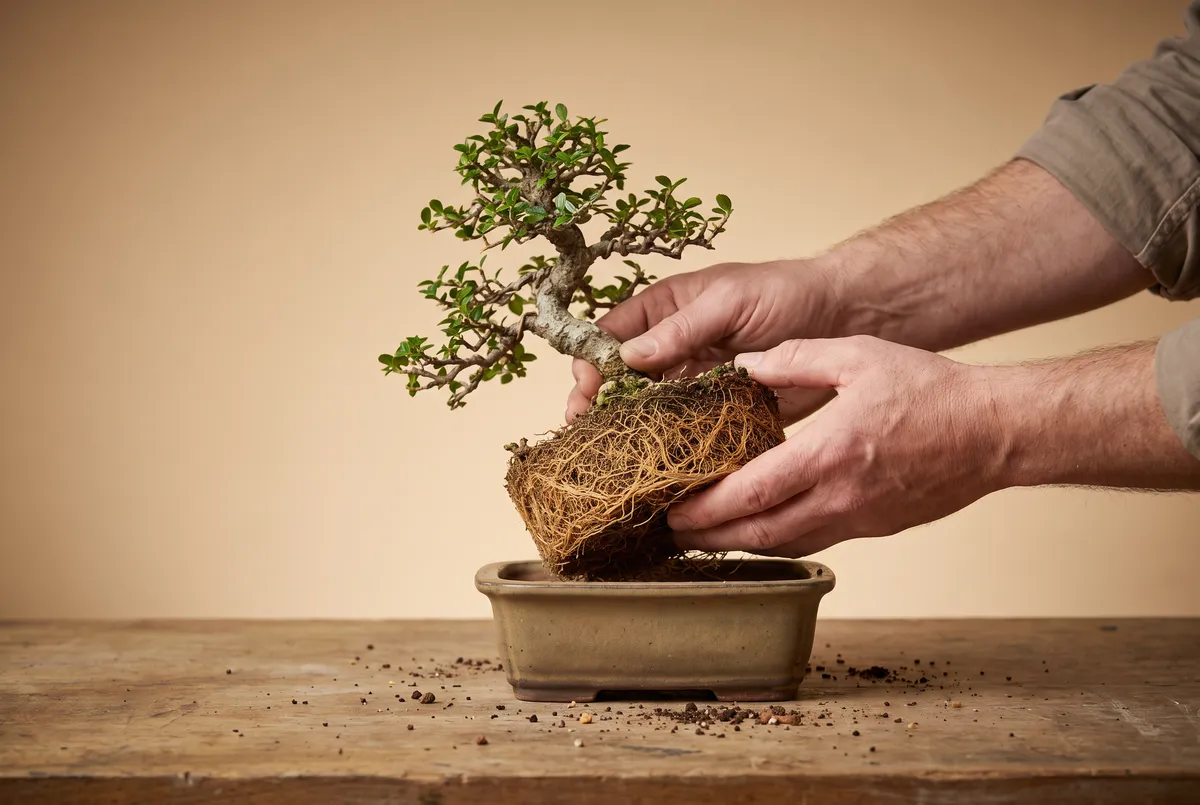
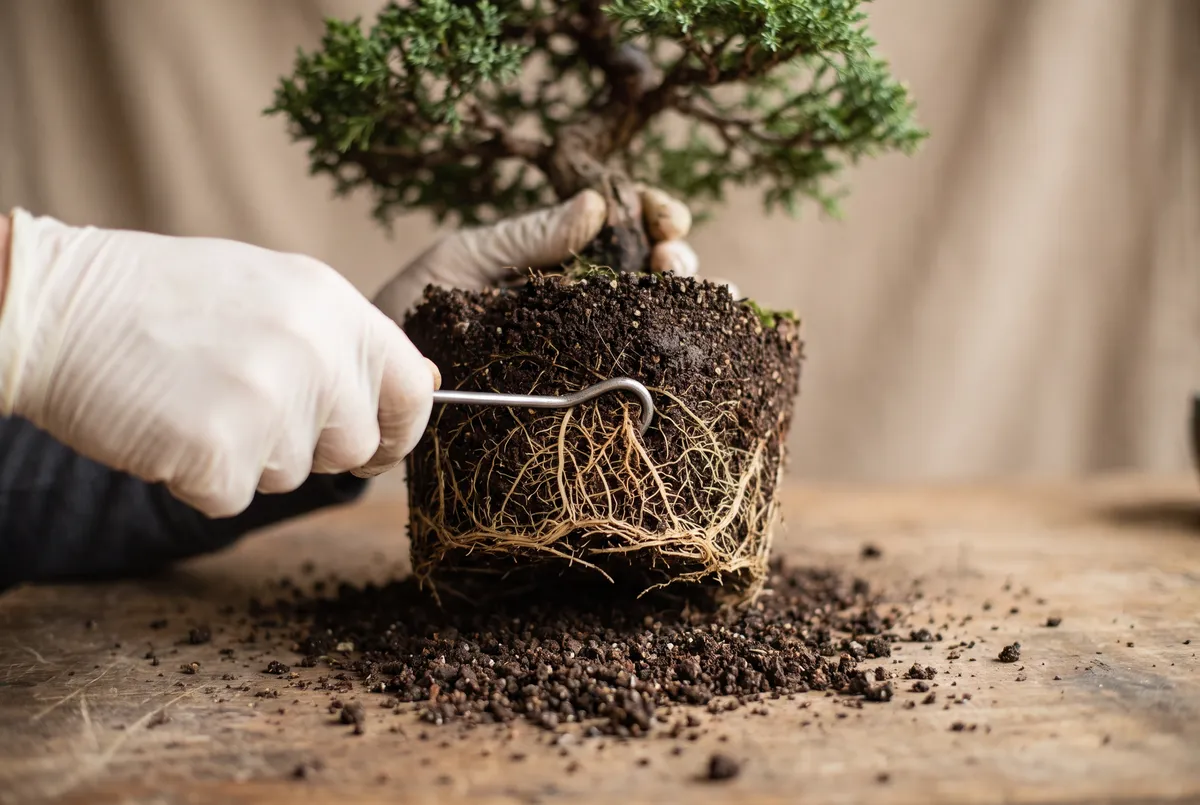
The lift test, failed: a root ball that comes out as one solid mat, holding the pot's shape, is due — book the next spring window.
Repot or wait?a starting point — cold zones shift a few weeks later
Roots need air as much as water. Once they've filled every pore in the pot, water can't soak in and oxygen can't reach the root tips — that's the real problem repotting solves. Four signs, checked each spring:
Water drains slower every month. A pot that used to drain in seconds now holds a puddle for a minute or more.
Roots are escaping through the drainage holes. A few exploring tips are nothing; ropes circling out the bottom mean the pot is full.
The lift test. Ease the tree a couple of centimeters out of the pot. A root ball that comes out as one solid mat, holding the pot's shape, is due.
The tree is pushing itself up. A root-bound trunk slowly rises as roots thicken beneath it — look for a gap under the nebari (the visible surface roots at the trunk base).
No signs? Leave the tree alone. "Every 2–3 years" is an inspection interval, not an appointment — a healthy tree in free-draining soil gains nothing from having its roots cut on schedule.
New tree potted in glued-down muck? Usually: wait
Mall and gift bonsai often arrive in dense peat, sometimes topped with glued-on gravel. The instinct is to fix it today. Usually the right move is to wait. A tree that just changed homes is already adjusting, and mid-winter or mid-summer root work stacks stress on stress. Peel off the glued gravel now (it blocks water and hides the soil from your finger test), water carefully — that peat stays wet a long time — and plan the real fix for early spring. The one exception that can't wait is root rot: sour-smelling soil and black, mushy roots mean the soil itself is killing the tree. That's an emergency repot, covered in the pest and disease guide.
Your first repot: the low-stakes version
If a full repot sounds terrifying, start with a slip-pot. It carries almost no risk and solves the worst problem — bad soil — immediately:
Ease the tree out of its current pot with the root ball intact. Don't comb, don't cut.
Set it into a slightly larger container with drainage holes; a cheap plastic training pot is perfect. Keeping a decorative pot that has no holes? Drill some — a tile bit at slow speed does it.
Fill the gap around the root ball with granular bonsai soil (the soil guide covers what to buy), working it in with a chopstick.
Water thoroughly and put the tree back in its usual spot.
No root pruning means no recovery period, which is why slip-potting works almost any time during the growing season. It's the standard rescue move for a mall bonsai sitting in soggy peat.
When to repot, species by species
Timing matters more than technique. For temperate species, the window is early spring, right when buds fatten but before they open — the tree is loaded with stored energy and primed to push new roots into fresh soil. Tropicals are more flexible: late spring through early summer, whenever they're growing hard. Month by month (shift a few weeks later in cold zones, earlier in mild ones):
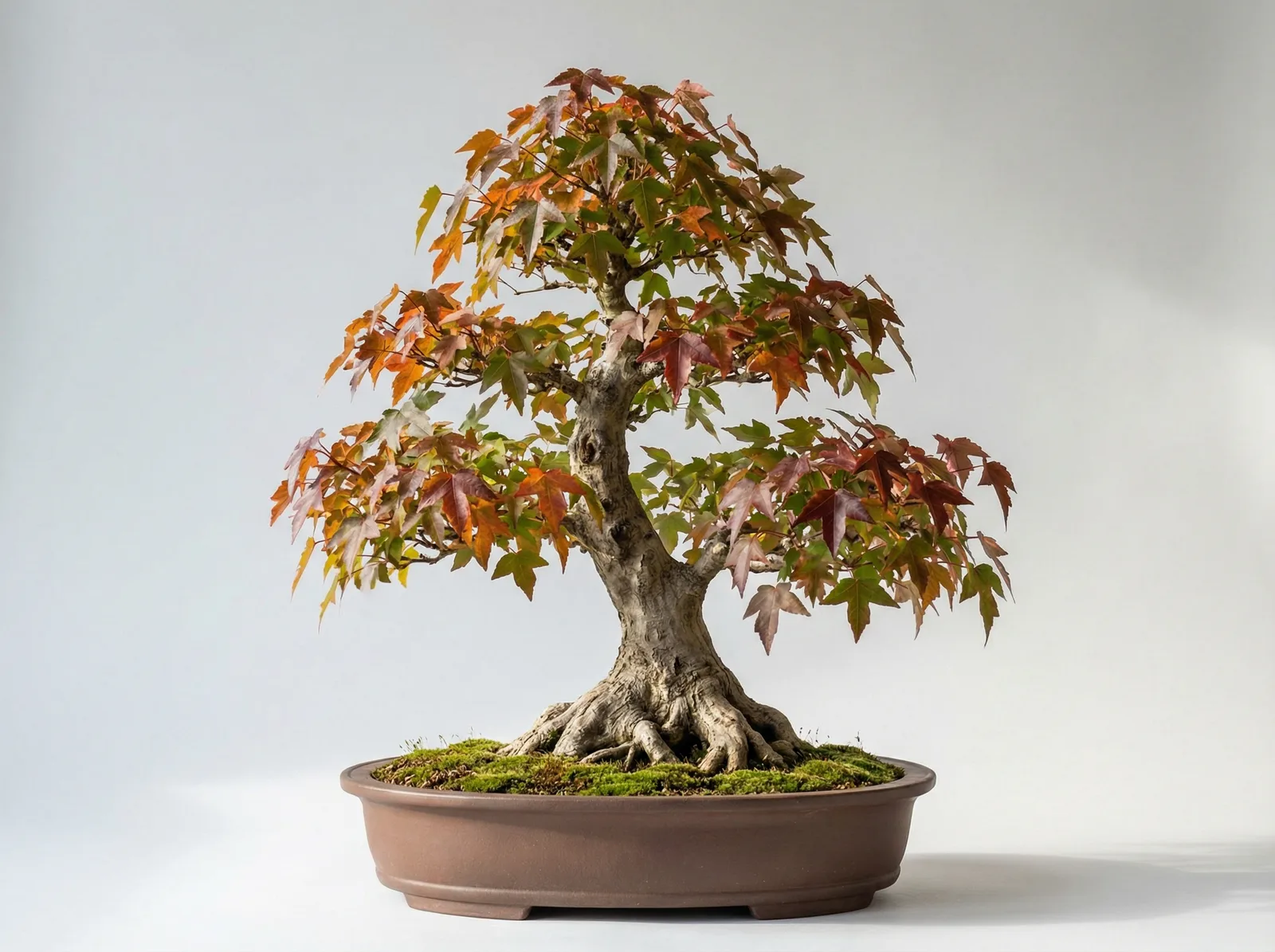
Japanese maple and trident maple: February–March, at bud swell. Every 2–3 years; fast-rooting tridents usually need it every 2.
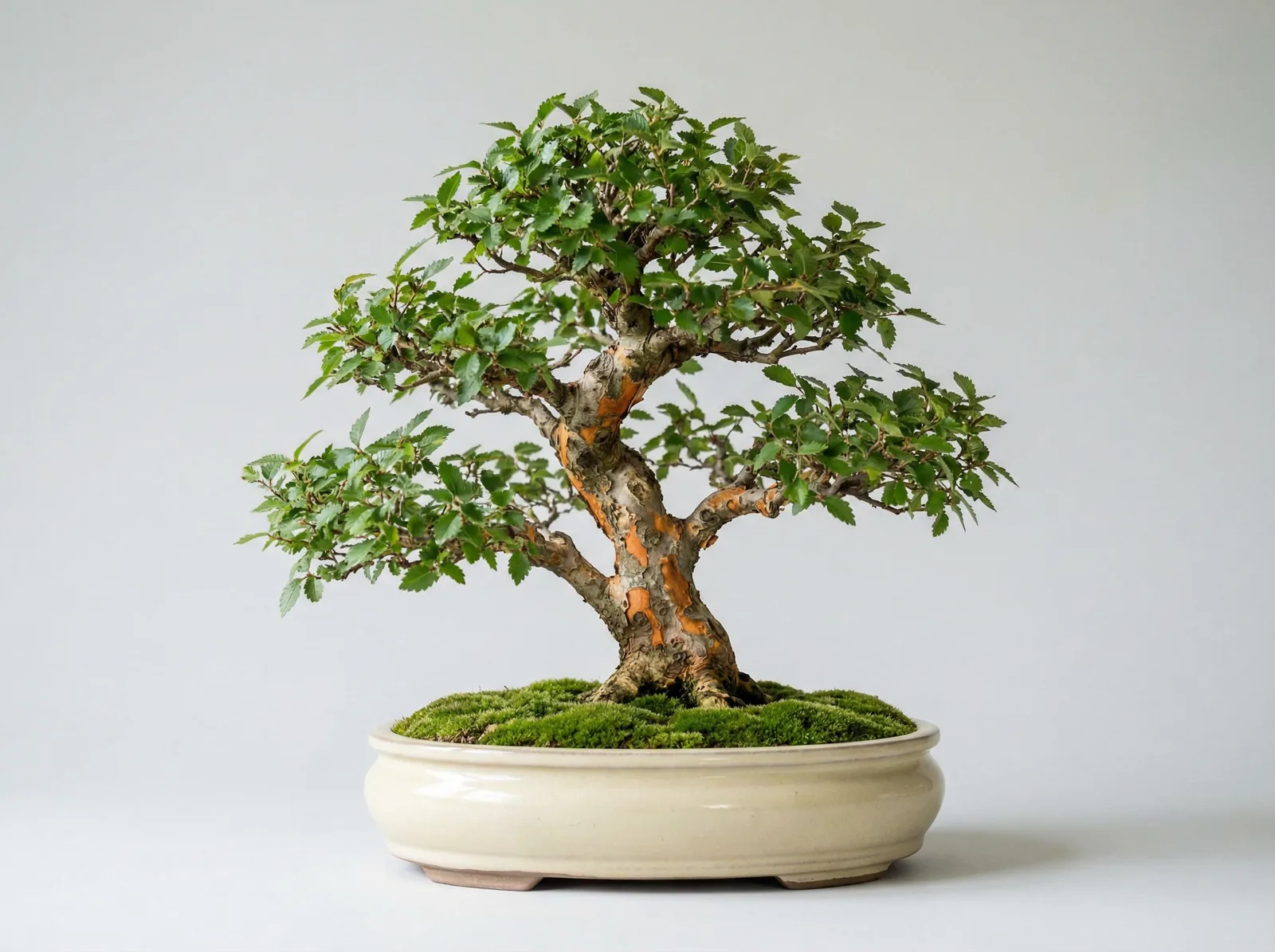
Chinese elm: March, as the buds green up. Every 2 years — it fills a pot quickly.
Black pine: March into early April. Every 3–5 years; pines resent frequent root work.
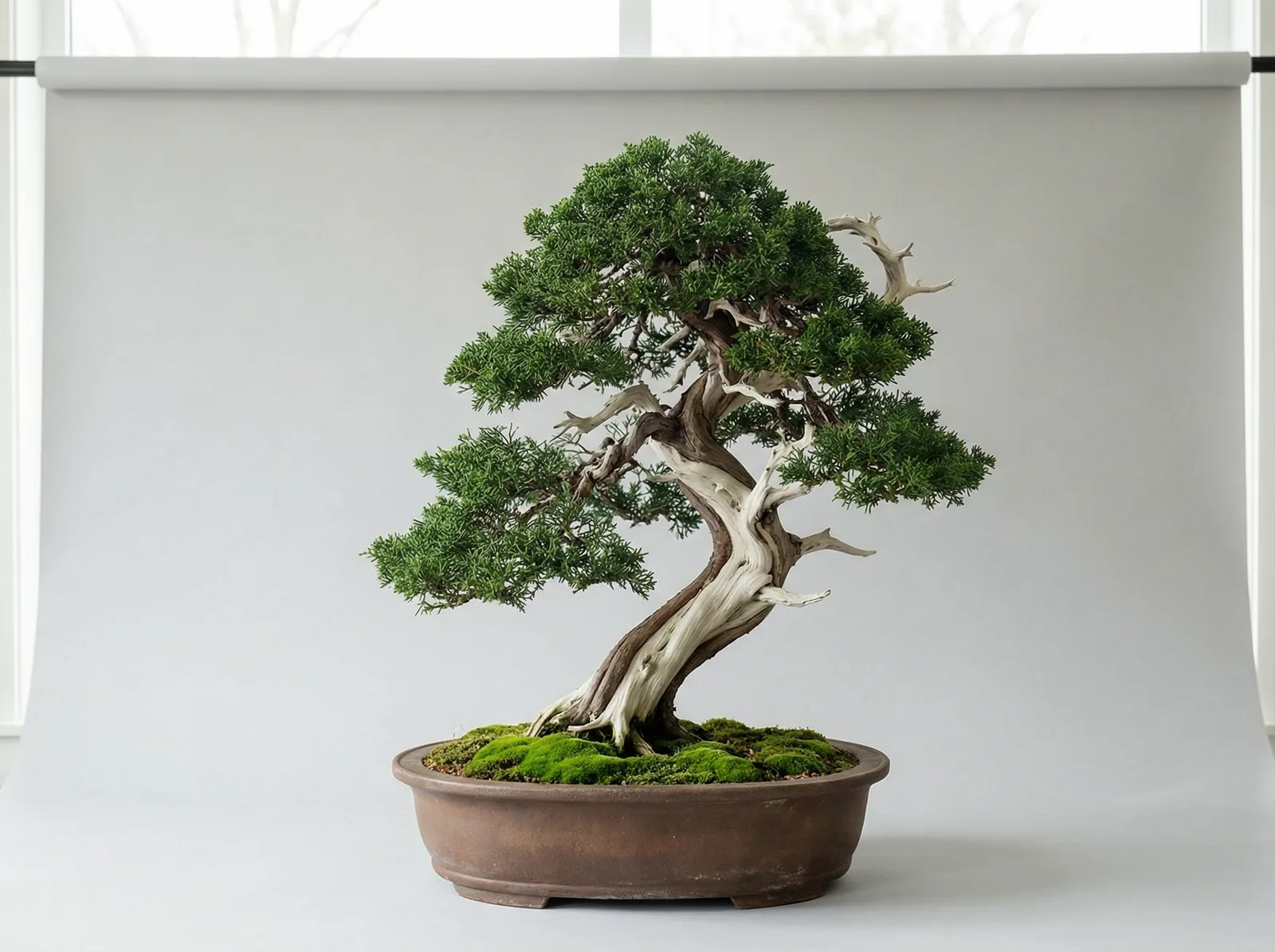
Juniper: slightly later, March–April, once the growth tips brighten. Every 2–3 years.
Ficus: June, in real warmth — ficus regrow roots fastest when nights stay warm. Every 2 years.
Jade: June as well. Every 3–4 years; let trimmed roots air-dry a few hours before potting — standard succulent insurance against rot.
Satsuki azalea: right after flowering, usually June, into straight kanuma. Every 2–3 years.
One hard rule spans all of them: never repot a sick or stressed tree — with root rot as the single emergency exception, because there the soil is the sickness. For everything else, get the tree healthy first and repot next season.
Choosing the pot — and the rest of the kit
Most repots go straight back into the same pot; the point is fresh soil, not more room. When you do need a new container, three rules of thumb get you close:
Length: about 2/3 the height of the tree.
Depth: roughly equal to the trunk's diameter at soil level (deep cascade pots are the exception).
Check the fit with the pot size calculator. Then stage the kit: fresh soil, pre-sifted with the dust removed — the soil calculator gives you the recipe and quantities for your species. Add drainage mesh, soft aluminum tie-down wire, a root hook or old chopstick, sharp root shears, and cut paste for deciduous species. If you're using akadama, soak it for ten minutes beforehand; dry akadama wicks moisture away from freshly trimmed roots.
Root pruning: which roots to cut, which to keep
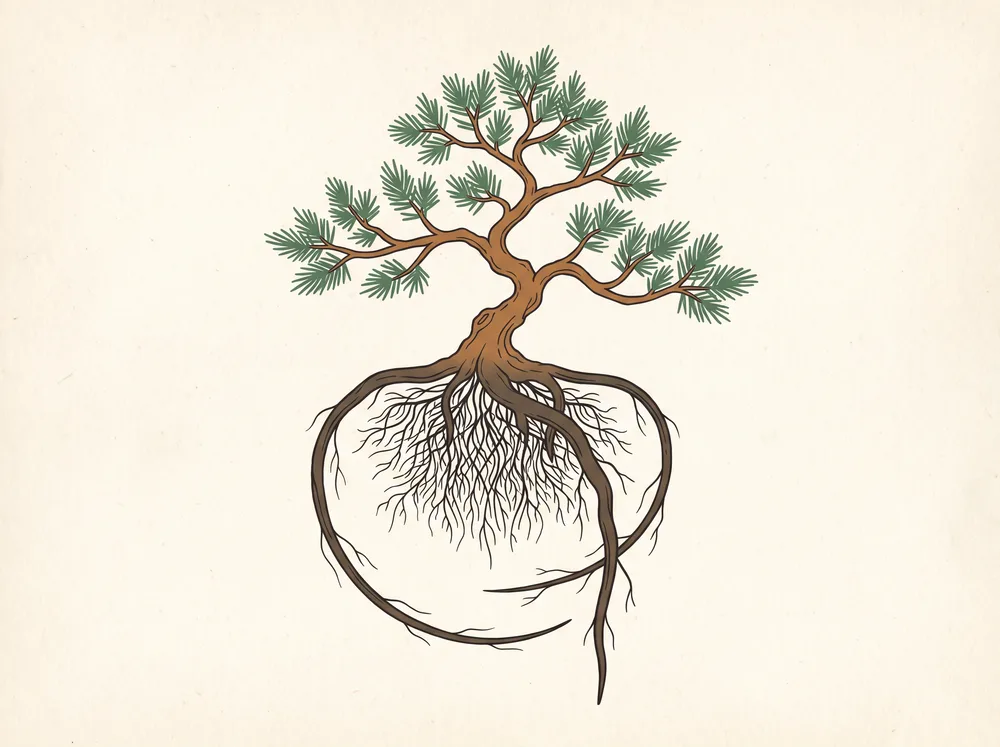
The fine white roots do nearly all the absorbing; the thick brown ones are plumbing and anchorage — and in a pot, anchor wires handle the anchorage. Root pruning is a trade: thick roots out, room for fine ones in. Sort what you see into three piles:
The three-pile sort, on one root system: keep the fine mats near the trunk, shorten the wide circler back to a side root, remove the taproot heading straight down.
Keep: the mats of fine feeder roots close to the trunk. That's the tree's working tissue.
Shorten: long runners circling the pot — cut each back to a junction with finer side roots, so the system branches instead of spiraling. Same logic as branch pruning, applied underground.
Remove: the thick taproot remnant and anything growing straight down. In a shallow pot they absorb little and steal the space feeder roots need.
Let each cut serve the nebari too: keep roots that radiate like spokes; remove ones that cross or jut upward. Take no more than about a third of the root mass, and less on conifers. Ficus and Chinese elm shrug off aggressive root work; black pine does not. Dead roots come off wherever you find them — dark, mushy, sour-smelling, where healthy roots are firm and pale.
The full repot, step by step
Six moves, out of the pot to tied down — the strip below shows the sequence at a glance. Work unhurried, and mist the roots whenever you pause — fine roots die fast in open air.
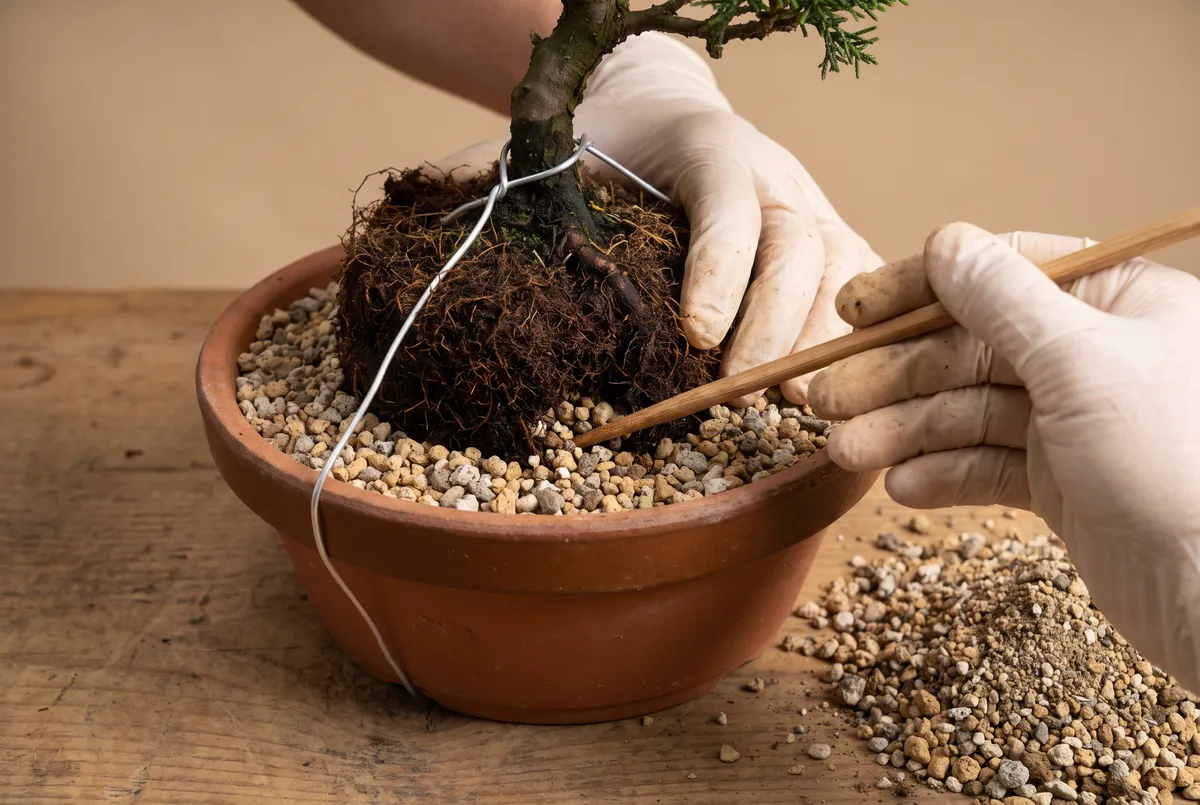
Steps 5–6 — chopstick mix into every root gap until nothing sinks or rattles, then the tie-down wire crosses the root ball (never the trunk) until the tree can't rock.Step 2 — comb from the edges inward. Take 30–50% of the spent soil, and on pines and junipers leave the core untouched: that's where the mycorrhizae live.The repot, start to finish
1Ease it outcut anchor wires under the pot first
2Rake the edgesloosen the outer third of the root ball
3Trim circlersremove roots that circle the pot — never more than ⅓ total
4Wire it inanchor wire through the drainage holes
5Work in soilchopstick fresh mix into every root gap — no air pockets
6Soak + shadewater until it runs clear; two weeks out of direct sun
Slide the tree out of its pot. Stuck? Run a thin knife around the inside edge.
Comb out old soil with the root hook, starting at the edges and working inward. Remove 30-50% of the spent substrate. On pines and junipers, leave a core of old soil near the trunk — it holds the mycorrhizal fungi the tree depends on.
Trim the roots using the keep/shorten/remove sort above — a third of the mass, maximum.
Prep the pot: mesh over the drainage holes, anchor wires threaded up through the bottom. Skip the old "drainage layer" of coarse particles — growers increasingly agree that in a shallow pot it holds a perched band of water instead of shedding it. One well-sifted particle size, top to bottom, drains better.
Mound fresh mix where the root ball will sit, position the tree slightly off-center with its front facing you, and work soil into the roots with a chopstick until no air pockets remain.
Tie the tree down. Thread the wire up through two drainage holes, cross the ends over the root ball, and twist them together until the tree can't rock (four holes, two wires for a big or top-heavy tree). Slip a scrap of rubber tubing over the wire where it crosses a surface root so it can't scar. Wind and bumps shift an unanchored tree and snap new feeder roots.
Aftercare and the month after
Water immediately and thoroughly, until it runs clear from the drainage holes. Then park the tree somewhere bright but sheltered — no harsh afternoon sun, no wind — for two to three weeks. Watch watering closely during this stretch: fresh soil drains differently and takes a week or two to calibrate, so check with a finger or chopstick instead of trusting the old watering rhythm. When the month is up, the fertilizing guide covers restarting.
Recovery has a normal script — learn it before you panic:
Normal: soft, tired-looking foliage for the first week — the tree lost absorbing roots and is rebalancing.
Normal: a deciduous tree repotted at bud swell sitting still for 10-14 days before the buds move.
Normal: shedding older leaves and pushing a fresh flush — ficus and Chinese elm do this after any disturbance (leaf drop explained).
Not normal: the whole canopy wilting within a day or two — too much root gone, or a root ball bone-dry or waterlogged. Shade it, check the moisture, and don't disturb it further.
Not normal: nothing moving three weeks after the rest of the garden has leafed out. Scratch test: nick a sliver of bark on a branch — green underneath means alive, keep waiting; tan means follow the triage in is my bonsai dead.
Quick repotting sheet
Frequency: every 2-3 years for most trees; annually for young, fast growers; every 3-5 for black pine.
Check first: slow drainage, roots out the holes, solid root mat, tree lifting itself. No signs, no repot.
Window: early spring at bud swell (temperate); June (tropicals, jade, azaleas after bloom).
Pot: length ≈ 2/3 tree height, depth ≈ trunk diameter; glazed oval for deciduous, unglazed rectangle for conifers.
Root pruning: a third of the mass, maximum. Keep fine feeders, remove downward growers, be conservative with conifers.
Nervous? Slip-pot instead — no root pruning, almost no risk.
After: 2-3 weeks of bright shelter, no fertilizer for a month. Worry only at whole-canopy wilt or three silent weeks.