
Is my bonsai dead?
Short answer
Do the scratch test: nick a sliver of bark on a small branch with your thumbnail. Green and moist underneath — alive, wherever you find it. Brown and dry — dead at that spot, so test again lower, toward the trunk. Two caveats: junipers hold green color for weeks after dying, and a bare deciduous tree in winter is dormant, not dead.
The scratch test, step by step
This is the one reliable check, and it takes ten seconds.
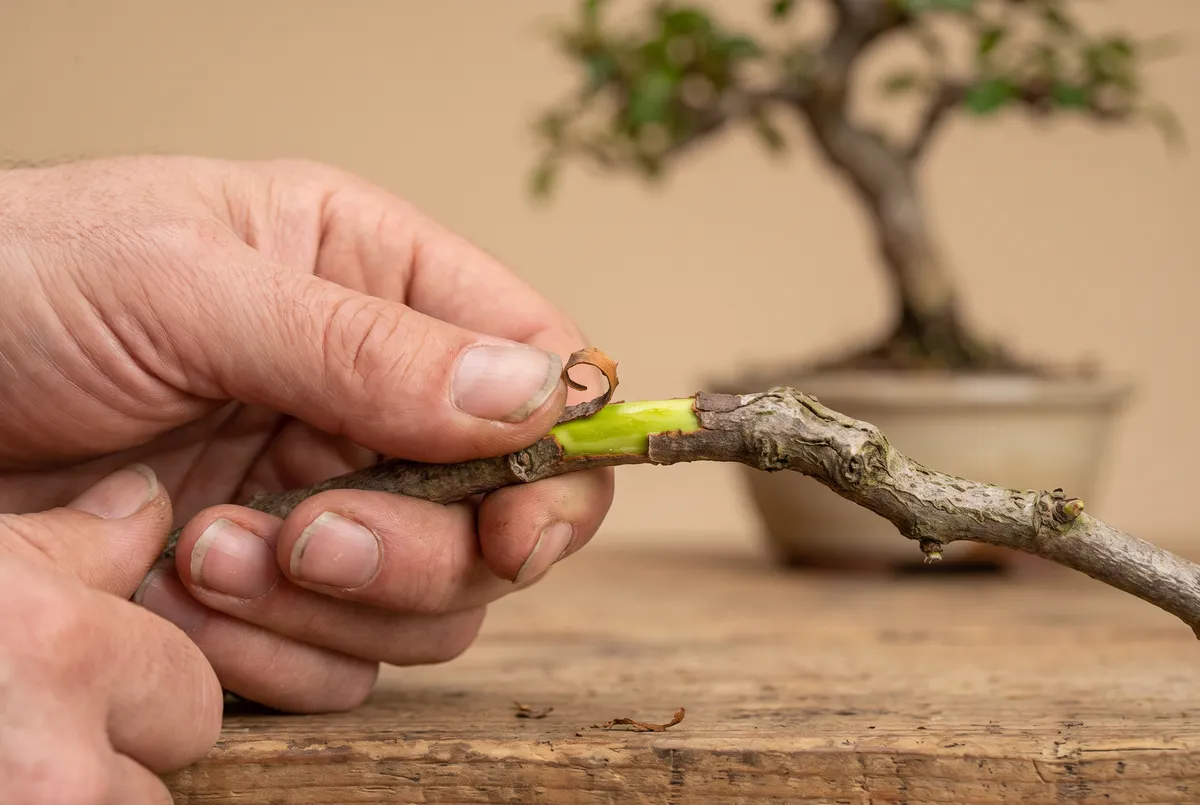
- Pick a branch about pencil thickness.
- Scrape off a fingernail-sized sliver of bark with your thumbnail or a knife tip — just deep enough to see the layer underneath.
- Read it: green and slightly moist means the cambium (the thin living layer under the bark) is alive at that spot. Brown, tan, or dry means that spot is dead.
- If it reads brown, move 2-3 inches down the branch and try again. Keep working toward the trunk.
Two ways beginners misread it. Scratching too deep: the cambium is paper-thin, so if you're looking at pale, wet wood you've cut past it — back up and check the rim of the scratch for the green line. And trusting moisture: dead wood can stay damp for weeks, so wet-but-tan is still a no. The signal is green, nothing else.
A tree is only truly gone when the trunk itself scratches brown near the soil line. Plenty of trees lose every leaf and several branches, keep a live trunk, and rebuild over a season or two. And for what it's worth, most trees that get scratch-tested in a panic scratch green.
Backup check: living twigs bend; dead ones snap. If small branches flex without breaking, water is still moving through them — and water only moves through living wood.
When the scratch is ambiguous, check the roots
Sometimes the scratch won't settle it — the green is faint, the bark is too thick to read, or every branch says something different. The roots break the tie. Tip the tree gently out of its pot; most root balls slide free in one piece, and squeezing the pot sides loosens a stubborn one.
- Alive: roots that are firm and pale — white to cream at the growing tips, tan along their length — in soil that smells like plain earth.
- Rotted: roots that are dark and mushy, with an outer layer that slides off between your fingers and a sour, swampy smell. Firmness and smell are the tells, not color alone — older roots are naturally brown but stay solid.
Rot with a green trunk is an emergency, not a funeral. Trim every mushy root back to firm tissue with clean scissors and repot into fresh, fast-draining mix — the repotting guide walks the steps and the soil guide covers the mix. Growers disagree about repotting a stressed tree out of season; with rot, most land on the same side, because roots sitting in soup lose more each week than a badly-timed repot costs.
Junipers lie about being dead
One species-specific trap: a juniper can read as alive for weeks after it isn't. Juniper foliage holds its green color long after the tree has functionally died — the needles fade slowly through gray-green to brown over a month or more, which is how people end up nursing a tree through February that quietly ended in November.
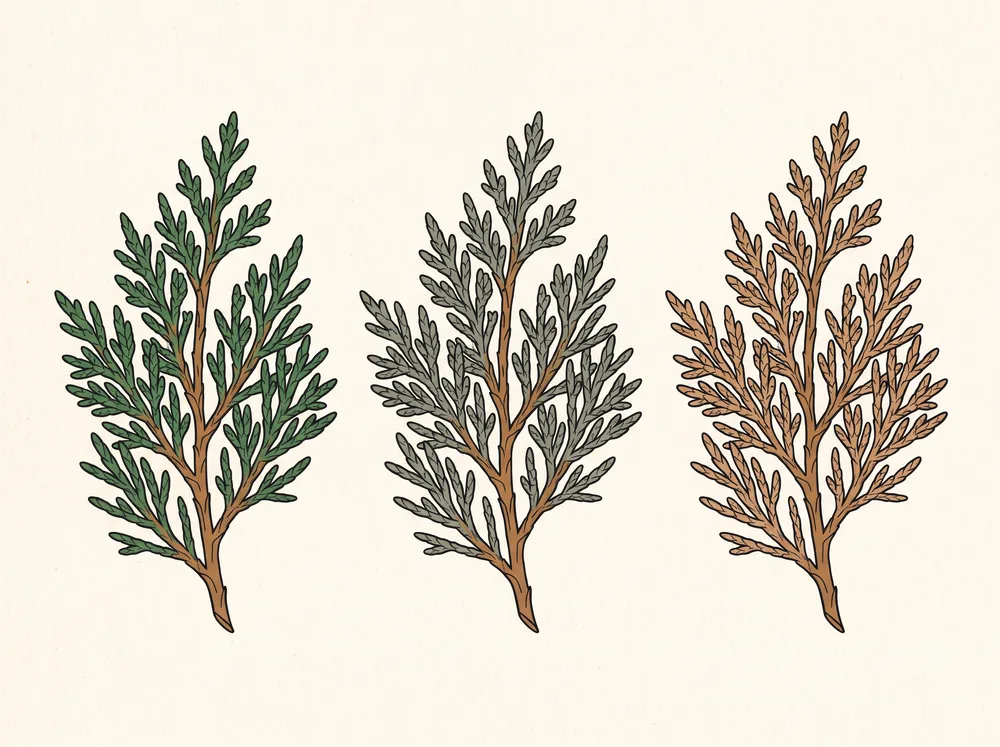
So on a juniper, ignore the color and trust the wood: run the scratch test on several branches and flex the twig tips. Brittle tips that snap, plus brown scratches, means it's gone no matter how green it looks. Green scratches and flexible tips mean it's alive no matter how brown some patches look. And most browned shelf junipers got that way for the reason covered in why is my bonsai turning brown: kept indoors, where junipers can't live.
A bare tree in winter is probably just asleep
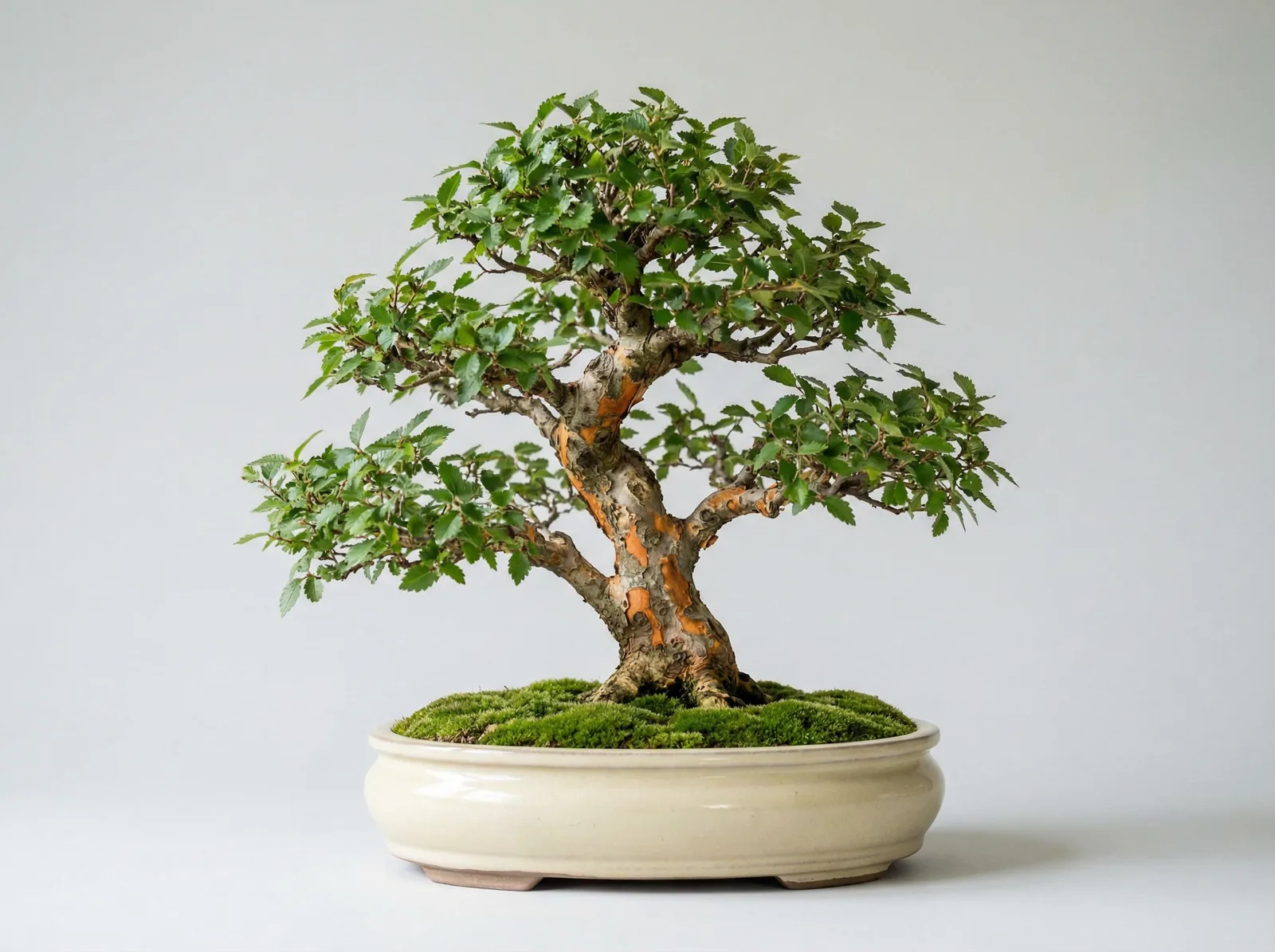
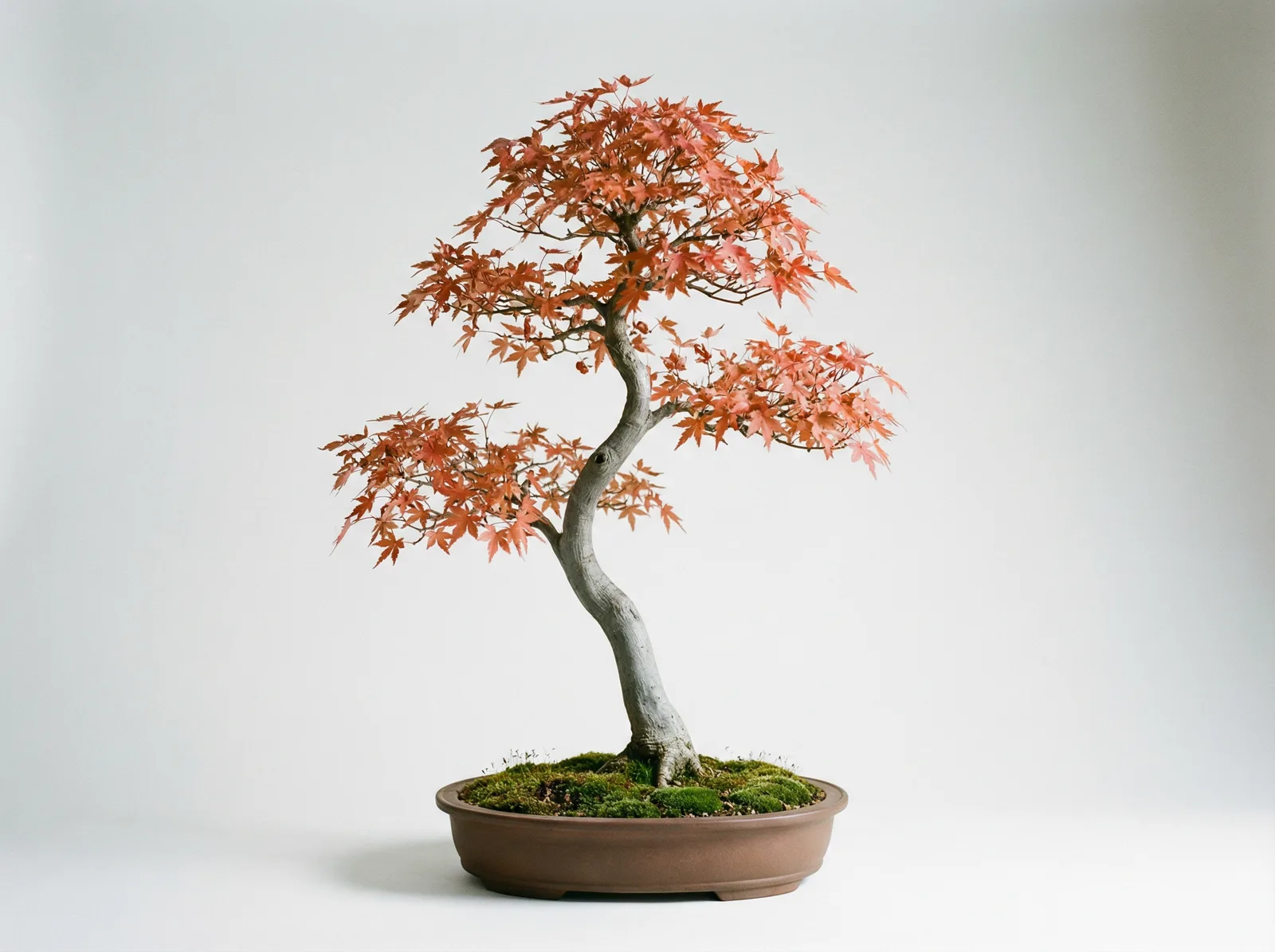
Deciduous bonsai — Japanese maple, Chinese elm kept outdoors, hornbeam, larch — drop every leaf in fall and stand bare until spring. From November to March they look exactly like dead trees. They aren't. Dormancy is a survival feature, and these species need the cold rest to stay healthy.
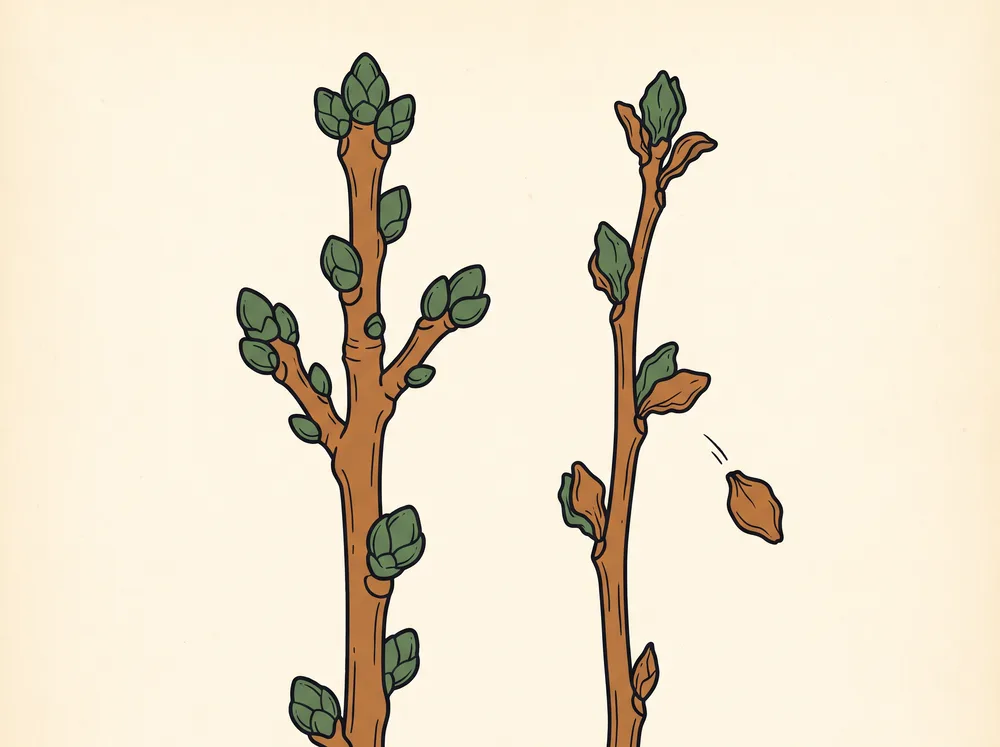
Two winter checks: the scratch test works year-round (dormant trees still scratch green, just less vividly), and the buds tell the story — living branches carry firm, plump buds at the tips and joints. Shriveled, flat buds that flick off at a touch are a bad sign; solid buds mean the tree is loaded and waiting. If a bare deciduous tree scratches green in January, do nothing except keep the roots barely moist. Spring answers the rest.
Scratched green? Here's the recovery plan
If you found live wood, the tree needs stability, not intervention.
- Put it in the right light for its species — a bright window for tropicals, outside for outdoor species (staged through cold shelter if it's mid-winter; see got a bonsai as a gift).
- Water by the finger test: soak thoroughly when the top 1/2 inch of soil dries, never on a calendar — the watering guide covers the rhythm. A stressed tree drinks less than a healthy one.
- Don't fertilize until new growth appears, and don't repot, prune, or wire a recovering tree.
- Then wait 4-6 weeks. Recovery is invisible right up until it's obvious.
Remove only what's confirmed dead — brittle, brown-scratching branches — and keep every live one, even the bare ones. Trees rebuild from wood you'd have bet against.
One reframe before you cut anything: on conifers, a dead branch on a living tree can be a feature, not a scar. Growers strip the bark and shape it into jin (a bleached deadwood snag) or shari (a strip of exposed trunk deadwood) — it's the look collected mountain trees earn from lightning and drought, and the deadwood guide shows how a branch you lost this month becomes the oldest-looking part of the tree.
How long before you call it
Only one finding earns a same-day verdict: brown at the base of the trunk plus roots gone to mush. Everything else gets a waiting period, and the clock depends on the tree.
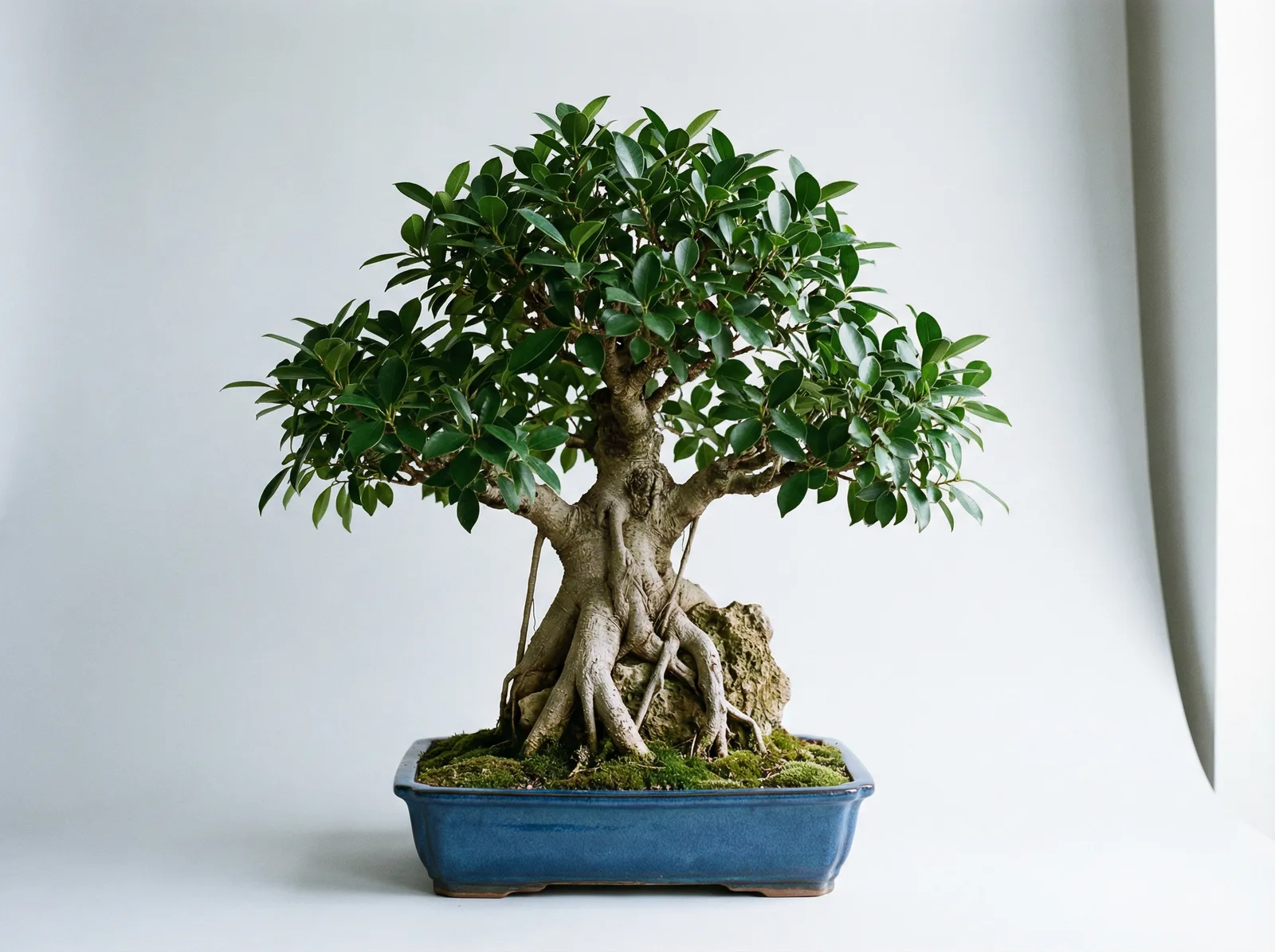
- Indoor tropicals (ficus, Fukien tea, dwarf jade): 6-8 weeks in a bright window. New buds often show inside 3-4 weeks, but a stressed tree restarts slowly — quiet is not the same as dead.
- Deciduous trees in winter: no verdict until 4-6 weeks past your last frost. If everything in the neighborhood has leafed out and your tree is still bare, scratch again — brown then is an answer.
- Junipers: the foliage lies, so re-run the scratch test every 2 weeks. Green scratches through a month of checks mean a living tree, whatever the color is doing.
During the wait, the stability plan above is the whole job. The urge to do something — feed it, repot it, cut it back hard — finishes off more borderline trees than the original problem does.
If it's gone: keep the pot, toss the soil
Brown at the trunk, brittle everywhere, shedding at a touch: the tree is gone, and no amount of care revives dead wood. That's a rotten feeling — and it's also the most common way people enter this hobby, because nearly every longtime grower's first tree died too.
Ten minutes of housekeeping protects the next tree:
- Keep the pot. Scrub it out and soak it 10 minutes in 1 part household bleach to 9 parts water, then rinse well. If the tree died of plain drought, hot soapy water is enough.
- Toss the soil. Spent mix from a tree lost to root rot, fungus, or pests carries the problem straight into round two. Some growers sterilize and reuse the inorganic parts; fresh mix costs a few dollars, so most don't bother.
- Keep the tools — just wipe the blades with rubbing alcohol if disease was in play.
The death itself was almost certainly not a lack of talent; it was a species-and-spot mismatch. Pick a tree that forgives the conditions you actually have: a Chinese elm tolerates indoor life and irregular watering, a ficus thrives in the bright window a juniper hated, and a dwarf jade shrugs off a missed week entirely. The beginner list ranks them honestly, and choosing your first bonsai walks the match. Round two goes better — this time you're choosing the tree, not the label.
Species mentioned here
More on “Is my bonsai dead?”
Keep reading