Juniperus chinensisoutdoor
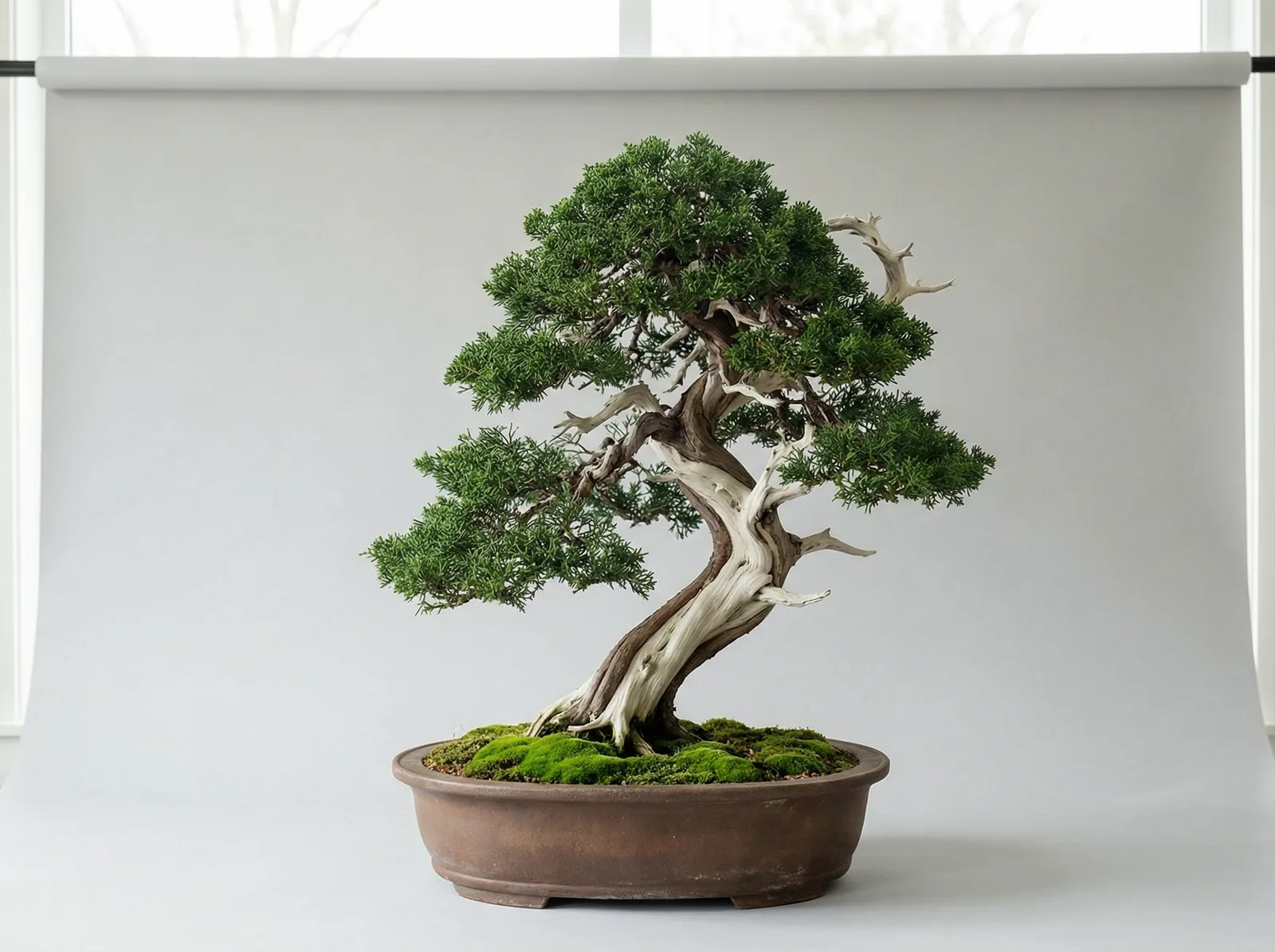
Juniper Bonsai
- care
- beginner
- light
- full sun
- zone
- 4–9
Jin and shari — deadwood features on bonsai — mimic lightning scars, weathered branches, and centuries of exposure. They add age and drama that foliage alone can't deliver.
Old trees in the wild carry their history on their bodies. Branches killed by storms bleach white in the sun. Lightning rips bark away from the trunk, exposing bare heartwood. These scars don't make the tree look damaged — they make it look ancient, defiant, alive against the odds. Jin and shari are the bonsai techniques that compress those centuries of weathering into deliberate design.
Jin is a dead branch stripped of bark. Shari is a strip of bare wood running along the trunk. Uro is the third member of the family: a hollowed scar where a branch died and rotted away, carved into a clean cavity — the one deadwood feature that works on deciduous trees. Together they add age and a survival story that foliage alone can't tell. A well-executed piece of deadwood on a 15-year-old juniper can make it read like it's been clinging to a mountainside for a century.
One more term before you touch a knife: the live vein. Every living branch is fed by a ribbon of live bark running down the trunk to the roots. Deadwood work is really live-vein management — you're deciding which ribbons stay. Deadwood decisions are styling decisions: plan them alongside the front, the branch structure, and the story the tree tells.
Wood chemistry decides this, not taste. Dense, resinous wood shrugs off fungal decay for decades; soft, wet wood is compost by next summer.
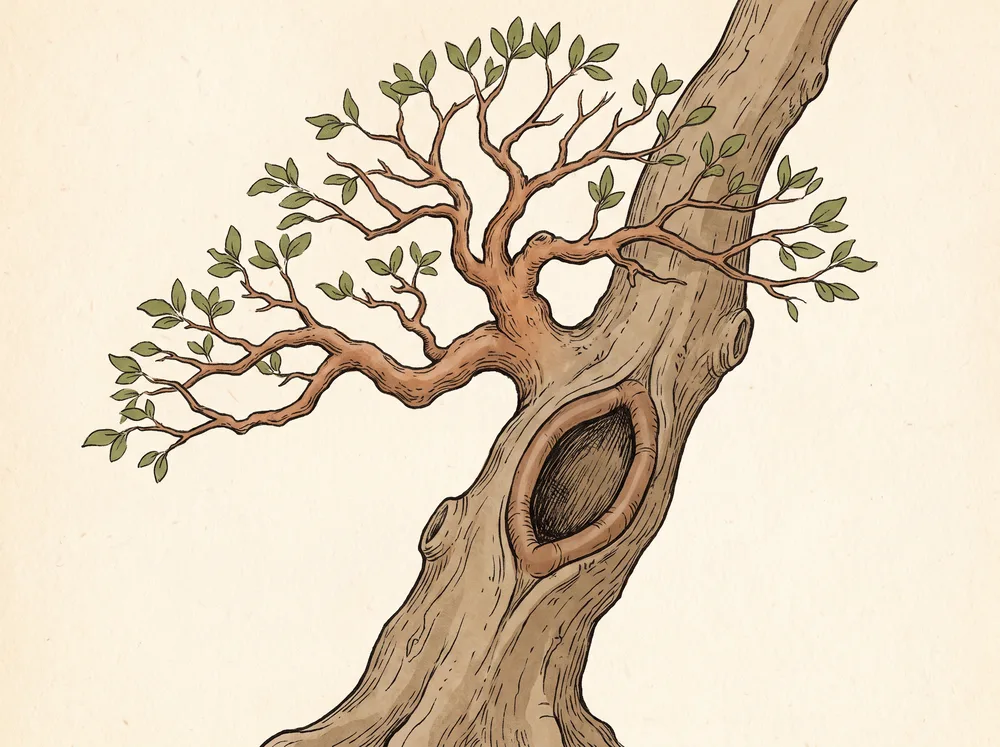
The uro is the deciduous consolation prize, and it's a good one. Deciduous trees are brilliant compartmentalizers, so work with that: where a maple or hornbeam lost a branch, carve the wound into a hollow with smooth, slightly inrolled edges — the scar you see on every ancient street tree. Angle the cavity downward or cut a small drain channel so rain can't pool inside; standing water restarts the rot you're trying to manage. The living callus slowly rolls around the rim, which is exactly what makes it read as old. No lime sulfur needed on most uro — the tree walls it off itself.
Bark peels because of what's underneath it. During active growth the cambium — the thin, slippery layer of dividing cells between bark and wood — is wet and loose, and bark lifts off in clean ribbons. In dormancy that layer is dry and glued down, and you'll gouge good wood trying to force it.
So the window is late spring through midsummer, when the bark "slips." Schedule major shari work for early spring through early summer specifically: the tree then has eight to ten weeks of active growth to compartmentalize the wound edge and reroute sap around the new dead zone before cold weather stops everything. A shari cut in September heads into frost with raw, uncallused edges. Small jin are more forgiving: the branch is already dead, so strip it whenever you like.
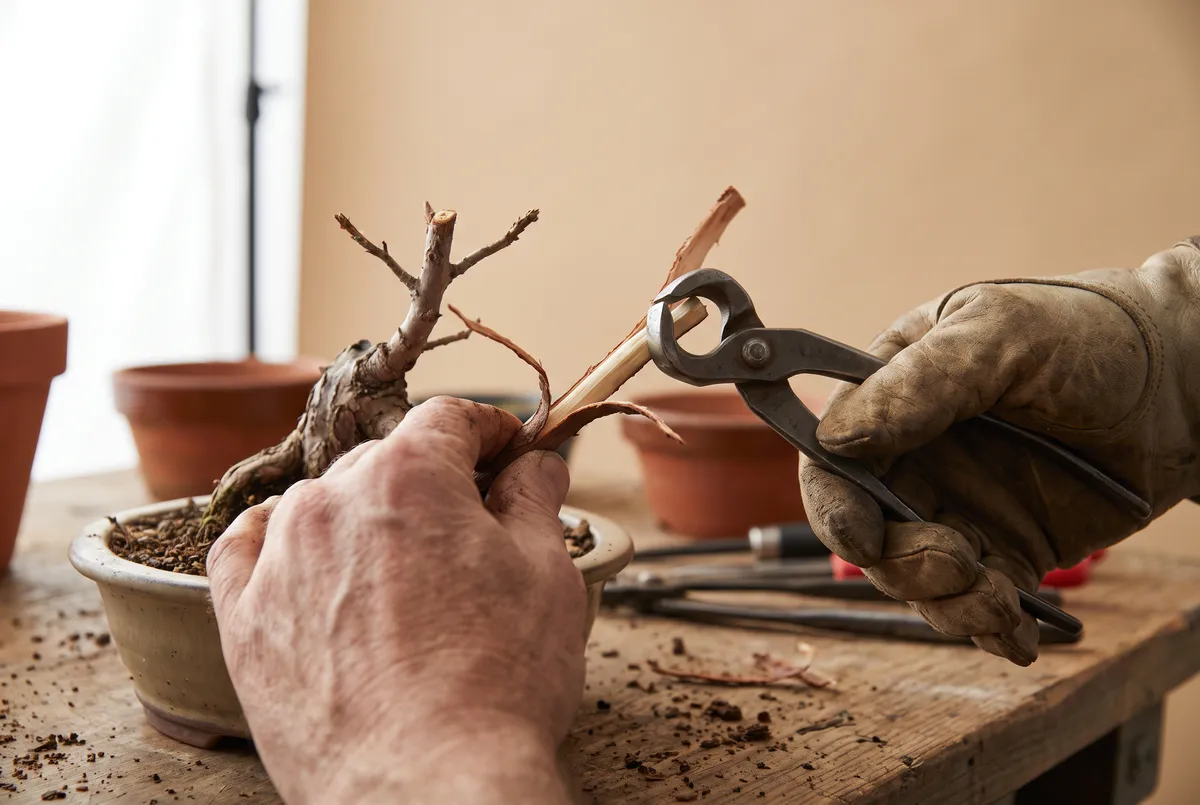
Your first jin, specified: a nursery-can juniper in the $25–40 range, working on a branch your front-selection already condemned. The branch was leaving anyway, so the worst case is a slightly ugly stub you shorten later — zero risk, real practice. Do it in the same session as your first structural pruning from the styling guide.
Gear note: jin pliers run $15–35 and are worth it — the square jaws crush bark without cutting it. Sturdy needle-nose pliers cover one or two small jin. The tools guide covers what's worth buying when.
A shari is riskier than a jin because you're cutting living trunk tissue. Trace before you draw: follow the bark line down from each living branch to the soil — those ribbons are your live veins. Mark them in chalk, then design the shari in the space between.
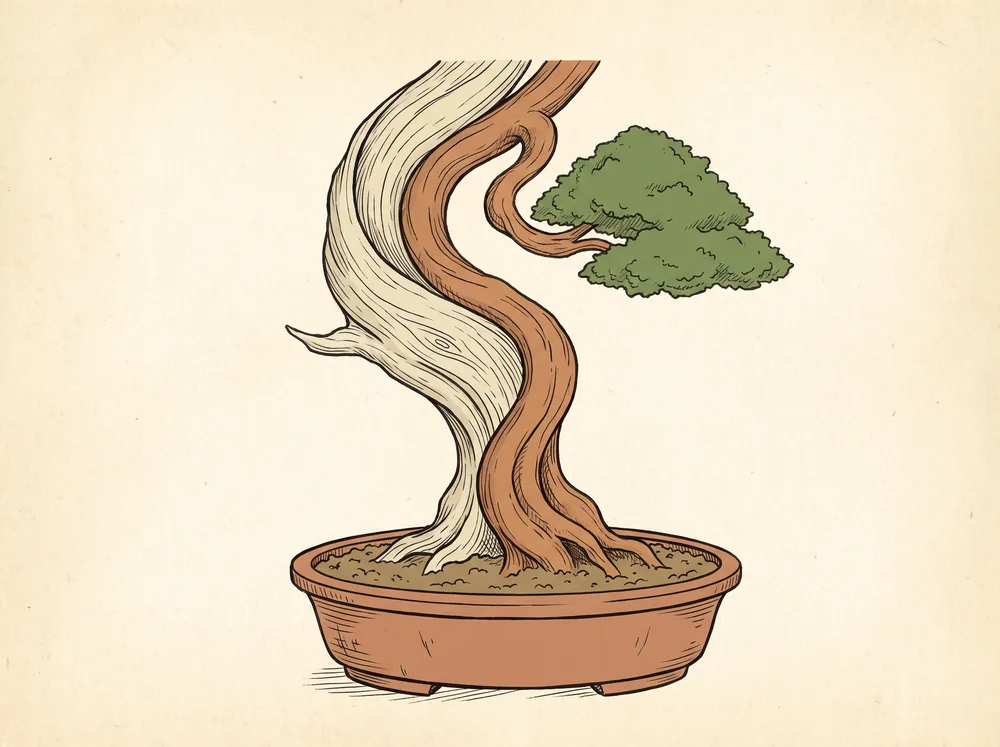
Widening is a multi-year protocol, and this is the mechanism behind every convincing shari you've admired: expand the strip 1/8 to 1/4 inch per year, letting the callus roll over at each edge before the next pass. The tree reroutes its plumbing gradually, the rolled edges look decades old, and you keep a margin for error the one-dramatic-strip approach never allows.
Dead wood can't defend itself — fungi and bacteria start eating it the day you strip it. Lime sulfur (sold as jin seal) is the counter: it bleaches the wood silvery white and acts as a fungicide that slows rot to a crawl.
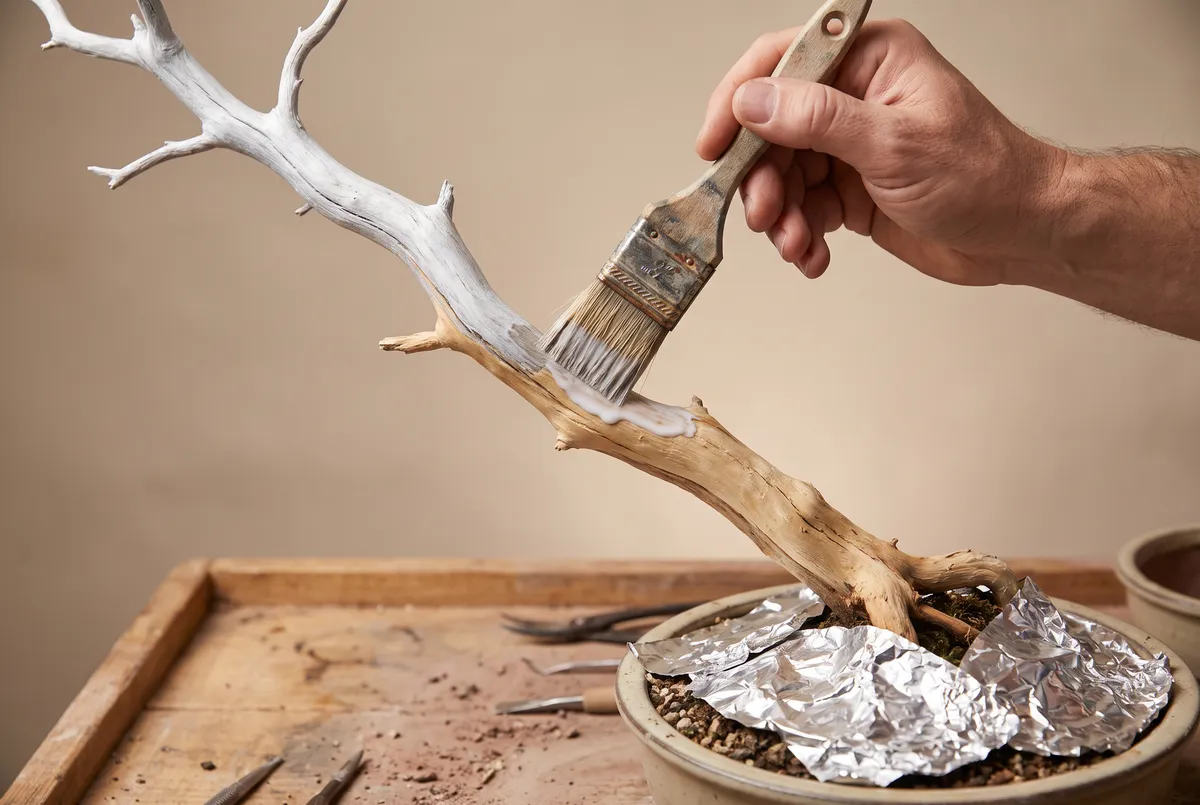
Refinement comes later. After the initial stripping, let the wood dry for a few weeks — three or four is plenty. Then add texture with a rotary tool and a structured carbide bit: grain lines, hollows, weathering channels, always carving along the natural grain, never across it. Seal freshly carved surfaces with another coat of lime sulfur.
Deadwood mistakes announce themselves fast. Here's the triage.
If the whole tree declines after deadwood work — yellowing and dropping foliage across the canopy — the usual cause is doing too much at once: shari plus repotting plus heavy wiring in the same spring. One major insult per year is the safe pace.
In nature, deadwood develops gradually and follows the tree's growth patterns; it doesn't appear in convenient symmetrical spots. Study photos of bristlecone pines, Sierra junipers, and coastal yews — notice how deadwood twists, tapers, and relates to the live portions. The oldest bonsai in the world earn their age marks over centuries; your job is to suggest that age, not replicate it in an afternoon. One believable jin beats five theatrical ones.