Juniperus chinensisoutdoor
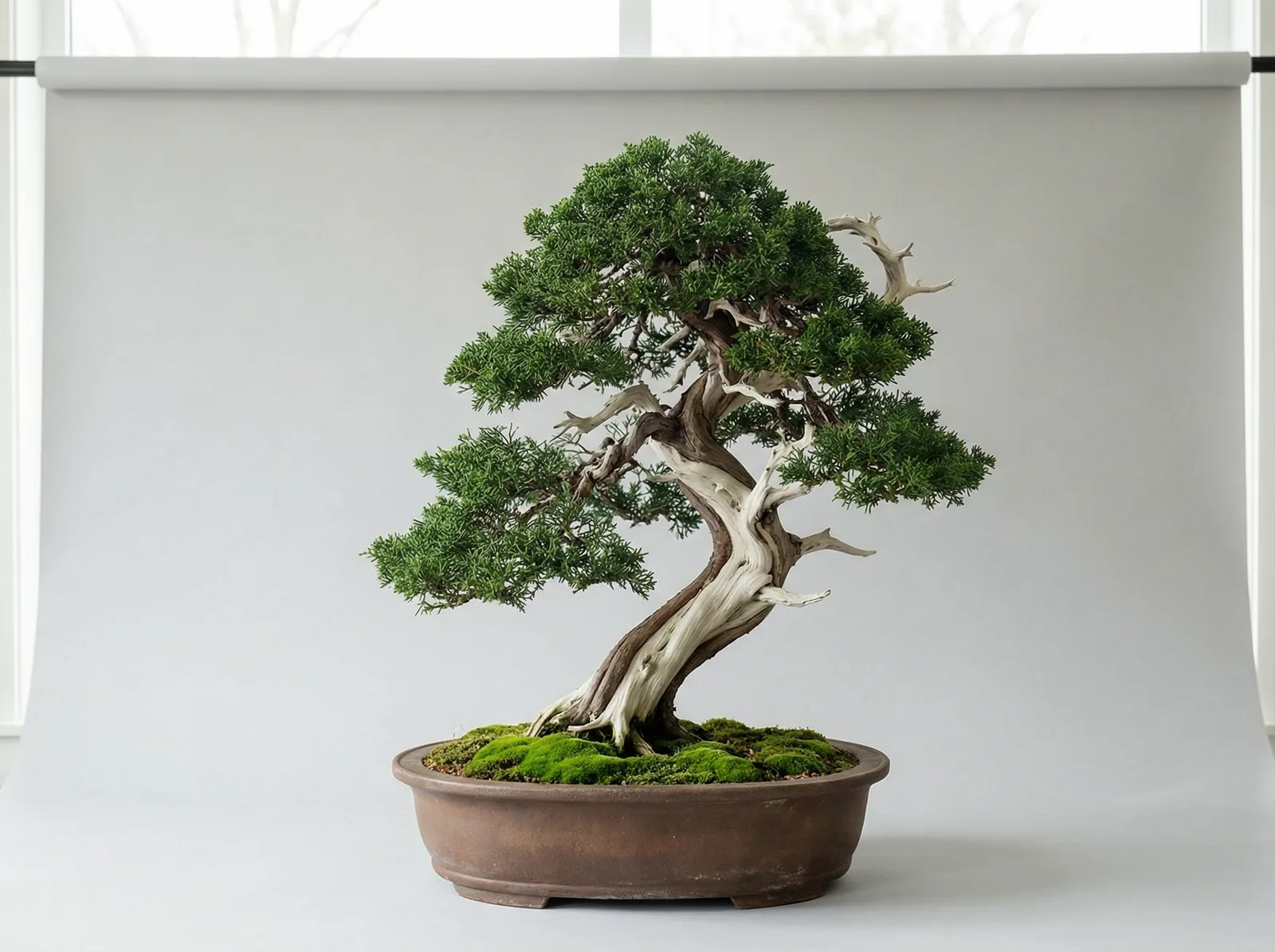
Juniper Bonsai
- care
- beginner
- light
- full sun
- zone
- 4–9
You don't need every tool on the rack. Five basics cover 90% of all bonsai work — here's what to buy first and what to skip for now.
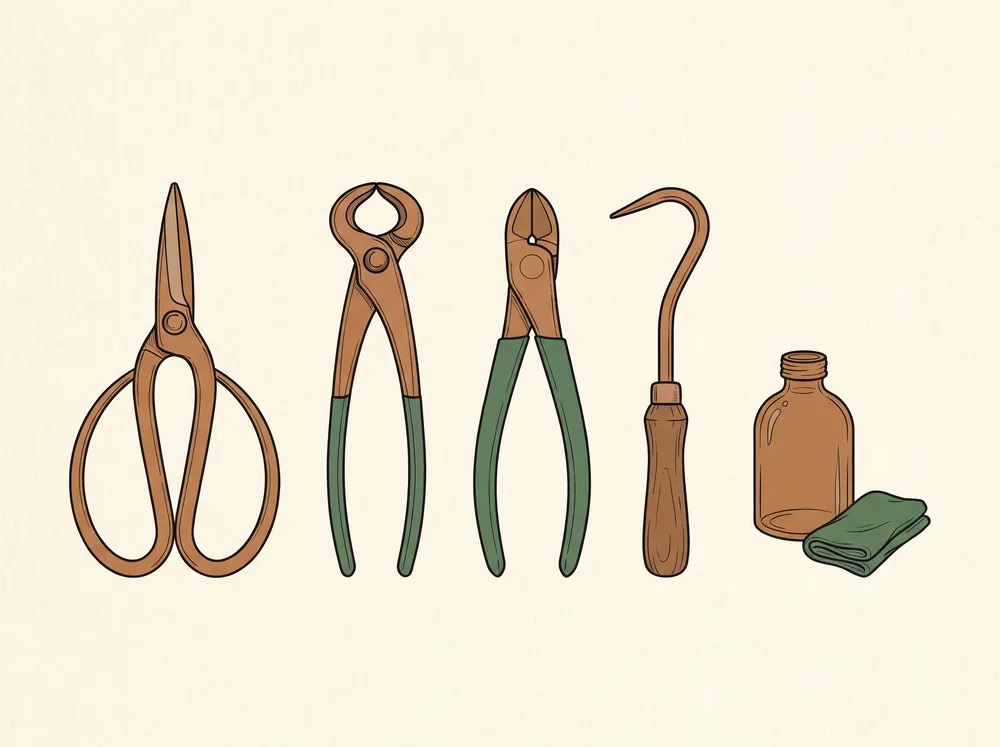
Walk into a bonsai tool display and you'll see fifty specialized implements, each promising to be essential. Here's what nobody selling tools will tell you: five of them cover 90% of the work, and the rest can wait until you've been doing this for a couple of years. Save the money for trees and soil.
This guide covers those five in buying order, then the questions that actually follow: which brands are worth the money, whether the $25 Amazon kit is junk, what wire to order first, and how to keep an edge on whatever you buy. (No tree yet? Start with choosing your first bonsai and come back.)
You'll grab these every session — leaf trimming, twig removal, root pruning, shoot pinching. Get a pair with sharp stainless blades and comfortable handles; $20-35 buys a pair that lasts years with care. The standard size is about 180 mm (7 in), which fits nearly every tree and hand; if you grow shohin — trees under 8 inches — narrow-tipped satsuki shears reach into dense foliage pads without stabbing the shoots next door.
Dull scissors crush stems instead of severing them, and crushed tissue dies back past the cut line — which is why the pruning guide keeps repeating "sharp."
When you remove a branch, this tool cuts a slightly hollow wound that heals flush with the trunk — no raised scar. Use it for any branch thicker than a matchstick. It's the tool worth spending $30-50 on, because cheap versions lose their edge fast and leave torn wounds that heal poorly.
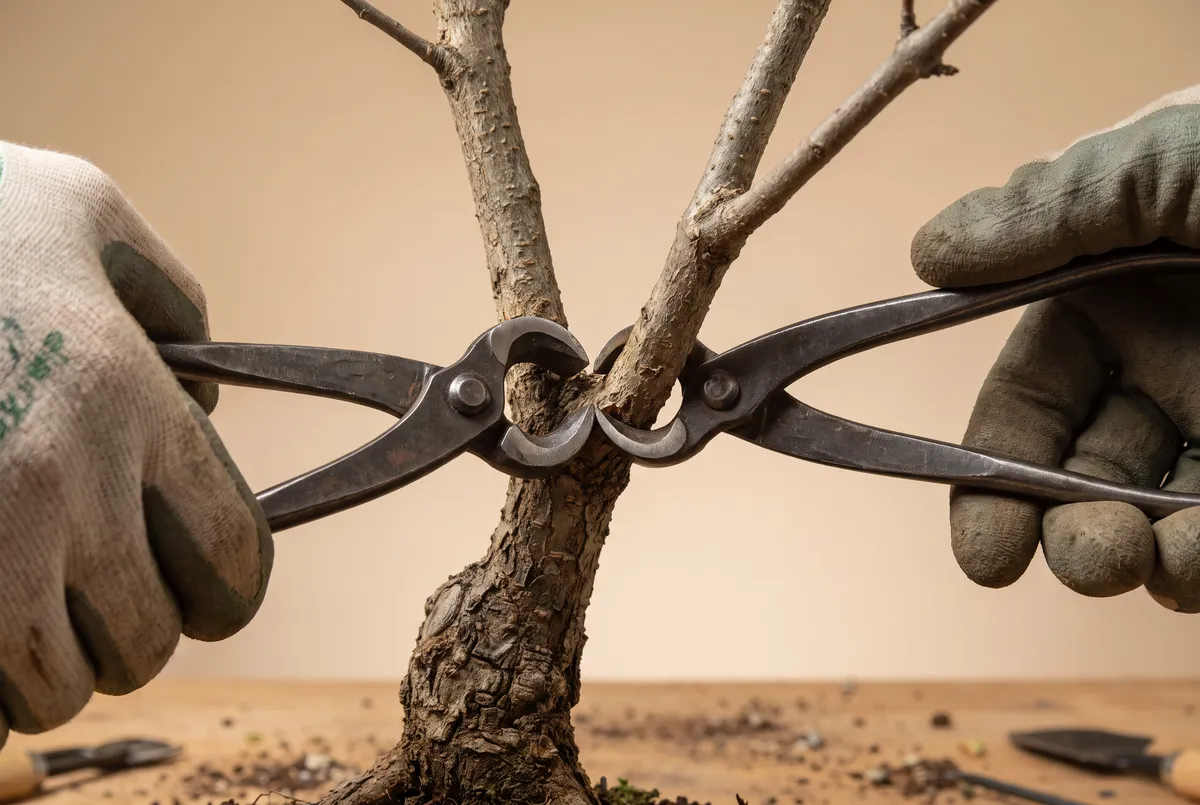
Two sizes cover everyone: 180 mm for shohin and smaller hands, 210 mm as the default — it takes branches up to roughly 15 mm (5/8 in) in one bite. Thicker than that, use a pruning saw first and clean the stub with the cutter afterward; forcing a big branch through springs the blades out of alignment.
It's also the priciest early buy, so here's the honest deferral test:
Bonsai wire cutters press flat against the branch while snipping wire away; regular diagonal pliers gouge bark every time. $15-25, nearly indestructible, and mandatory once you start wiring.
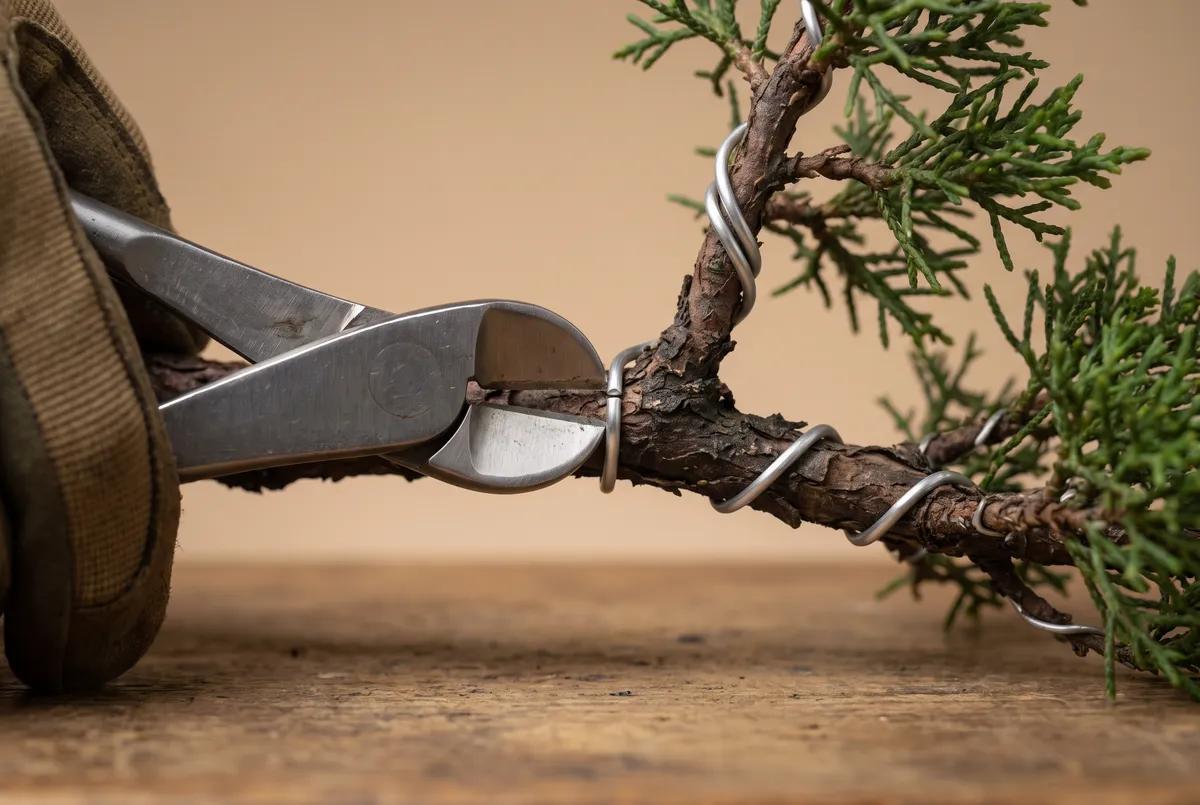
The wire itself is the cheaper half of the order. A first purchase of 100 g rolls each of 1.5, 2, and 3 mm anodized aluminum runs about $25 total and covers everything from twigs to 9 mm branches — aluminum wire wants to be about a third of the branch's thickness, and the wire gauge calculator does the matching (plus tells you how many meters each roll holds). Skip copper at first: it holds bends better per gauge but is harder to apply and unforgiving to reposition. Buy it by the job once serious conifer work starts.
A simple bent-metal tool that combs old soil out of the root ball during repotting. A long chopstick substitutes in a pinch, but the hook is faster, reaches deeper, and doesn't snap. Under $10 — buy one before your first spring repot, along with the new pot (size it with the pot size calculator) and the soil itself (recipes in the soil guide, quantities from the soil calculator).
Two tools earn their place once styling work starts. A knob cutter — a beefier concave cutter that takes spherical bites — removes stubs and trunk bumps flush; indispensable once structural work begins ($30-50). Jin pliers strip bark, bend heavy wire, and drive the deadwood techniques; they're the first add-on past basic maintenance ($15-25). Same deferral logic applies: buy each one the season you actually need it, not before.
What you don't need yet: carving bits, grafting knives, turntables (a lazy susan works), branch benders, trunk splitters, leaf cutters, and everything else that looks impressive on a workbench photo. Each exists for a specific advanced technique. Wait until you actually hit the situation that demands it.
answer the questions — your bench list appears here
Is the $25 Amazon starter kit any good? It's fine for months, not years. The steel is soft, so edges fold and cuts start crushing after a season of regular use — but a kit will absolutely get you through your first year of learning without wrecking a tree. When it fades, replace the shears first; they do the most cutting and suffer first. Think of the kit as tuition, not equipment.
When you buy piece by piece, the market sorts into three honest tiers:
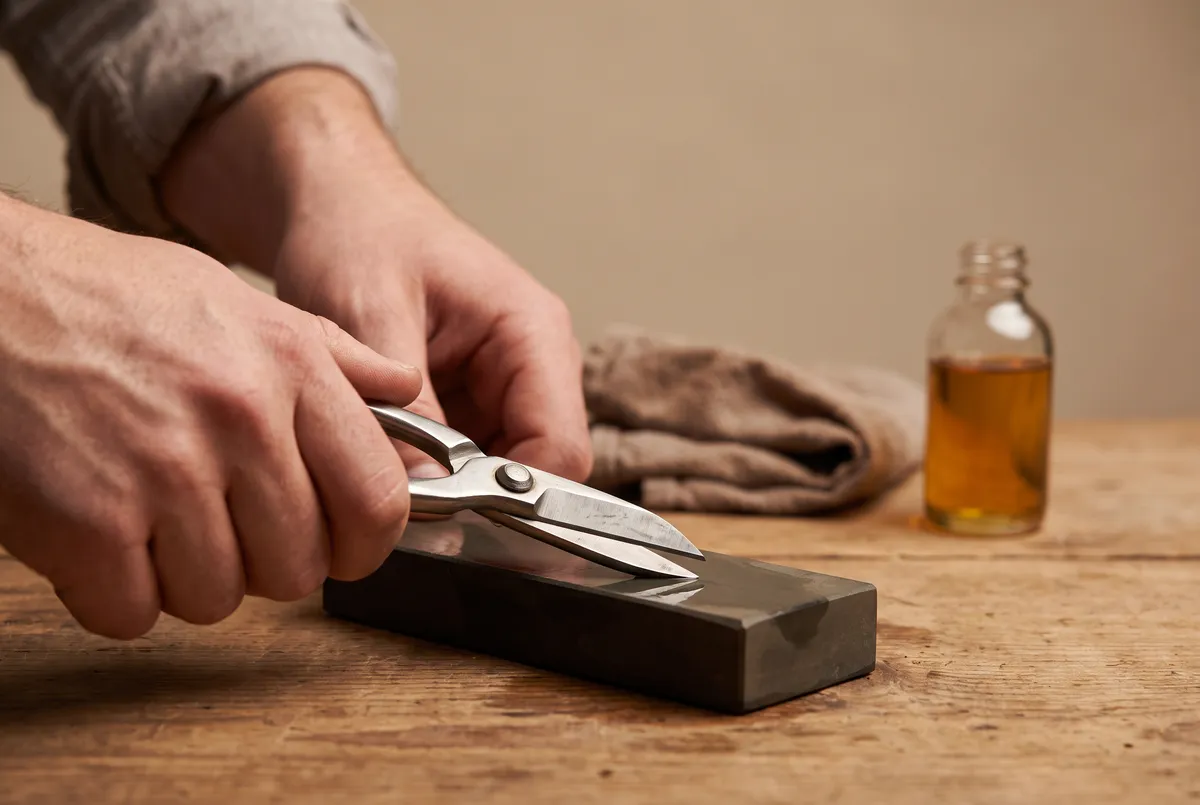
The steel choice matters more than the badge. Carbon steel — the traditional black-finished blades — takes a keener edge, holds it longer, and sharpens faster, but it rusts: one wet night on the bench leaves orange freckles by morning. Stainless forgives neglect and humid sheds, costs more from the same maker, and gives up a little edge retention. If your tools live outside or you already know you won't oil them, buy stainless; if you'll spend the five minutes below, carbon rewards it.
Wherever you buy, buy from bonsai-specific makers rather than the garden aisle — garden pruners aren't ground for the close, flush cuts bonsai demands.
Tool care is one habit, not a project. After every session:
One more habit, borrowed from the pest guide's quarantine logic:
Some species are genuinely harder on steel than others: