
How much do bonsai trees cost?
Short answer
Most bonsai cost between $30 and $150. A mall or starter tree runs $25–50, a nicely styled tree from a specialty nursery is $80–200, and refined collector specimens climb into the thousands. The tree is only part of it — soil, a pot, and basic tools add $40–80 the first year. You don't need to spend a lot to keep a good tree alive.
What you get at each price
Bonsai pricing sorts into a few honest bands. Move the selector below to see what each one buys — here's the shape of it:
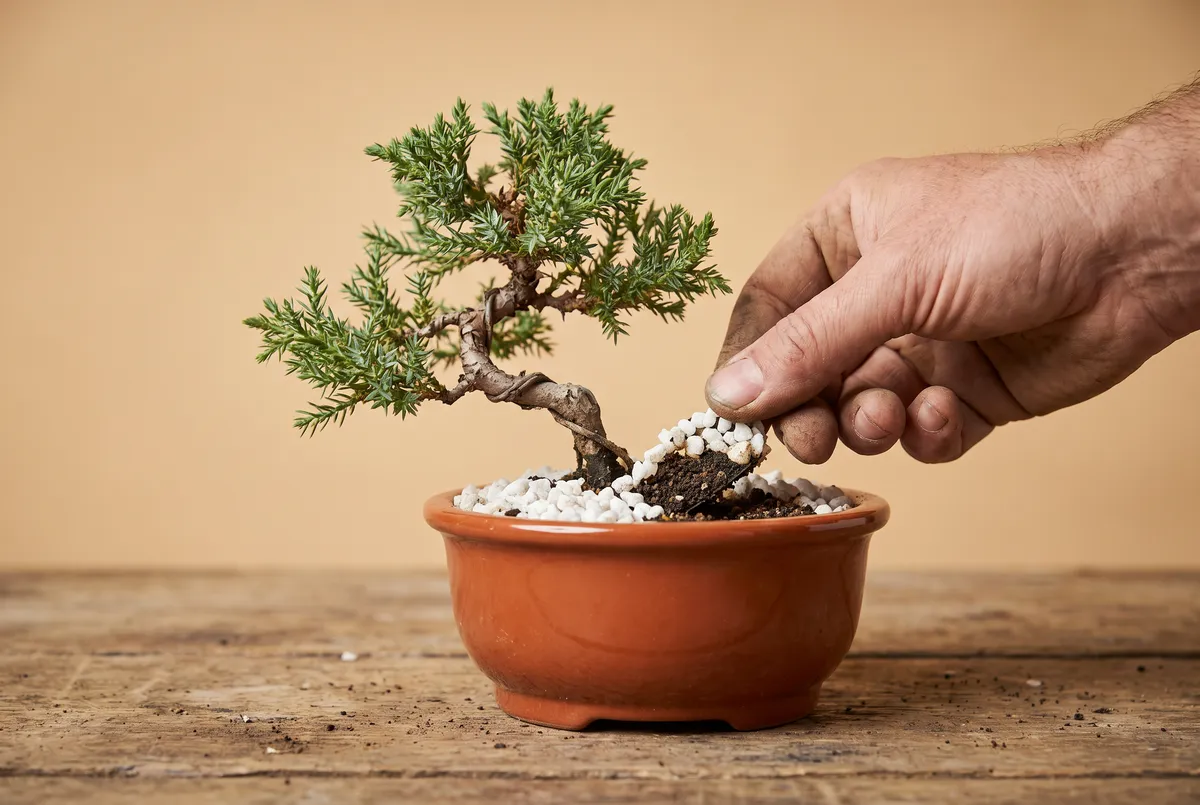
- Under $30 — the mall bonsai. A young juniper or ficus in a plastic-lined pot with glued gravel on top. It's a real tree, and we mean that — the $30 mall bonsai is a real bonsai. Peel off the gravel, learn to water it, and it can become something good.
- $30–80 — a proper starter. A few years old, decent roots, from a garden center or online nursery.
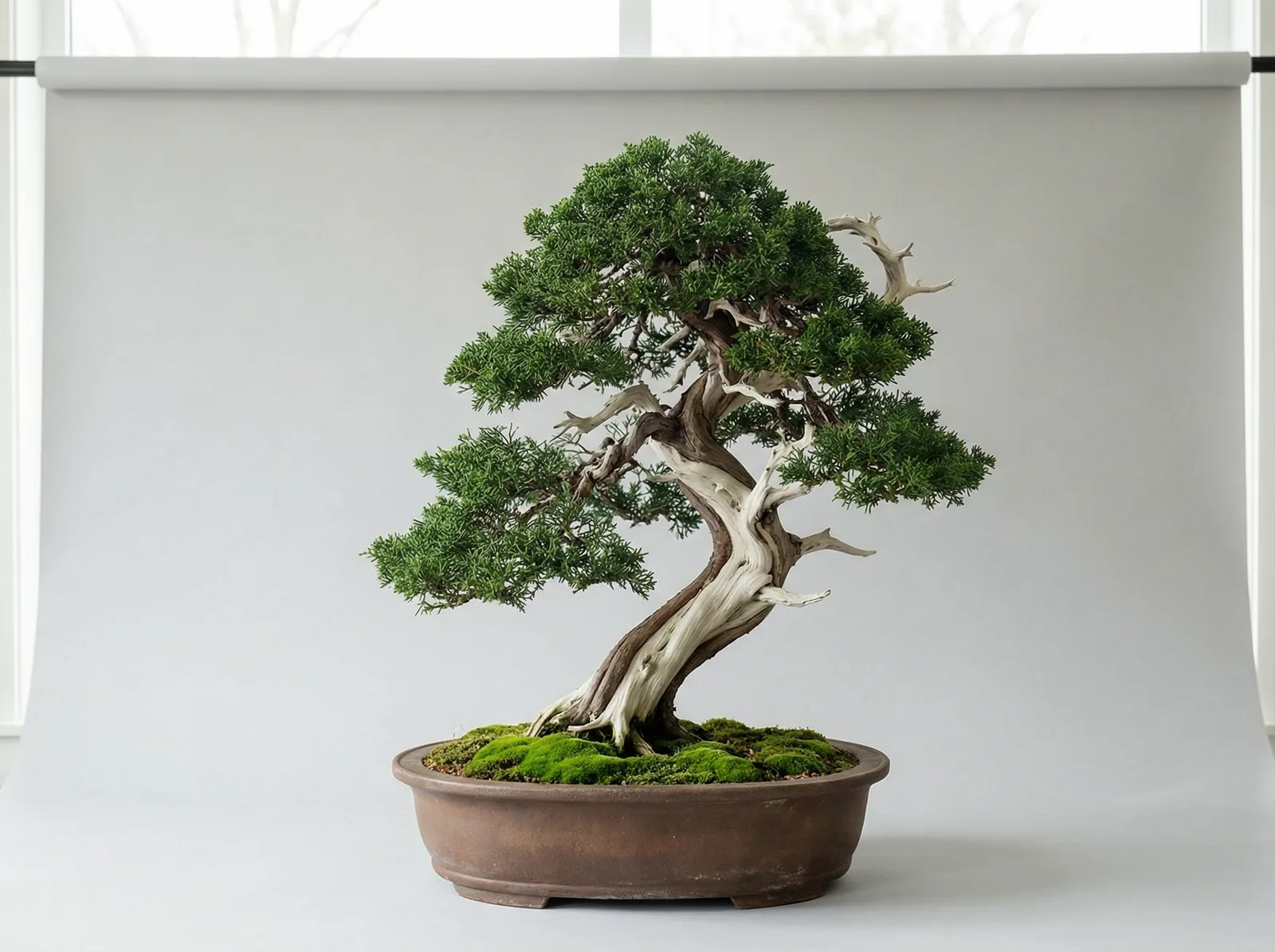
- $80–200 — a styled tree. Real trunk movement and taper, shaped by someone who knew what they were doing.
- $200–1,000 — refined. Age, ramification, and a good pot.
- $1,000+ — specimen. Decades of work, and it shows.
Why two bonsai the same size cost wildly different amounts
Size barely factors into bonsai price. What you're paying for is time — and the features only time produces.
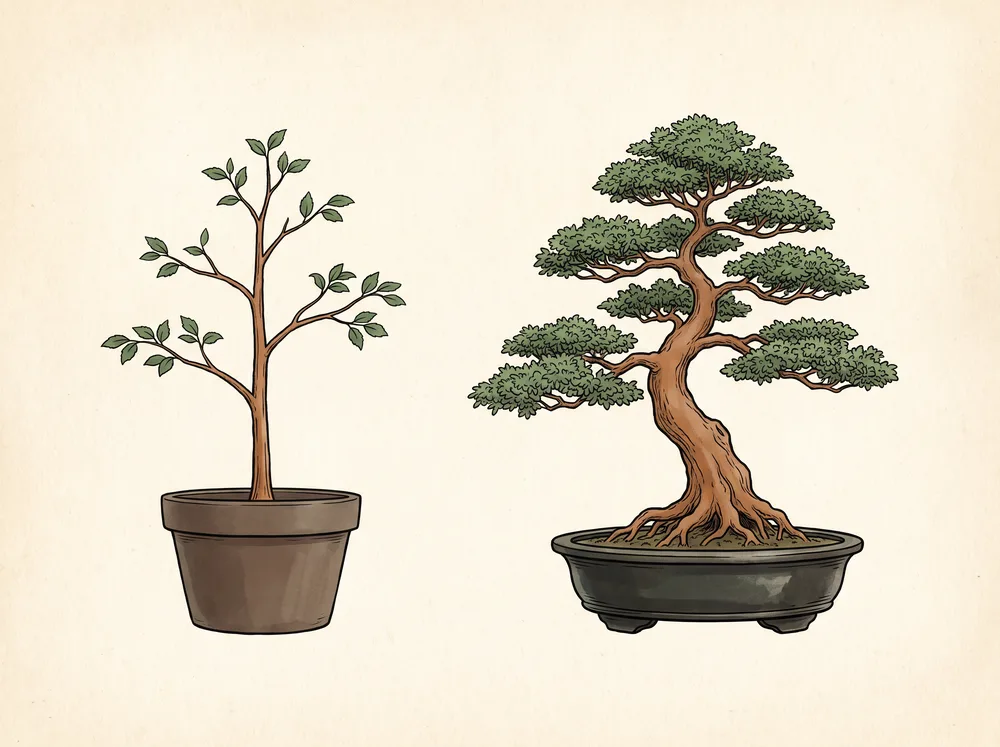
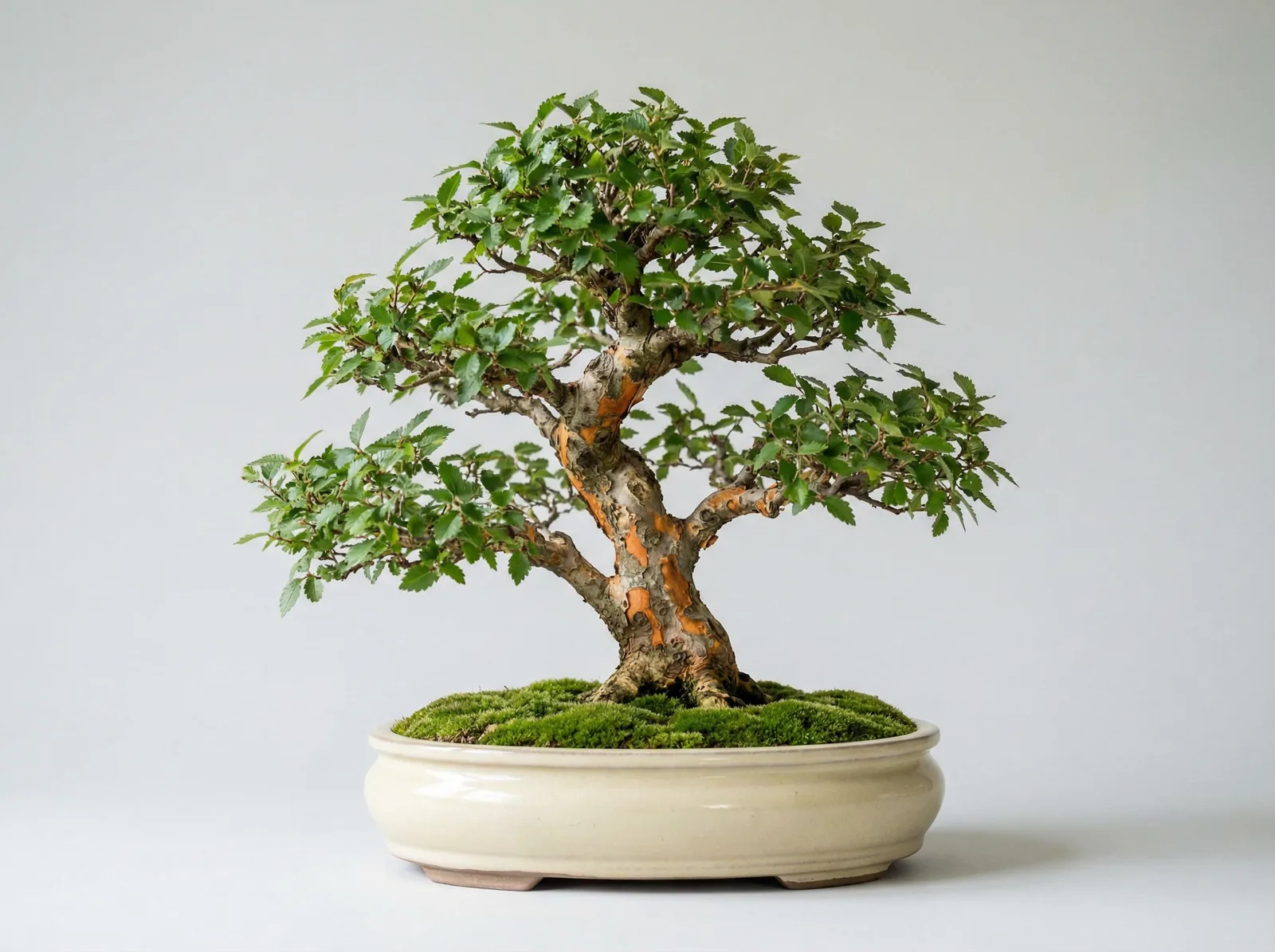
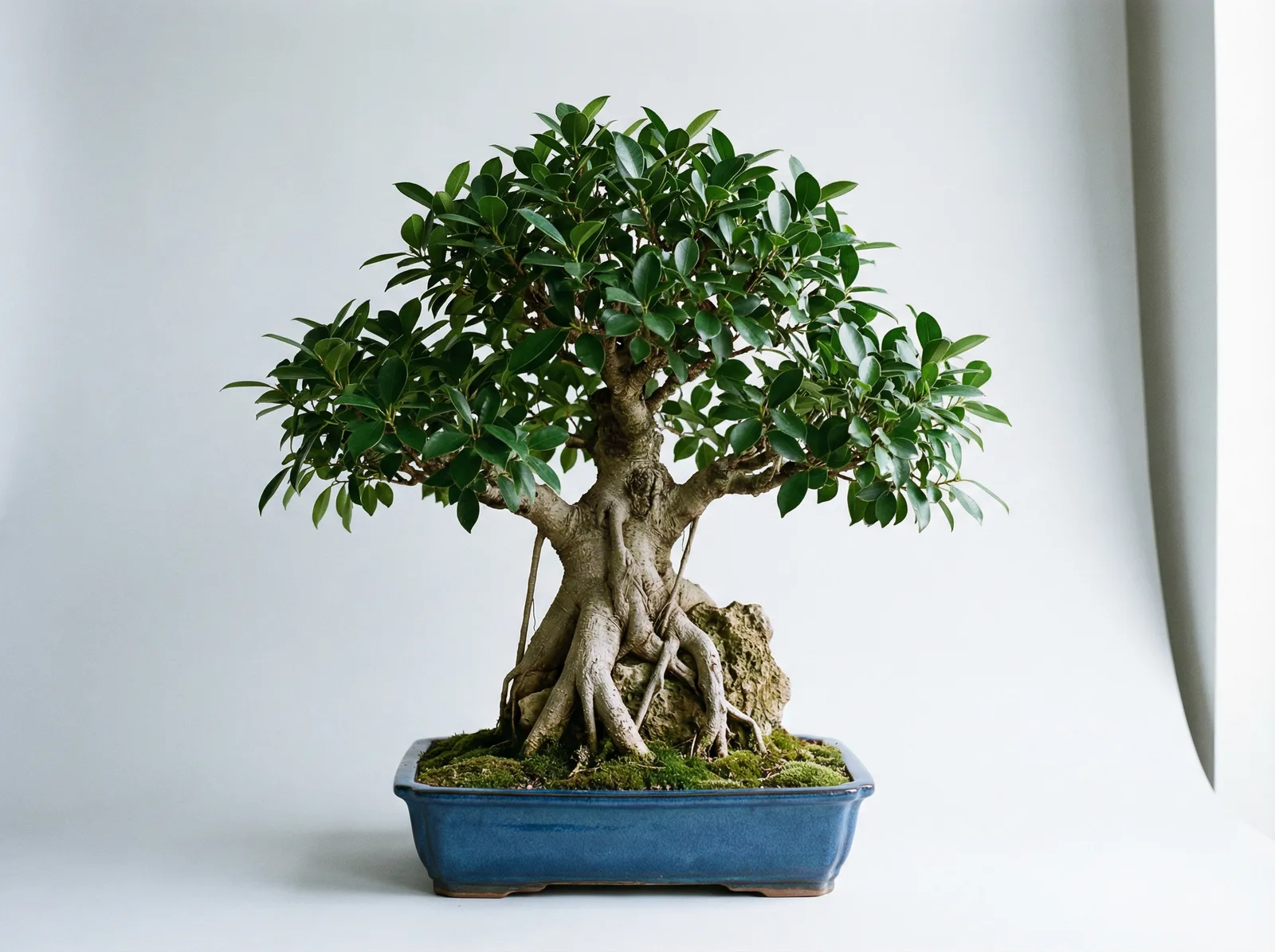
A thick, tapering trunk takes years to grow. A wide flare of surface roots (nebari) takes careful work. Dense fine branching (ramification) is the product of hundreds of small cuts over many seasons. Two Chinese elms can be the same height, but if one has a pencil-straight trunk and the other has a fat, characterful base, the second is worth five times as much. The pot matters too — a good hand-made container can cost more than the tree in it.
The hidden first-year costs
Budget for a little more than the tree. In year one you'll want:
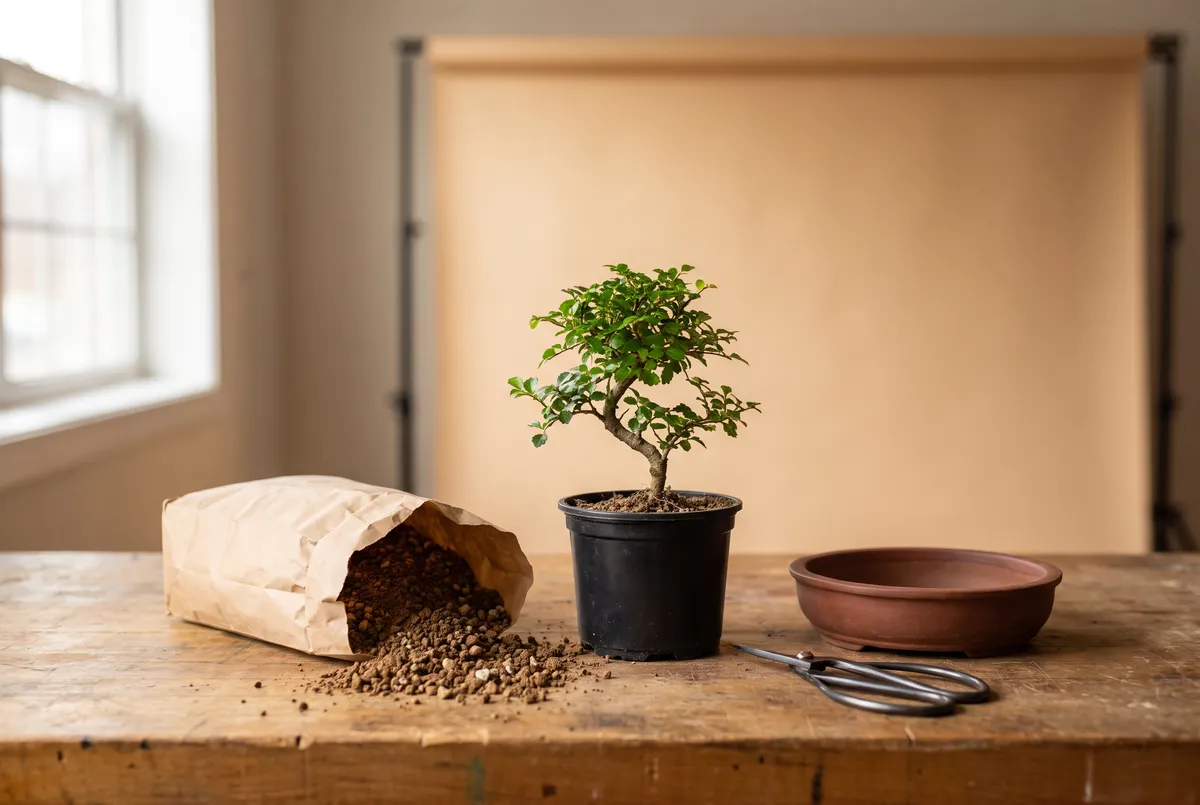
- Bonsai soil — $15–25 for a bag of a proper gritty mix. Don't use potting soil; it holds too much water. See the soil guide.
- A basic tool or two — a decent pair of shears is $15–30. You do not need a full tool set to start.
- A pot, eventually — $20–50 when you repot, though your tree can stay in its nursery pot for a season.
All in, plan on $40–80 of supplies on top of the tree. After that, ongoing costs are tiny — fertilizer and the occasional bag of soil.
Where to spend and where to save
Here's our opinion, plainly: spend on the tree, save on everything else at first. A better tree teaches you more and motivates you more than a drawer full of tools ever will.
And save your money by not buying a seed kit. A $30 seed kit is a 10-plus-year project sold as a gift — for the same $30–40 you can buy a live starter tree that already looks like a bonsai. We'd tell you that even though the seed-kit affiliates would happily pay us not to. Put the money into a tree that's alive today.
Whatever the number, skip the seed kit — the same money buys a tree that's alive today.
What this means for your tree
For a first tree, $30–60 on a healthy starter species plus $40 or so of soil and a shears is a sane budget that gets you everything you need. You can absolutely spend more later, once you know whether the hobby sticks.
If you're comparing options, the beginner picks are where the money goes furthest, and the most expensive bonsai exist mostly to show you what decades of the same care can eventually produce.
Species mentioned here
More on “How much do bonsai trees cost?”
Keep reading