How big do bonsai trees get?
Short answer
Bonsai range from under 2 inches to over 3 feet — it's a spectrum with named size classes. Most trees people own are “chumono,” roughly 8–24 inches, small enough for a table. A bonsai stays whatever size you keep it: prune the roots and top and it holds. Stop, and it will try to grow back toward a full-size tree.
Chumono中品 · kifu
From a wine bottle up to a table lamp.
The everyday tabletop bonsai — the size most people own.
Find your class
The size classes
Bonsai are grouped into traditional size classes, from thimble-small to trees that take two people to lift. Tap the scale below to compare them; here's the vocabulary:
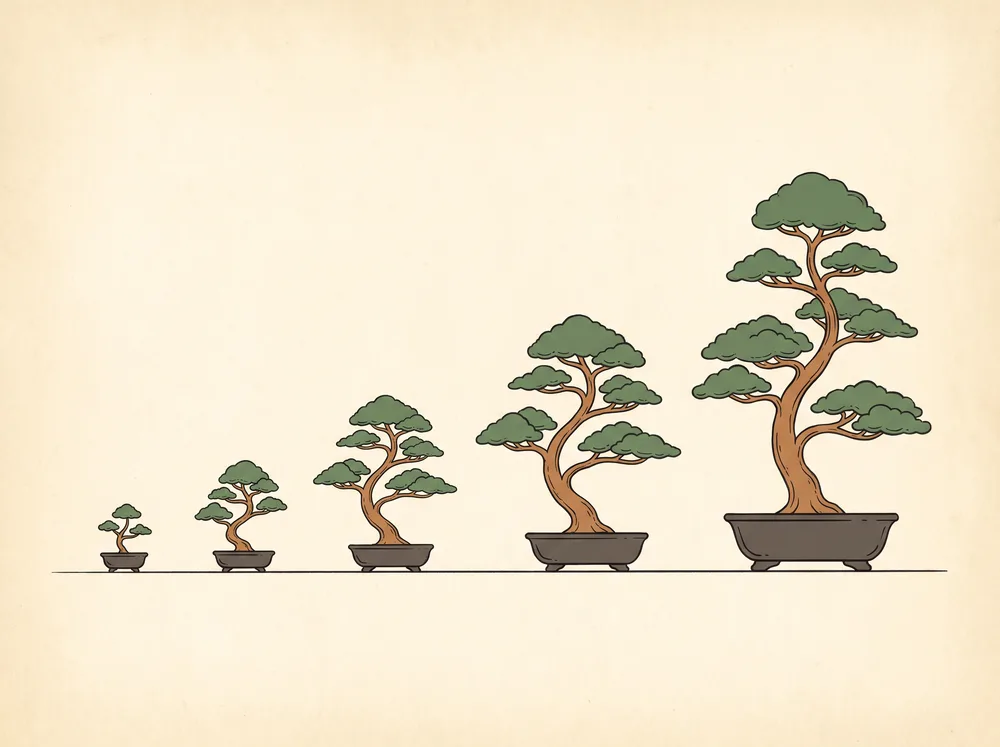
- Mame (“bean”) — under ~4 inches. Fits on a fingertip.
- Shohin — roughly 4–8 inches. Palm-sized.
- Chumono / kifu — about 8–24 inches. The everyday tabletop bonsai most people own.
- Omono / dai — 24–40 inches. A serious display tree.
- Imperial — 40–80 inches. Historically grown for palaces; two-handed at least.
The classes are guidelines, not laws — but they tell you what “small” and “big” actually mean in bonsai terms.
How a bonsai is kept small
A bonsai holds its size because you actively maintain it, not because it's a dwarf variety. Three things do the work: the shallow pot limits root volume, annual root pruning resets the tree, and cutting back new growth controls the height and spread.
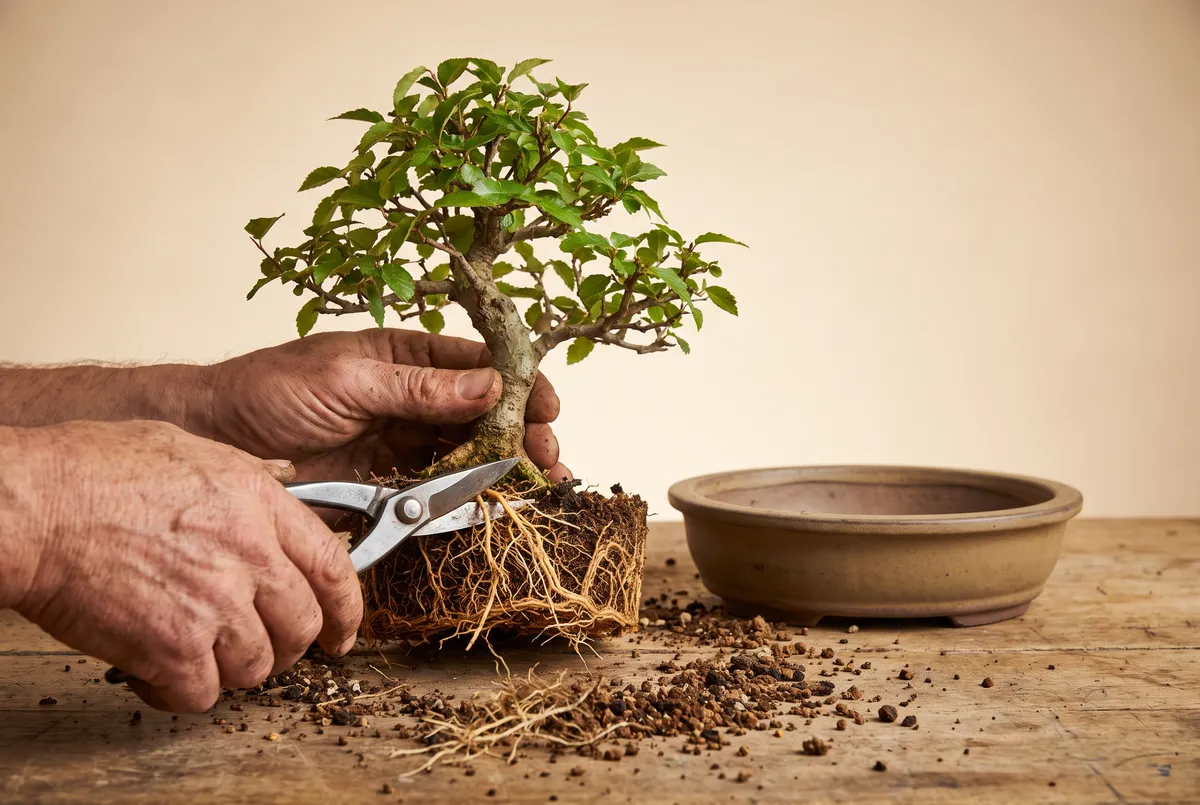
The leaves shrink too, on many species — keep a tree small and prune it for years and it often produces smaller leaves in proportion, a process called leaf reduction. What you're doing is holding a naturally larger tree at a chosen scale. Let it go, and it remembers what it wanted to be.
How big can a bonsai get?
Bigger than most people expect. Imperial bonsai run four to nearly seven feet and can be older than the country they're displayed in. At that size they're less “desk tree” and more “architectural feature,” and they need proportionally large pots and serious muscle to repot.
You can also simply grow a species that wants to be large. A bald cypress or pine trained as a big bonsai reads very differently from a delicate shohin maple. Size is a design choice — within the limits of your space, your back, and your patience.
Choosing a size for your space
Our advice: match the size to where the tree will actually live before you fall for a big specimen. A chumono around 12–18 inches is the sweet spot for most homes — big enough to have presence and real branch structure, small enough to sit on a table and be watered easily.
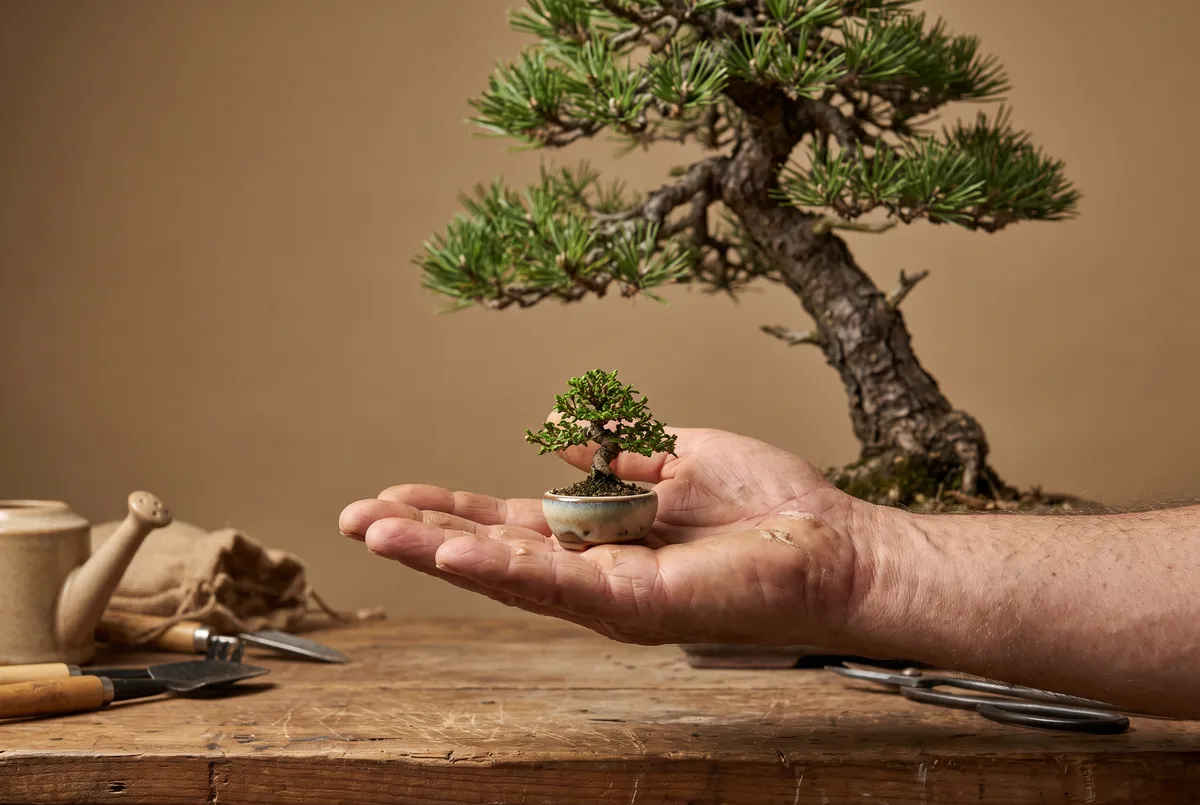
Go smaller (shohin, mame) if you're tight on space, but know that tiny trees dry out fast and demand more frequent watering. Go bigger only if you have the outdoor room and don't mind the weight. For apartments specifically, see our small-space picks.
What this means for your tree
Your bonsai will stay the size you keep it — no bigger, as long as you prune the roots and top on schedule. If it's slowly getting leggy and out of scale, that's not the tree “growing up,” it's a sign it's due for pruning or a repot.
Decide what size you want it to hold, then maintain toward that. And if you're still choosing a tree, factor size into the decision as much as species — it's easier to keep a naturally smaller-leaved tree convincing at a small scale.
Species mentioned here
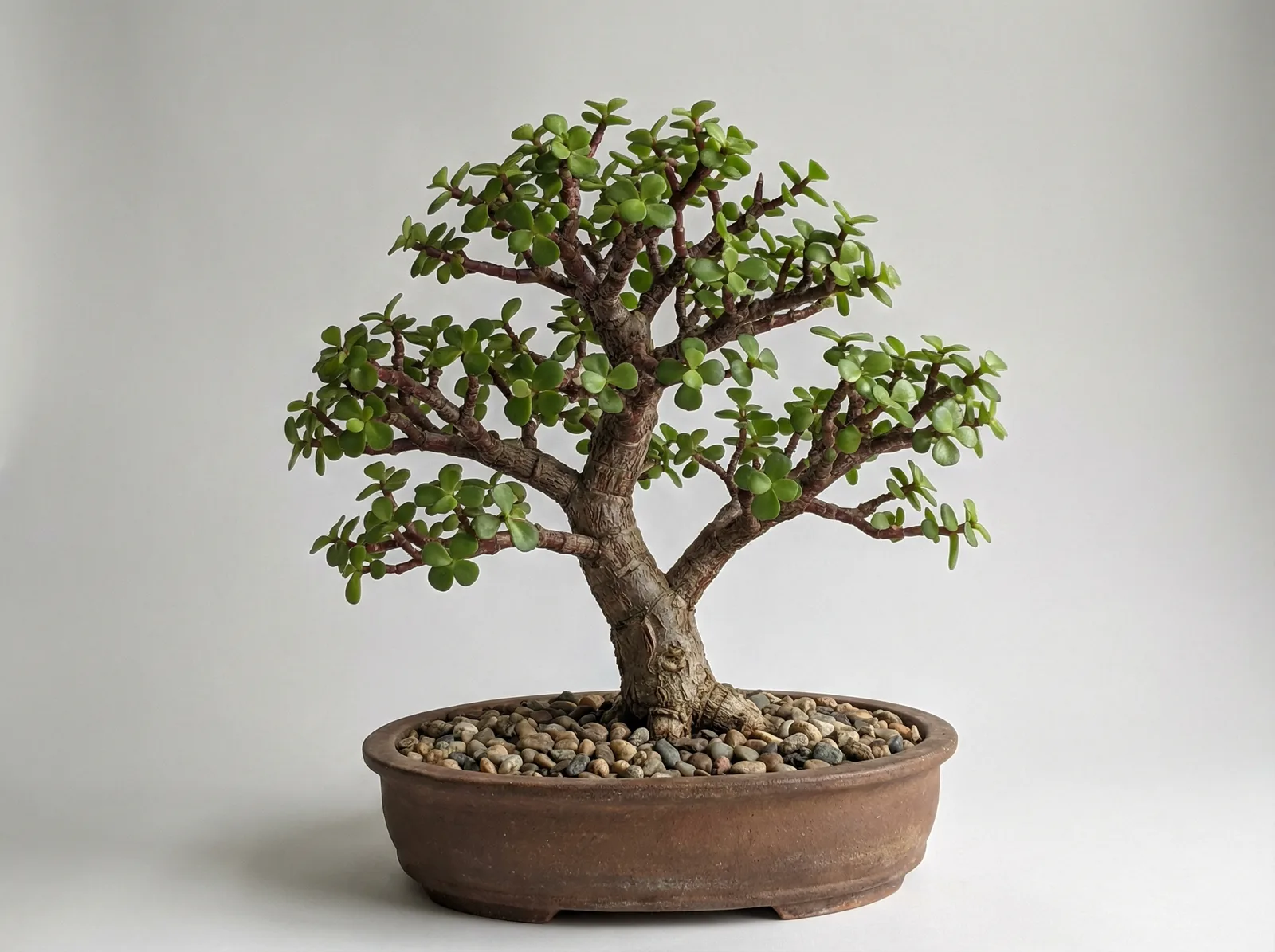
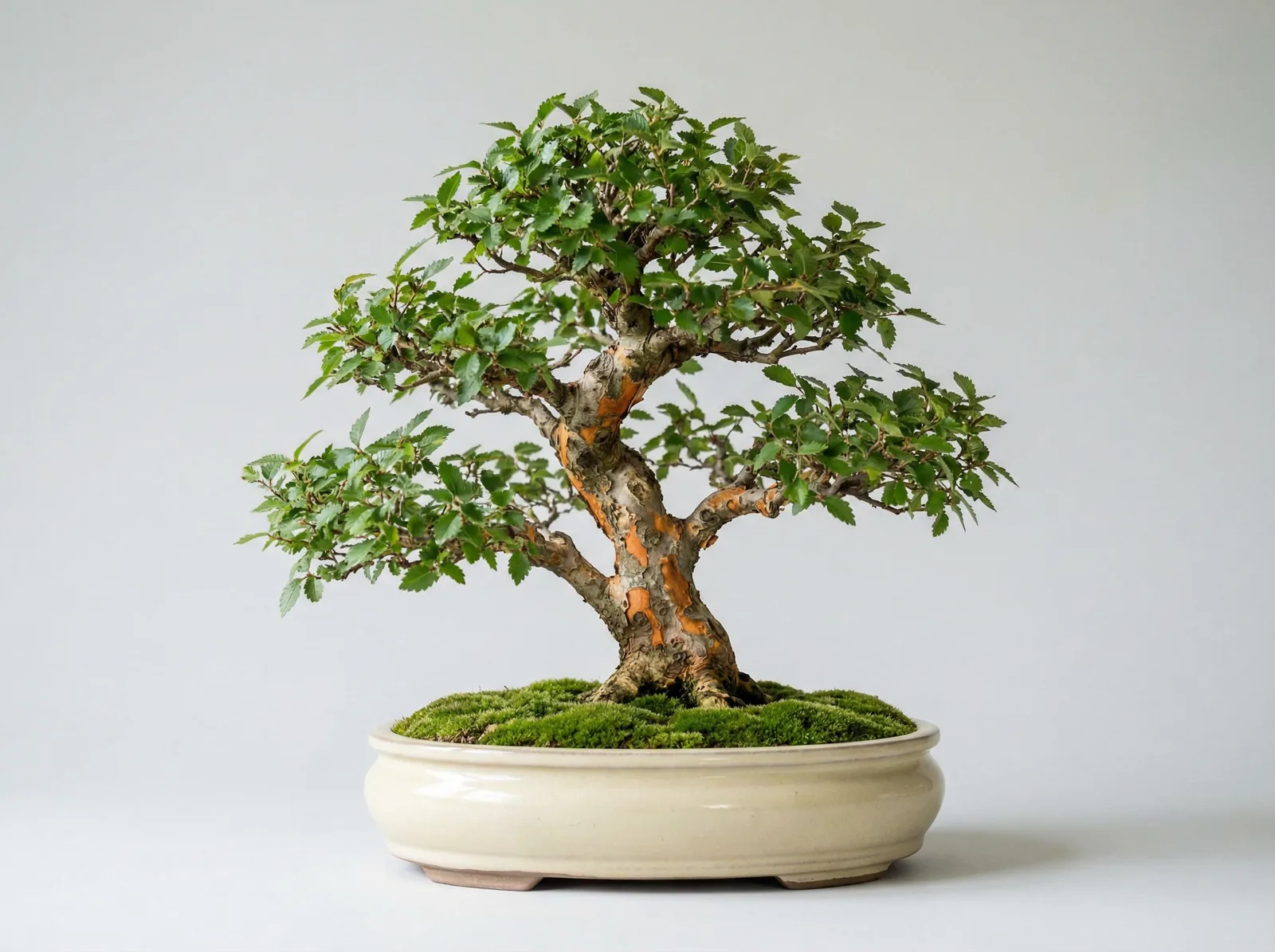
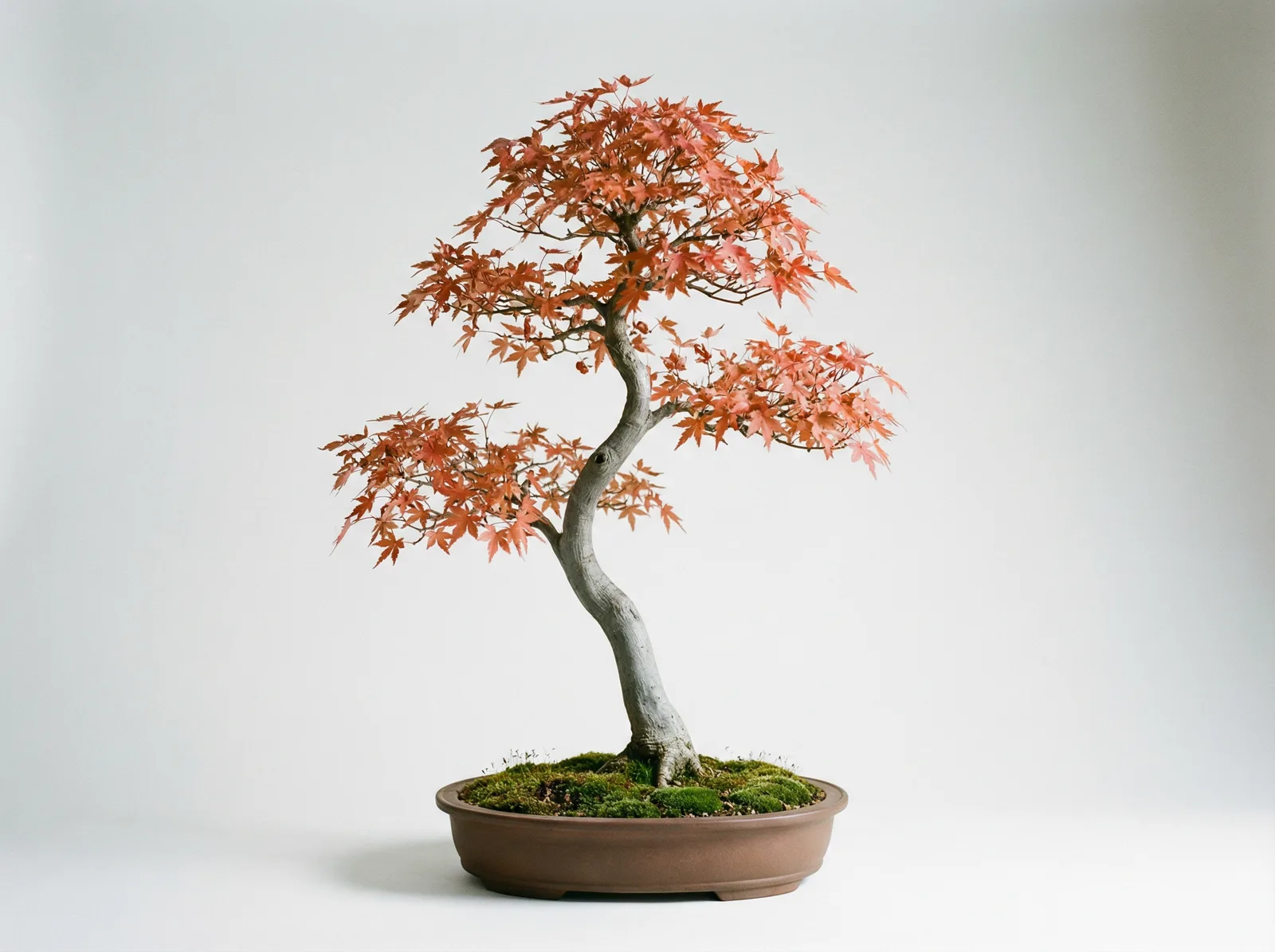
More on “How big do bonsai trees get?”
Keep reading