How often should you water a bonsai?
Short answer
Water when the soil is starting to dry, not on a fixed schedule. For most trees that's every 1–3 days in summer and every 3–7 in winter, but pot size, species, and heat change everything. Push a finger a half-inch into the soil: dry means water now, damp means wait. When you do water, soak until it runs from the drainage holes.
Expect to water about daily
Treat that as a starting rhythm, not a rule. Check the soil first — push a finger a half-inch in, and water thoroughly only when it feels dry at that depth. Your tree, pot, and weather will shift the number.
Deciding about right now, not the rhythm? Run the morning check
Why a schedule fails
“Water every three days” is the advice that kills trees. Not because the number's always wrong, but because a fixed schedule ignores everything that actually determines when a tree is thirsty — heat, humidity, wind, pot size, soil, and the species itself.
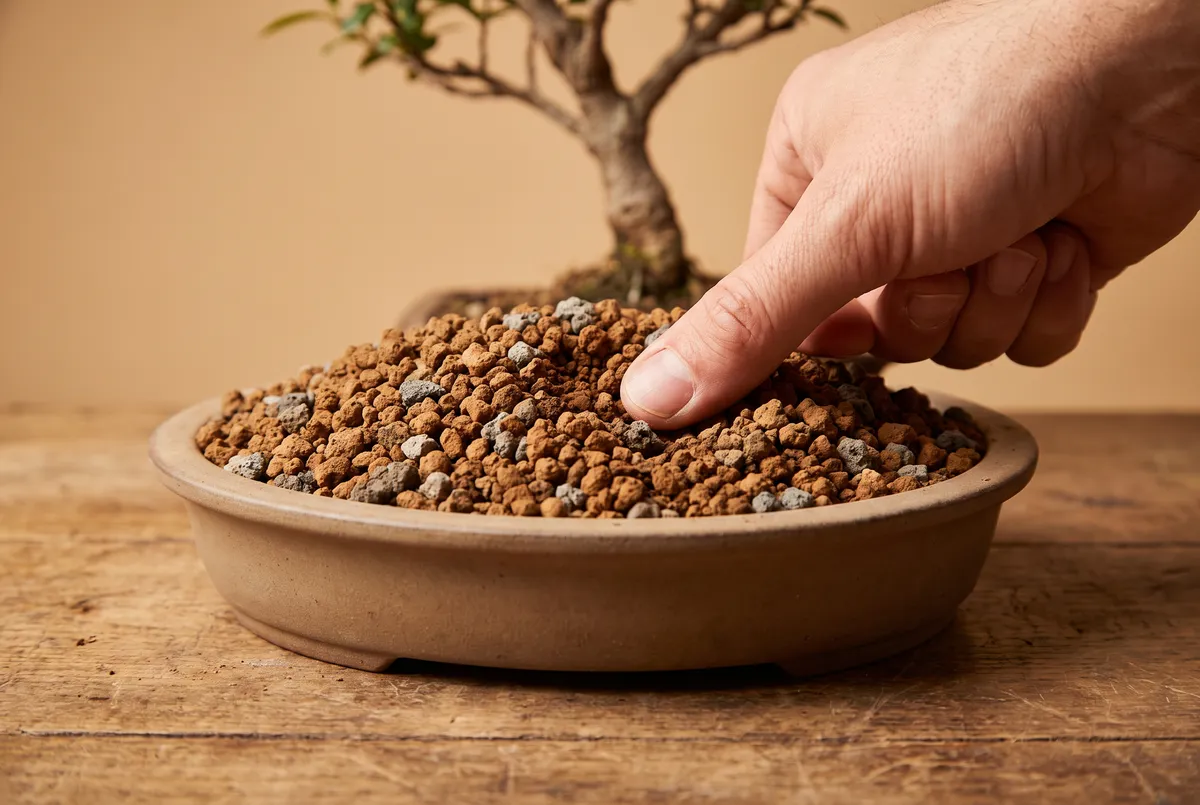
The reliable method isn't a calendar, it's a finger. Push it about half an inch into the soil. If it feels dry at that depth, water now. If it's still damp, check again tomorrow. Do that daily and you'll learn your specific tree's rhythm in a week — far better than any schedule someone else wrote. Set the cadence tool below as your starting point, then let the soil correct you.
What changes how fast a tree drinks
Five things move the needle most, and the tool below accounts for the big ones:
- Season and heat. Summer can mean daily watering; winter dormancy can stretch it to once a week or less.
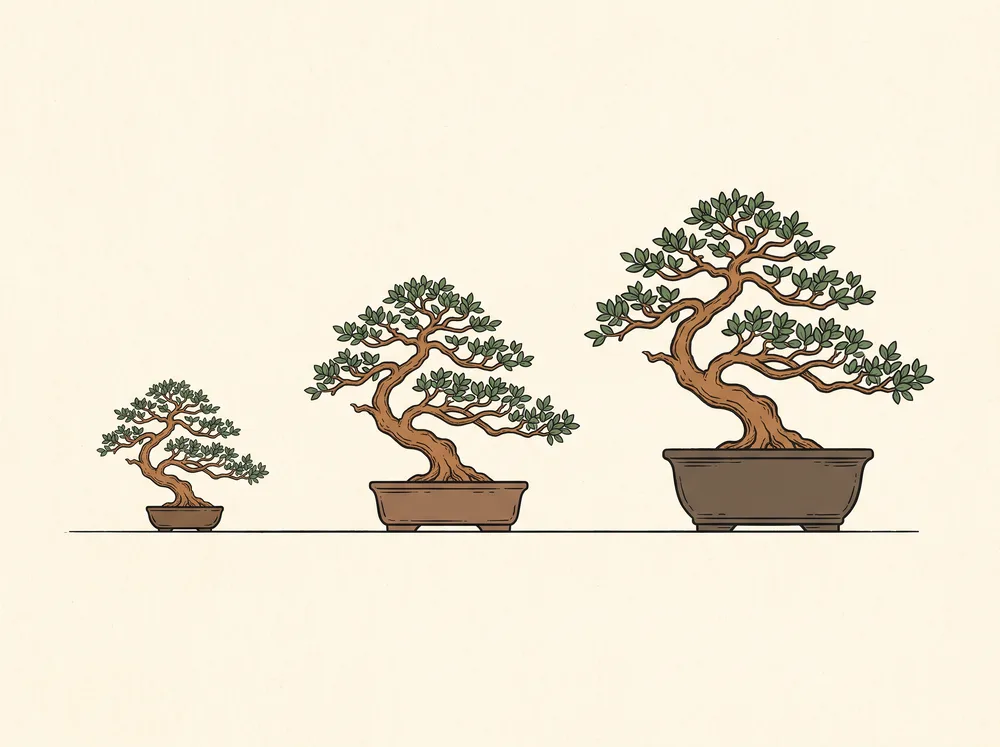
- Pot size. A small, shallow pot dries out far faster than a deep one — mame and shohin trees may need water twice a day in heat.
- Indoor vs outdoor. Outdoor trees in sun and wind drink faster; indoor air is more stable but can be dry.
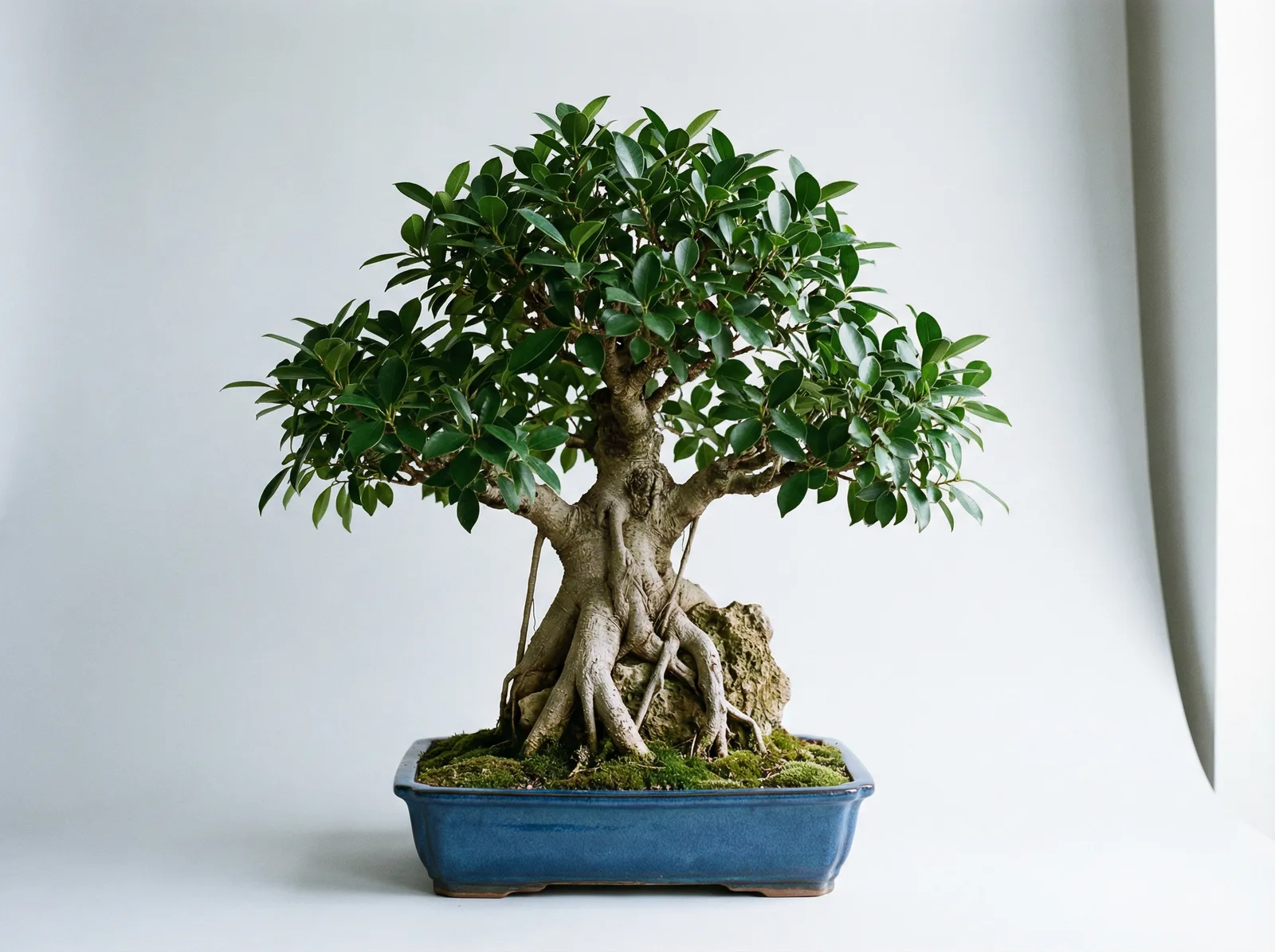
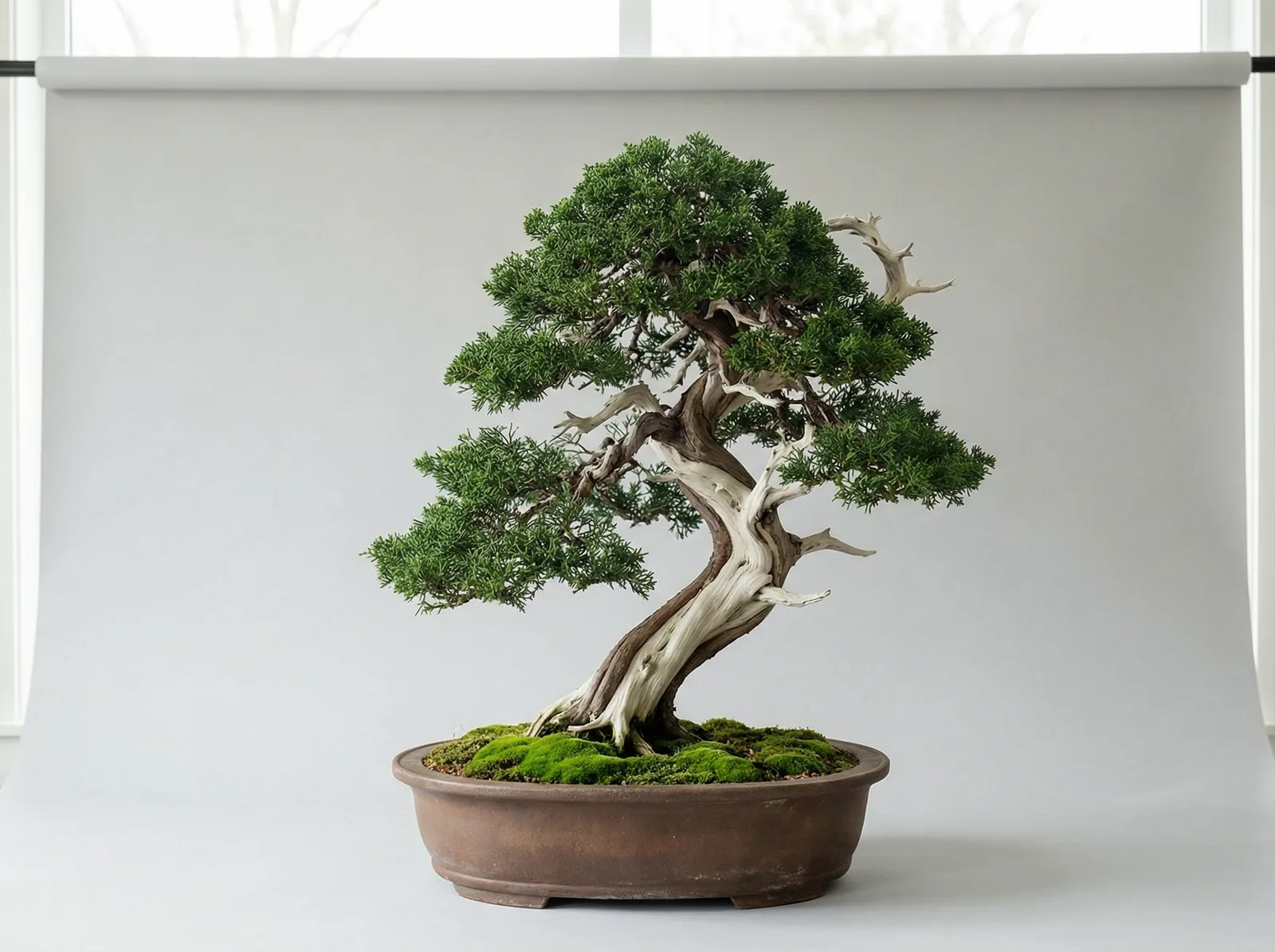
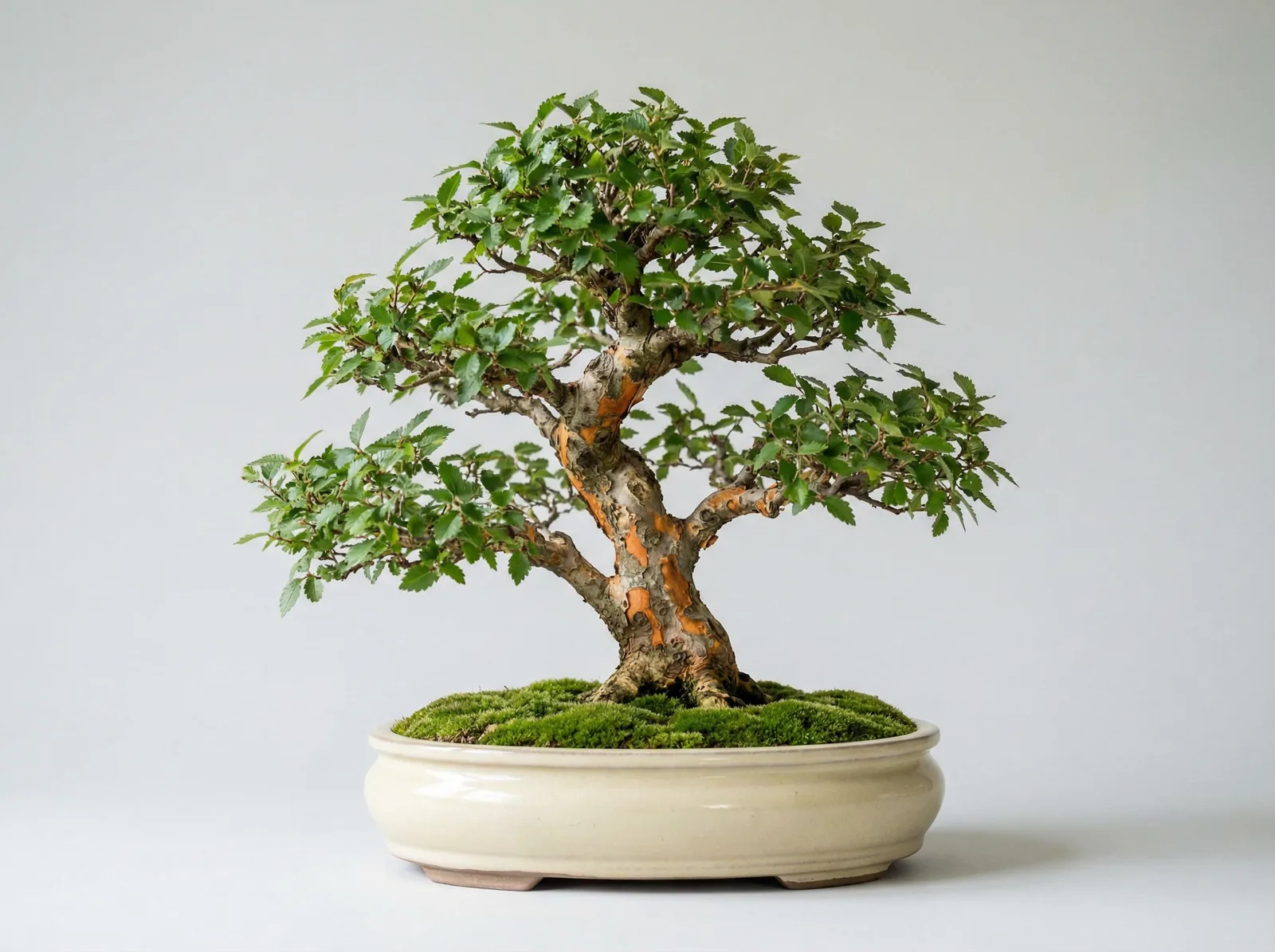
- Species. Ficus and Chinese elm like steady moisture; pines and junipers prefer to dry slightly; jade wants to dry out a lot.
- Soil. A gritty bonsai mix drains fast by design — that's a feature, and it's why you check often.
How to water properly
When the soil says go, water thoroughly — half-measures cause more problems than they solve. Use a can with a fine rose or a gentle hose setting so you don't blast the soil out, and water the whole surface until it runs freely from the drainage holes. Wait a minute, then do it again; the second pass makes sure the entire root mass is soaked, not just the top layer.
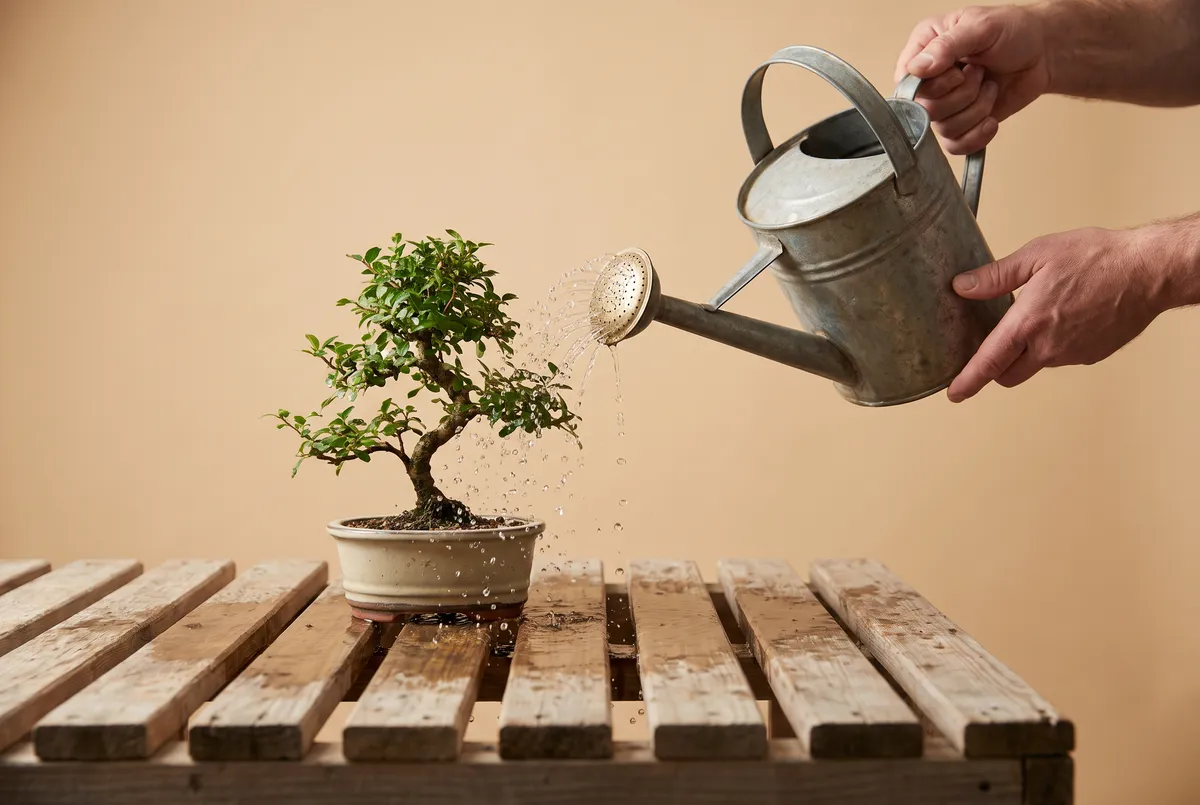
Morning is the best time — it lets the foliage dry before night and gives the tree water for the hot part of the day. If water runs straight through without soaking in, the soil has gone hydrophobic from drying too far; sit the whole pot in a basin for 10 minutes to rehydrate it. The full method is in the watering guide.
Under vs overwatering
Both can kill, but here's the counterintuitive truth: overwatering kills more bonsai than underwatering. Roots sitting in soggy soil can't breathe and quietly rot, and by the time the leaves yellow, the damage is done.
Underwatering is more obvious — wilting, crisping leaves — and often recoverable if you catch it. That's exactly why the check-the-soil-first method matters: it stops you watering a pot that's still wet. If you're not sure which problem you have, err toward letting the soil tell you rather than watering “just in case.”
What this means for your tree
Watering is the one habit that decides whether your bonsai lives, so make it a daily glance, not a weekly chore. Check the soil every day; water thoroughly only when it's starting to dry. That's the whole game, and it's a skill anyone builds in a couple of weeks.
Use the cadence tool as training wheels for your species and setup, then trust your finger over any number. Once watering is automatic, the rest of bonsai care — light, feeding, pruning — gets a lot easier, and the hobby stops feeling hard.
Species mentioned here
More on “How often should you water a bonsai?”
Keep reading