What is a bonsai tree?
Short answer
A bonsai is an ordinary tree kept small on purpose. It's not a special species or a genetic dwarf — it's a normal tree grown in a shallow pot and shaped with pruning and wiring so it looks like a full-grown tree in miniature. “Bonsai” is the technique, not a kind of plant. Almost any woody tree or shrub can become one.
Bonsai is a method, not a species
The single most common misunderstanding: there's no such thing as a “bonsai tree” you buy as a seed. A juniper bonsai is just a juniper. A ficus bonsai is just a ficus. The word describes what you do to the tree — grow it in a container and keep it small — not what it is genetically.
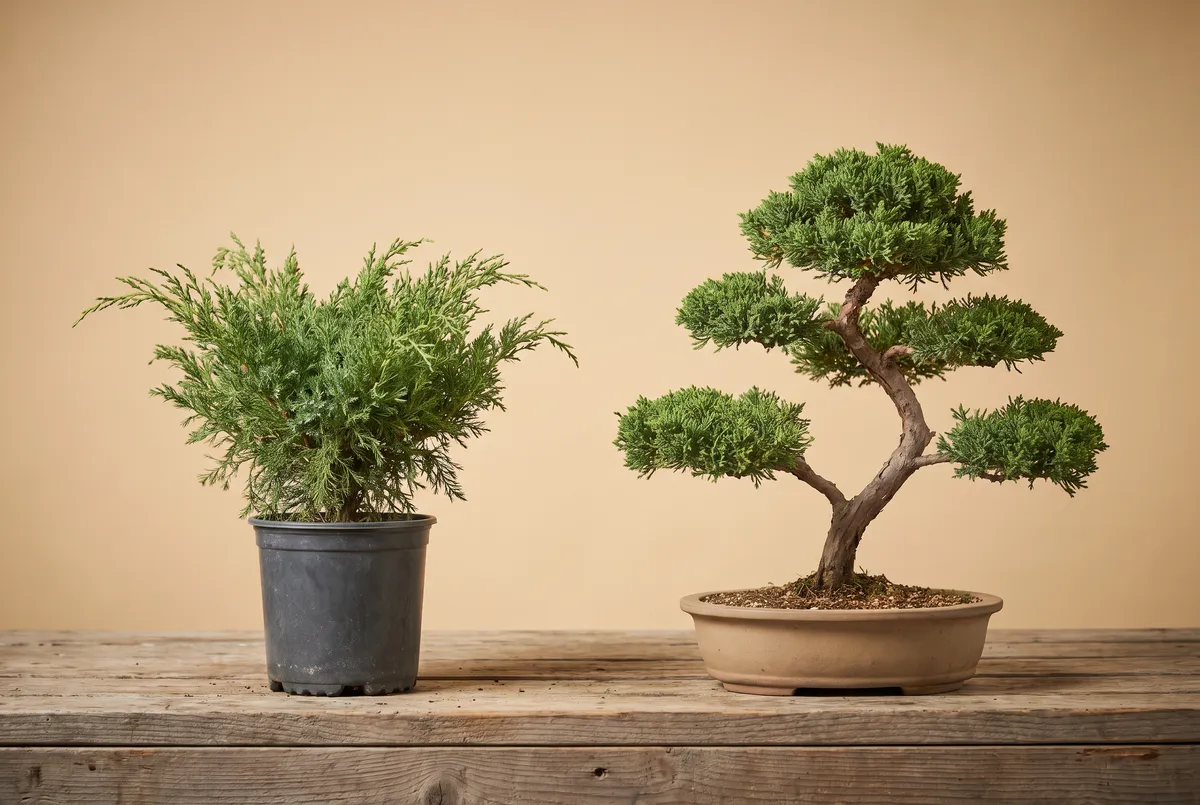
That's why almost any woody tree can be made into a bonsai, from an oak to a fig to a maple. Some species just take to it far better than others because they have small leaves and bud back readily on old wood.
How a tree is kept small
A bonsai stays small because you keep it that way, using a few standard techniques:
- Pot confinement. A shallow container limits how much root mass — and therefore how much top growth — the tree can support.
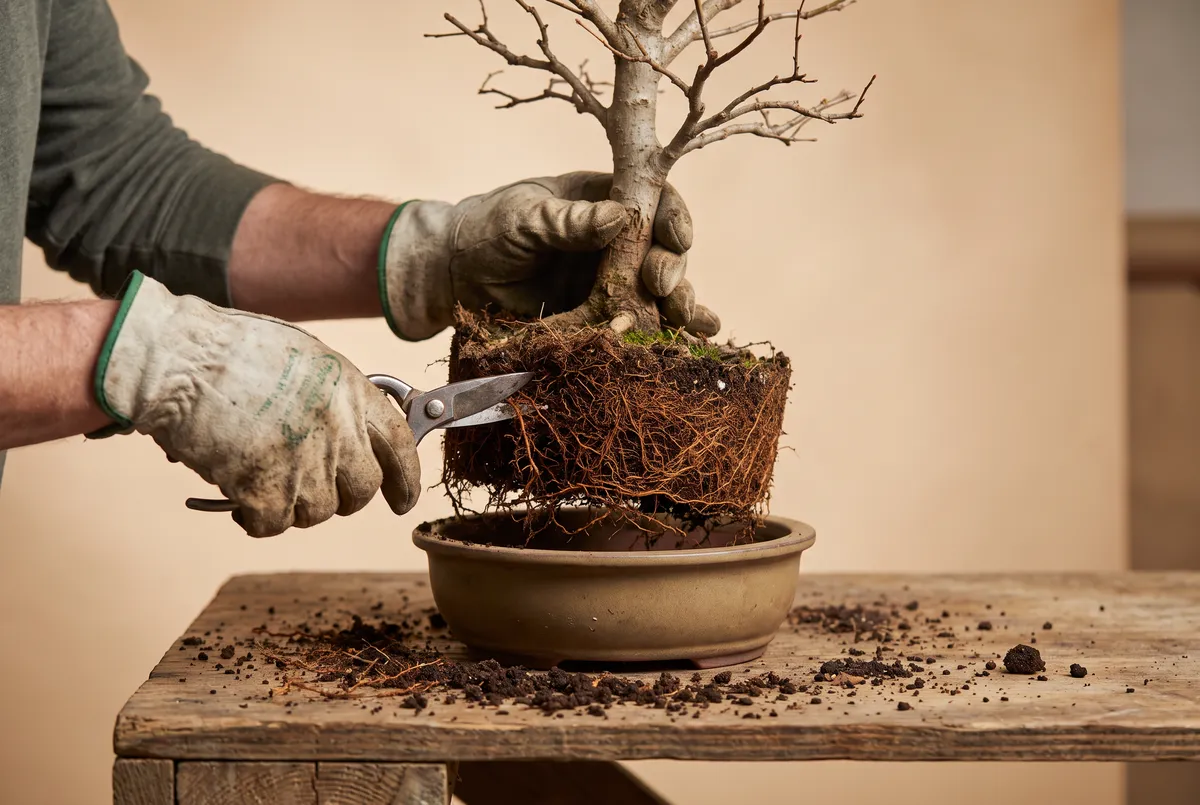
- Root pruning. Every year or two you trim the roots at repotting, which resets the tree and keeps it in scale.
- Top pruning. Cutting back new shoots controls height and builds ramification (the dense, fine branching that makes a tree look old).
- Wiring. Wrapping branches in aluminum or copper wire lets you bend them into position while they set.
Done together, these hold a tree at whatever size you choose. Stop, and it will slowly try to become a full-size tree again.
The parts of a bonsai
Bonsai has its own vocabulary for the parts of a tree, and it's worth a quick handshake with the terms. The nebari is the flare of surface roots at the base — the thing that makes a young tree read as old. The trunk's taper from thick base to thin apex is a big part of a convincing tree. Then there's the canopy, the pot, and sometimes deadwood features.
Tap the parts of the diagram below to see what each one is called and why it matters. You don't need the jargon to keep a tree alive, but it helps you see what makes one bonsai look better than another.
How bonsai differs from a houseplant
A potted ficus on your desk and a ficus bonsai are the same plant — the difference is intention and technique. A houseplant is allowed to grow however it likes. A bonsai is shaped: its roots are pruned to fit a shallow pot, its branches are placed on purpose, and its proportions are managed to suggest a mature tree.
The practical upshot is that a bonsai needs a bit more from you — more attentive watering because the soil volume is small, plus seasonal pruning. It's not as hard as its reputation, but it's more hands-on than a pothos in a corner.
Where bonsai came from
The art started in China more than a thousand years ago as penjing — miniature landscapes in trays — and was carried to Japan, where it was refined into the single-tree focus most people picture today. The word and its layered meanings came along with it.
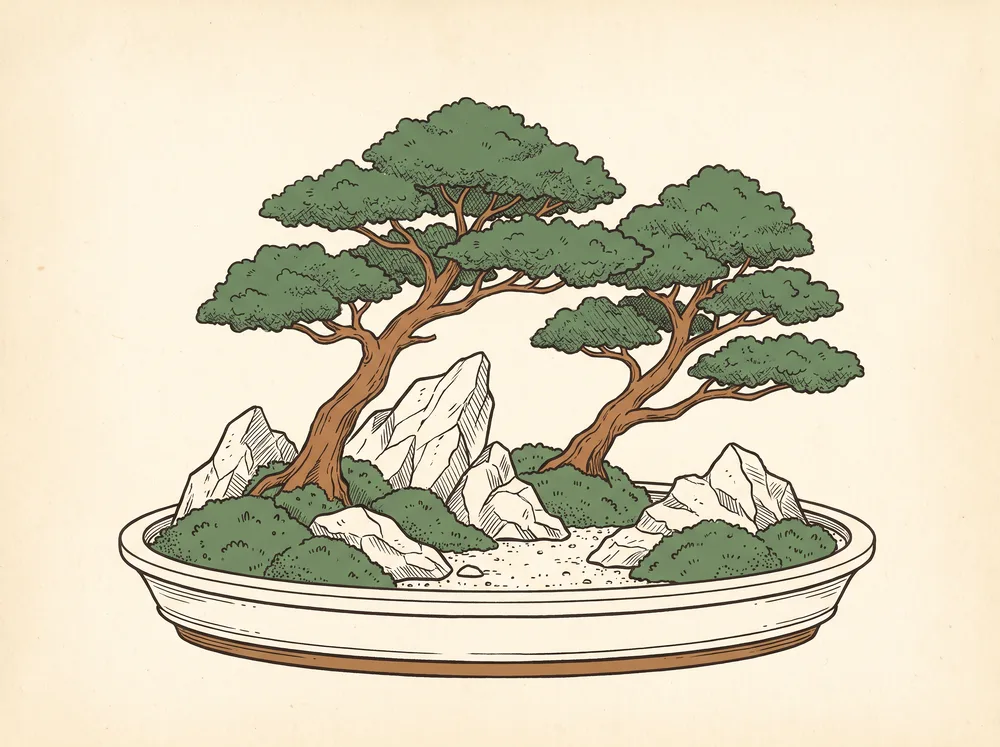
What reached the West is mostly the Japanese tradition, which is why the terms are Japanese. But the core idea is ancient and simple: bring a piece of a landscape indoors, and tend it.
Surface rootsnebari
The flare of roots spreading at the soil line. Nebari is the single biggest tell of a mature, well-grown tree — it's what makes a young trunk read as old.
What this means for your tree
If you just got your first bonsai, the most useful thing to internalize is this: you own a specific tree species, and its species is what tells you how to care for it. There's no generic “bonsai care” — a Chinese elm and a pine want different things.
Find out what you have, then read its species page. Start with the two questions that kill the most beginner trees: does it belong inside or outside, and how often does it want water?
Species mentioned here
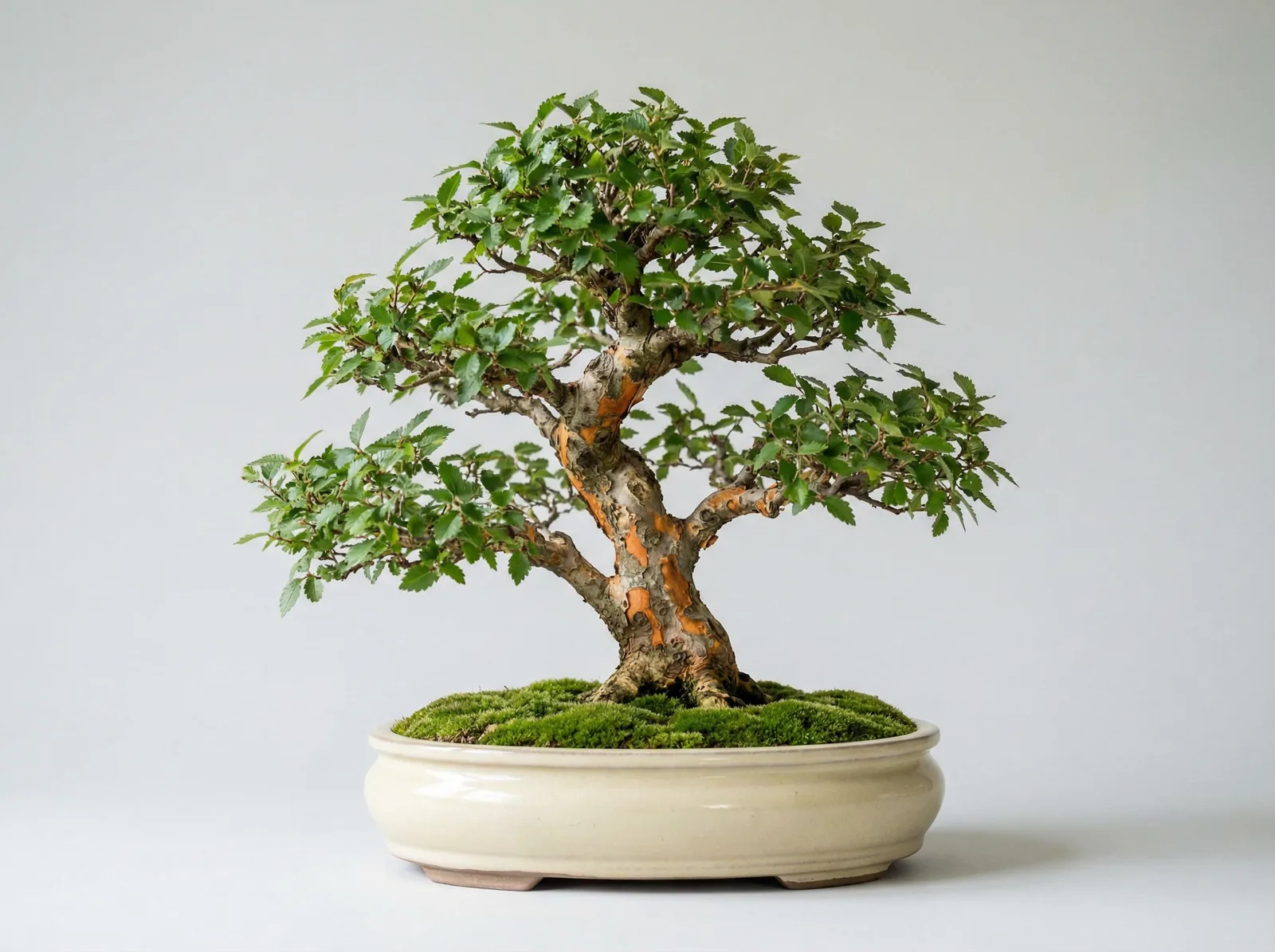
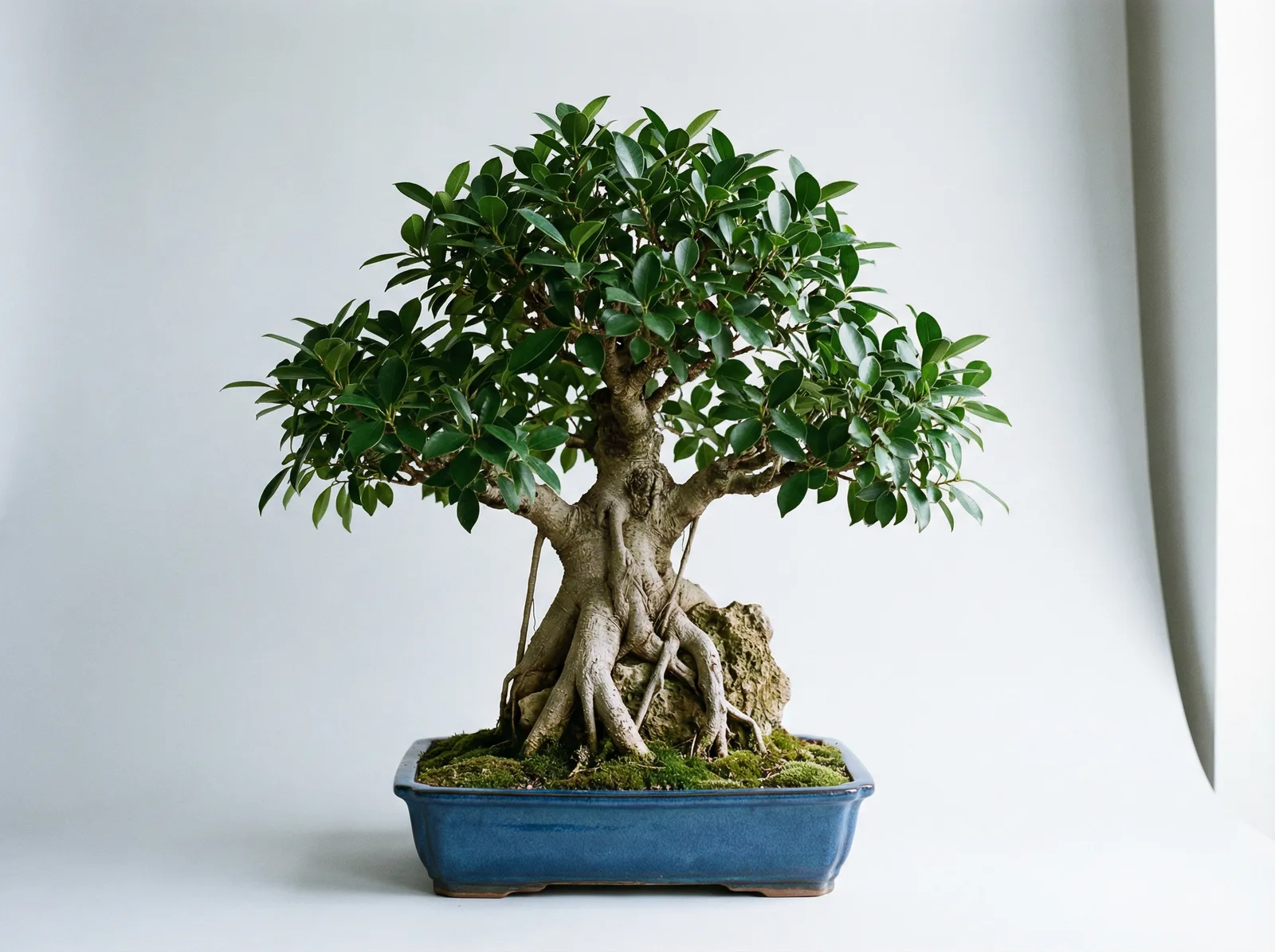
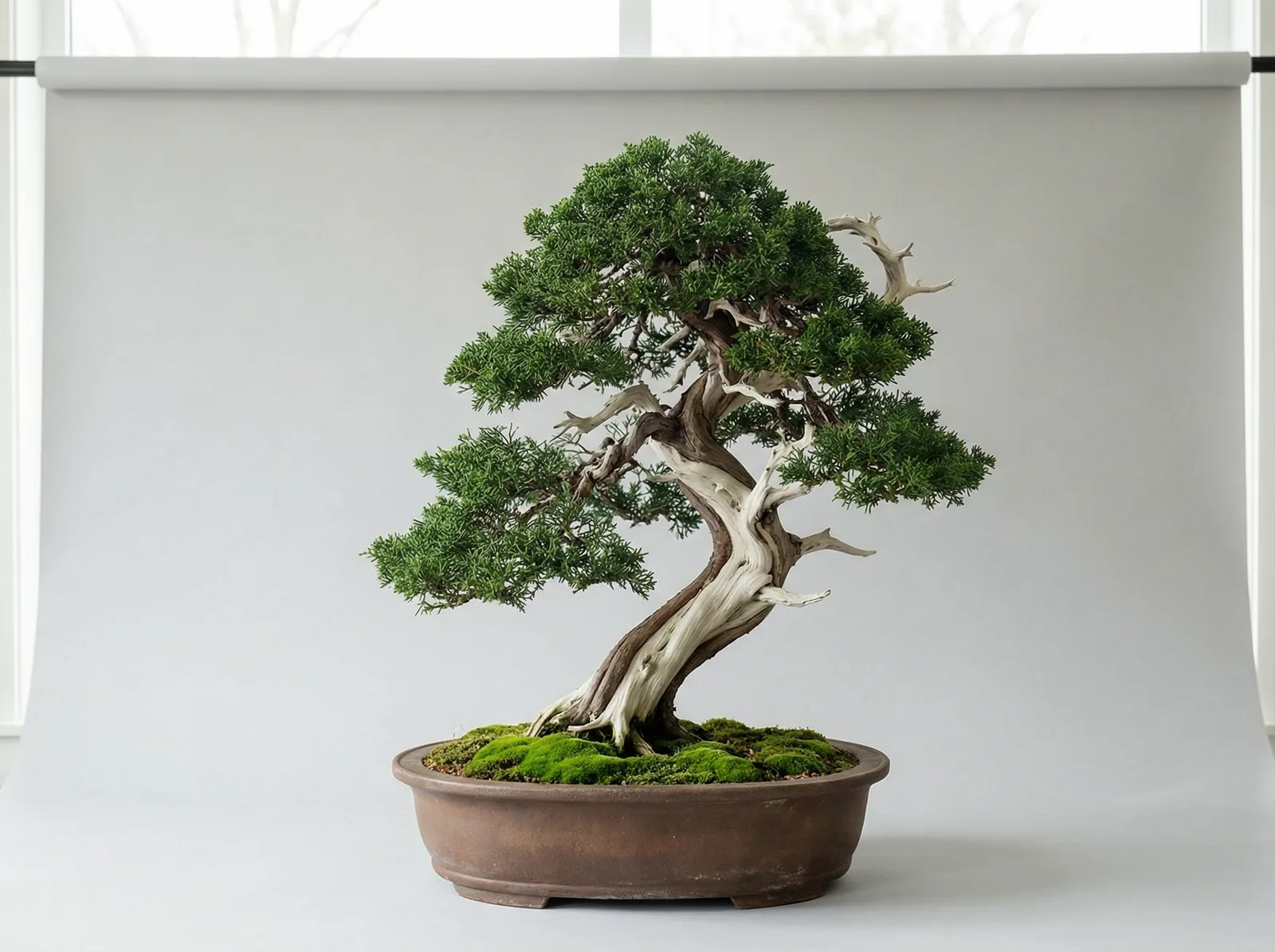
More on “What is a bonsai tree?”
Keep reading