What does a bonsai tree mean?
Short answer
Bonsai means “planted in a tray” — 盆 (bon, a shallow pot) plus 栽 (sai, plantings). The word names a technique, not a symbol. It's pronounced BON-sigh — no relation to “banzai,” the war cry; that's a different word. Over centuries the trees came to stand for patience, care sustained across a lifetime, and a small piece of nature kept close. Given as a gift, a bonsai usually carries a wish: endurance, balance, or a bond meant to last.
Where the word comes from
First, saying it: bonsai is pronounced BON-sigh. It gets mixed up with “banzai” constantly, and they're different words — banzai (万歳) is the old Japanese cheer-turned-war-cry meaning “ten thousand years,” while bonsai (盆栽) is a quiet gardening term. One is shouted from a cliff; the other is watered twice a week.
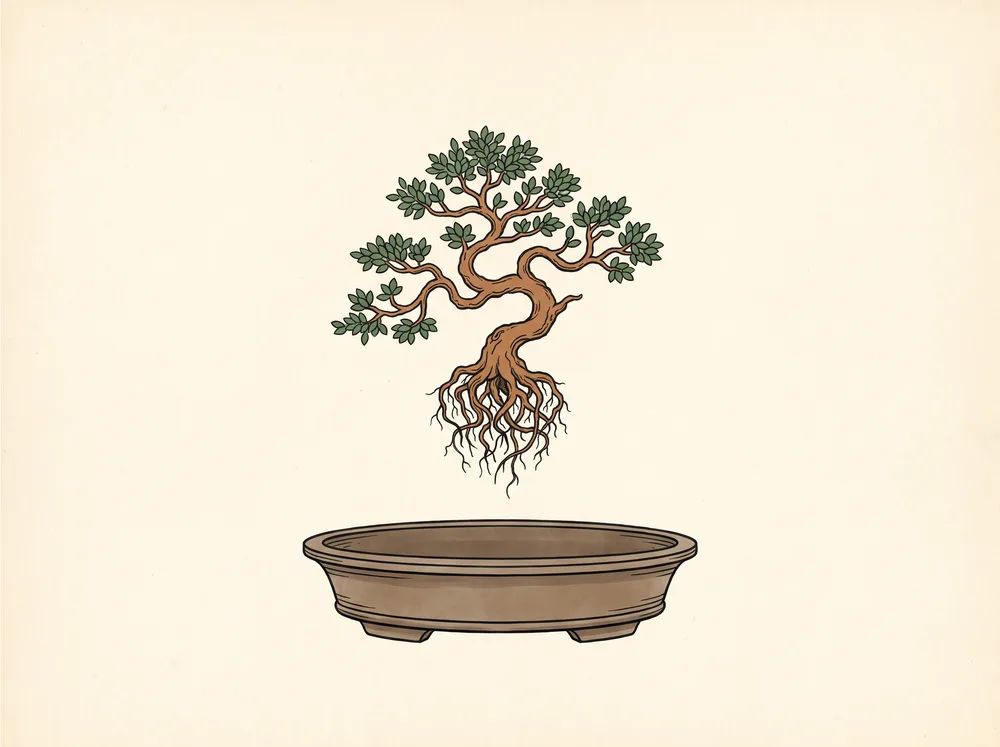
“Bonsai” is Japanese, but the practice and the characters are older than that. The word is written 盆栽 — 盆 (bon) is the shallow tray or pot, and 栽 (sai) means plantings or to plant. Put together it's literally “tray planting.”
The Japanese borrowed both the characters and the art from China, where the older tradition of penjing (盆景, “tray scenery”) goes back well over a thousand years. So the name tells you something honest: at its root, bonsai describes how a tree is grown — in a container, kept small — not a mystical category of plant. If you understand what a bonsai tree actually is, the meaning of the word stops being mysterious.
A short, honest history
The practice starts in China, not Japan. Miniature trees in trays — penjing, “tray scenery” — appear in Tang-dynasty art by 706 AD, when murals in Prince Zhanghuai's tomb showed attendants carrying potted miniature landscapes. Chinese growers had probably been shaping container trees for generations before anyone painted one.
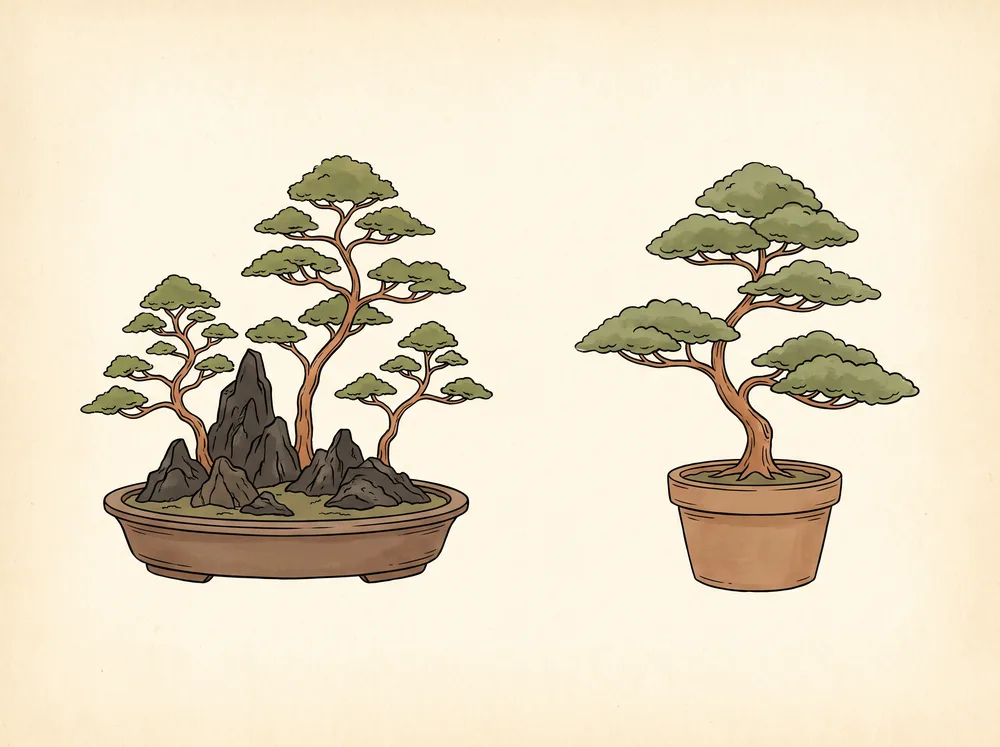
The art crossed to Japan around the Kamakura period (roughly the 12th-14th centuries), traveling with the Buddhist monks who carried Chan teaching — what Japan would refine into Zen — between the two countries. Japanese growers then narrowed the form over centuries: where penjing often builds a whole landscape with rocks, figures, and multiple trees, bonsai distilled toward a single tree in a plain pot. Even the word “bonsai” is newer than the practice — it only settled into common Japanese use in the late 1800s.
The West caught on in the 20th century: exhibitions in London and Paris, American servicemen returning from Japan after WWII, and the 1970 Osaka World's Fair, which put bonsai in front of millions. No mysticism required at any step — this is a horticultural craft, refined for over a thousand years, that happens to be beautiful.
What a bonsai actually symbolizes
Skip the incense for a second. The symbolism people attach to bonsai — patience, harmony, balance — isn't invented. It comes from something concrete about the tree in front of you.
A bonsai means patience because you can't rush one. A trunk takes years to thicken; fine branching takes more. The tree keeps time, and you keep pace with it. It means harmony because a good bonsai is balanced on purpose — roots, trunk, and canopy in proportion, nothing fighting for attention. And it means continuity because these trees outlast the people who start them. A tree you plant today can be handed to someone who isn't born yet.
That's the real weight of a bonsai: not a life lesson printed on a card, but a living thing you're responsible for over a long stretch of time.
Giving a bonsai: what it says
A bonsai is a common gift for a reason — it reads as “I'm wishing you something that lasts.” The specific message shifts with the occasion. A housewarming bonsai says roots and stability. A wedding or anniversary tree says a bond that grows. One given after a loss can stand for a life that continues in miniature.
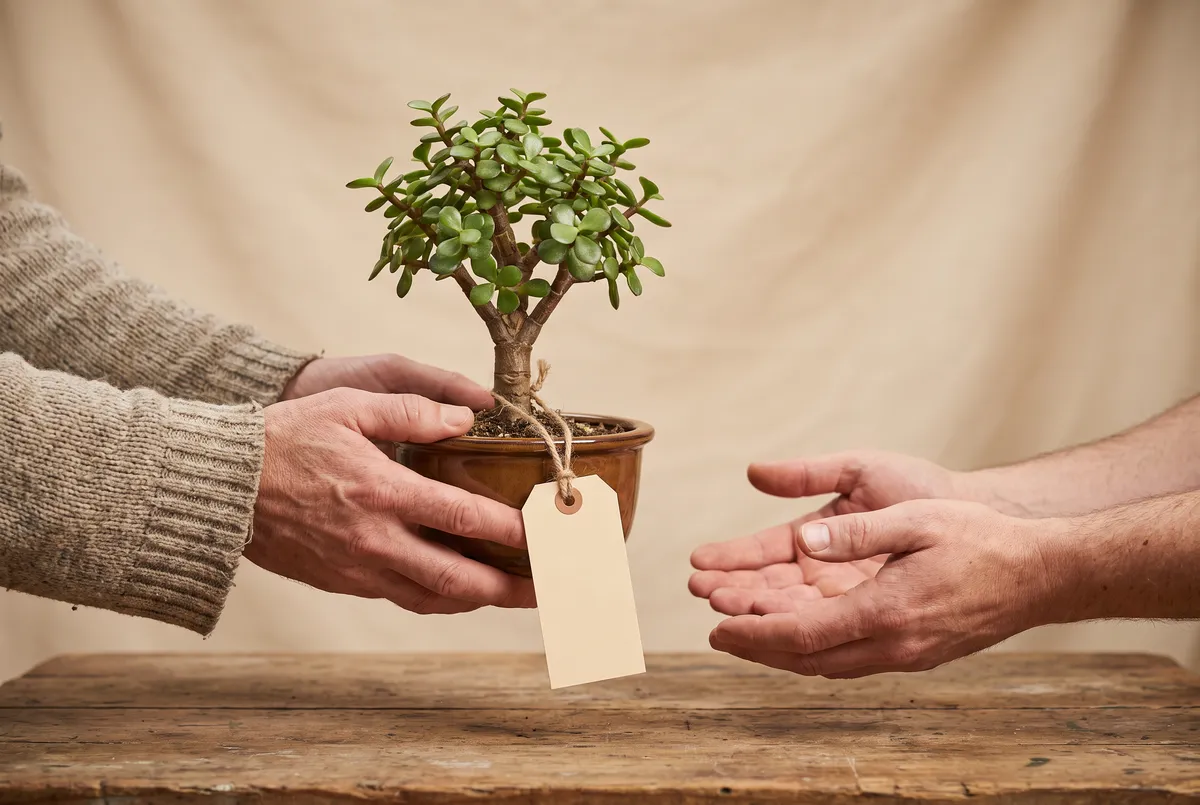
Use the picker below to match an occasion to a fitting species. And one honest note, because we say it on every page it's true on: if you're buying a bonsai as a gift, buy a live starter tree, not a seed kit. A seed kit is a decade-long project dressed up as a present — the recipient wants a tree now, not in 2036.
Feng shui and placement, minus the mysticism
In feng shui, plants stand for growth and living energy, and a bonsai is sometimes placed in the east (family, health) or southeast (wealth) of a home. A jade bonsai, with its coin-round leaves, is the classic “money tree” gift for prosperity.
We'll pass along the tradition, but we won't pretend a corner placement keeps a tree alive. What actually keeps a bonsai healthy is light and water in the right amounts — a juniper in the “wealth corner” of a windowless room still dies. Put the tree where it gets the light its species needs first. Let feng shui break the tie between two good spots, not override biology.
Meaning by species
Much of a bonsai's meaning comes from which tree it is:
- Jade and dwarf jade — prosperity and friendship; the “money tree” of the windowsill.
- Cherry blossom — the beauty of things that don't last; renewal each spring.
- Pine — longevity and steadiness; the evergreen that holds through winter.
- Juniper — protection and endurance, with dramatic deadwood that reads as survival.
- Chinese elm — quiet inner strength and resilience; also the honest beginner's tree.
- Wisteria — devotion and a long-lasting bond, from vines that live for generations.
- Japanese maple — grace and the beauty of change; the tree people picture when they picture fall color.
- Olive — peace and long life; the tree of the olive branch, still fruiting after centuries of drought.
- Ginkgo — hope and survival; a species older than the dinosaurs, whose trees releafed near Hiroshima's blast zone.
- Azalea — gratitude and abundance; a satsuki in full June bloom is the most generous display in bonsai.
- Ficus — shelter and connection; full-size figs are the trees whole villages meet under, and the Bodhi tree was a ficus.
- Money tree — luck and prosperity; the braided pachira is East Asia's standard gift for a new business.
- Bald cypress — persistence in hard places; it thrives standing in the swamps that drown every other tree.
Is bonsai cruel to the tree?
No — a healthy bonsai isn't a tortured tree, it's a pruned one. This question comes up a lot, so it deserves a straight answer.
Everything done to a bonsai — root pruning, branch pruning, wiring, repotting — is standard horticulture that gardeners do to full-size trees and hedges too. A tree in a pot isn't in pain; plants don't have a nervous system to feel it. Kept correctly, a bonsai lives just as long as its species would in the ground, sometimes centuries. The wiring shapes branches while they're flexible and comes off before it bites in. What is unkind is neglect — letting a tree dry out or keeping a sun tree in the dark. Care, not confinement, is the whole practice.
Pick an occasion and where the tree will live to see what a bonsai gift signals — and a species that fits the message.
What this means for your tree
If someone gave you a bonsai, treat the meaning as an invitation, not a burden. The symbolism only holds if the tree lives — so the most meaningful thing you can do is keep it alive and let it get older on your watch.
Start by finding out exactly what species you have and whether it belongs indoors or outdoors. Everything the word “bonsai” stands for — patience, continuity, care over time — begins the day you water it correctly for the first time.
Species mentioned here
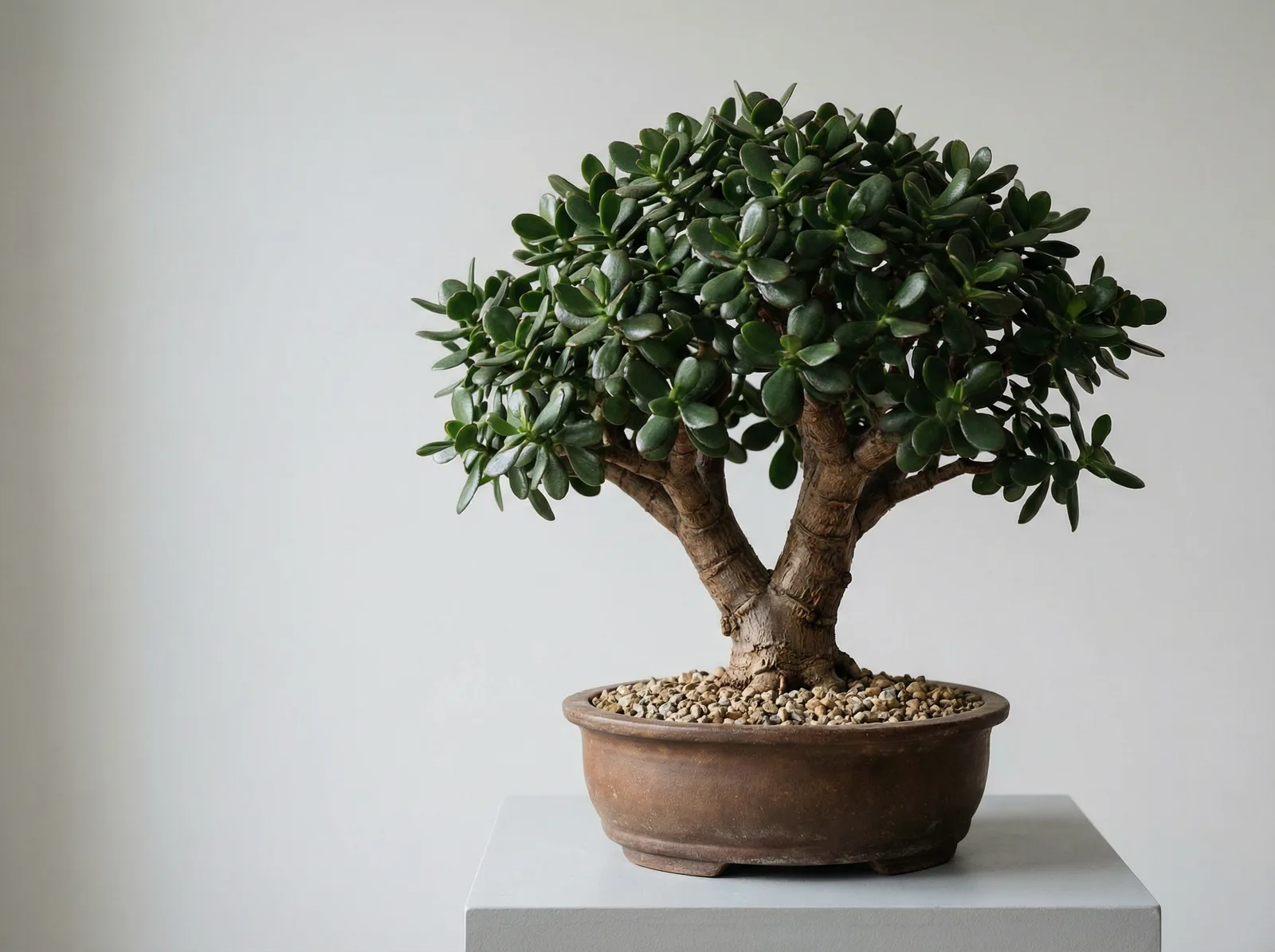
Jade Bonsai
- care
- beginner
- light
- bright direct
- zone
- 10–12
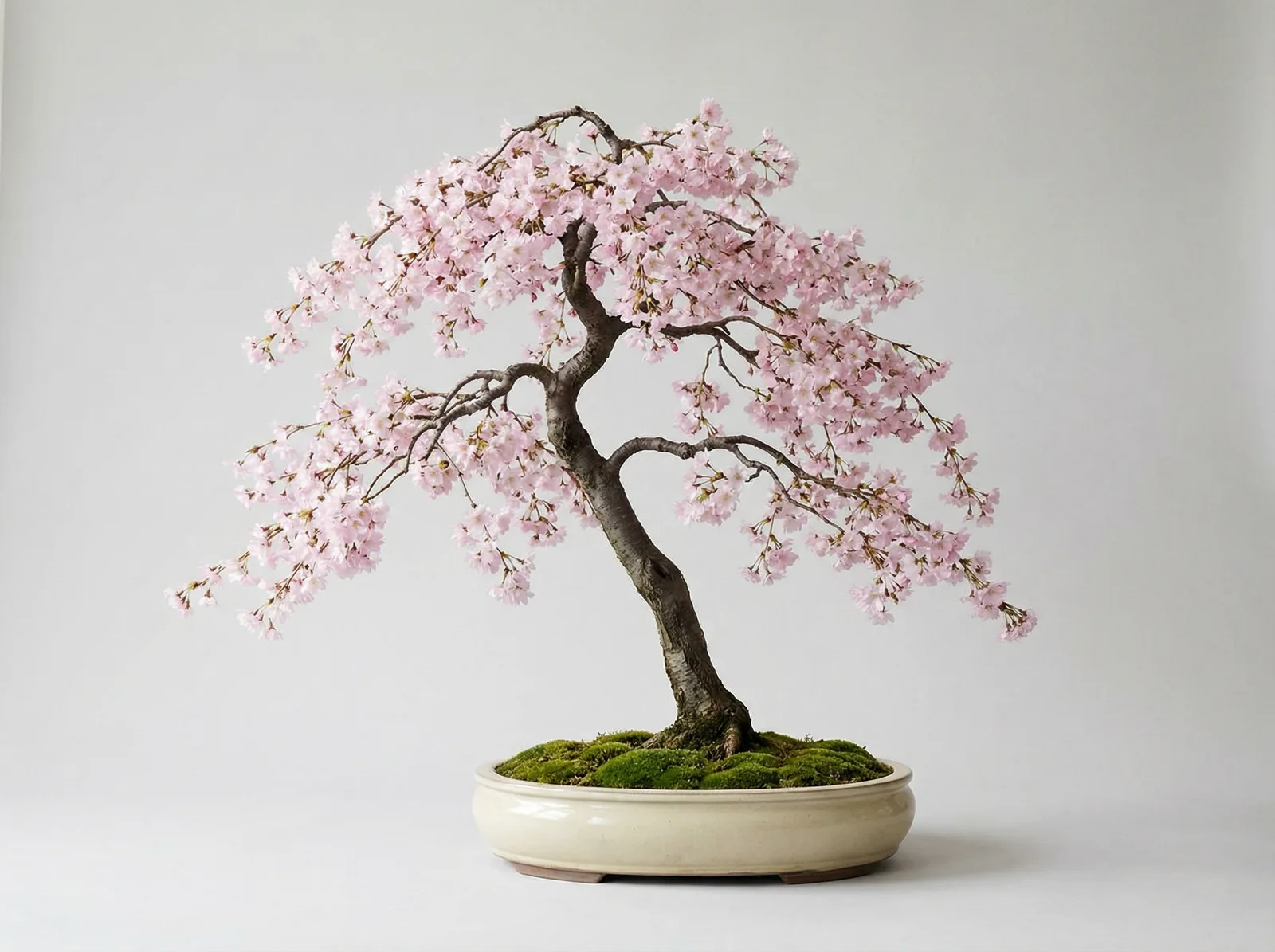
Cherry Blossom Bonsai
- care
- advanced
- light
- full sun
- zone
- 5–9
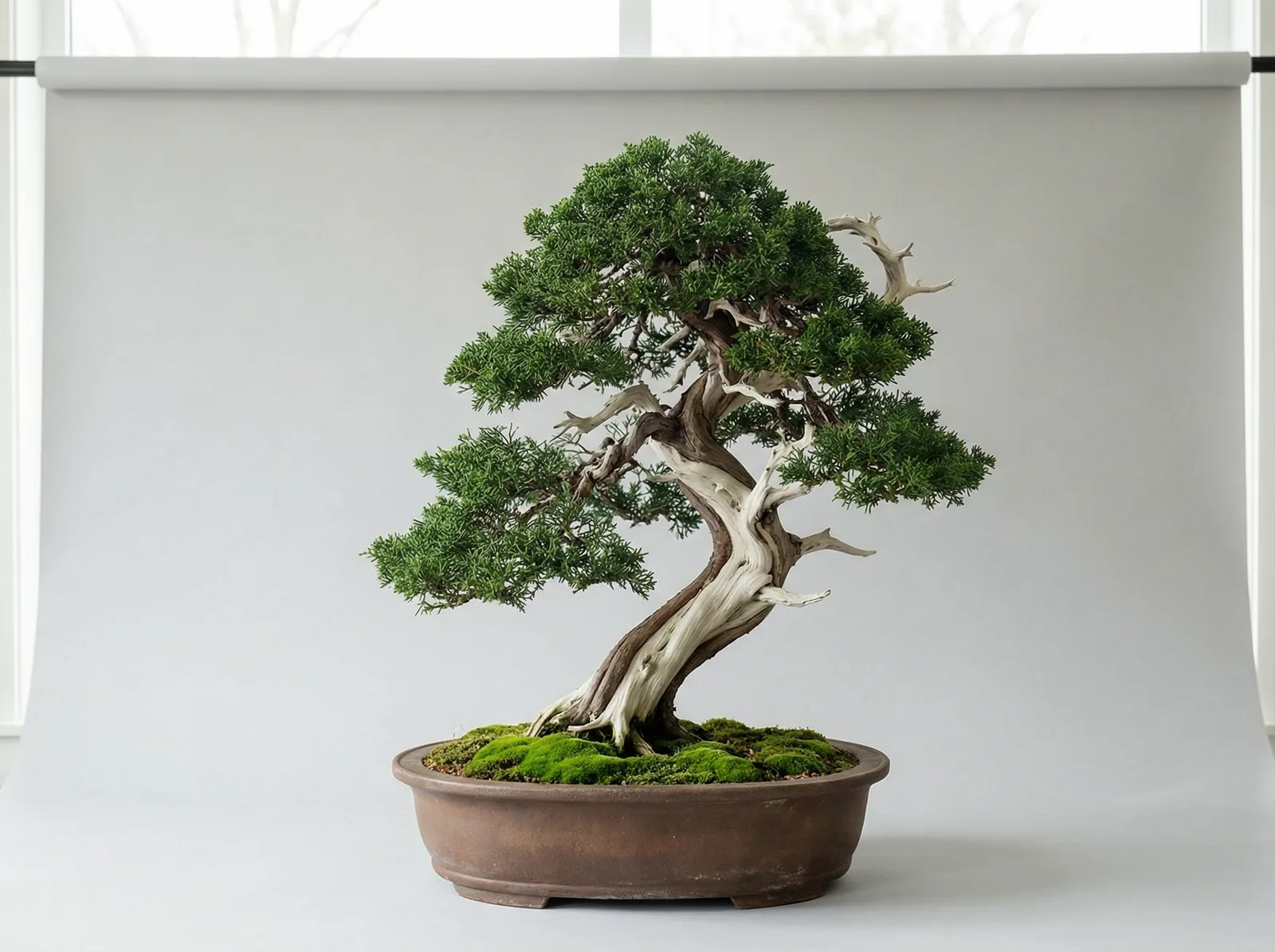
Juniper Bonsai
- care
- beginner
- light
- full sun
- zone
- 4–9
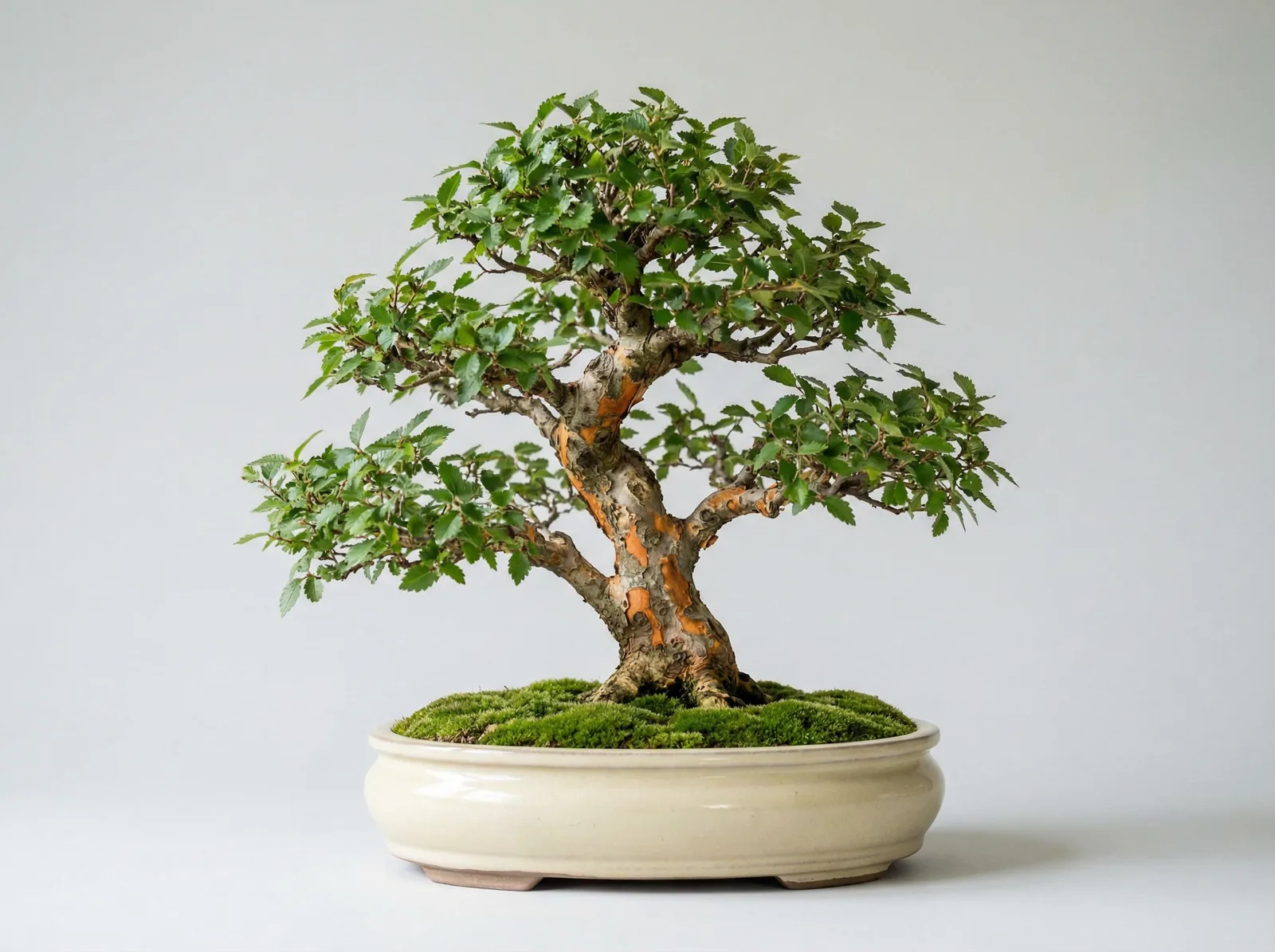
Chinese Elm Bonsai
- care
- beginner
- light
- full sun+
- zone
- 5–10
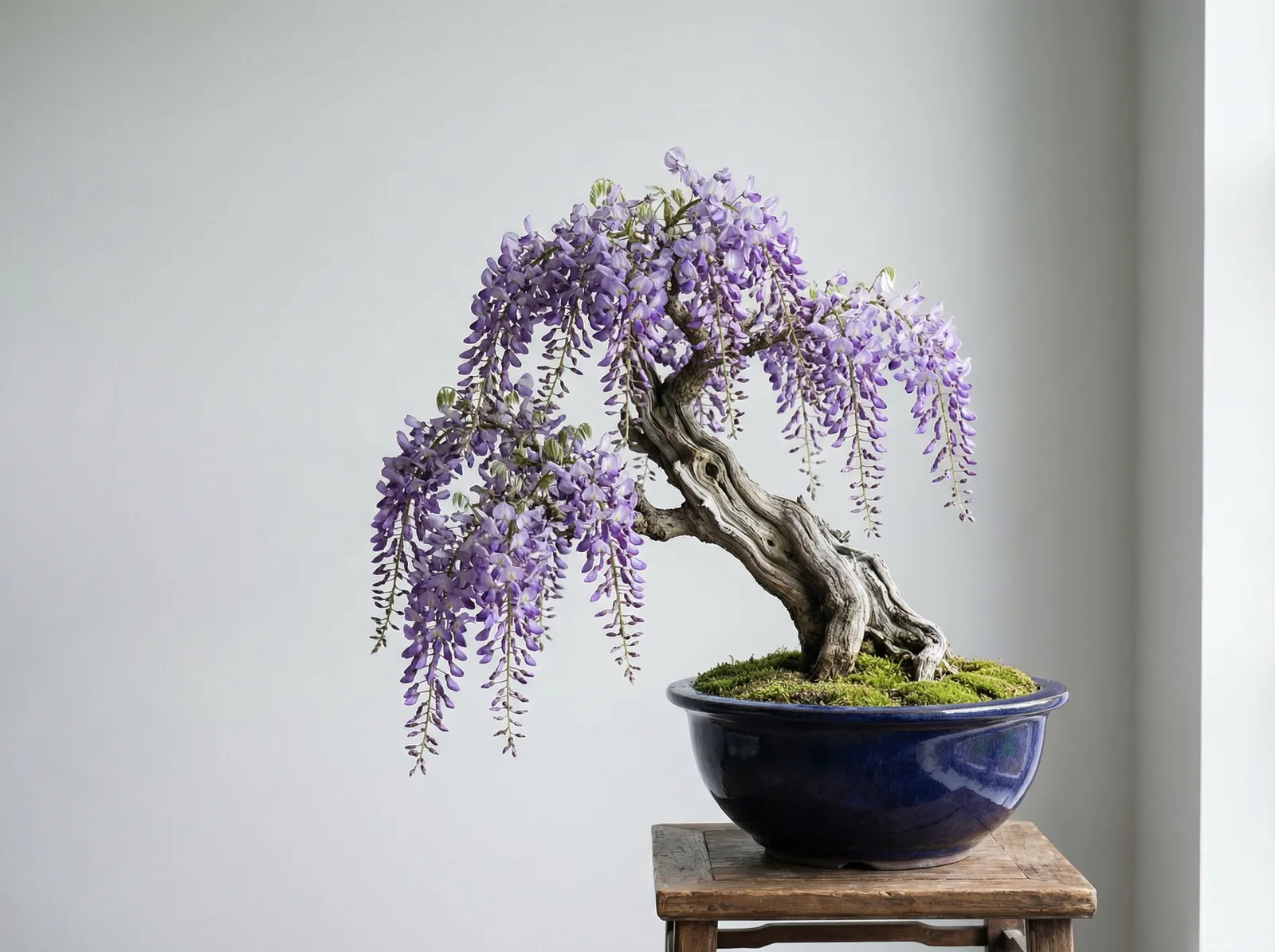
Wisteria Bonsai
- care
- intermediate
- light
- full sun
- zone
- 5–9
More on “What does a bonsai tree mean?”
Keep reading