Adenium obesumboth
Desert Rose Bonsai
- care
- intermediate
- light
- full sun
- zone
- 10–12
Pachira aquatica · Malvaceae
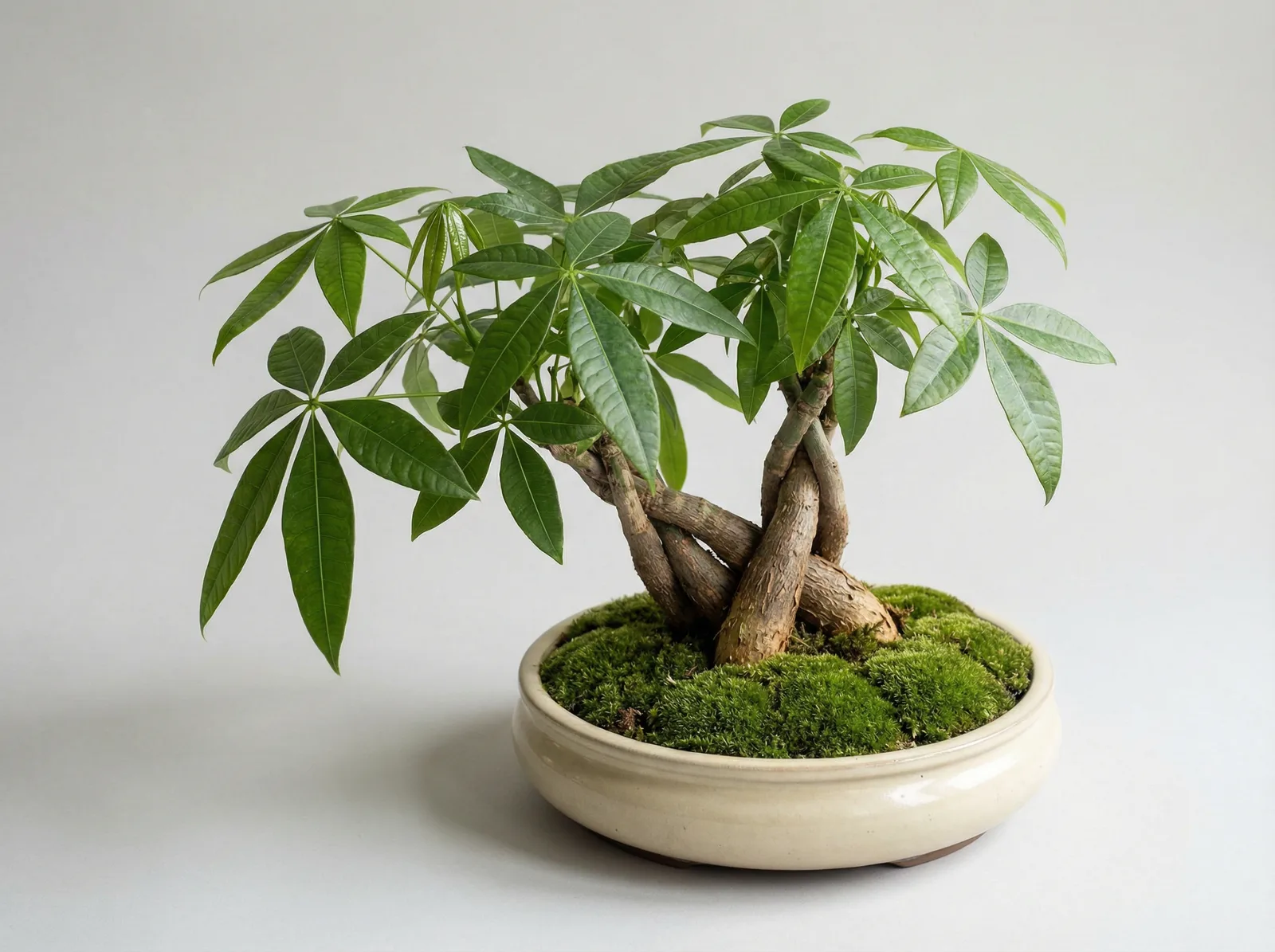
Why grow it
Money tree is the rare species where a $12 grocery-store plant is genuine bonsai stock. Pachira aquatica has large palmate leaves, a smooth green trunk, and a tropical look that feels nothing like a classic Japanese bonsai -- and that's perfectly fine. The naturally swelling base and tree-like silhouette give it presence from day one.
Skip the braided trunks if bonsai is your goal. A single-trunk or natural multi-trunk money tree is far more interesting for bonsai development. The trunk swells at the base over time, bark develops character as the plant matures, and the large leaves can be reduced somewhat through controlled pruning and light management.
Money trees earned their name from feng shui tradition -- the five-lobed leaves supposedly represent the five elements. Set the superstition aside and you still have a vigorous indoor tree that tolerates low light, irregular watering, and dry heated air better than almost any other bonsai candidate. That's genuinely rare.
The routine
Money trees are genuinely easy. They handle the exact conditions that kill most bonsai indoors: dry air, inconsistent light, sporadic watering. That doesn't mean you should neglect them, but they bounce back from mistakes that would leave a ficus dropping leaves for weeks.
Light is flexible. Bright indirect produces the best growth, but money trees survive in surprisingly low light. Getting leggy with long internodes? It wants more light. Move closer to a window or add a grow light. An east-facing window is usually enough.
Money Tree looking rough right now?Skip to common problems below, or start with the symptom guide.Here's where people struggle: watering. The trunk stores moisture, so the plant needs less water than its lush foliage suggests. Let the top 1-2 inches dry between waterings. Yellow, droopy lower leaves? Classic overwatering. Firm leaves that droop slightly and perk up after watering? You're on schedule.
Humidity matters more than most people realize. Pachira aquatica -- the scientific name literally means "water." A pebble tray, occasional misting, or a nearby humidifier keeps leaves looking fresh. They'll survive dry air, but they actually thrive above 50% humidity.
Shaping
Prune in spring and summer when the plant is actively growing. Cut leggy branches back to just above a leaf node -- new shoots pop out within a couple weeks. Money trees respond well to pruning and push growth from dormant buds readily. Don't be shy about it.
Leaf reduction takes time. Money tree leaves are naturally large. Consistent pruning, moderate light, and a slightly restricted pot size gradually produce smaller foliage. But let's be real -- this species will always have proportionally large leaves. That's part of its character.
Remove yellow or damaged leaves cleanly at the petiole base. Dead branches get cut flush at the trunk junction. If your money tree has a braided trunk, decide now: maintain the braid or let it grow natural. For bonsai styling, unbraided single trunks look better. Period.
The first styling decision is the braid. Most money trees come with three to five braided trunks, and a braid locks you out of every classic bonsai form -- you can't build taper, movement, or a believable trunk line from a plait. If bonsai is the goal, start with a single-trunk plant, or separate young braided stems in spring before they fuse. Already fused? Enjoy it as a decorative tree and take cuttings for future bonsai stock.
Single-trunk informal upright suits the species best: the swelling base and palmate canopy read as a tropical tree instead of a houseplant. Exposed-root style is the sleeper option -- raise the plant slightly at each repotting to reveal the root flare, and the effect gets more impressive every year.
Shape with scissors, not wire. Young green shoots will take a bend, but older wood is soft-fleshed and scars instead of setting. Cut to outward-facing buds and let the fast regrowth do the work -- clip-and-grow fits this species perfectly.
Pot choice: a simple oval in earth tones, shallow enough to show off the trunk base. Skip ornate or brightly glazed pots that compete with those oversized leaves.
When things go wrong
Yellow leaves? You're overwatering. This is the answer about 90% of the time. Let the soil dry between waterings and cut back the frequency. If the trunk feels soft or mushy, root rot has started -- unpot, trim the damage, repot into dry soil, and water less going forward.
Not sure whether a sad, bare money tree is still alive? Squeeze the trunk -- firm means yes, mushy means rot. On woody branches you can also run the scratch test: scrape a sliver of bark with a thumbnail, and green, moist tissue underneath means the branch is live. Tan and dry means it's gone.
Leaf drop from drafts or temperature changes is the second most common complaint. Money trees hate cold drafts, AC vents, and sudden temperature swings. Find a stable spot and leave the tree there. Moved plants drop leaves in protest. They recover in a few weeks, but the drama is avoidable.
Leggy stretched growth means more light. Move closer to a window or add supplemental lighting. Prune the stretched growth hard to encourage compact new branching.
Mealybugs and scale are occasional indoor pests. Mealybugs look like white cottony spots in leaf joints. Scale shows up as brown bumps on stems. Rubbing alcohol on a cotton swab handles small outbreaks; for anything bigger, follow the treatment steps in our pest control guide at /guides/pest-control.
Money trees are everywhere. Grocery stores, home improvement stores, plant shops, online. Small braided plants go for $10-25. Larger specimens with thick trunks run $30-75. But here's the thing: for bonsai, you want single-trunk unbraided plants, and those are slightly harder to find.
For bonsai development, look for plants with thick, single trunks in six to eight inch pots. Large-format stores like Home Depot and Lowe's often have money trees with one to two inch trunk diameter for $20-40. Those give you a real head start. Seed-grown plants do produce the single, unbraided trunks ideal for bonsai -- but skip the seed route. Indoor money trees almost never fruit, Pachira seed loses viability within weeks of harvest, and much of what's sold online never sprouts. A single-trunk nursery plant gets you there years faster.
Also on the bench