Bougainvillea glabraboth
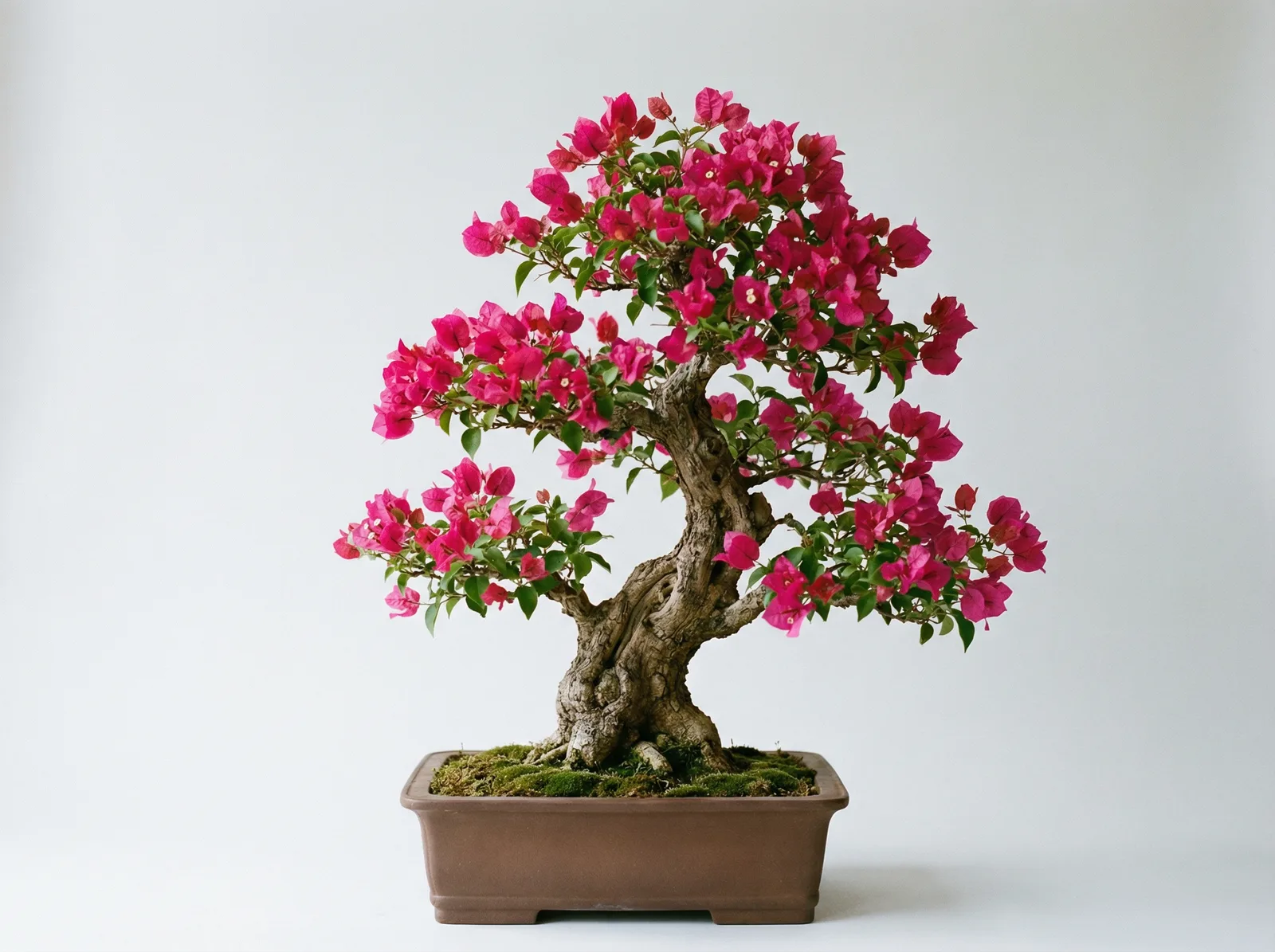
Bougainvillea Bonsai
- care
- intermediate
- light
- full sun
- zone
- 9–11
Adenium obesum · Apocynaceae
Why grow it
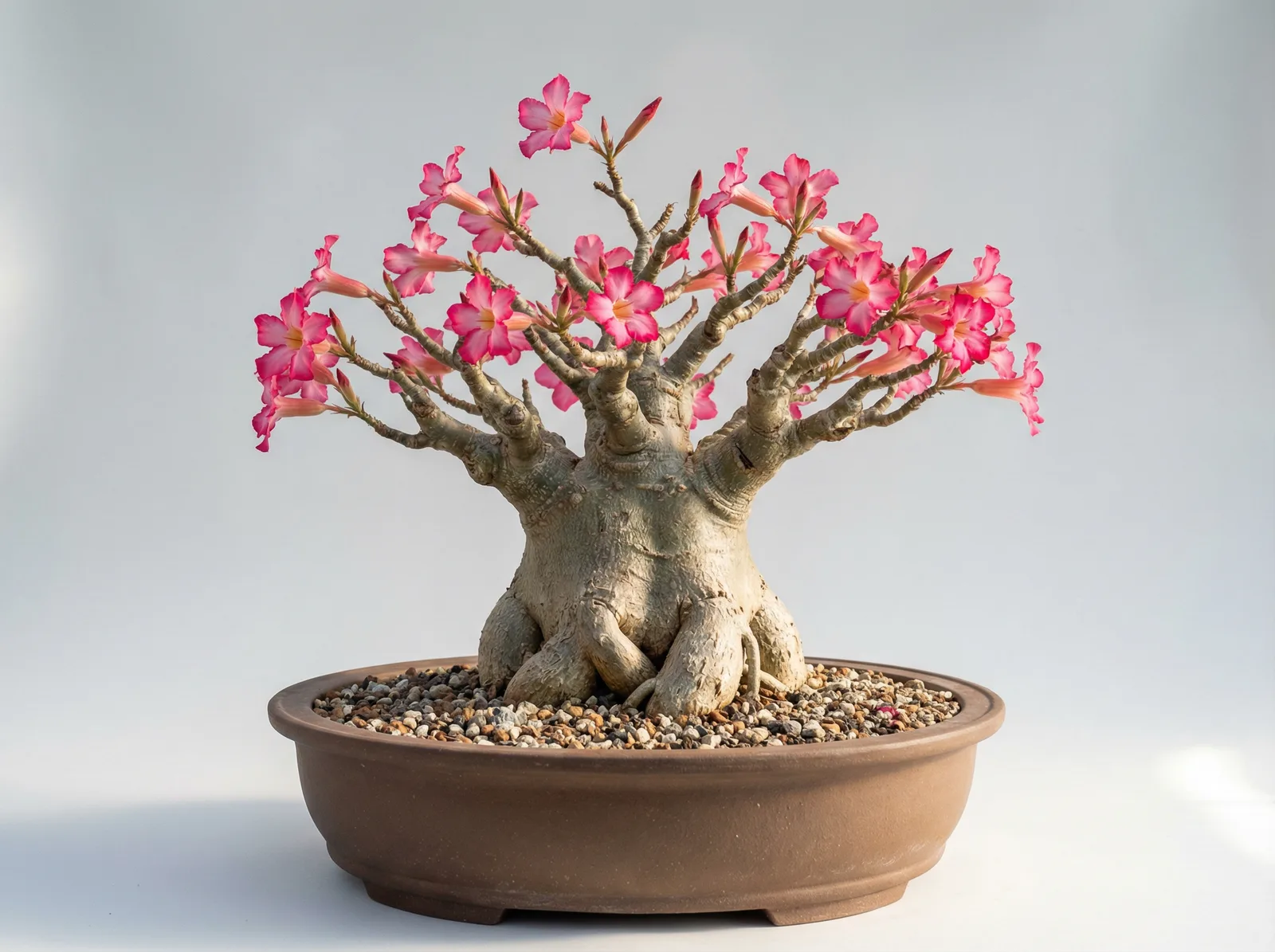
Desert rose isn't traditional bonsai. It's better. Adenium obesum creates some of the most dramatic, sculptural potted trees you'll ever see -- no decades of development required. That massively swollen trunk, called a caudex, stores water and looks like a natural bonsai from the day you buy it. Add showy pink, red, or white flowers that bloom for months, and you've got something most bonsai species can't compete with visually.
The caudex is the star. It bulges, twists, and flows into shapes that look like melted wax or eroded stone. Every plant develops unique character. Some growers raise the caudex above the soil line over successive repottings to showcase the full sculptural form. The results can stop you mid-stride.
Keep one thing in mind: this is a succulent, not a traditional tree. Water it like a cactus, give it scorching sun, and it rewards you with months of blooms. Overwater it, and it rots before you realize anything's wrong. Respect the desert origins.
The routine
Think desert. Not forest, not tropical rainforest -- actual desert. Hot sun, dry soil, warm temperatures. That's the entire care philosophy for Adenium.
Watering is where everyone goes wrong. The swollen caudex stores water like a camel's hump, and the roots rot in constantly moist soil. Water deeply but infrequently -- let the soil go bone dry between waterings. Stick your finger two inches deep. Still damp? Walk away. In winter, once or twice a month is plenty. Maybe less.
Desert Rose looking rough right now?Skip to common problems below, or start with the symptom guide.Sun exposure directly controls flowering. Desert rose in full sun blooms like crazy. One in a dim window? Barely a flower all year. If you're growing indoors, the brightest south-facing window is the bare minimum. Move it outside from June through September for the best results.
Winter dormancy is normal below about 50°F. The plant drops its leaves and stops growing. Don't panic and don't water much. Just let it rest. Resume normal care when you see new growth pushing in spring.
Shaping
Prune in spring as new growth starts. Cut leggy branches back to two or three nodes to push branching and compactness. Desert rose bleeds white latex sap when cut -- it carries the plant's cardiac glycoside toxins, so wear gloves and keep clippings away from pets. The bleeding stops on its own in a few minutes. No need for cut paste.
Snip spent flower clusters just below the stalk to encourage more blooms. This redirects energy from seed production into new flowers. It's a simple habit that doubles your bloom count over the season.
Hard pruning can reshape an overgrown plant. Cut branches back to the caudex if you need to -- new shoots emerge within a few weeks during active growth. But leave the caudex itself alone. Don't cut into it.
Root pruning during repotting is minimal. Trim dead or rotting roots only. Those thick storage roots are the plant's water reserve -- don't reduce them significantly or you're removing the very thing keeping it alive.
Forget traditional bonsai rules here. The caudex is the focal point, not branch structure. Choose a shallow, wide pot that shows off the trunk's sculptural shape. An unglazed oval in warm earth tones lets the caudex take center stage.
Raise the caudex above the soil line gradually. Each repotting, remove a bit of soil from the top of the root ball to expose more of that swollen base. Over three or four repottings, you'll reveal the full form. This is the iconic desert rose look -- massive, bulging trunk above a shallow pot.
Wiring is mostly pointless on desert rose. The fleshy branches don't hold shapes well, and the plant's natural form is already more interesting than anything you'd wire into it. Shape through pruning instead. Cut to outward-facing buds to direct growth.
Grafted desert roses with multiple flower colors on one caudex are common from nurseries. A single plant producing red, pink, and white blooms simultaneously? That's hard to argue with.
When things go wrong
Root rot is the number one killer and it's not even close. Soft, mushy caudex? Brown slimy roots? You overwatered. If you catch it early, unpot the plant, cut away all rotten tissue until you reach firm white flesh, let it dry for several days in open air, then repot into dry, gritty mix. Don't water for at least a week. Sometimes you save it. Sometimes you don't. Firmness is the health check for this species -- skip the bark-scratch test you'd use on a woody tree. A healthy caudex is hard, like an unripe apple; a leafless desert rose in winter dormancy with a firm caudex is fine, while soft and wrinkled means trouble in any season.
No flowers almost always means not enough light. Move it into full sun and keep the feeding lean. Desert rose needs intense light, warm days above 70°F, and nights above 60°F to flower well. Indoor plants in dim windows rarely bloom.
Mealybugs and spider mites are the usual pests. Mealybugs appear as white cottony clusters in leaf joints -- dab them with rubbing alcohol on a cotton swab. Spider mites cause stippled, dusty-looking leaves. Neem oil handles both.
Leaf drop in fall is dormancy, not a problem. If leaves drop during summer, check for overwatering or cold drafts from AC.
Garden centers and big-box stores carry desert rose in four to six inch pots for $15-30. Look for plants with thick, firm caudexes and plump stems. Squeeze the trunk gently -- if it gives, that's rot. Walk away. Grafted specimens with multiple flower colors cost a bit more but are worth the premium.
Online sellers offer a wider variety of cultivars, typically $20-60. Thailand is a major producer of adenium genetics, and many US sellers import Thai cultivars with spectacular flower forms. Buy from reputable sellers who ship bare-root in warm weather only. A desert rose shipped in January will arrive stressed or dead. Timing matters.
Also on the bench