Rhododendron spp.outdoor
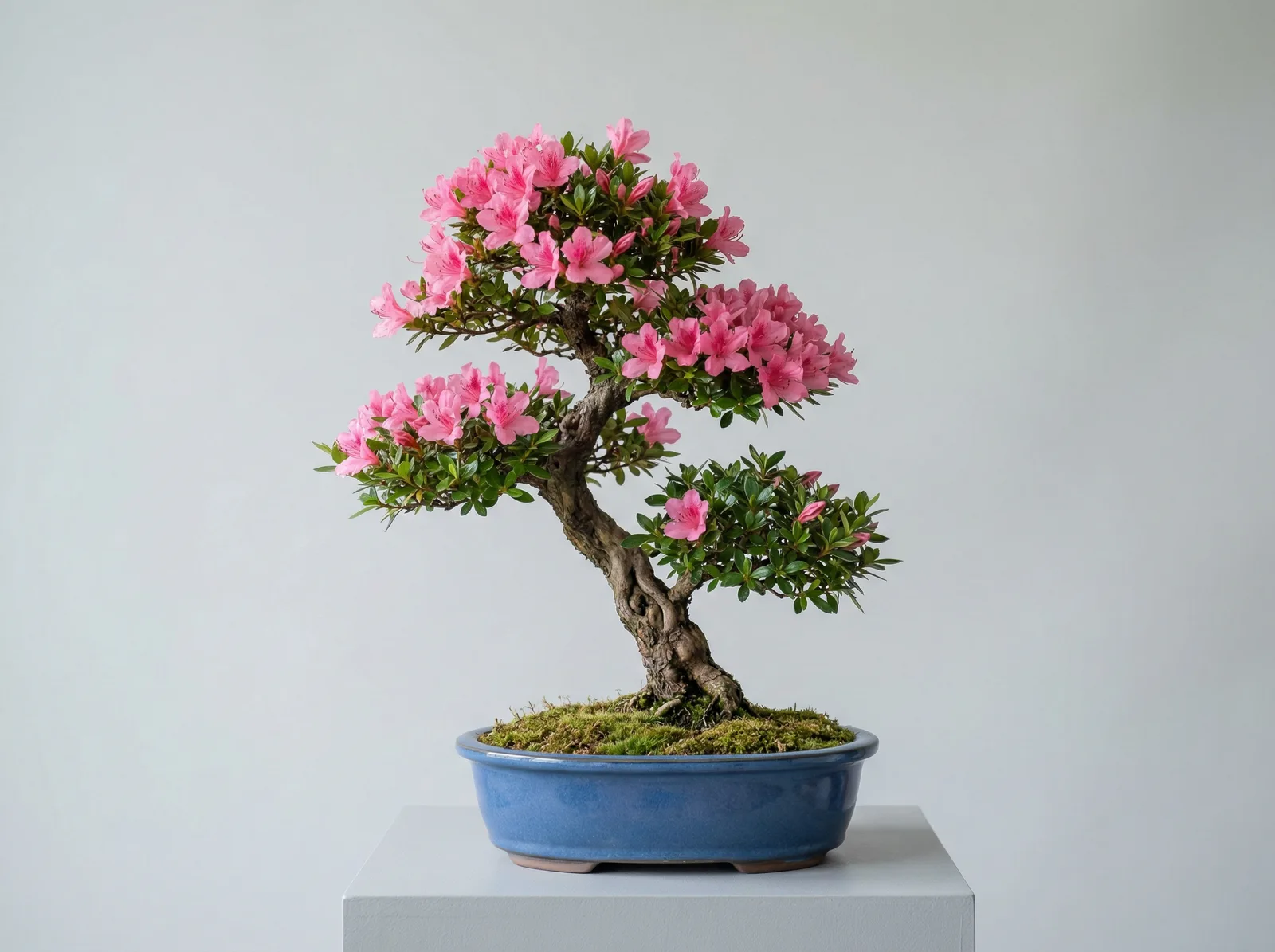
Azalea Bonsai
- care
- intermediate
- light
- partial shade
- zone
- 6–9
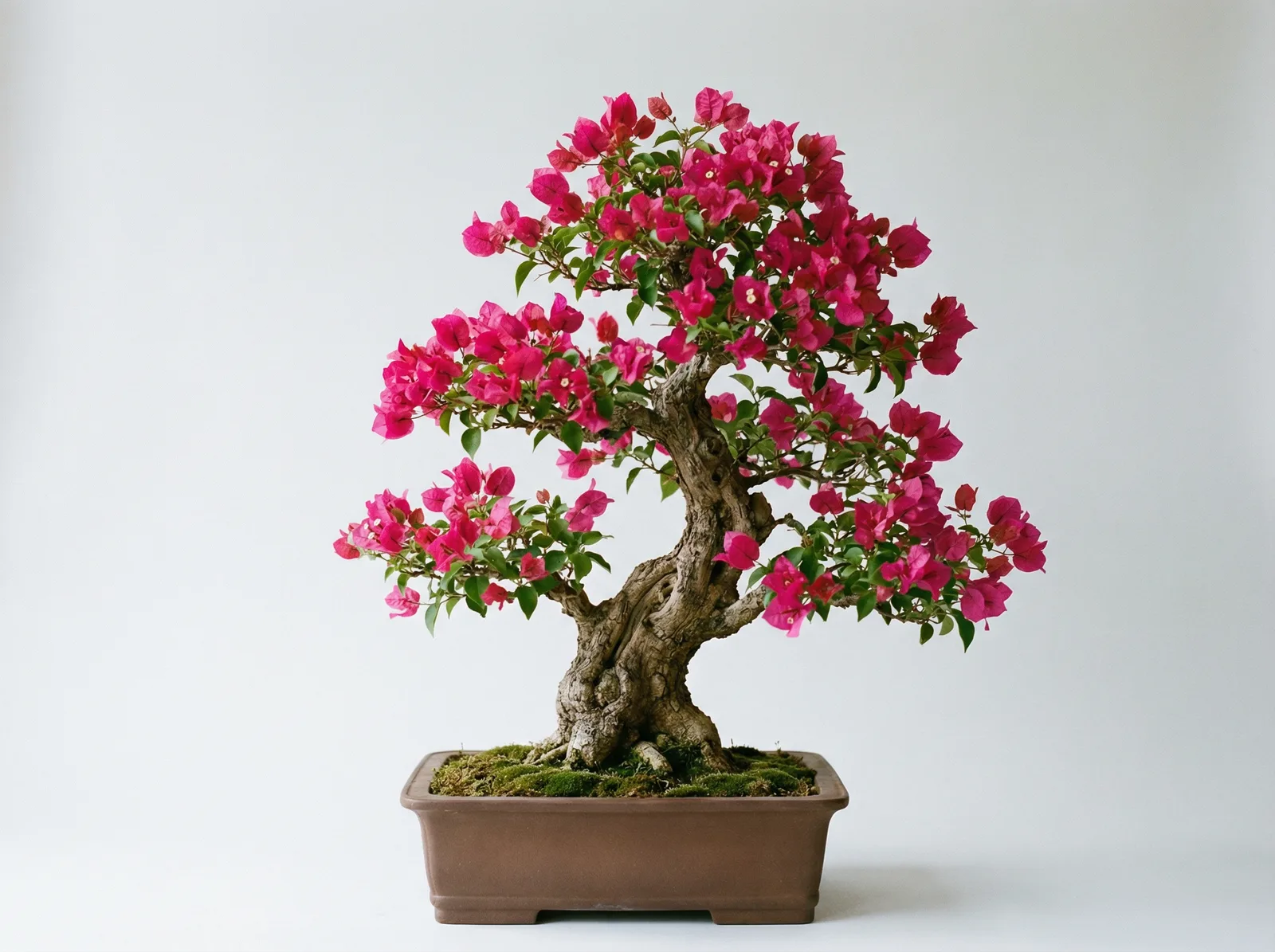
Bougainvillea glabra · Nyctaginaceae
Why grow it
Those electric bracts -- magenta, purple, orange, crimson -- aren't even flowers. They're modified leaves surrounding tiny white true flowers that most people never notice. But who cares about botanical accuracy when a bougainvillea in full bloom looks like someone lit the tree on fire with color? Bougainvillea glabra in peak display is the most visually explosive bonsai you can grow. Nothing else comes close.
Here's the counterintuitive truth about bougainvillea: they flower best when you treat them badly. Drought stress, heat stress, root restriction, lean soil. Treat them like a pampered ficus and you get a green bush with zero color. Stress them strategically and the bracts erupt. It's one of the few bonsai where "less care" produces better results.
The trunk is the long-term reward. Young bougainvillea look like sticks with color. But give a trunk 8-10 years and it develops this gnarled, peeling bark over muscular wood that looks genuinely ancient. Fast enough growth that you won't wait decades, but slow enough to build real character. Watch the thorns, though. They're sharp and they're everywhere.
prune: after flowering, year-round in warm climates
The routine
Without intense, direct sun, you won't see a single bract. Not one. This isn't a "prefers sun" situation -- it's an absolute requirement. Six hours of direct sunlight daily is the floor. Eight or more is ideal. Indoors under grow lights? Maybe some color, but don't count on it. Bougainvillea belong outdoors from May through October in most zones.
The drought-stress flowering cycle is the key technique and it takes practice. Water deeply, then wait. Wait until the leaves start to droop and look slightly wilted. Then water deeply again. This controlled drought triggers bract production. It feels wrong -- every instinct says "water the wilting plant!" -- but bougainvillea respond to that stress with color. Once you see bracts developing, you can ease up slightly, but don't switch to consistent moisture or the next round of color won't come.
Bougainvillea looking rough right now?Skip to common problems below, or start with the symptom guide.Winter depends on your zone. Zones 9-11, the tree stays out and may bloom year-round. Everywhere else, bring it inside to a cool, bright spot -- 50-60°F is perfect. Expect leaf drop. That's normal, not a crisis. Cut watering way back, maybe once every two weeks. The tree is resting. It'll explode back to life when warmth returns in spring.
Gloves. Always gloves. The thorns will get you.
Shaping
Prune after each bloom cycle, not during. Bougainvillea flower on new growth, so cutting back spent flowering shoots to 2-3 nodes stimulates the next wave of color. You can get three or four bloom cycles in a good summer by staying on top of post-bloom pruning.
Spring is the time for hard cuts. If winter left the tree leggy and overgrown, chop it back without mercy. Bougainvillea push new growth from old wood like their life depends on it -- because in the wild, it does. Cut back to within a few inches of the main trunk and watch it rebuild. Do this in March or April, just before the outdoor growing season starts.
Pinch constantly during active growth. Without intervention, bougainvillea throw long whip-like shoots that extend two or three feet in a matter of weeks. Pinch back to 3-4 leaves. This forces branching and creates more flowering points. More tips equals more potential color. The math is simple but the consistency required is real.
Bougainvillea styling starts with accepting what the wood won't do. Mature branches are brittle and snap instead of bending, the thorns punish careless hands, and coiled wire is nearly useless on anything older than a season. The design happens with scissors, guy wires, and timing: position young green shoots while they still flex -- the wire gauge tool at /tools/wire-gauge sizes wire to shoot -- and move anything heavier with a guy wire anchored to the pot rim. Jin pliers keep your fingers clear of the thorns.
What you get for the trouble is the best cascade material in the tropics. Bracts spilling over the pot edge like a waterfall of magenta is the image on every tropical bonsai book cover for a reason. Let flowering branches run downward naturally while the main canopy stays compact above the rim -- the contrast between structured trunk and falling color carries the whole design.
Informal upright works when the trunk has earned the spotlight. A mature bougainvillea trunk with peeling bark and muscular movement shouldn't hide behind a solid wall of bracts. Thin the foliage to reveal the trunk line, then let strategic bursts of color frame it.
When things go wrong
"My bougainvillea won't flower" is the most common complaint this species generates, and the answer is nearly always the same three things: more sun, less water, and less nitrogen. If you're watering on a regular schedule, keeping it in partial shade, and feeding it generously, you've built the perfect recipe for a green, flowerless bush. Stress the plant. That's the whole secret.
Leaf drop after moving indoors for winter is normal, not a problem. The light drops, the temperature changes, and the tree responds by dumping leaves. Reduce watering and leave it alone. Resist the urge to move it to a warmer room, water more, or fertilize. It's resting. Let it rest. And if bare February branches have you wondering whether it's alive, scratch the bark with a thumbnail -- green underneath means it's fine. Bougainvillea can drop every leaf in winter and still flush out hard by May.
Root rot from overwatering is the actual killer. Bougainvillea evolved in dry conditions. Soggy soil destroys roots fast. Use a gritty mix -- 70% pumice or lava rock, 30% bark -- and let the pot dry between waterings. If the trunk base feels soft or the soil smells sour, you've already got rot. Unpot, trim dead roots, dry for a day, and repot in fresh mix.
Warm-climate nurseries are loaded with bougainvillea in 1-5 gallon pots for $15-40. Look for compact varieties with interesting trunk bases. 'Helen Johnson' stays naturally small with bright pink bracts. 'Torch Glow' is upright and compact. Skip the massive landscape varieties unless you want a project that starts with a trunk chop.
Wigert's Bonsai in Florida specializes in tropical species and carries some of the best bougainvillea bonsai material available online, typically $60-200 for developed trees. They grow them in Florida sun, which means the trees arrive with real trunk character and bloom-tested vigor. Quality from random online sellers varies wildly -- some ship stressed, root-bound plants that take a full season to recover. Stick with vendors who specialize in tropicals.
Some links may become affiliate links; our picks don't change.
Also on the bench