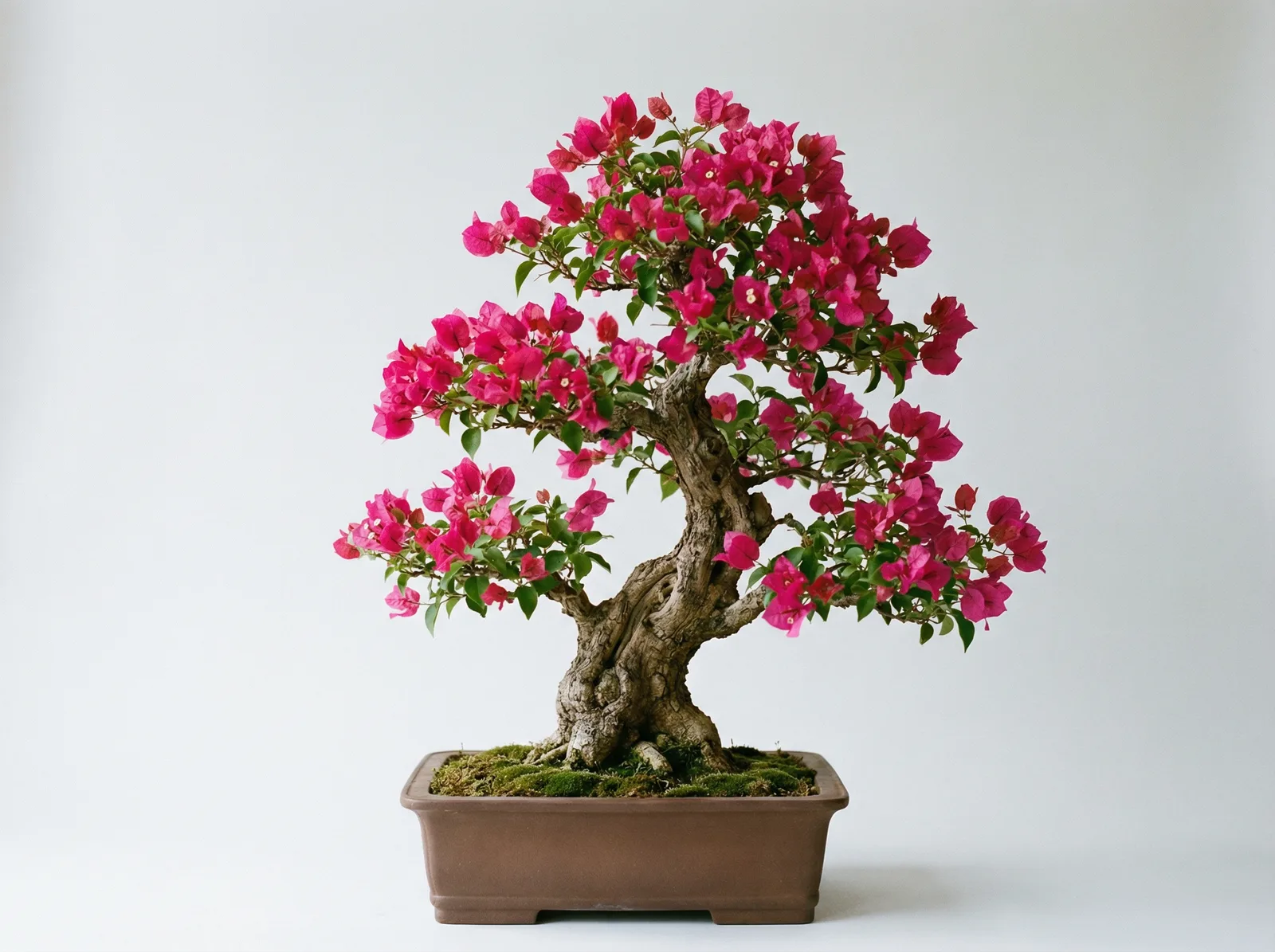
Rhododendron spp.outdoor
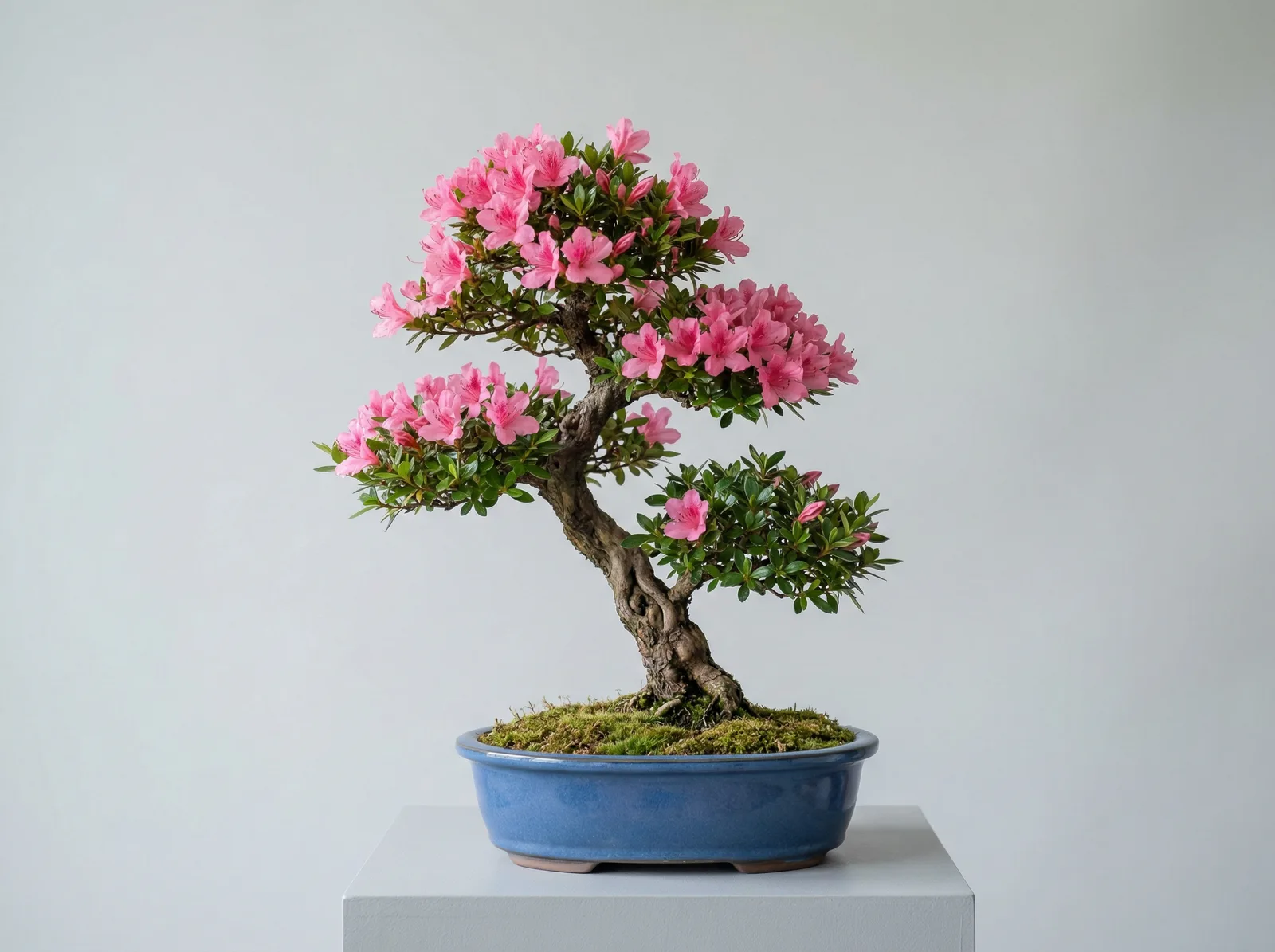
Azalea Bonsai
- care
- intermediate
- light
- partial shade
- zone
- 6–9
Wisteria floribunda · Fabaceae
Why grow it
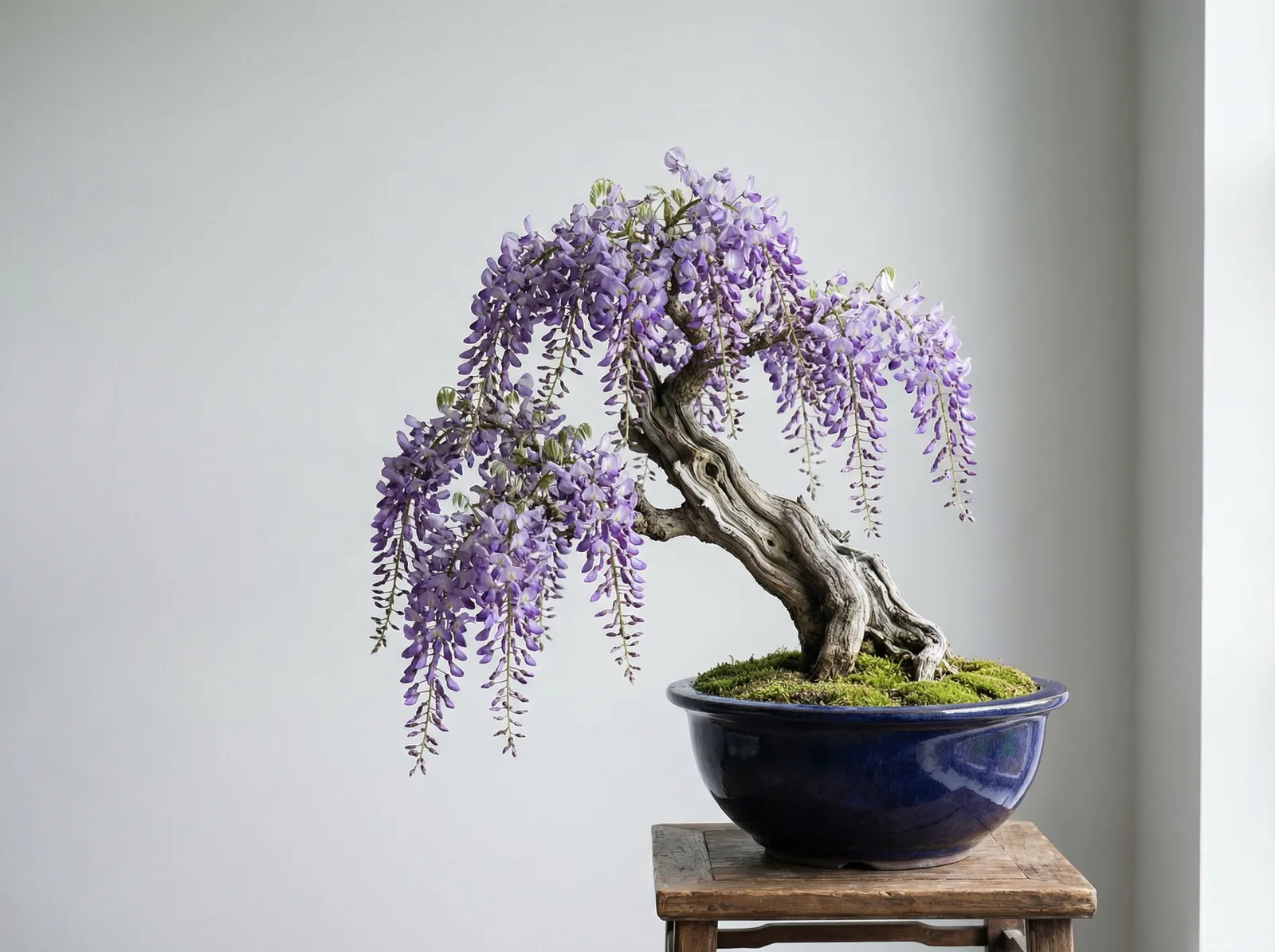
A wisteria bonsai in bloom is absurd in the best way. Flower clusters hang 12 to 18 inches long—often longer than the tree is tall—in cascades of purple, lavender, or white. The fragrance fills a room. For two weeks in spring, it's the most spectacular bonsai in any collection. The other 50 weeks, it's a vigorous vine doing everything it can to escape its pot.
Wisteria floribunda (Japanese wisteria) is the better bonsai choice over W. sinensis (Chinese wisteria). The Japanese species blooms more reliably at a young age, and its flower clusters open progressively from top to bottom, extending the show.
Getting flowers is the challenge. In nature, wisteria grow for years as massive vines before blooming. Your job is to trick a plant that wants to cover a pergola into flowering on a 16-inch tree. Root restriction, strategic stress, and relentless pruning are your tools.
prune: after flowering, late summer
The routine
Wisteria flower when they're stressed. That sounds wrong for bonsai care advice, but it's the truth. A happy, well-fed, freshly repotted wisteria produces 10-foot vegetative whips and zero flowers. A slightly root-bound, modestly fertilized wisteria that's been pinched back all summer? That one blooms.
Full sun. Absolutely full sun. Flower buds form on short spurs that develop in direct light. Shade produces long, lanky, non-flowering growth. If your wisteria sits in anything less than 6 hours of direct sun, it won't bloom. Don't wonder why. More sun.
Wisteria looking rough right now?Skip to common problems below, or start with the symptom guide.Watering is heavy during the growing season—these are vigorous plants with big leaves that transpire heavily. Daily in summer, sometimes twice on hot days. But here's the nuance: after the spring growth flush hardens off in June, reduce watering slightly. Not enough to wilt the tree, but enough to signal that conditions aren't ideal. This mild drought stress pushes the tree toward reproduction (flowers) rather than more growth.
Fertilizer strategy matters more here than with any other species. After flowering, cut nitrogen hard: feed lightly with a low-nitrogen formula and stop everything by September. One myth worth clearing up -- "phosphorus makes flowers" has been debunked, so don't expect a bloom-booster to conjure buds. Low nitrogen still works, though, because it slows the leafy growth that would otherwise shade out the flower spurs. Feed lean, not loaded.
Soil is standard bonsai mix: 60% inorganic (akadama and pumice) with 40% organic (bark and compost). Nothing special here. Wisteria aren't fussy about soil—they're fussy about everything else.
Shaping
Pruning wisteria is a part-time job from June through September. The tree throws out long, whip-like shoots constantly—turn your back for a week and you'll find 3-foot tendrils reaching for the nearest structure. Cut these back to 2-3 leaves as they appear. Every single time. No exceptions.
This constant summer pruning is what triggers flowering. You're cutting off the growth points and forcing energy into the short lateral spurs where flower buds form. Skip a few weeks of pruning and the tree invests all that energy into vegetative growth instead.
Right after flowering, cut back the spent flower racemes and any long shoots to 2-3 buds. These buds develop into next year's flowering spurs. Late summer (July-August), make a final pass: shorten all remaining shoots to 4-6 leaves. This signals the tree that growing season is winding down and it's time to set buds.
Root pruning during repotting actually helps trigger flowering. Aggressive root work stresses the tree and shifts its energy from growth toward reproduction. Don't be gentle. Wisteria roots are thick and woody—use root cutters and take off more than you would with most species.
Cascade. That's the style. When those 18-inch flower clusters hang down past a tall cascade pot, it's one of the most dramatic images in bonsai. Use a deep, narrow pot that gives the flowers room to drape. The trunk curves and the flowers fall—everything moves downward together.
Semi-cascade works too, and it's easier to manage. The trunk extends past the pot rim but doesn't drop below the base. The flowers still hang beautifully.
Don't overthink the branch structure. Wisteria bonsai aren't about intricate ramification or precise pad placement. They're about that gnarled, twisting trunk (which develops naturally as the vine grows) and the flower display. Simple, flowing lines with enough spurs to produce a full bloom. That's it.
Wiring is mostly unnecessary. The natural twisting growth creates trunk character on its own. If you need to position a young branch, wrap it loosely—the wire-gauge tool at /tools/wire-gauge will pick the size. But honestly, between the constant pruning and the natural growth habit, wisteria shape themselves. Your job is editing, not engineering.
Root-over-rock can be striking with wisteria. The thick roots conform to stone over time, and the combination of gnarled wood, rough rock, and delicate purple flowers is hard to beat.
When things go wrong
No flowers. That's the complaint. Every wisteria forum thread, every bonsai club question. The answer is almost always the same combination: not enough sun, too much nitrogen, not enough summer pruning. All three need to be right. Full sun. Low nitrogen after spring. Pinch back every shoot, every week, all summer.
Also: patience. Seed-grown wisteria can take 5-10 years to reach flowering maturity. Grafted plants bloom in 2-3 years. If you bought a seedling, you might just need to wait. Look for grafted stock labeled "blooms young" if you want flowers sooner.
Rampant vegetative growth—those long whip-like shoots—means the tree is happy and growing. Good. But it means it doesn't feel any pressure to reproduce. Increase the stress slightly: tighter pot, less nitrogen, more aggressive root pruning at repotting. You're trying to convince the tree that conditions are tough enough to warrant making seeds (flowers).
Aphids love the soft new growth in spring. Green clusters on shoot tips, sticky honeydew on the leaves, ants running up and down the trunk. A strong water spray knocks them off. Insecticidal soap handles persistent infestations. Check weekly from April through June.
Wisteria are also late risers in spring. A vine that looks dead in April often isn't—before you panic, do the scratch test: nick a spot of bark with your nail. Green cambium underneath: be patient. Dry brown: that section is dead, so cut back until you hit green.
Nursery stock wisteria in 1-gallon pots costs $15-30 and gives you a vine to develop from scratch. The catch: seedling-grown plants may take 5+ years to flower. Always ask if it's grafted. Grafted wisteria bloom younger—that's worth paying a few extra dollars for.
Specialty bonsai vendors sell flowering-age wisteria pre-bonsai for $60-200. Wigert's and Brussel's both carry good material. Look for plants with established trunk character—that twisted, ropy look that wisteria develop with age. If the vendor can tell you it's flowered before, even better.
Japanese import wisteria bonsai occasionally show up at specialty nurseries or bonsai shows for $300+. These are usually older specimens with significant trunk development and proven flowering records. If you find one and the price is fair, grab it. Good wisteria bonsai are harder to find than you'd expect.
Some links may become affiliate links; our picks don't change.
Also on the bench