Rhododendron spp.outdoor
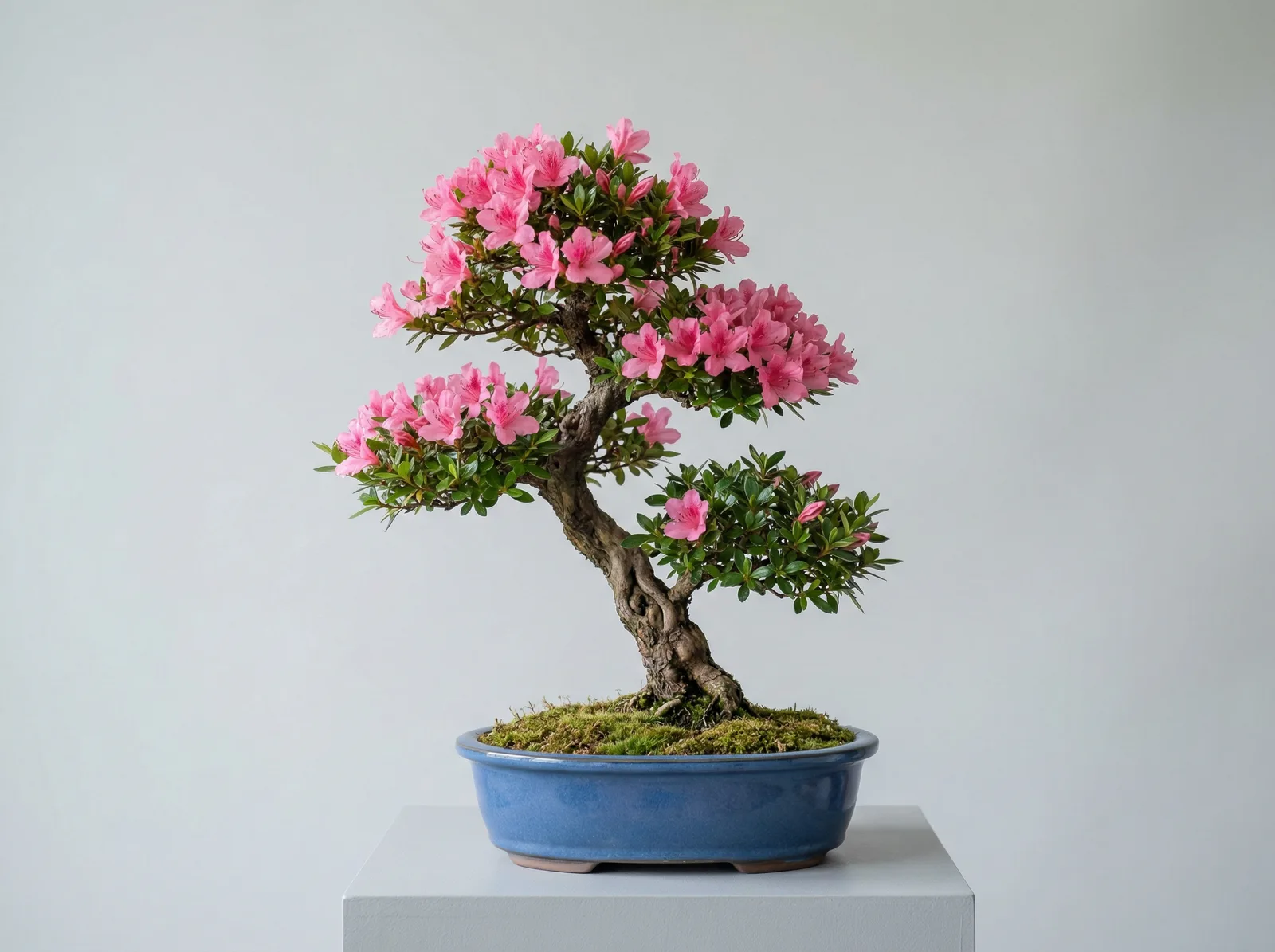
Azalea Bonsai
- care
- intermediate
- light
- partial shade
- zone
- 6–9
Prunus serrulata · Rosaceae
Why grow it
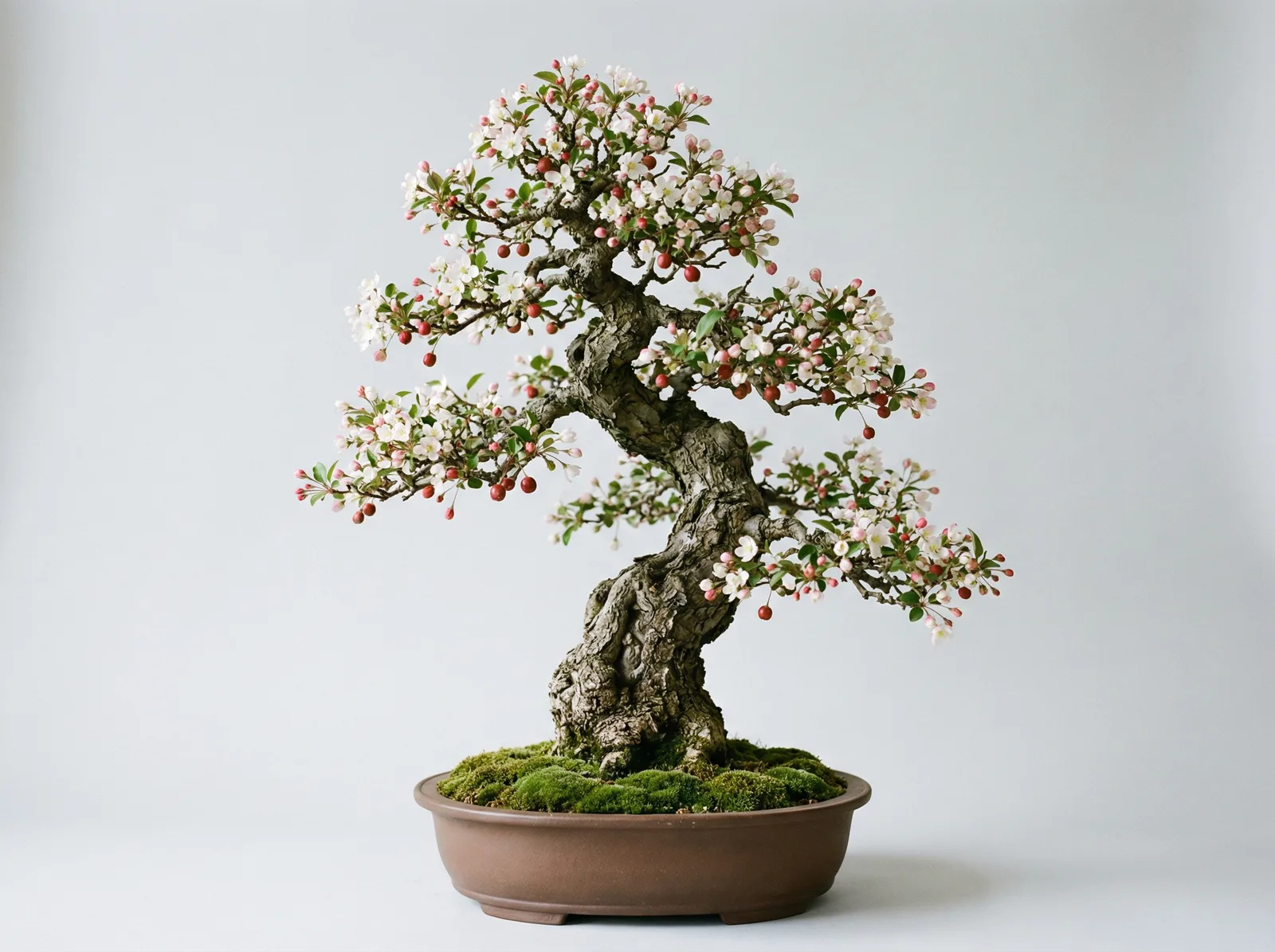
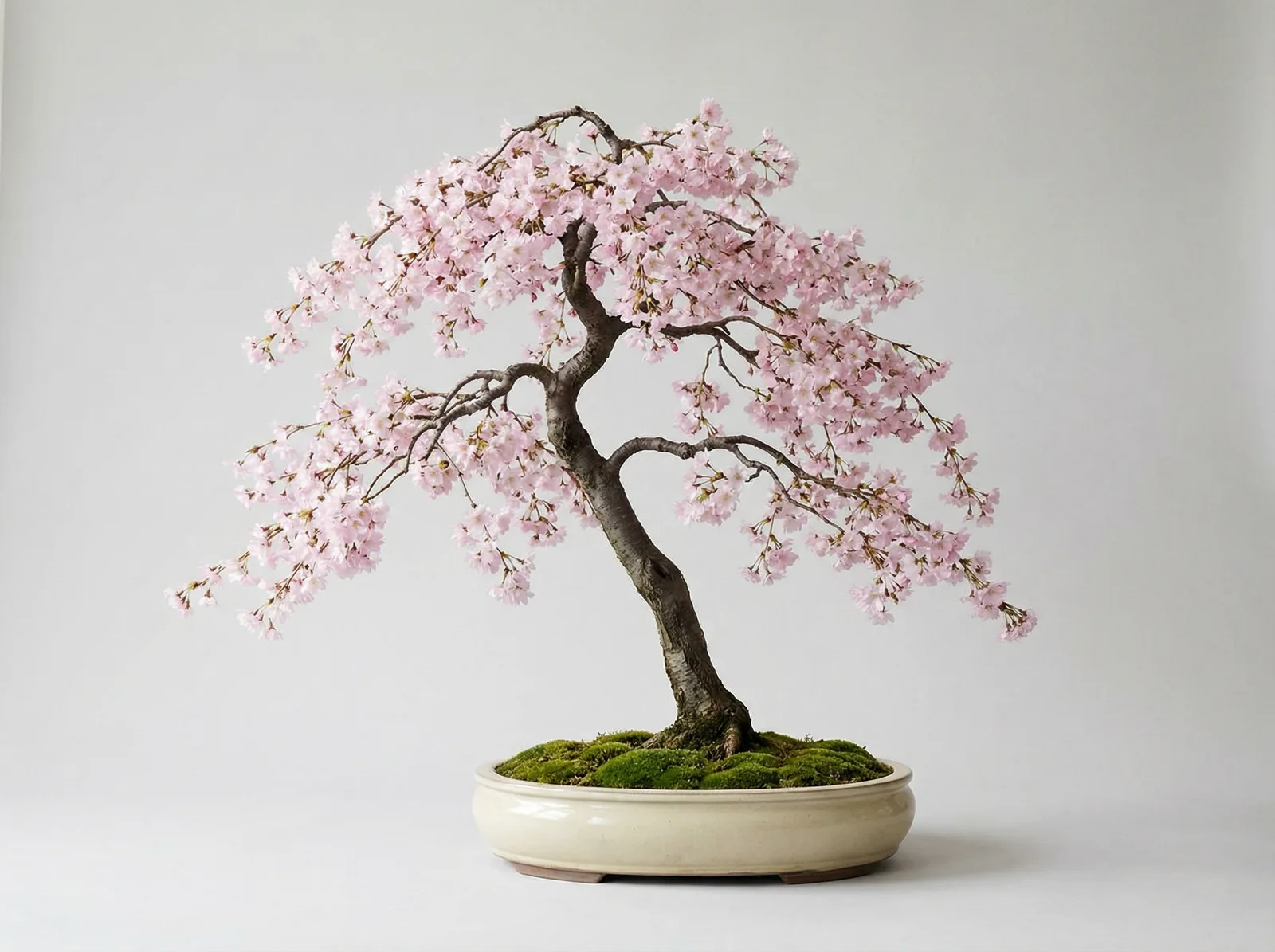
A cherry bonsai in full bloom is one of those things that makes non-bonsai people understand bonsai. For maybe ten days in spring, Prunus serrulata covers itself in soft pink or white flowers, the petals fall like confetti, and then it's over. That's the deal. Fleeting beauty. The Japanese have a word for it—mono no aware, the bittersweet awareness of impermanence. Heavy concept for a small tree, but it fits.
Both P. serrulata (flowering cherry) and P. mume (Japanese apricot, which blooms even earlier with fragrant flowers) are used for bonsai. The cherry gives you that classic five-petaled sakura. The apricot gives you fragrance and earlier color. Both are challenging.
Honest assessment: this tree will frustrate you. Branches die back without warning. Pests target it constantly. Wounds heal slowly and invite infection. But when it flowers? Nothing else comes close.
The routine
Flowering hinges on winter chill. Cherry trees need 6-8 weeks below 45°F to set buds properly. In zones 5-7, nature handles this. In zone 8 or warmer, you'll need to choose low-chill cultivars or artificially refrigerate the tree (yes, people actually do this). No chill, no flowers. Non-negotiable.
Branch die-back is the species' defining frustration. You'll make a perfect cut, seal it with paste, do everything right, and the branch still dies back three inches past the cut. Prunus compartmentalize wounds poorly. The cambium retreats, and infection follows. Accept this. Plan for it. Keep more branches than you think you need, because some will leave without warning.
Cherry Blossom looking rough right now?Skip to common problems below, or start with the symptom guide.Pest pressure is relentless. Aphids in spring, caterpillars in early summer, borers year-round, scale whenever they feel like it. Check the tree twice a week during the growing season. A spray bottle of diluted neem oil within arm's reach of the tree isn't paranoia—it's preparation. Systemic insecticide (imidacloprid) is an option for chronic borer problems, applied as a soil drench in spring.
The bark deserves attention in your design. Glossy mahogany with horizontal lenticels—it's beautiful year-round. Don't hide it behind dense foliage. Let branches be sparse enough to show off the trunk.
Shaping
Prune immediately after petal drop. Not "soon after." Not "this weekend." The day the last flowers fade, get your tools out. Cherry bloom on last year's wood, and the tree starts forming next year's buds within weeks of flowering. Every day you delay is potential buds you're cutting off.
Summer pruning in late July controls vegetative growth and encourages flower bud set. Cut vigorous shoots back to 2-3 leaves. This is not about shaping the tree—it's about telling the tree to stop growing and start budding. Reduce nitrogen fertilizer at the same time to reinforce the signal.
Don't expect back-budding from old wood. If you remove a primary branch, that section of trunk stays bare. This makes every major cut a permanent design decision. Work with what the tree gives you. Cherry bonsai are about editing, not building from scratch.
Seal every wound. Every single one. Use cut paste on anything larger than 3mm. Some experienced Prunus growers seal even smaller cuts. The risk isn't cosmetic—it's that open wounds on cherry invite bacterial canker and fungal infection. A 30-second application of paste can save a branch.
Style a cherry for the ten days it flowers. Horizontal branches and slight downward angles display blooms far better than upward-reaching ones—when the tree flowers, you want to see color from the front and from above. Set every branch angle with that view in mind, and keep the silhouette open enough that flower clusters read individually instead of merging into a mass.
Beyond that, let the tree move. Informal upright and slanting styles match how cherries actually grow—with a natural lean and graceful curves. Formal upright reads rigid and wrong on this species. The glossy mahogany bark with its horizontal lenticels is beautiful year-round, so keep foliage sparse enough to show the trunk.
Multi-trunk and forest plantings create the most impactful spring display. Three or five trunks of different heights, all flowering at once, is a miniature version of the cherry groves in Kyoto. Use a wide, shallow pot and plant in an asymmetric group.
Wiring is the riskiest technique on this species. Cherry bark is thin, tears easily, and torn bark invites the die-back and canker problems the species is already prone to. If you must wire, wrap over a layer of damp raffia, apply after flowering, and remove within 8-10 weeks (size the wire with /tools/wire-gauge). For larger branches, guy wires anchored to the pot move wood with far less bark contact.
When things go wrong
Branch die-back is not a problem you solve. It's a condition you manage. Prunus trees compartmentalize wounds worse than almost any other genus. A healthy-looking branch can die back to the trunk from a small pruning cut or a bark scratch. Keep your tools razor-sharp and disinfect between cuts (alcohol or flame). Seal every wound. And keep more branches in your design than you think you'll need—you'll lose some. When you're not sure whether a branch is dead or just slow, scratch a thumbnail of bark: moist green underneath means it's alive; tan and dry means the die-back has it—cut back to living wood and seal the cut.
Borers tunnel into the trunk and larger branches. Look for small holes with fine sawdust piling up at the base. Poke a thin wire into the hole to kill the larva, then seal the entry with cut paste. Prevention is better: keep the tree healthy and vigorous, avoid bark damage, and consider a spring soil drench of systemic insecticide.
Black knot is a fungal disease—rough, dark, tar-like swellings on branches. Prune out infected wood at least 6 inches below visible infection. Disinfect your cutter between every cut. Burn or bag the infected wood. A preventive copper fungicide spray in early spring reduces risk.
Weak flowering traces back to three causes: insufficient winter chill, too much nitrogen after midsummer, or pruning too late. All three are preventable. Make the fertilizer switch from balanced to low-nitrogen when you do the late-July shoot-shortening, and don't prune after early August—next spring's flower buds are already sitting on the branches by then.
Cherry bonsai aren't sitting on shelves at your local garden center. This is specialty material. Flowering-size pre-bonsai from reputable vendors run $80-300, and you're paying for a tree that's already been through a few years of careful development.
For Japanese cherry (P. serrulata), look at specialist vendors who understand the species. Fuji cherry (P. incisa) is actually a better choice for bonsai—smaller leaves, more compact growth, and reliable flowering at a younger age. Some vendors carry it specifically for bonsai use.
Nursery stock can work if you pick compact or dwarf varieties. Standard ornamental flowering cherry grows too vigorously and produces leaves too large for convincing bonsai. Look for named cultivars suited to containers. Expect to pay $30-80 for nursery stock with potential. Japanese import nurseries occasionally offer refined specimens for $400+, but at that price point, make sure you're confident in your ability to keep the tree alive.
Also on the bench