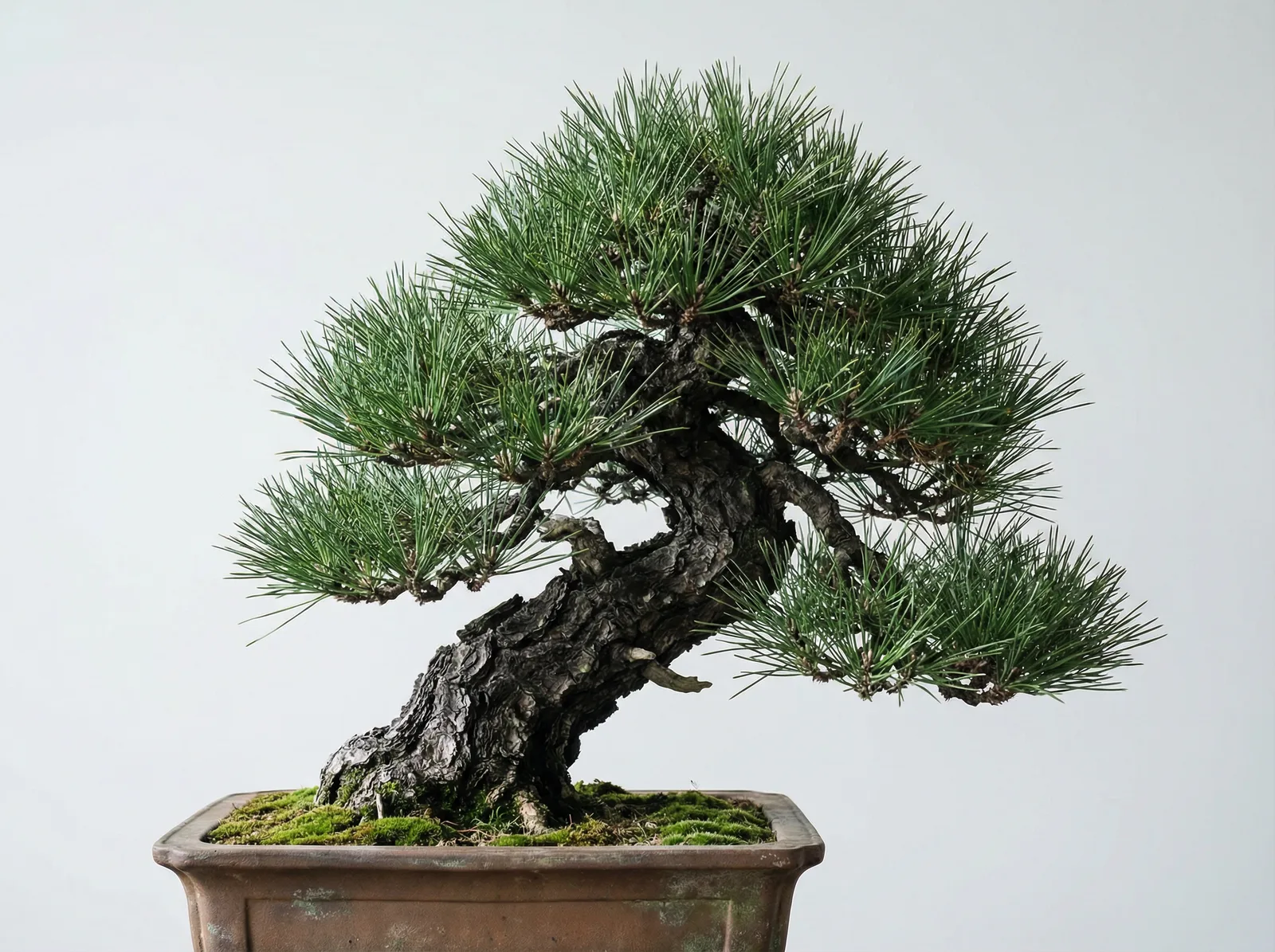
Juniperus chinensisoutdoor
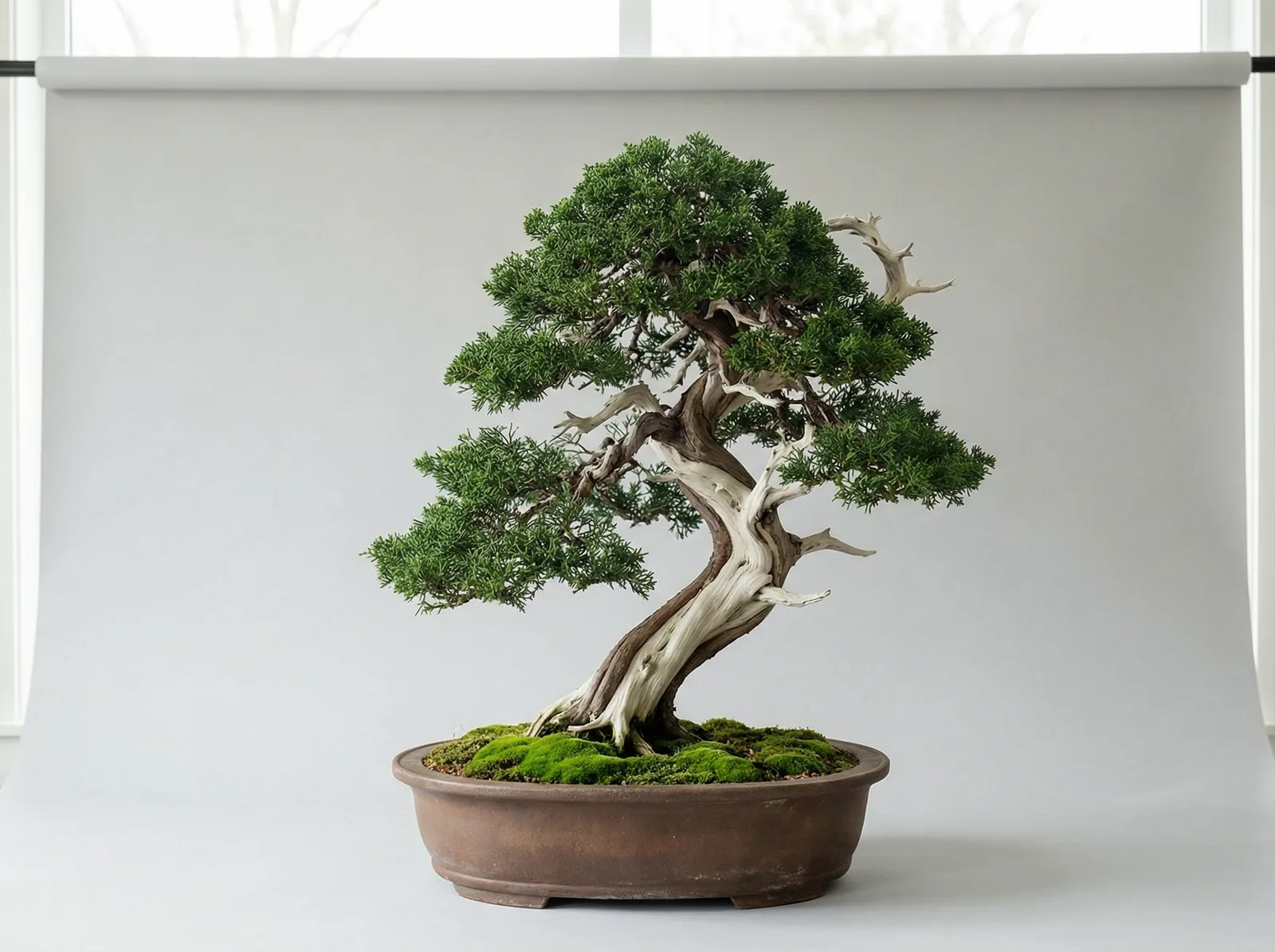
Juniper Bonsai
- care
- beginner
- light
- full sun
- zone
- 4–9
Wiring lets you position every branch exactly where you want it. It's the most powerful shaping tool in bonsai — and easier to learn than most people think.
A branch growing straight up? Wire it down into an elegant sweep. Two branches crowding each other? Wire one aside to open negative space. Without wiring you're stuck hoping the tree grows where you want it. With wiring, you decide. It's the technique that turns pruning and styling plans into an actual silhouette — and wiring a bonsai tree for shaping takes an afternoon of practice to learn, not years.
The mechanism explains every rule below: wire holds a branch in position while the tree lays down new wood along the bent shape. Once enough rigid wood forms, the branch stays put on its own. Gauge, wrap direction, timing, removal — all of it serves that one slow process.
Start with anodized aluminum: softer, cheaper, more forgiving, available everywhere. Annealed copper holds stronger bends on thick branches and is traditional for conifers like juniper, but it work-hardens as you apply it, so it punishes hesitation and rewrapping. Most growers keep both; aluminum from 1mm up to 4mm covers nearly every situation.
Buying it: the same product sells as "bonsai wire" and "training wire." Get 100g rolls, not the rainbow kits of ten tiny coils — kits run out mid-branch on the two sizes you actually use. A first order of 1.5mm, 2.5mm, and 3.5mm aluminum runs about $25 total. Copper costs roughly twice as much; save it for bends aluminum won't hold.
Rule of thumb: wire roughly one-third the diameter of the branch you're bending. Too thin and the branch springs back; too thick and application becomes a wrestling match that scars bark. When in doubt, go slightly thicker — and for trunks, one size up again: stiffer wood on a longer lever. Or skip the estimating: the wire gauge calculator gives you the size from branch thickness and wire type.
Cut the length before you start: about one and a half times the branch, plus enough for two anchor turns. Beginners cut short, run out mid-branch, and splice on a second piece that never holds as well as one continuous run. If it happens anyway, start the new wire two coils back, parallel to the old one.
As for how old the tree should be — age doesn't matter, flexibility does. Any healthy, actively growing tree can be wired. New shoots need to lignify first (turn from green to woody brown, usually by midsummer for spring growth); before that they crush instead of bend. Anything thicker than a finger — roughly 12–15mm — moves better with a guy wire than a coil.
Three decisions come before the first coil, and they're the three beginners skip.
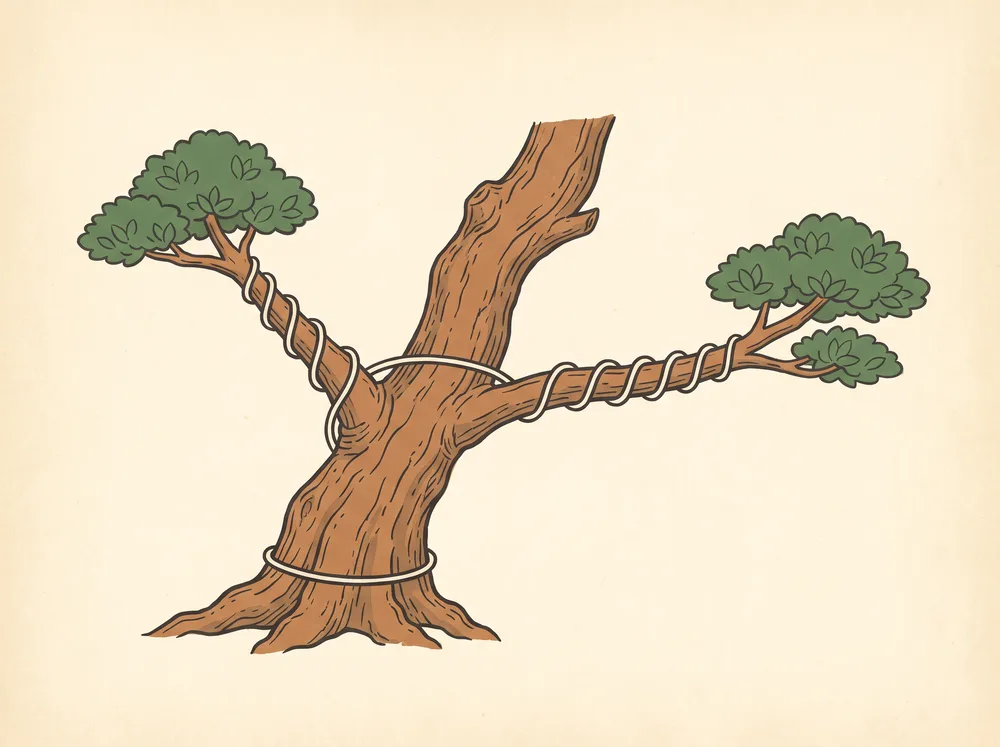
Direction first. Wrap in the direction of the intended bend, so the coil tightens as the branch moves instead of opening. Bending the branch clockwise (sighting down it from the trunk)? Wrap clockwise. Get this backwards and the wire loosens at the exact moment you bend — the number-one reason beginner wire fails to hold.
Order second: trunk, then primary branches, then secondaries — thick wire goes on before thin wire crosses it. And wrap an entire line before bending any of it; coil-bend-coil down a branch leaves uneven spacing and no leverage.
Anchor third — the step beginners botch most. Unanchored wire just rotates with the branch. For a primary branch, anchor by wrapping the trunk first or pushing the wire deep into the soil. For two branches of similar thickness at similar height, use one continuous wire: wrap one branch, cross the trunk, continue onto the opposite branch. This two-branch-one-wire pattern is cleaner and more stable than wiring each branch separately.
The diagram shows all four: even 45-degree coils done right, a wrong-direction coil opening under a bend, double-wiring, and a guy wire.
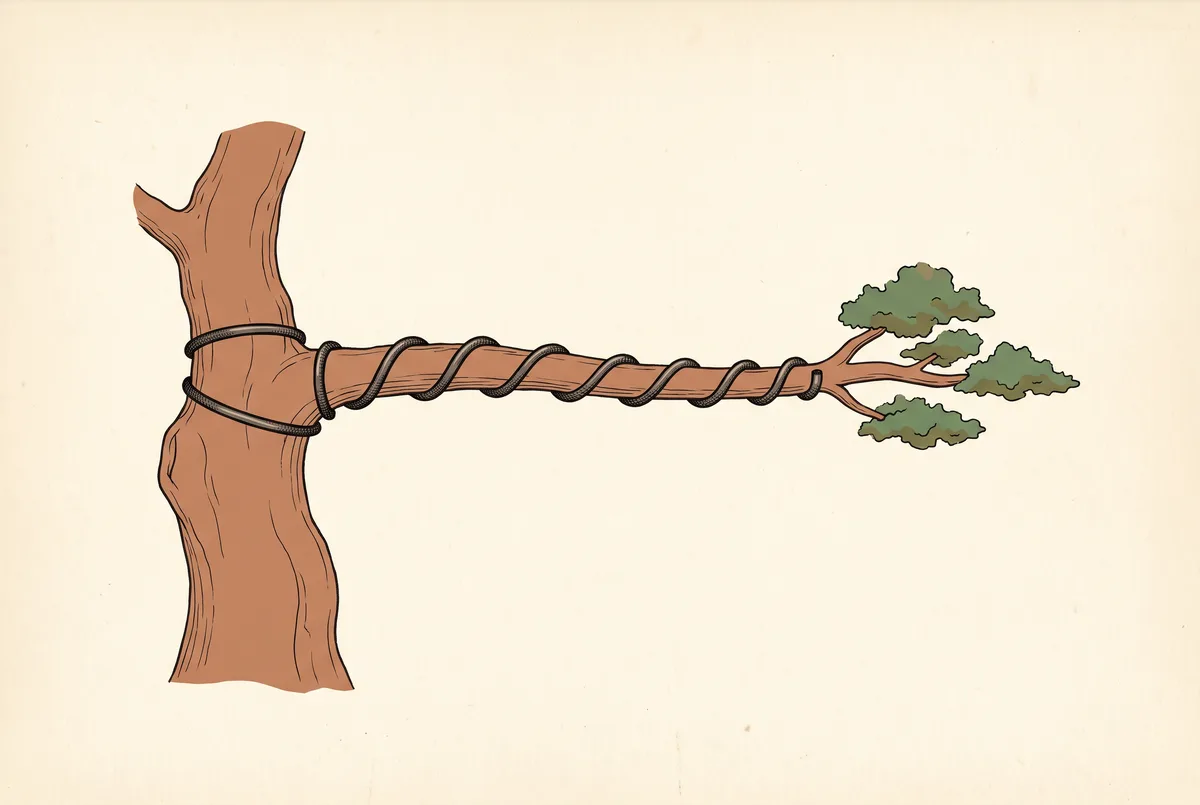
Anchor with two turns on the trunk or a parent branch, then wrap toward the tip at about 45° — snug to the bark, never biting it. Even spacing holds the bend; gaps and crossings don’t.
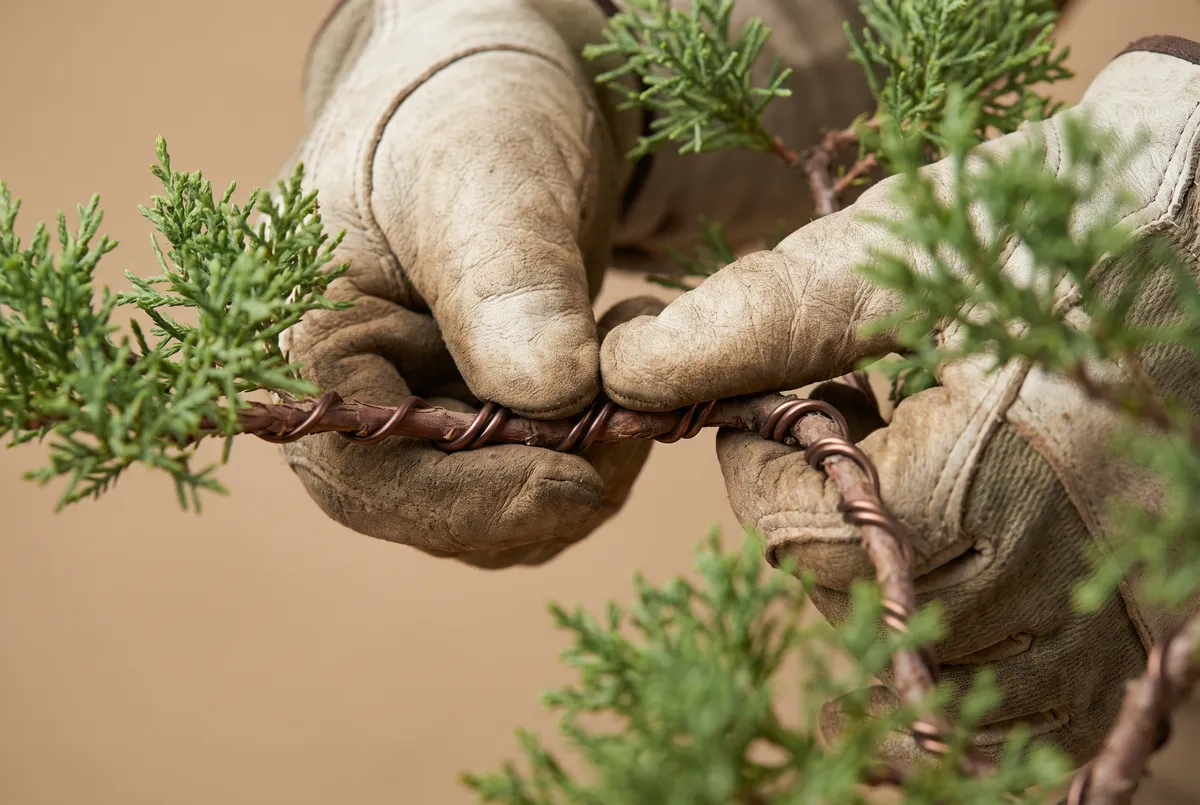
Before any of this touches your tree, spend ten minutes on scrap. Wire the offcuts from your last pruning session, or a dead branch, until the coils come out even without thinking. Bark pays for practice.
Past 4–5mm of wire, single coils stop being the right tool. Double-wiring — two parallel wires of a smaller gauge laid side by side in the same track — bends nearly as much wood as one thick bar and is far easier to apply neatly. It's standard practice on anything trunk-adjacent.

For branches too thick or too brittle to coil at all, use a guy wire: a loop of thin wire (1–1.5mm) over the branch, padded where it touches with a scrap of aquarium airline tubing or garden hose, tensioned down to the pot rim, a drainage-hole wire, or a strong surface root, then twisted tight with pliers. Zero coil scarring, and you can pull the branch down in stages — a little more every few weeks — instead of gambling everything on one bend.
One term for later: raffia — soaked palm fiber wrapped tightly around a branch before extreme conifer bends, to compress the wood and keep cracks from opening. It works, and it is not a year-one technique.
Wood varies more than technique does. The same coil that shapes a juniper snaps a maple.
A branch sets by building new wood in its bent position, so removal timing is a race: the wire has to stay on long enough to win, but come off before the thickening branch swallows it.
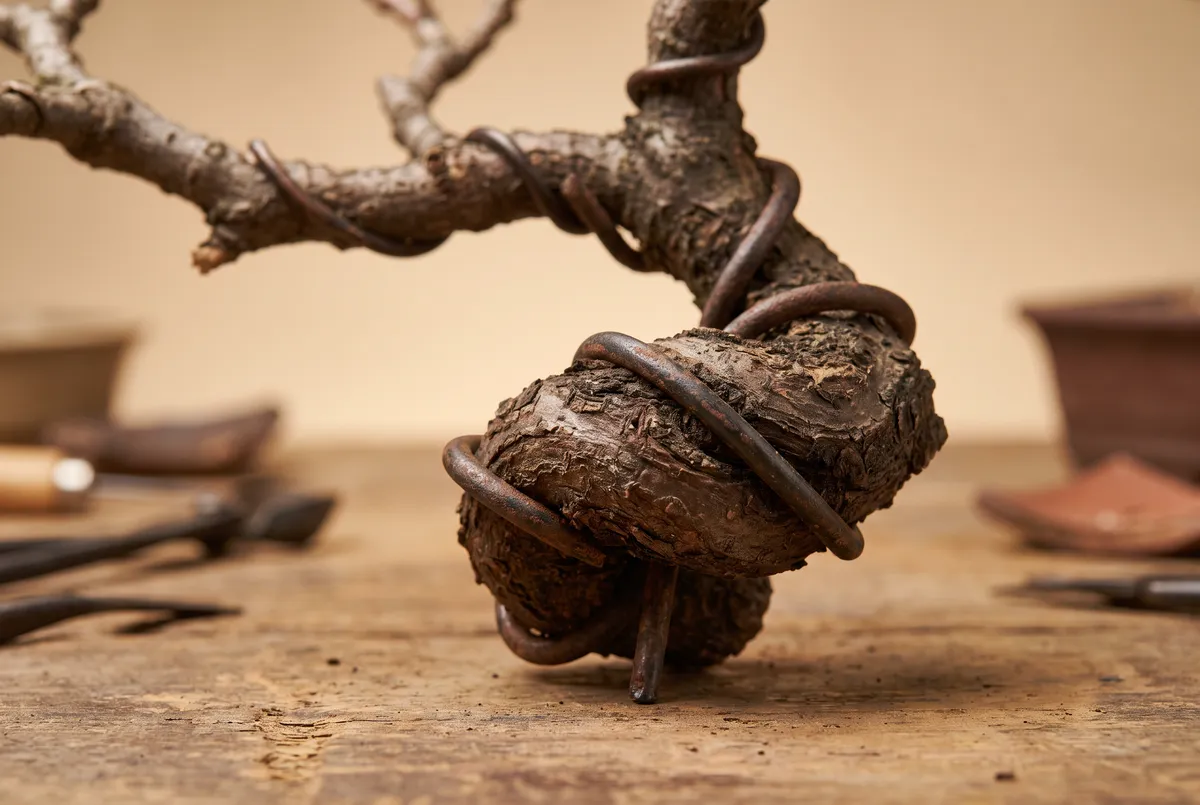
Season first. Deciduous trees in late winter, when branches are bare and visible. Conifers in late autumn or early winter when growth has slowed. Avoid peak growing season — branches thicken fastest in late spring and summer and wire bites in before you notice. Some growers also wire deciduous right after the spring flush hardens in early June — legitimate, but it commits you to weekly checks.
Fast deciduous growers — Chinese elm, trident maple, zelkova — thicken enough for wire to bite in six to eight weeks. Conifers may carry wire six to twelve months, and heavy bends on old juniper or pine often need rewiring for two or three seasons before the wood truly sets.
Removal: cut the wire off in small sections with rounded-tip bonsai wire cutters (the tools guide explains why regular pliers gouge bark).
Every grower has snapped a branch. Here's the triage.