Ulmus parvifoliaboth
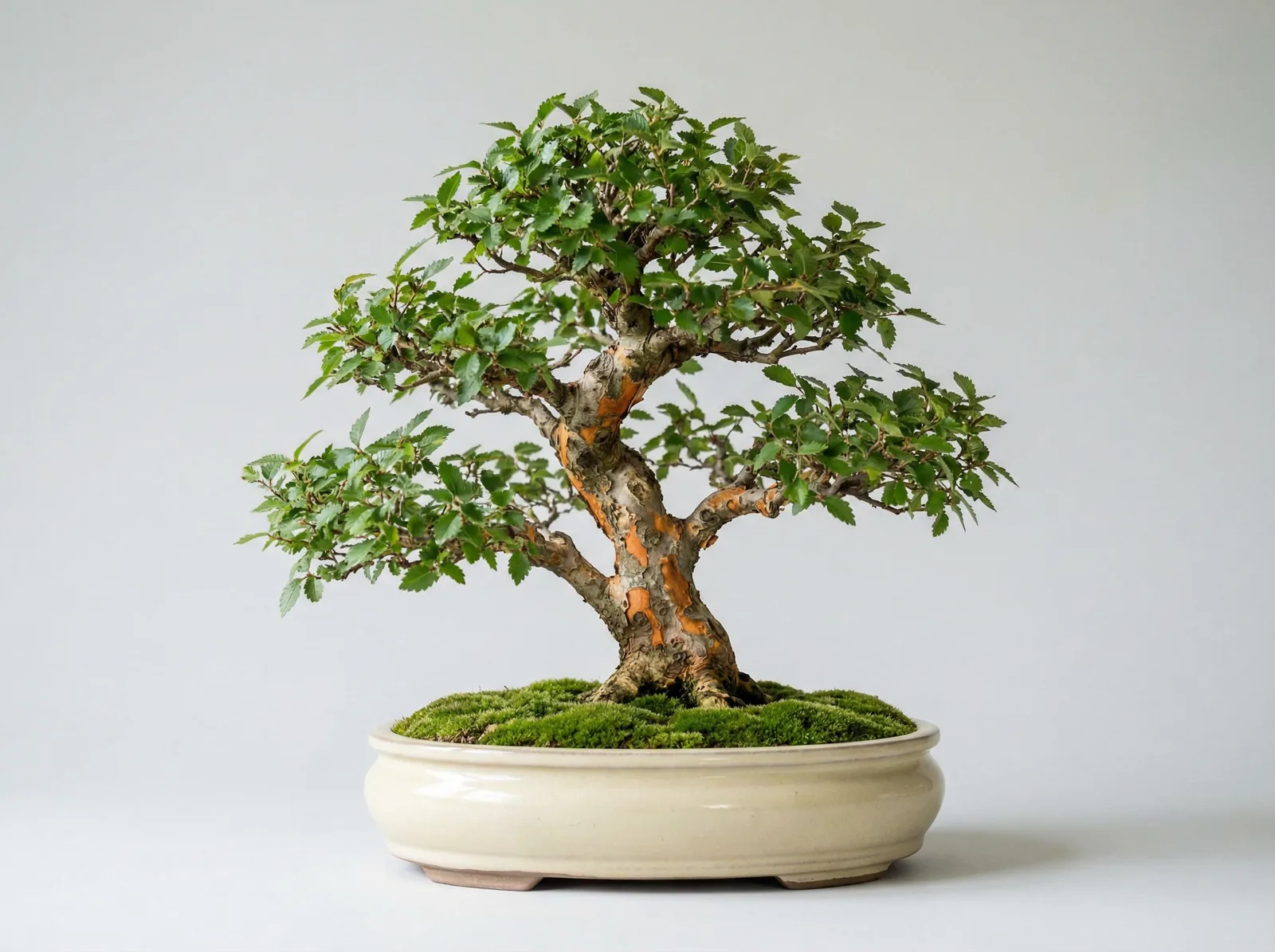
Chinese Elm Bonsai
- care
- beginner
- light
- full sun+
- zone
- 5–10
Zelkova serrata · Ulmaceae
Why grow it
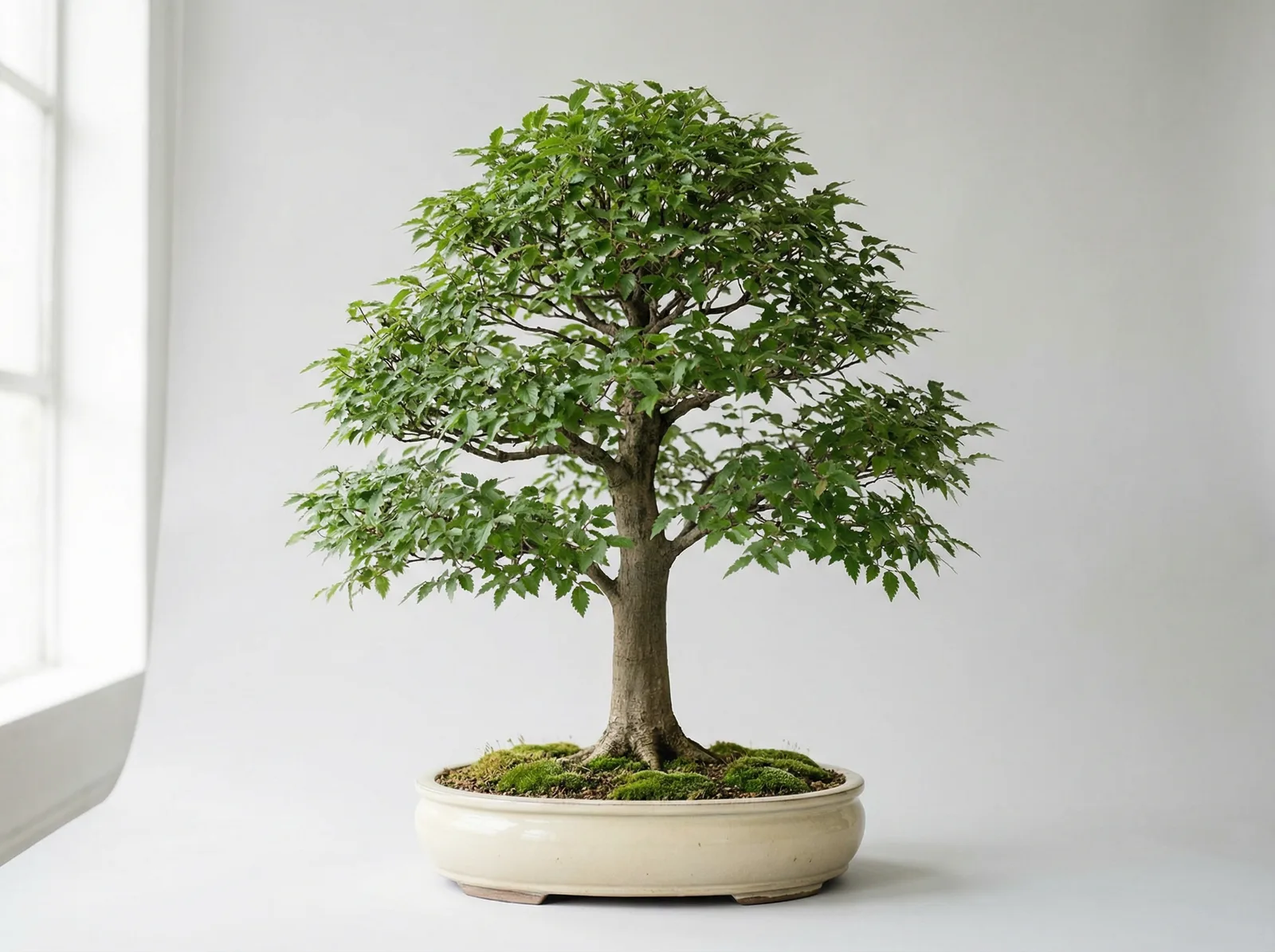
If broom-style bonsai had a mascot, it would be the zelkova. No other species creates that classic vase-shaped canopy -- the one that looks like a perfect miniature park tree in December -- as naturally as Zelkova serrata. The fine branching is in its DNA. You're not forcing it; you're refining what the tree already wants to do.
Zelkova belong to the elm family (Ulmaceae) and share many of their cousin's strengths: fine twig structure, small leaves that reduce further with technique, and fast ramification. But zelkova dodge the Dutch elm disease bullet entirely. The serrated leaves start a bit larger than Chinese elm, but a couple seasons of disciplined pruning shrinks them down.
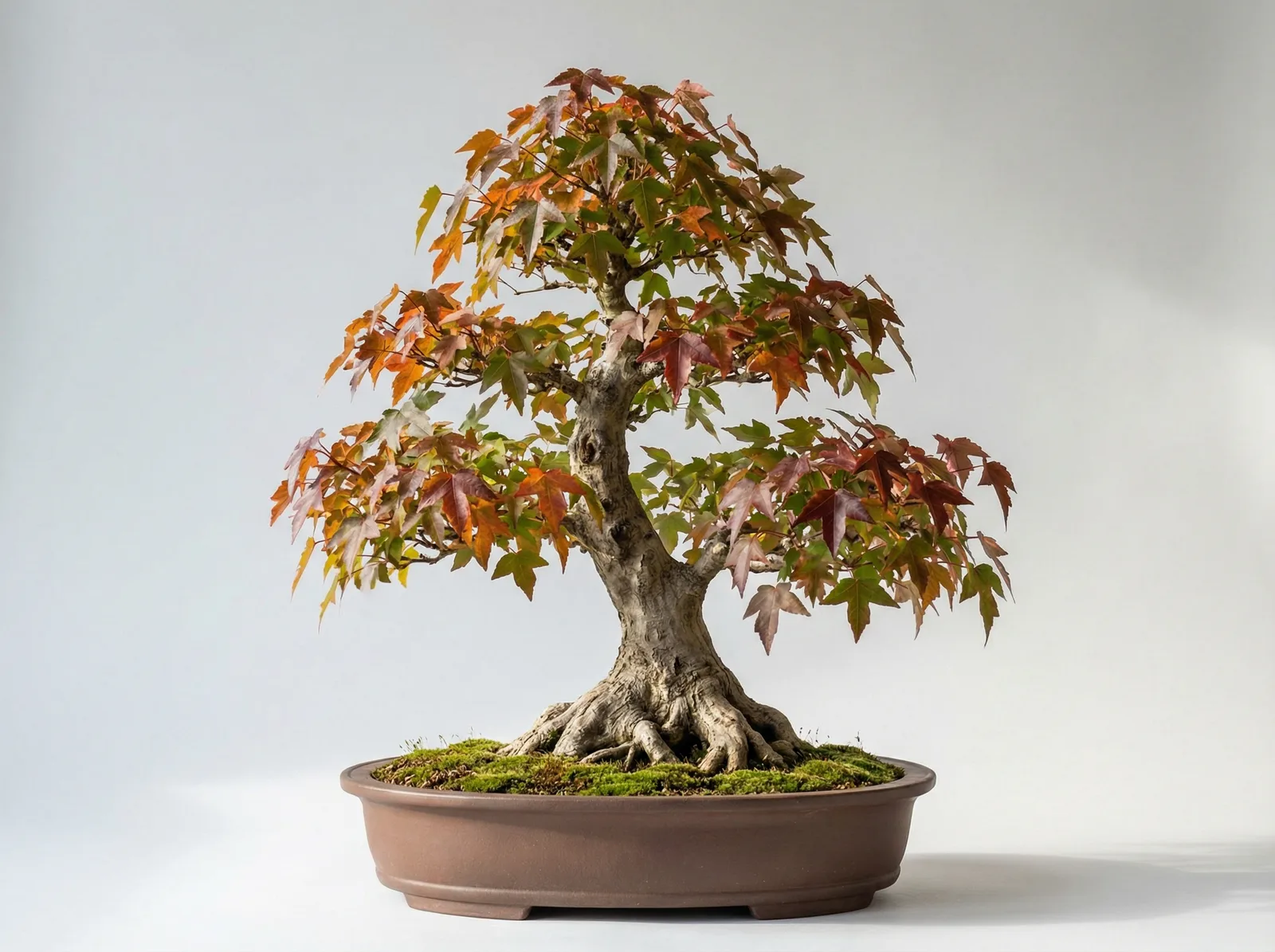
Fall color alone justifies growing this species. Yellow, orange, and russet leaves that glow in low autumn light. Then the leaves drop, and you see it -- the winter silhouette, every branch visible, the ramification you've spent years building on full display. That bare-tree view in January? That's the real payoff of deciduous bonsai.
The routine
Zelkova are refreshingly low-drama. Full sun, consistent water, regular fertilizer with Biogold or balanced liquid feed every two weeks from April through September. They don't throw tantrums. If you've kept a Chinese elm happy, zelkova care will feel familiar -- nearly identical requirements.
Where people get into trouble is watering in summer. Zelkova develop fine, fibrous root systems that dry out fast in shallow bonsai pots. On a hot July day, a tree in a small pot can go from moist to dangerously dry by afternoon. Check daily. Twice daily in a heat wave. If leaf edges are browning, you're letting it dry out too much between waterings. A humidity tray underneath buys you a small buffer on hot, windy days.
Zelkova looking rough right now?Skip to common problems below, or start with the symptom guide.Want great fall color? Here's the recipe: stop nitrogen fertilizer by early August, make sure the tree gets strong light exposure through September, and hope for cool nights in October. You can't control the weather, but you can set the tree up to take advantage of it.
Winter care is simple. Leave them outside. Zelkova need dormancy and they're cold-hardy to zone 5 without special protection. In the coldest zones, mulch around the pot or sink it into the ground. Never bring them indoors.
Shaping
Late winter structural pruning is your chance to edit the branch framework while the tree is bare. Remove anything that crosses, grows downward, or disrupts the silhouette. Use concave cutters on branches thicker than 4mm so the wound heals flat rather than leaving a bump.
Summer is where the magic happens. Let new shoots extend 4-6 leaves, then cut back to 1-2 with sharp scissors. The tree pushes two or three new shoots from each cut point. Repeat this cycle from May through August and you'll build jaw-dropping twig density in 2-3 years. Skip this step and you end up with long, unbranched whips. Consistent summer pruning is what separates a good zelkova from a great one.
Defoliation in early June forces smaller leaves on the second flush. Only do this on vigorous, well-fed trees -- a weak tree won't recover cleanly. Remove every leaf but leave the petioles attached. New growth should emerge within two to three weeks, noticeably smaller than the first set.
Broom style. That's the assignment. Start with a straight trunk that forks into 3-5 primary branches at roughly the same height. Each primary splits into secondaries, which split again. The result is a symmetrical, dome-shaped canopy that mimics an old shade tree on a village green.
Building a convincing broom takes 5-7 years of disciplined pruning. Select your primary branches radiating evenly around the trunk. Prune each to encourage outward and slightly upward growth -- not straight up. Let the tree grow freely in summer to build energy, then cut back in winter to tighten the framework. Year by year, the dome fills in.
Forest plantings are zelkova's other great strength. Use 5, 7, or 9 trees with varying trunk diameters and heights. Arrange them asymmetrically in an oval pot. The fine branching and fall color create a miniature woodland that changes character with every season. Wire individual trees lightly to set initial trunk angles before planting -- /tools/wire-gauge has the gauge-to-branch chart.
When things go wrong
Leaf scorch -- brown, crispy edges that make the tree look sunburned. It's almost always a watering issue, not a sun issue. Zelkova can handle full sun in zones 5-7 without complaint if you keep the roots moist. The fix is more water, not less light. If a branch crisped entirely, scratch-test it before cutting: green under the bark means it will re-leaf; brown means prune back to live wood. Only in zone 8+ does afternoon shade become worth considering.
Aphids are a spring ritual. Sticky honeydew on lower leaves is usually the first sign -- look up and you'll find clusters on the shoot tips. A hard spray of water knocks them off. Insecticidal soap if they're persistent (the pest guide at /guides/pest-control has the full treatment rundown). They're annoying but rarely cause lasting damage.
Poor ramification is a pruning problem, not a species problem. If your zelkova has long, bare branches with tufts of leaves at the tips, you didn't prune enough during the growing season. There's no shortcut: cut back to 1-2 leaves, repeatedly, all summer. The tree will reward your discipline with dense twigs by fall.
Specialized bonsai nurseries carry zelkova in the $50-200 range for domestically grown material. Japanese imports with developed broom structure run $200-500+, and they're worth it if the branch framework is solid. The initial structure on a zelkova matters more than the foliage -- you can grow leaves, but you can't fake taper.
Landscape nurseries sell zelkova in 1-5 gallon pots for $20-60, and this is actually terrific raw material for bonsai. Buy in late winter when the tree is bare so you can evaluate trunk movement and branch placement without leaves obscuring the view. For zelkova specifically, see the tree before you buy if possible -- online, that means only buying from vendors who photograph the exact tree you'll receive. The bare branch structure tells you everything.
Also on the bench