New to bonsai? Start here. What bonsai actually is, how to pick your first tree, the basics of keeping it alive, and what to ignore until year two.
On the benchbonsai scissorswatering canbonsai soiltraining pothumidity tray (for indoor)
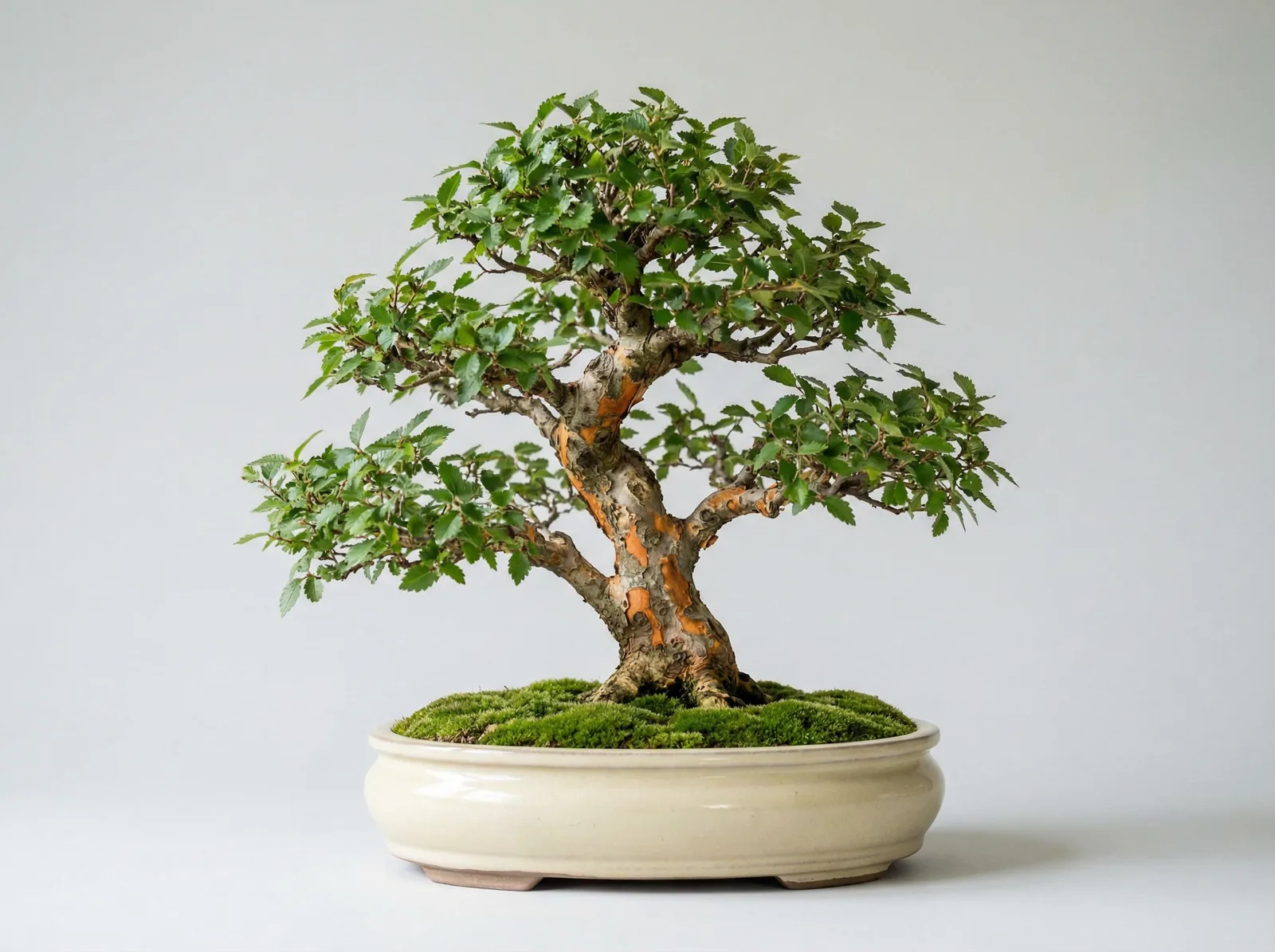
Bonsai isn't a type of tree. It's a technique applied to ordinary trees — the word means "planted in a container" in Japanese, and the full story is at what is a bonsai tree. Through pruning, wiring, and growing in a shallow pot, you keep a tree small while making it look like a mature specimen in miniature. That's the whole concept. Everything else is detail.
The good news: year one asks little of you — light, water, and restraint cover almost all of it.
The actual starter kit
You don't need a decade of experience or a drawer of specialty tools. Here's what handles the first six months, with honest prices:
A tree: $25–40 from a nursery or bonsai seller
A pot with drainage holes: a $10 plastic training pot is fine — the glazed ceramic can wait
Granular bonsai soil: about $15 for a small bag (the soil guide covers what granular means and why potting soil fails)
Sharp scissors: $20 buys a pair of shears that lasts a decade
A watering can with a fine rose head: $10–15
Call it under $100 for the whole first year, tree included. Wiring, structural pruning, repotting, styling — all of that comes later, once you've built the habit of keeping a tree alive and reading what it needs.
Buy a tree, not a packet of seeds
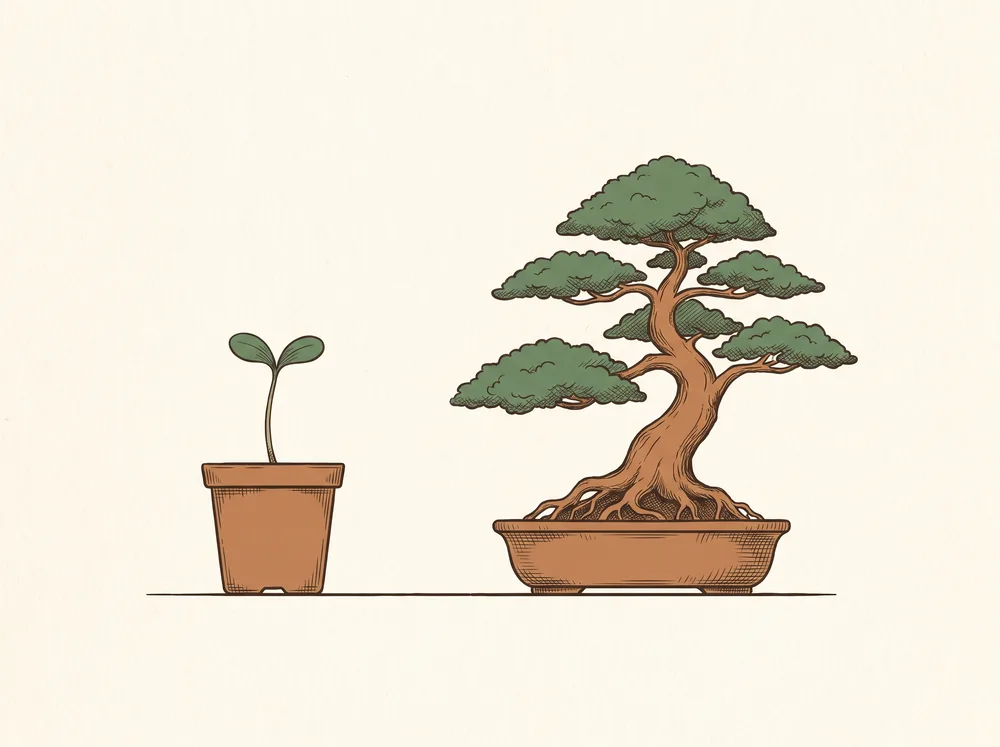
Growing bonsai from seed takes five to ten years before you have anything that resembles a bonsai — the math is laid out at how long it takes to grow a bonsai, and it's why "bonsai seed kits" are a gift-shop trap. A $25–40 nursery tree or pre-bonsai gives you something to work with immediately.
The same $30, five to ten years apart — the seed kit is the one on the left. Buy the tree on the right.
Species choice matters more than skill — most "black thumbs" are really wrong-tree-wrong-place. Four starter species forgive the mistakes every beginner makes; the ranked list with reasons is at best bonsai for beginners:
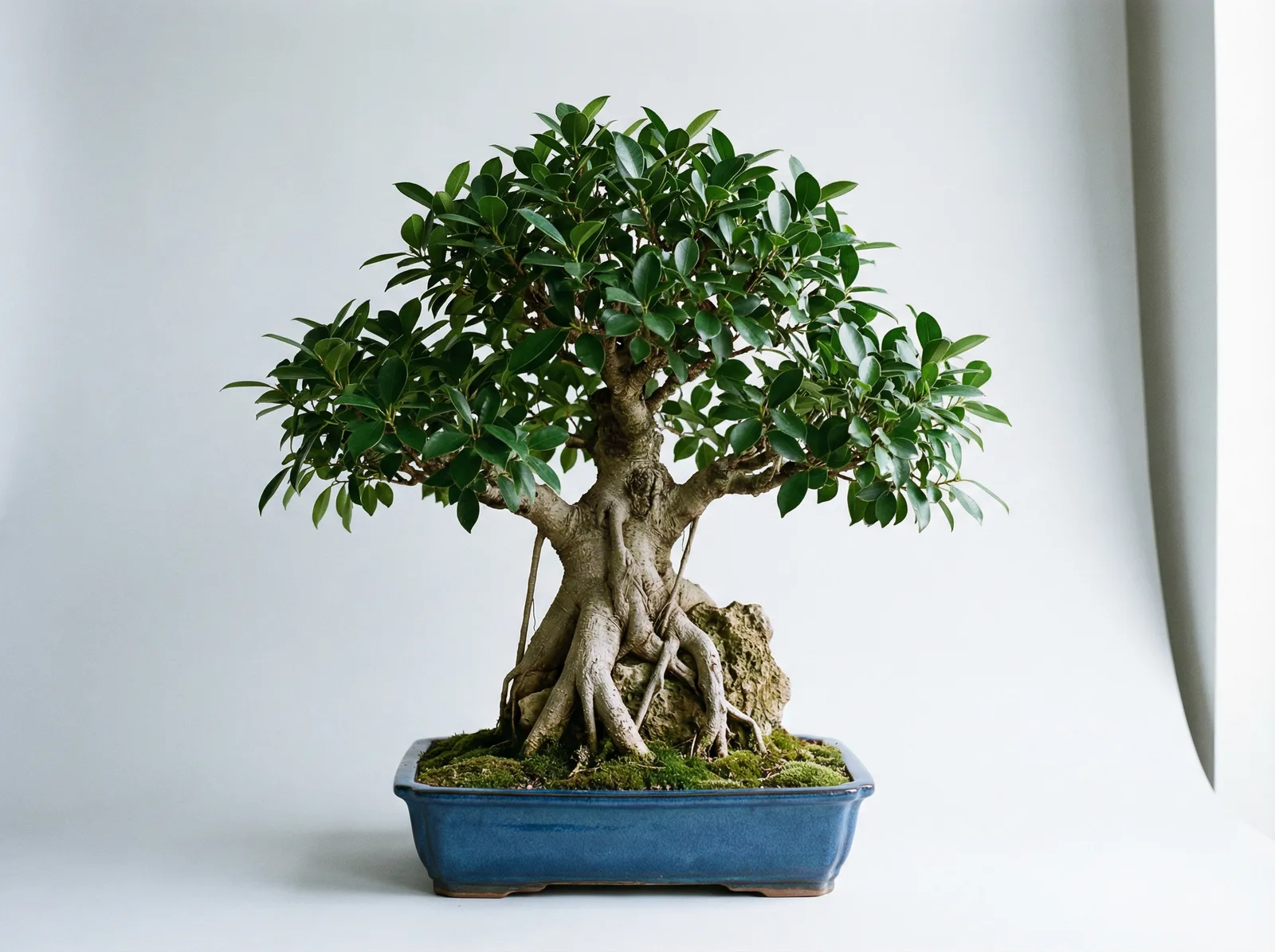
Ficus: the indoor default — Ficus retusa or microcarpa specifically. Bright indirect light, water when the soil surface dries, and it shrugs off beginner pruning.
Chinese elm: the best all-rounder, and our top pick if the tree can live outside. Full sun to partial shade, soil kept lightly moist, and it handles a bright room if it has to.
Juniper: the classic first conifer. Full sun, moderate water, outdoors only — more on that below.
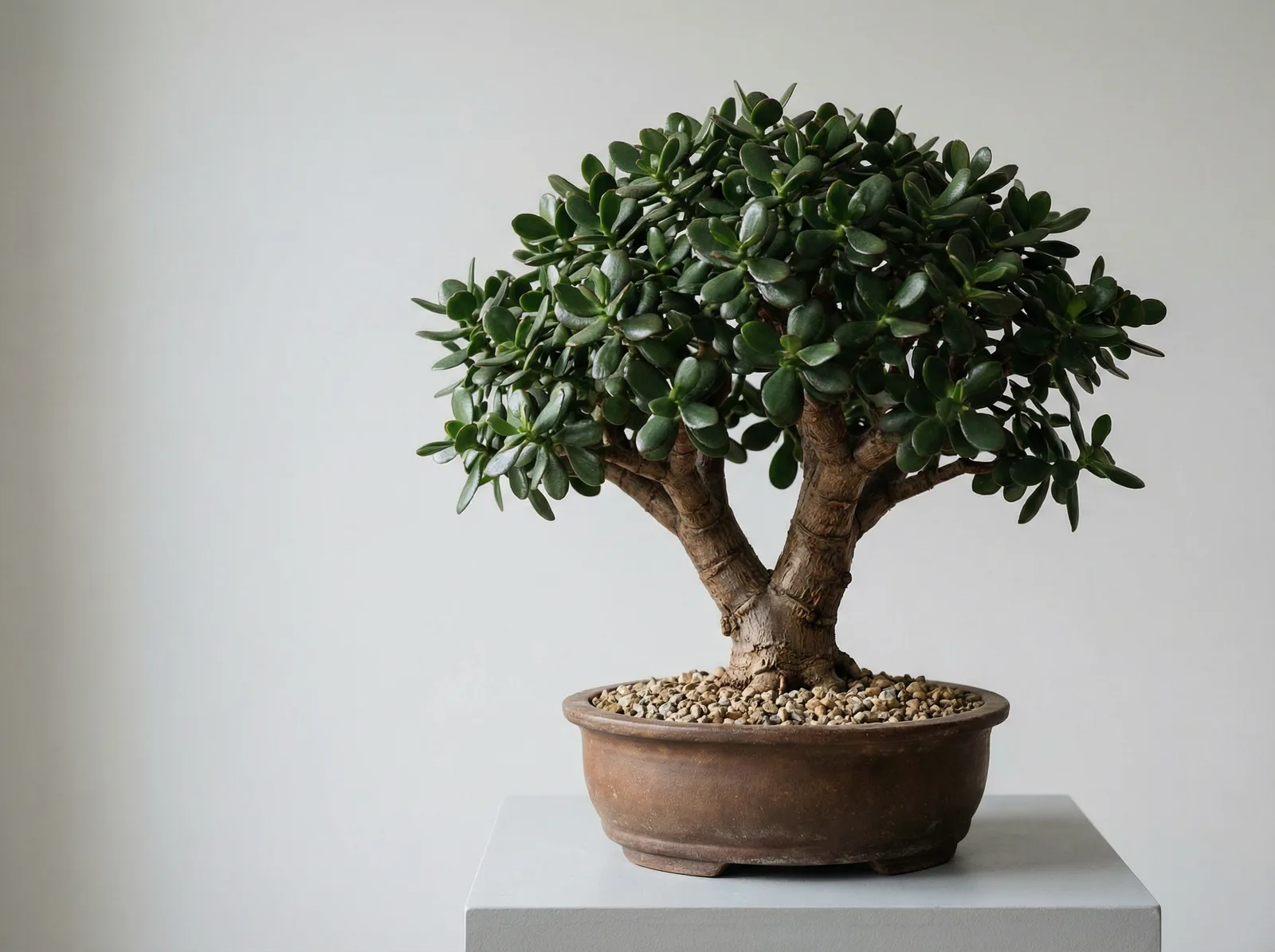
Dwarf jade: a succulent that stores water in its leaves. Let the soil dry between waterings; the most forgiving choice for people who travel.
Placement comes before everything
Outdoor bonsai need a minimum of four to six hours of direct sunlight daily. Indoor bonsai need the brightest window in your home or a full-spectrum LED grow light (do bonsai need direct sunlight breaks it down by species). A tree in a dim corner slowly starves no matter how carefully you water it — leaves are the tree's food factory.
One placement rule outranks all others: junipers and other temperate trees live outside. A juniper on a bookshelf is the single most common beginner heartbreak, and it isn't your fault when it happens — it's a species mismatch, and the label probably set you up.
Watering: the one skill that matters
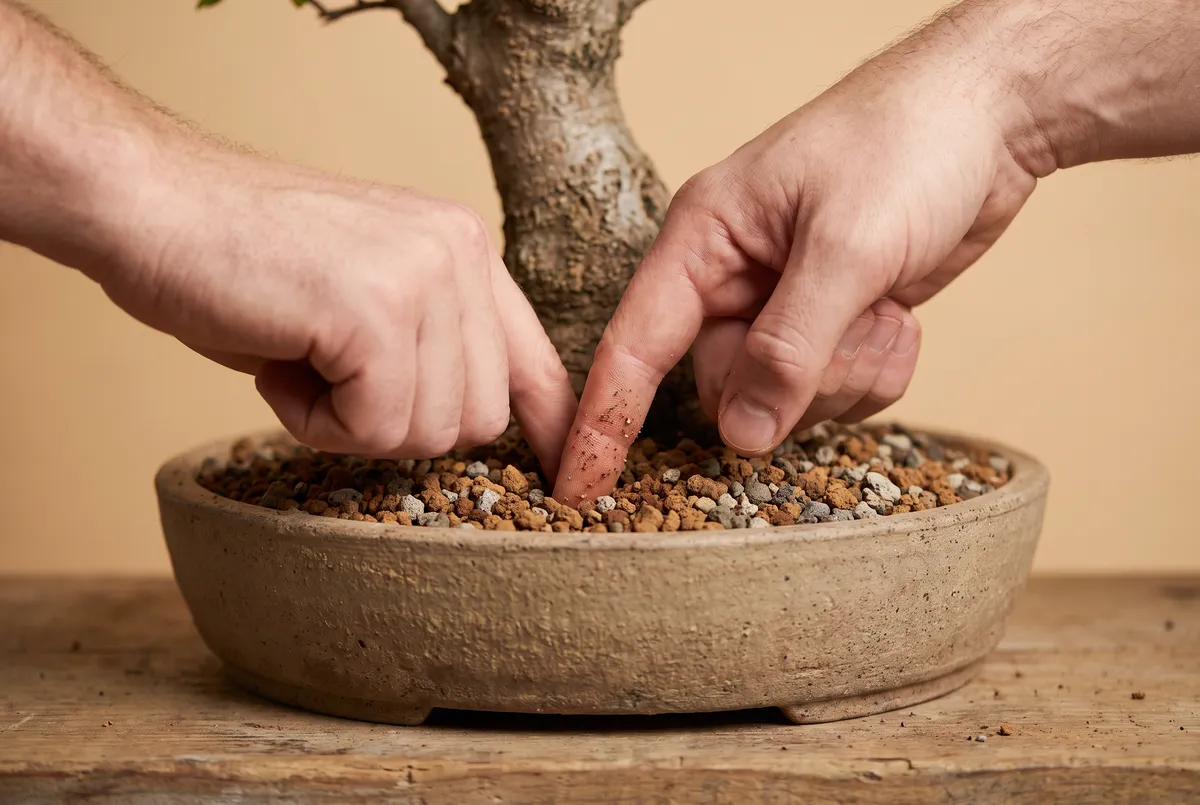
Watering separates people who keep bonsai alive from people who keep buying replacements. Ignore fixed schedules — roots need oxygen between waterings, and a timer can't feel whether the soil has dried. Check every day by pushing a finger half an inch into the soil; that's the entire skill, and how often to water a bonsai answers the schedule question directly.
The entire skill, first knuckle deep: dry at the fingertip → water until it runs from the drainage holes; still damp → put the can down.
Your first year, season by season
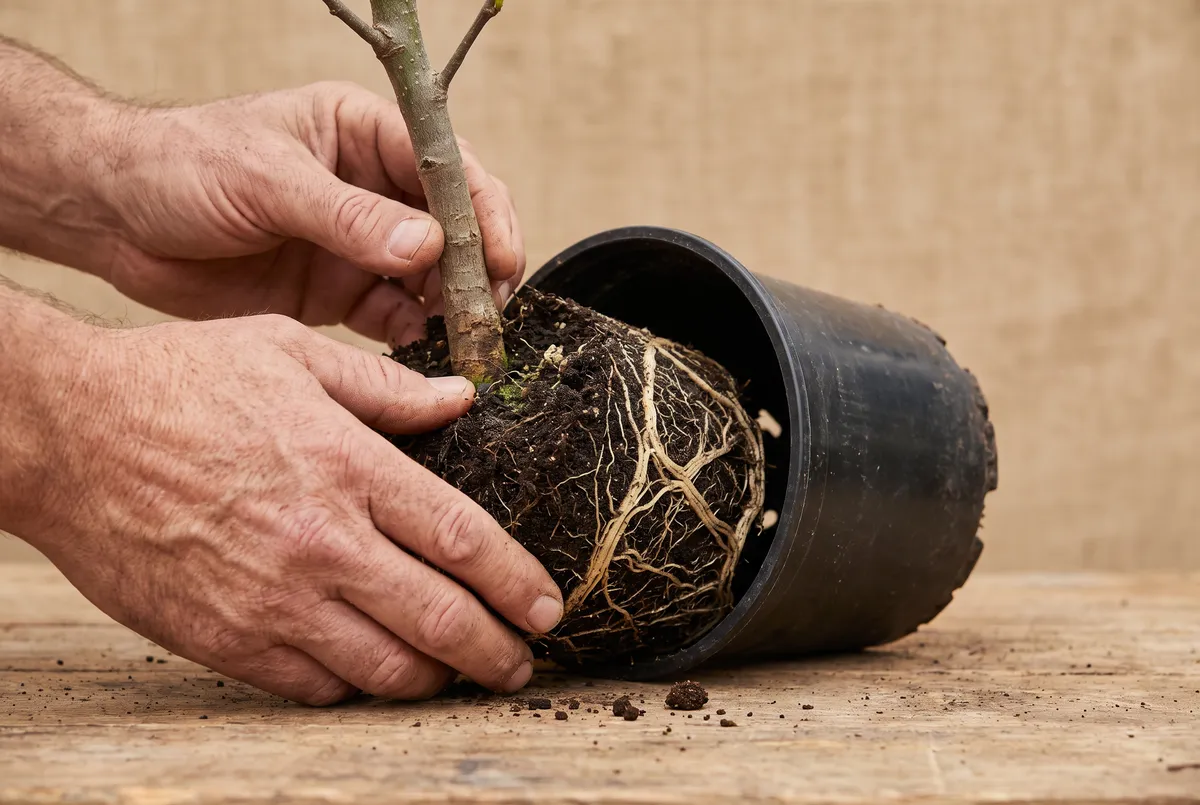
What most starter trees look like out of the pot: dense muck, circling roots. First spring, slip-pot the whole thing intact — don't tease it apart in year one.
First-year plannerN. hemisphere calendar
The first 12 months · from Jan
J
F
M
A
M
J
J
A
S
O
N
D
Jan–Mar
Settle in: light and water only. No pruning, no repot, no feed — the tree is learning your conditions.
Mar
Buds swell — slip-pot the root ball intact into granular soil, one pot size up. Mix the soil
Apr
Start feeding: balanced liquid fertilizer, every 2 weeks. Feeding basics
Oct
Last feed of the year — stop until buds move next spring.
Nov
Winter protection: mulch the pot in, cold frame, or unheated garage. Winter care
Jun · yr 2
First structural prune — year-two work, once the trunk has run free for a full season. Pruning guide
A tree runs on stored energy; the first-year calendar protects those reserves while it adapts to your conditions. Start the clock whenever the tree comes home:
Months 1–2: nothing but light and water. Some leaf drop in the first weeks is adjustment, not death — why bonsai drop leaves sorts normal shedding from real trouble.
First spring: most starter trees arrive in dense muck. Slip-pot as the buds swell — ease the root ball out whole and settle it, undisturbed, into granular bonsai soil in a slightly larger pot (the soil calculator sizes the batch). Four weeks after growth resumes, start feeding: balanced liquid fertilizer every two weeks (the fertilizing guide has the schedule).
Summer: watering becomes the job — daily finger checks, and in real heat, daily water. The only trimming worth doing all year: remove clearly dead branches, and cut new shoots back to two or three nodes once they've extended to four or six. That light maintenance keeps the shape without stressing a tree that's still settling in.
Fall: ease off. Growth slows, watering intervals stretch, and hardy trees stop getting fed by mid-fall so the season's growth hardens before frost.
Winter: hardy species stay outside — they need several weeks below roughly 45°F to rest properly. Pots freeze faster than open ground, so once nights dip below the mid-20s°F, mulch the pot in, use a cold frame, or move the tree to an unheated garage (winter care covers each option). Tropicals come inside before nights hit 50°F and stall under short days — slower growth, less water; the indoor growing guide covers light.
Don't prune aggressively in year one, and don't repot on impulse. Both spend reserves the tree needs for settling in.
The five ways first trees die
Nearly every dead first tree traces back to one of five preventable causes — and none of them is a talent problem.
The indoor juniper. Symptom: a shelf juniper going grey-green and crispy two or three months in. Why: temperate conifers need outdoor sun and a cold dormancy, and they hold their color long after they've died. Fix: outside, full sun, today — if you wanted an indoor tree, that's what the ficus is for.
Watering on a schedule. Symptom: yellowing leaves over soil that never dries. Why: waterlogged soil suffocates roots first, then rots them. Fix: the finger test — water when the top half-inch is dry, never by the calendar.
The dim corner. Symptom: pale, stretched shoots and a steady trickle of dropped leaves. Why: photosynthesis is arithmetic — below a few hours of real light a day, the tree runs at a loss. Fix: the brightest window you own, or a grow light 6–12 inches above the foliage.
Panic repotting. Symptom: a struggling tree gets repotted in July "to save it" and collapses within weeks. Why: cut roots regrow well only during the spring flush — the rest of the year, root damage compounds the stress. Fix: hold until early spring; root rot is the lone exception.
Over-pruning a new tree. Symptom: a tree scalped in week one that stalls and never pushes new growth. Why: leaves feed the tree; strip too many and it can't rebuild its reserves. Fix: year-one restraint — dead wood and light shoot-trimming only.
Growers argue whether the ceiling is a third or closer to half on vigorous tropicals; nobody argues a first-year tree should test it.
Is it dead? (Probably not)
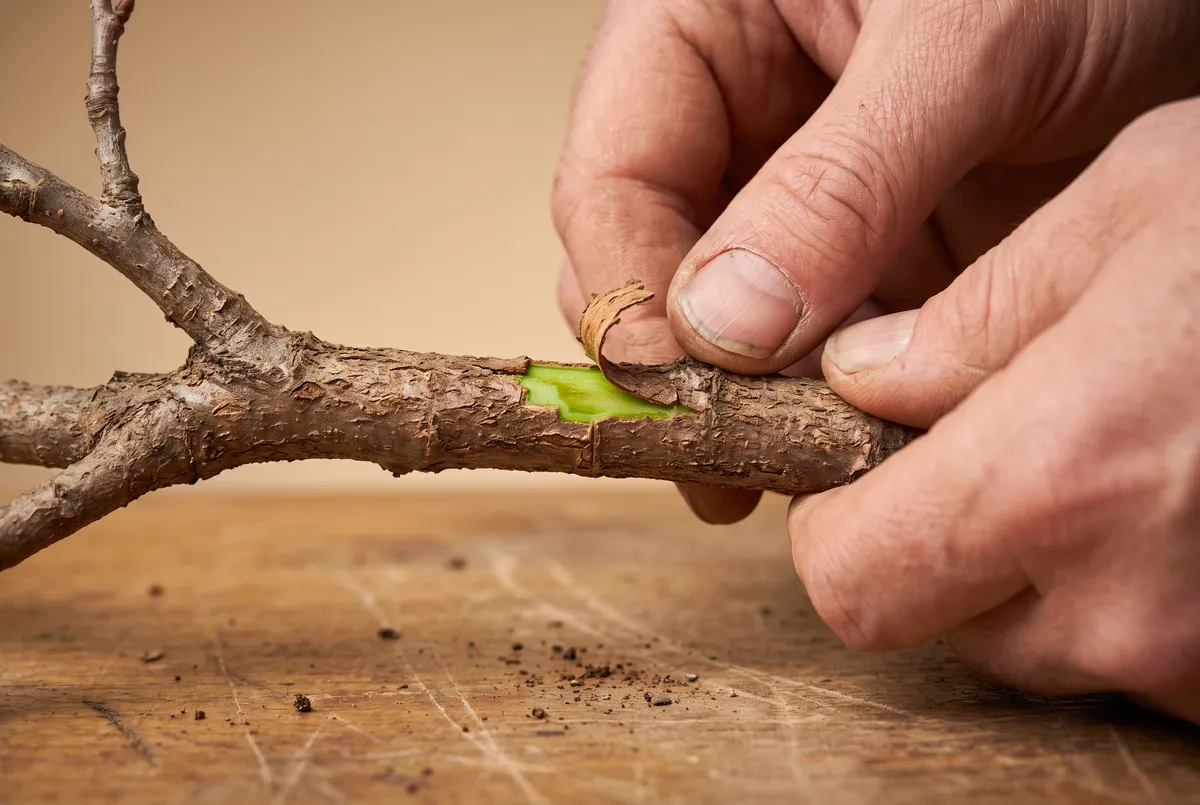
Most "dead" bonsai aren't. Two calm tests first. Scratch test: nick a twig with a fingernail — green and moist underneath means live tissue; brown and dry means try again lower, toward the trunk. Flex test: a living branch tip bends; a dead one snaps like a matchstick. A tree that's dropped every leaf can still pass both and re-leaf inside four to six weeks — the full triage is at is my bonsai dead.
What "green under the bark" actually looks like. This tree is alive, whatever its leaves are doing — treat it as a recovery case, not a loss.
What a healthy first year looks like:
1 month: stable — no new growth needed yet; a little adjustment shedding is normal.
3 months: new shoots and fresh leaf tips. The tree has accepted your conditions.
12 months: you're choosing what to learn next, not wondering whether it will survive.
Six words you'll keep seeing
Every other guide here uses these terms — one line each:
Nebari: the visible surface roots at the base of the trunk — what makes a tree look old.
Ramification: the density of fine branching, built by years of repeated trimming.
Internode: the stem length between two leaves; short internodes make growth look compact.
Back-budding: new buds breaking on older wood after a trim — how a tree gets denser near the trunk.
Dieback: a branch or tip dying backward from its end, usually after stress or a large cut.
Dormancy: the winter rest temperate trees require, triggered by cold and shortening days.
The quick sheet
The whole first year on one card:
Buy: one starter tree ($25–40), training pot ($10), granular soil ($15), shears ($20) — under $100 all in
Place: outdoors, 4–6 hours of direct sun; indoors, the brightest window or a grow light
Water: finger test daily; water only when the top half-inch is dry, then water until it drains
Feed: balanced liquid fertilizer every two weeks, spring through early fall
Prune: dead wood and light shoot-trimming only until year two
Repot: first spring, buds swelling, and not before
Read next, in this order: the watering guide this week — it's the skill that decides everything; choosing your first bonsai to pick a good individual tree; the repotting guide before your first spring; and the pruning guide in summer, once the tree is clearly healthy and pushing strong growth.
A local bonsai club compresses years of trial and error into months — monthly meetings, workshops, group repotting sessions, and experienced members who'll look at your actual tree and tell you what it needs. Watching someone prune a real tree is worth fifty articles, including this one.
Your next step is small: put one tree in the sunniest spot you have this week, and check its soil with your finger every morning. Two weeks of that habit and you'll know your tree better than any article can teach you.