Fagus sylvaticaoutdoor
Beech Bonsai
- care
- intermediate
- light
- full sun+
- zone
- 4–8
Carpinus betulus · Betulaceae
Why grow it
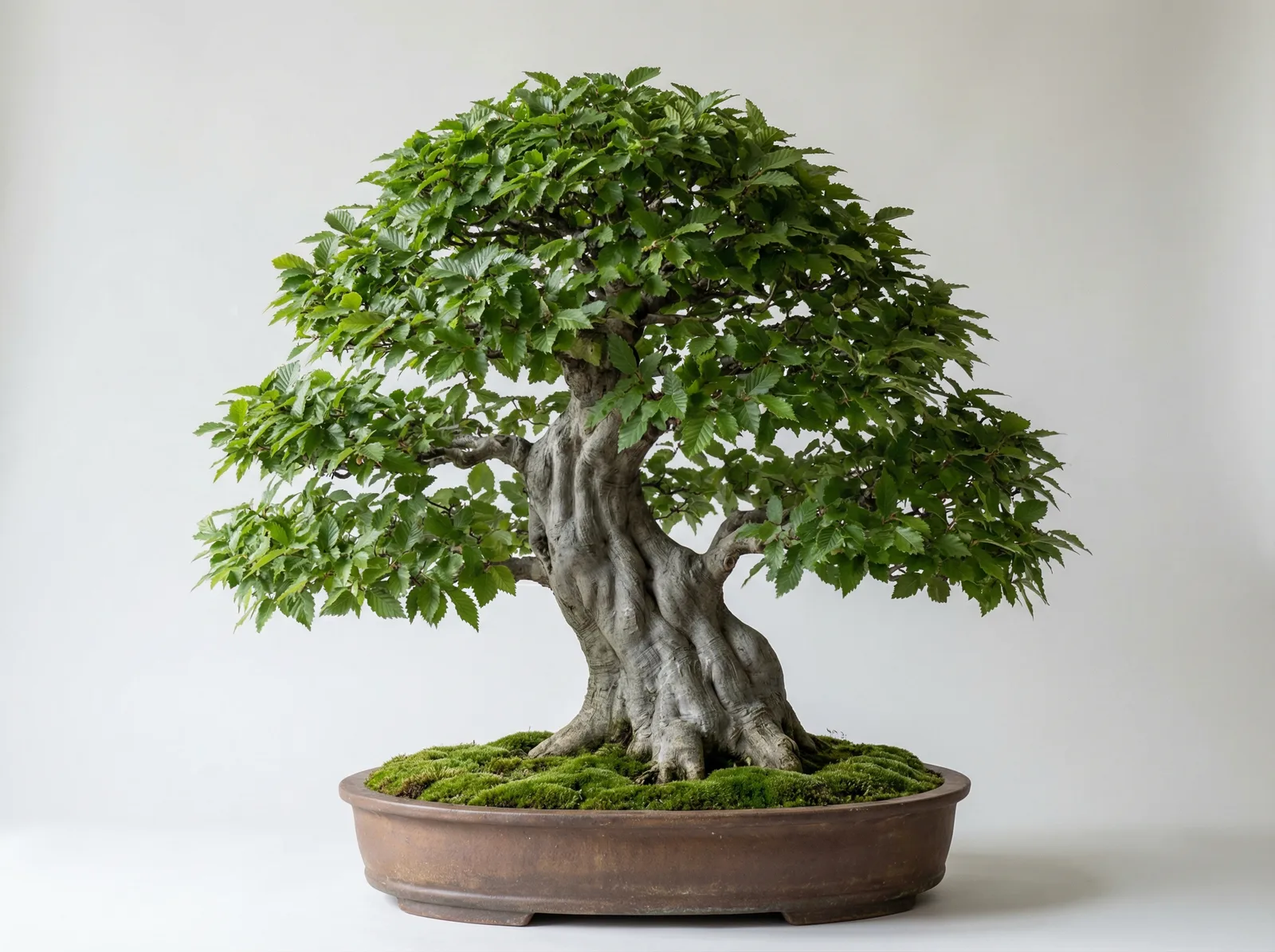
Carpinus betulus produces some of the finest ramification of any deciduous species on earth. The twig structure in winter silhouette is museum-quality. Small, serrated leaves turn warm yellow to orange in autumn. And the smooth gray bark develops a muscular, fluted character as the trunk matures.
Every box gets checked for deciduous bonsai work. Hornbeams respond to pruning like they were built for it. They back-bud reliably from old wood. The bark is attractive year-round. Both European hornbeam (Carpinus betulus) and Japanese hornbeam (Carpinus japonica) are excellent choices.
If you've mastered Chinese elm or zelkova and want the next challenge -- something with more refinement potential -- hornbeam is where you go. The care isn't hard. But getting the best from a hornbeam takes thoughtful, consistent pruning work over several seasons. That's where it gets interesting.
The routine
Steady conditions. That's the hornbeam philosophy. Not too dry, not too wet, not too hot, not too cold. Provide consistent moisture and reasonable light and they'll reward you with vigorous, compact growth.
Watering is the daily non-negotiable. The fine root system dries out faster than you'd expect from a tree this tough. Check soil at least once a day in summer, twice during heat waves. See brown leaf margins? You've been too slow on the watering. Increase frequency immediately and don't let it happen again -- the damaged edges stay brown all season.
Hornbeam looking rough right now?Skip to common problems below, or start with the symptom guide.Light management shifts through the year. Full morning sun in spring and fall is perfect. In summer, some afternoon shade keeps the leaves from scorching. If all you have is full sun, compensate with more water.
Fertilizer makes a visible difference with hornbeam. A well-fed tree pushes compact, healthy growth with rich green color. An underfed one goes leggy and pale. Use Biogold or similar organic pellets every two weeks from bud break through early September. Don't skip feedings during the active season.
Shaping
Hornbeams are pruning royalty. They back-bud aggressively from old wood -- even from thick, mature branches -- which means you can cut hard and confidently expect new shoots to fill the gaps. This is what makes them exceptional for fine ramification.
Structural pruning goes in late winter before bud break. Remove unwanted branches, reduce length, and establish your primary framework. Hornbeams heal reasonably well, but seal any cut wider than a pencil with wound paste to prevent dieback.
Maintenance pruning runs all growing season. Let new shoots push to four or five leaf pairs, then cut back to one or two. This constant shortening is what builds that incredible twig density over three to five years. By midsummer, you may need to thin congested areas to let light into the interior -- don't let the canopy get so dense that inner buds starve.
Partial defoliation in early June works well. Remove the largest leaves to let light hit interior buds. Full defoliation is possible on a strong tree, but honestly, consistent shoot pruning makes it unnecessary.
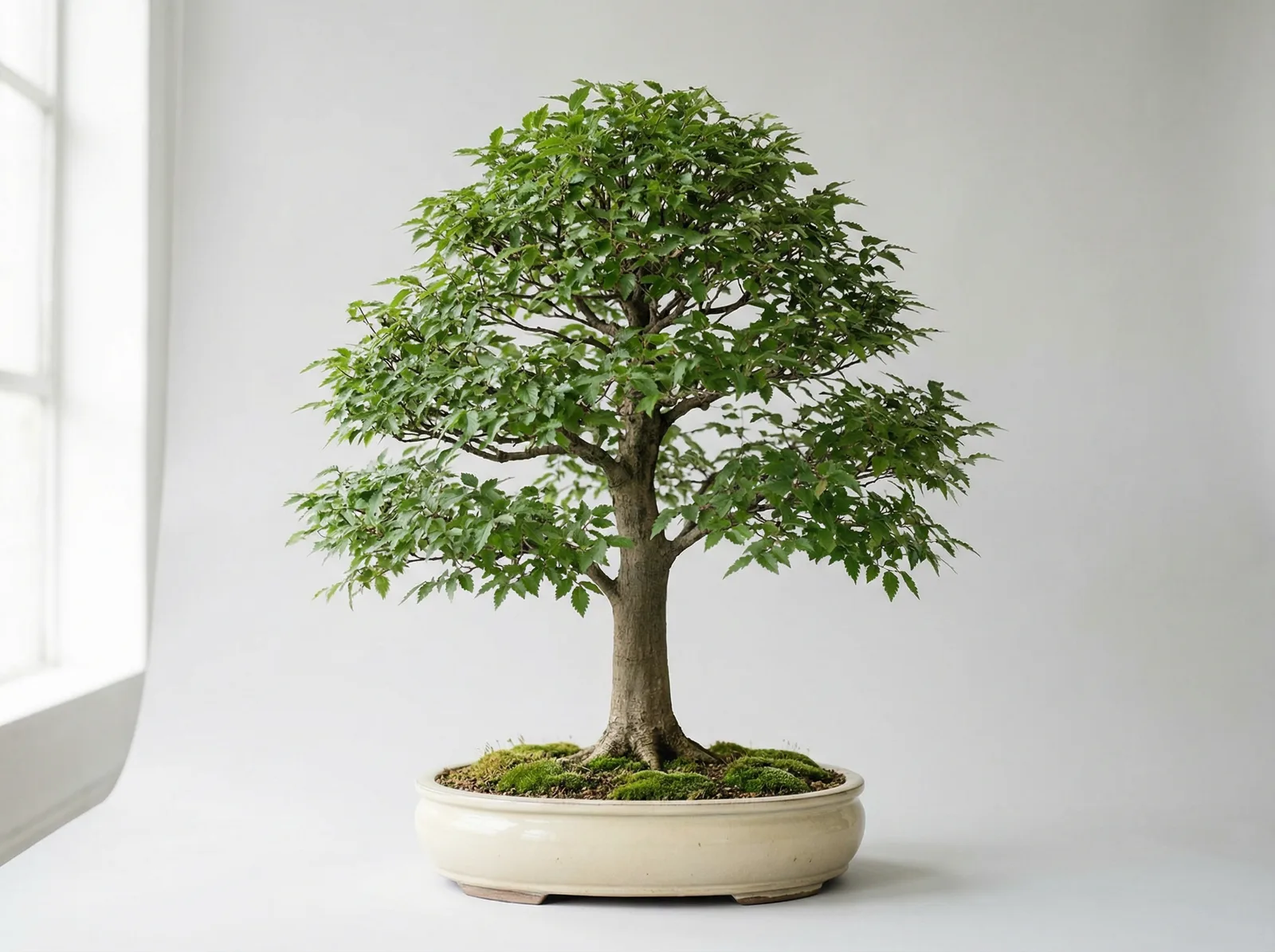
Style a hornbeam for January, not July. Everything this species does best -- dense twigging, a muscular fluted trunk, smooth gray bark -- reads clearest with the leaves off, so make the bare winter silhouette the design target and treat summer foliage as the bonus. Broom style is the classic expression: a fine-branched, rounded canopy that takes three to five years of disciplined cutting to knit together. Formal and informal upright work well too.
Forest plantings take it further. Five to nine trees of varying trunk diameters in a long, shallow tray build a miniature European woodland, the fluted gray trunks doing the talking under one unified canopy. Few compositions in bonsai reward patience this visibly.
Wire young branches in early spring before the leaves emerge, always with damp raffia underneath -- hornbeam bark marks easily -- and pull the wire the moment it starts to bite. The wire gauge tool at /tools/wire-gauge gives the right thickness per branch. Anything heavier responds better to clip-and-grow anyway; with back-budding this reliable, the shears can do most of what wire would.
When things go wrong
Brown, crispy leaf edges almost always mean you fell behind on watering. Or the tree caught too much hot afternoon sun. Or wind dried it out. Increase watering, provide afternoon shade, and shelter from drying wind. The scorched leaves won't recover, but the next flush will be fine.
Hornbeam scale shows up occasionally as small bumps along branches, and powdery mildew appears as a white coating in humid, still conditions. Neither threatens a vigorous tree -- pick off the worst leaves, improve airflow, and let the pest guide at /guides/pest-control handle the rest.
Dormant hornbeam are sometimes declared dead in March by owners expecting earlier leaves. Check before you grieve: scratch a fingernail's width of bark off a twig -- wet green tissue underneath means the tree is alive and simply on hornbeam time. Dry brown means cut back further and test again lower down.
Slow taper development is the species' one frustration. Hornbeam trunks thicken steadily but not fast. If trunk girth is your goal, grow the tree in a large pot or in the ground for three to five years before starting bonsai training. That head start makes a real difference.
European hornbeam is common at landscaping nurseries, especially as hedge stock. A 1-2 gallon tree costs $15-35 and gives you a solid foundation. Hedge-grown trees sometimes have interesting root bases from being planted close together. Look for low branching and some movement at the base.
Specialty bonsai sellers carry pre-bonsai hornbeam, particularly in Europe and the eastern US, for $60-200. Japanese hornbeam (Carpinus japonica) is harder to find but worth the hunt for its smaller leaves. Bonsai society sales and regional shows are your best bet for quality material at fair prices.
Also on the bench