Ginkgo bilobaoutdoor
Ginkgo Bonsai
- care
- intermediate
- light
- full sun
- zone
- 3–8
Fagus sylvatica · Fagaceae
Why grow it
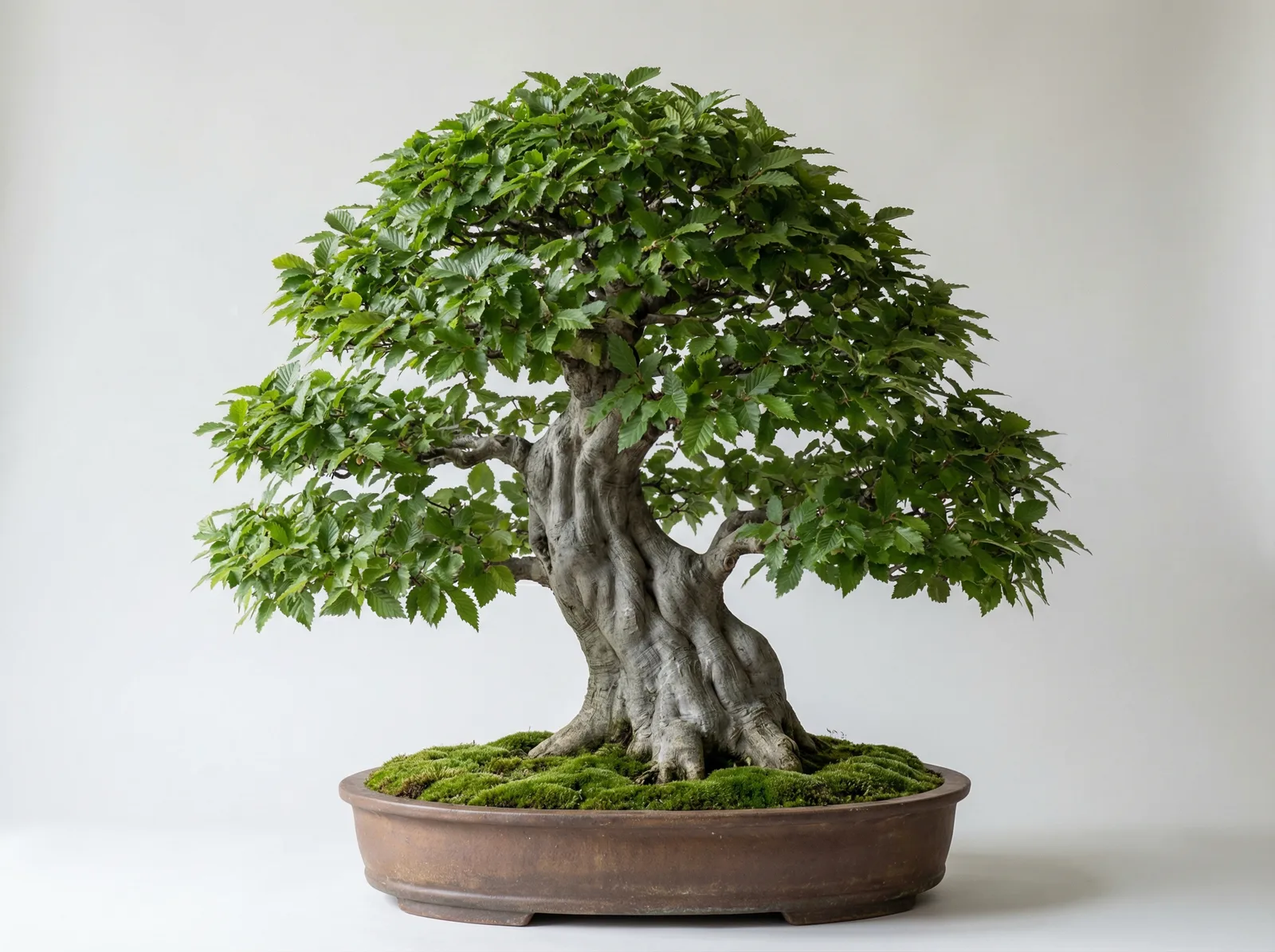
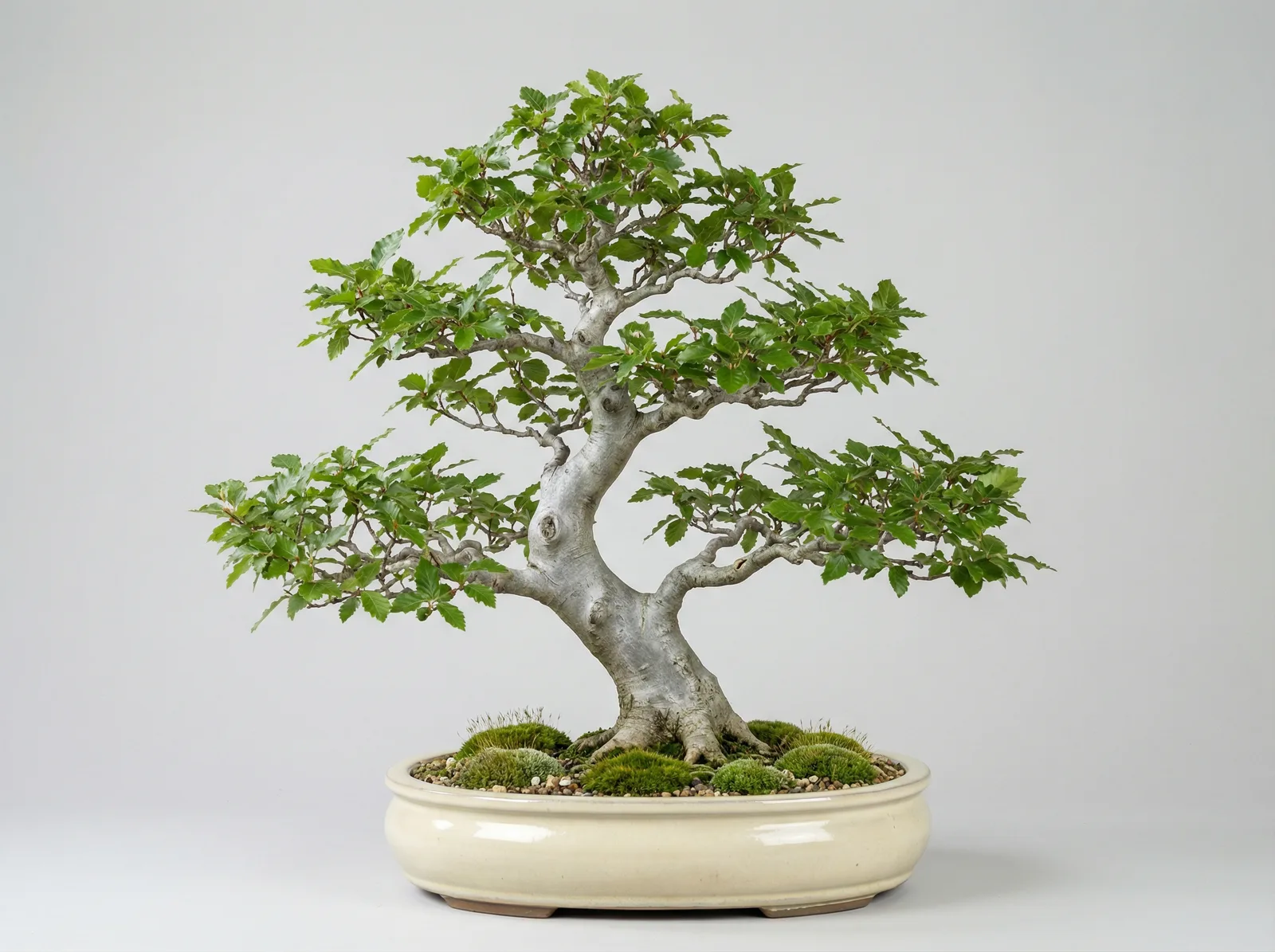
Beech bonsai are aristocrats. The smooth, silvery bark is unmistakable -- it never gets rough or plated like oak or maple. It stays elegant and silver for the tree's entire life. The leaves are thin, wavy-edged, and catch light beautifully. In autumn they turn bronze and copper, and here's the best part: many beech hold their dried leaves through the entire winter. It's called marcescence, and it gives you something to look at even in January.
Both European beech (Fagus sylvatica) and American beech (Fagus grandifolia) make excellent bonsai. Purple-leaved cultivars like 'Purpurea' add a color dimension that nothing else in the hobby matches.
Beech test your patience. Slow growth, gradual trunk taper, less aggressive back-budding than hornbeam or elm. But a well-developed beech bonsai exudes a maturity and grace that few species can touch. This is a tree that rewards the long view.
The routine
Beech care comes down to consistent moisture. They evolved in cool, damp European forests and still expect those conditions. Get the watering right and everything else follows.
Check soil twice daily in summer. If the surface feels dry, water now, not later. Beech don't give warning before showing stress -- brown leaf margins appear fast and they don't green back up. That damage is cosmetic scar tissue for the rest of the season. Build a watering routine and stick with it.
Beech looking rough right now?Skip to common problems below, or start with the symptom guide.Light should be moderate. Morning sun with dappled afternoon shade mimics the forest-edge habitat beech actually grow in. Too much blazing sun cooks the paper-thin leaves. Too little light and you get leggy growth with lackluster fall color. Find the middle.
Protect from late spring frosts. This is the one that catches people. Beech break dormancy with tender, tissue-thin leaves that freeze at the slightest frost. A frost blanket draped over the tree, or a temporary move to a porch or garage for the night, saves the entire spring flush. Once the leaves harden off in early summer, the tree toughens up considerably.
Shaping
Structural work happens in late winter while the tree is dormant. Remove crossing branches, downward shoots, and anything cluttering the design. Beech heal slowly, so minimize large cuts wherever possible. Use wound paste on anything wider than a pencil -- the smooth bark shows every scar, so clean technique matters.
Let new shoots extend to three or four leaf pairs in spring, then cut back to one or two. This builds ramification, but slowly. Beech don't back-bud from old bare wood the way hornbeam or elm do. Always cut to a bud or an existing leaf pair. Never to bare wood. A bare branch stays bare.
Partial defoliation works in early June on healthy, well-fed trees. Remove only the largest leaves to let light reach inner buds. Full defoliation is risky with beech -- they don't regenerate as aggressively as maples, and you could lose interior bud sites permanently. Stick with partial removal.
Midsummer thinning matters. Remove leaves and small shoots from overly dense zones so light penetrates the canopy interior. Buds that sit in darkness for too long go dormant and eventually die. Keep the interior lit.
Beech bark never heals its scars. That smooth silver surface shows every wire bite and careless cut for the life of the tree, and it changes how you style one: always pad wire with damp raffia or protection tape, wire only in spring after the leaves harden, and strip it before the season ends. For branches heavier than a pencil, skip wire entirely and use clip-and-grow. If you're unsure what a branch needs, the wire gauge tool at /tools/wire-gauge will match wire to thickness.
The payoff for all that caution is broom style -- the quintessential beech form. A straight trunk rising into a fine, rounded crown mirrors how beech grow in open fields across Europe, and the silver bark plus delicate winter branching makes the style look effortless. It isn't, but it looks like it is.
Forest plantings are the other classic. Beech woods are iconic European landscapes, and recreating one in a shallow tray is among the most satisfying projects in the hobby. Use five to nine trees of varying sizes, plant them in natural-looking clusters, and develop a unified canopy over several years. Silver trunks rising through a shared canopy -- hard to beat.
When things go wrong
Brown leaf margins are almost always watering. Beech dry out fast and show damage immediately. If you see browning, increase watering right now. The damaged leaves stay brown for the rest of the season, but subsequent growth will be fine.
Beech scale appears as small white cottony masses on the bark, usually on stressed trees. Remove heavily infested branches entirely; treatment specifics are in the pest guide at /guides/pest-control.
Poor back-budding frustrates growers coming from elm or maple. Beech are conservative with new buds, especially on old wood. Always prune to an existing bud and keep interior foliage alive to maintain active bud sites. Once you lose interior buds, they're very difficult to get back.
Wondering if a branch is dead or just late? Beech leaf out later than most species, so don't panic in April. Scratch a tiny sliver of bark with a thumbnail: green and moist underneath means alive; tan and dry means dead, so cut back until you hit green.
Slow trunk development is just who beech are. If you want a thick trunk, grow the tree in a large container or in the ground for five to ten years before starting bonsai work. There is no shortcut, no growth hack, no cheat code.
European beech nursery stock is widely available in temperate regions. Hedge-grade trees cost $10-25 and provide usable starting material. Most nursery beech are arrow-straight, so be selective -- hunt for trees with movement at the base or interesting root flares. Those are the specimens worth buying.
Pre-bonsai beech from specialty vendors run $75-300. You're paying for initial trunk character and some branch development. Purple beech (Fagus sylvatica 'Purpurea') commands a small premium but the color is worth it. Local bonsai club sales and annual shows are the best places to find collected beech with genuinely exceptional character.
Also on the bench