Why is my bonsai turning yellow?
Short answer
Look at where and how. A few yellow leaves at the bottom or inside the canopy is routine turnover — old leaves retiring. Yellowing that spreads across the whole tree points to watering (too much, most often) or too little light. Yellow plus sticky leaves or tiny bumps on stems means pests. Bottom-up is usually fine; all-over means change something.
A few yellow leaves is the tree doing housekeeping
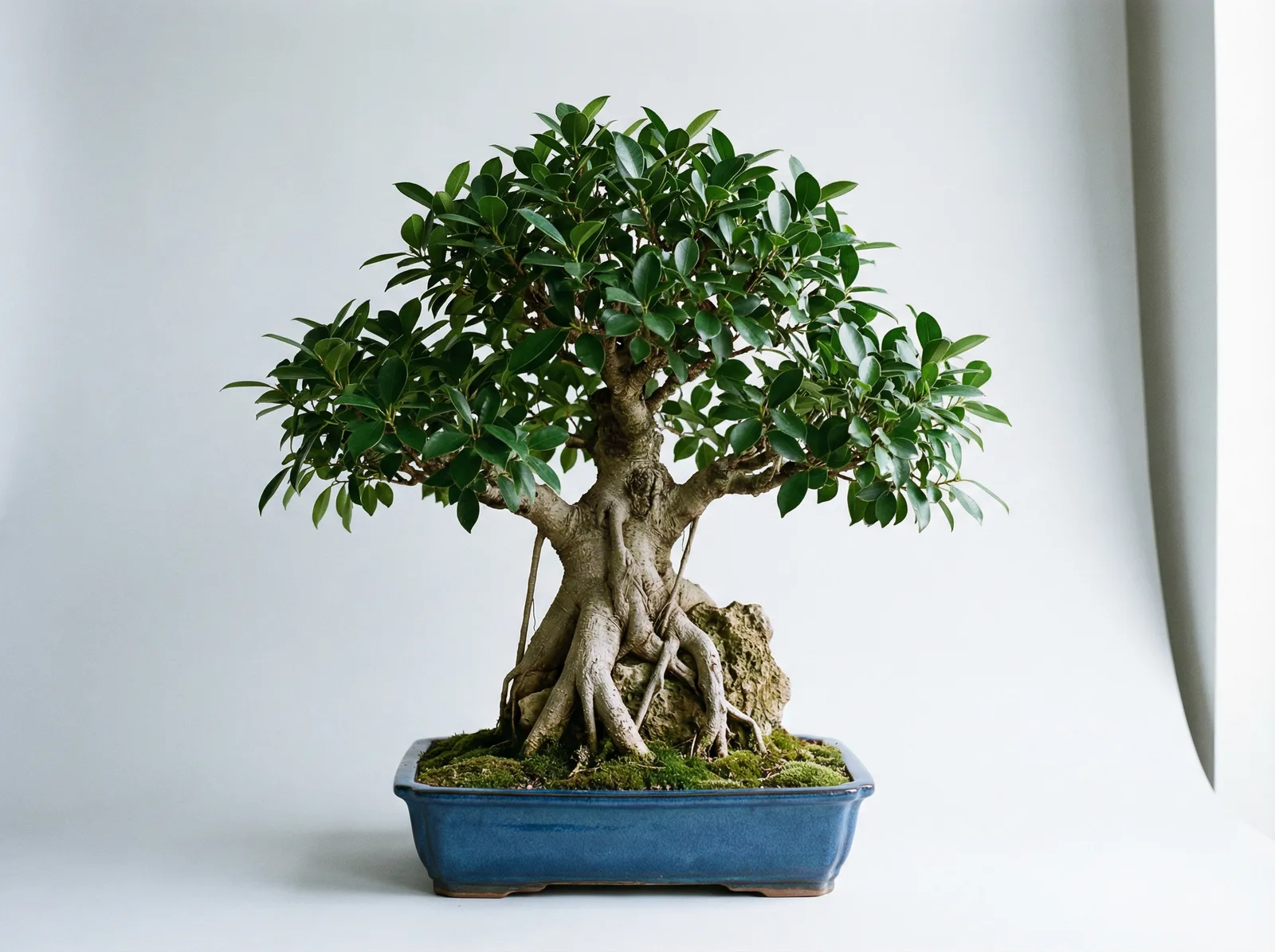
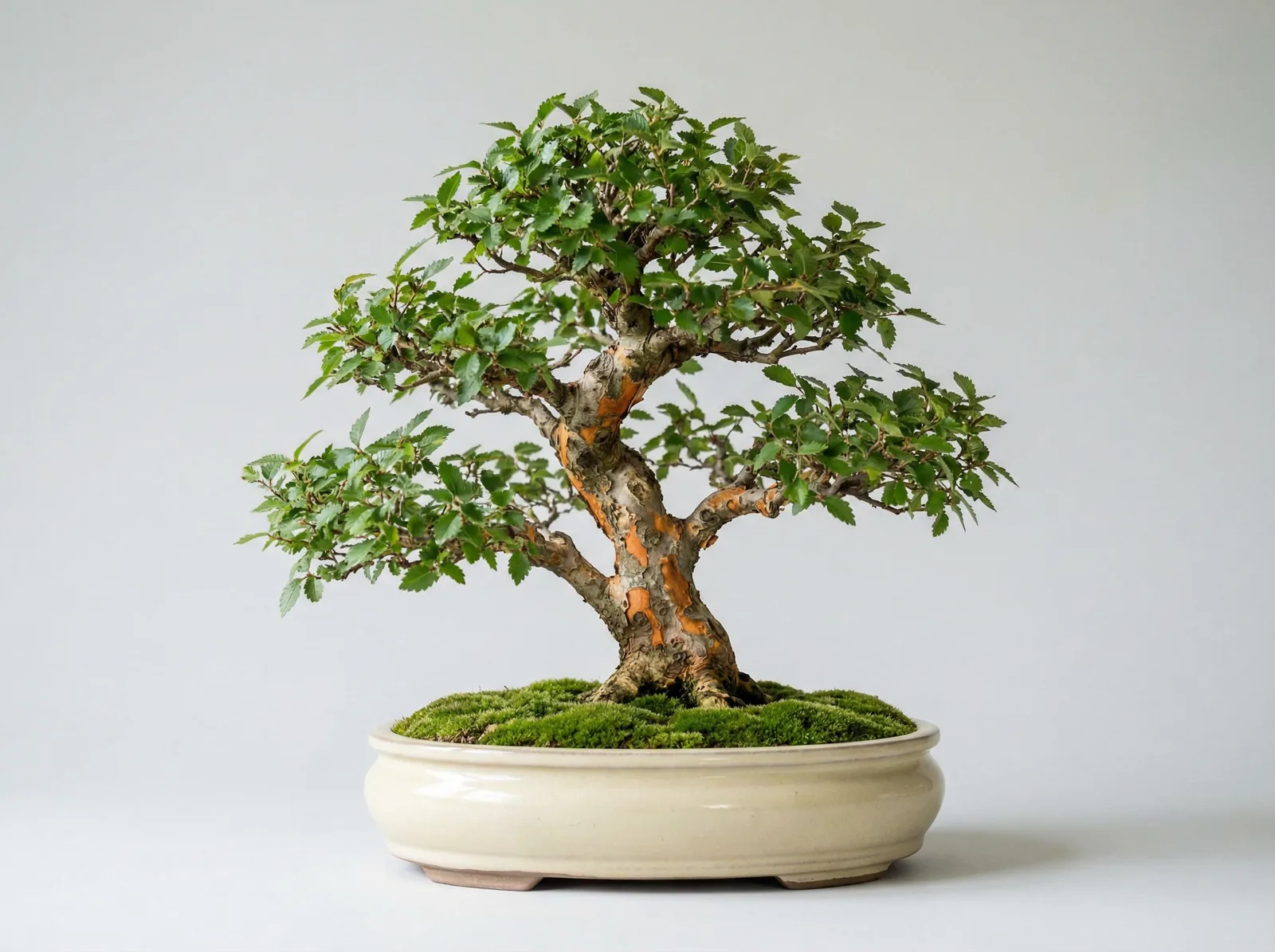
Leaves wear out. On a healthy tree, the oldest ones — lowest on a branch, deepest in the canopy — yellow and drop a few at a time while new growth keeps coming at the tips. One or two yellow leaves a week on a tree that's otherwise growing is turnover, not a symptom. Every species does it; ficus and Chinese elm do it visibly enough to worry new owners weekly.
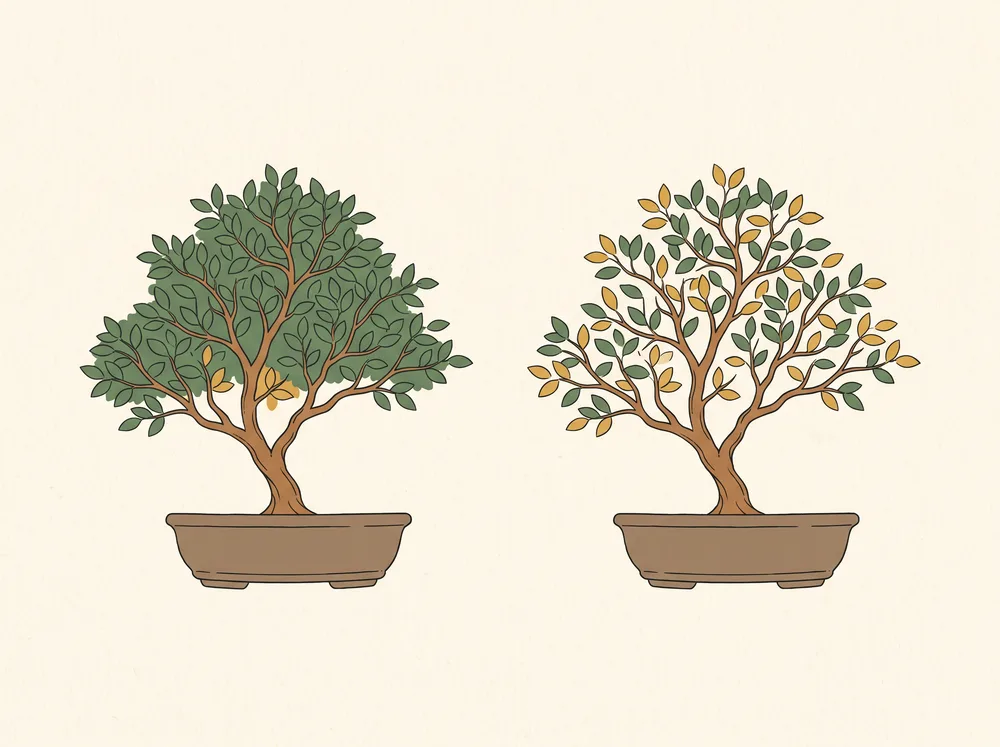
The thing to actually watch is direction. Turnover stays at the bottom and inside. Trouble spreads — up the tree, out to the branch tips, faster each week.
Yellowing all over: watering first, light second
When yellow shows up across the canopy, check the soil before anything else — push a finger 1/2 inch down.
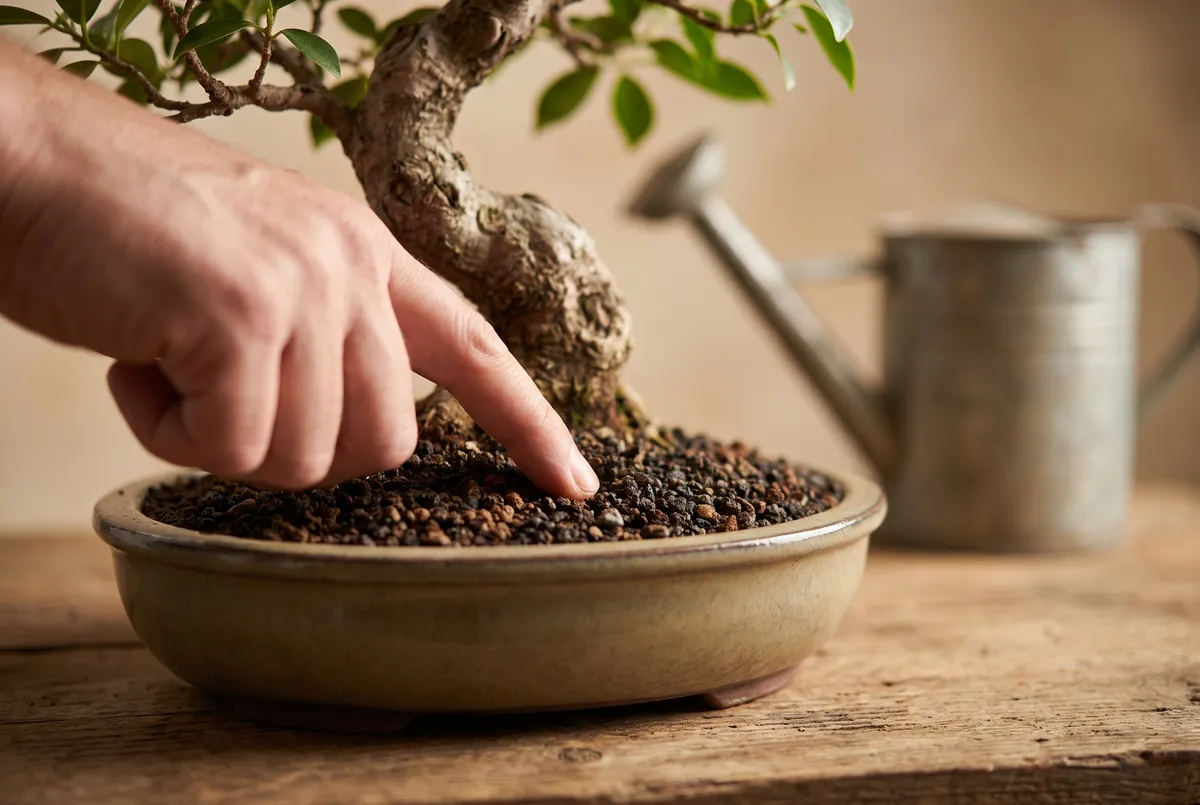
Staying wet for days: overwatering, the most common cause of all-over yellowing. Waterlogged roots can't take up oxygen, so the foliage pales evenly; leaves feel soft and let go with a gentle tug. Let the surface dry before each watering and confirm water runs out the drainage holes — the yellowing stops with the next flush of leaves.
Bone dry: underwatering yellows too, but the leaves go crispy at the edges and tend to hang on. Soak the pot in a basin for 10 minutes, then reset your rhythm — the cadence tool below gives the check-first schedule by season.
Soil normal? Then it's probably light. A tree slowly starving in a dim corner yellows palest on its newest growth, which also comes in small and stretched. Move it within 1-2 feet of your brightest window and read do bonsai need direct sunlight.
Yellow plus sticky means pests
Run a finger over the leaves. If they're tacky — or the shelf under the tree carries a faint sticky film — that's honeydew, the residue sap-sucking insects leave behind. Scale (small brown bumps along stems that don't flick off like dirt), aphids (soft green or black clusters on new shoots), and spider mites (fine webbing plus pin-prick stippled yellowing) all pull sap and yellow the tree patch by patch.
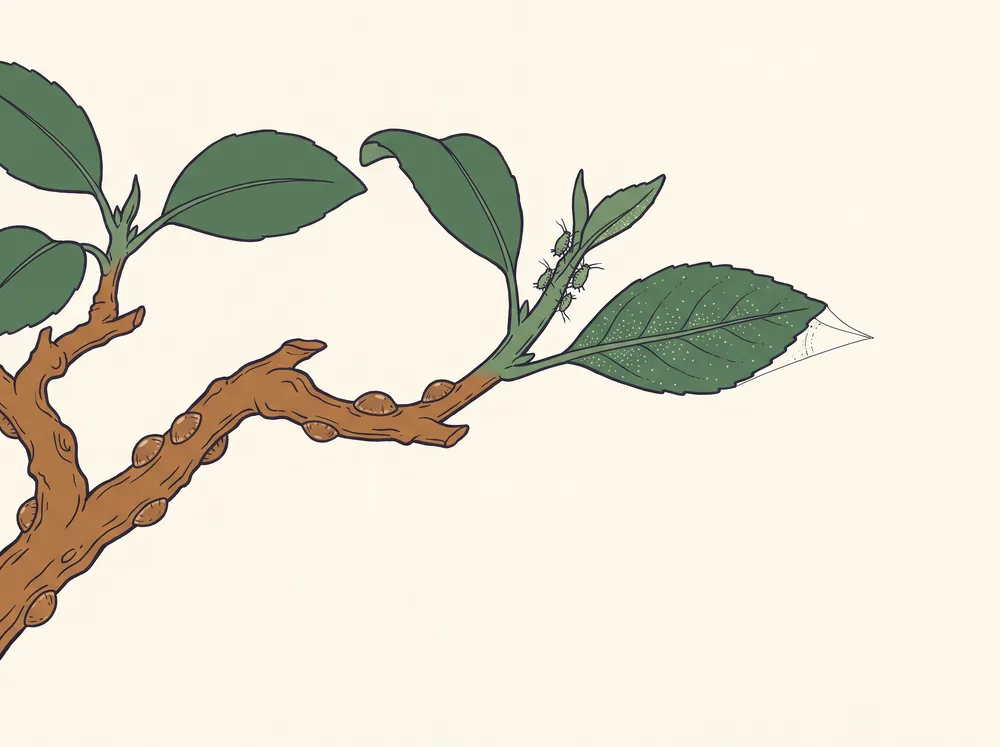
Inspect leaf undersides and branch junctions under a good light. Treatment is the same family for all three: wipe off what you can reach, then spray with insecticidal soap or horticultural oil, repeating weekly for 3-4 weeks to catch hatching generations. The pest control guide walks through telling them apart. Sticky is the giveaway — no stickiness, no webbing, no bumps, and pests probably aren't your yellow.
Yellow on schedule: fall color and winter light
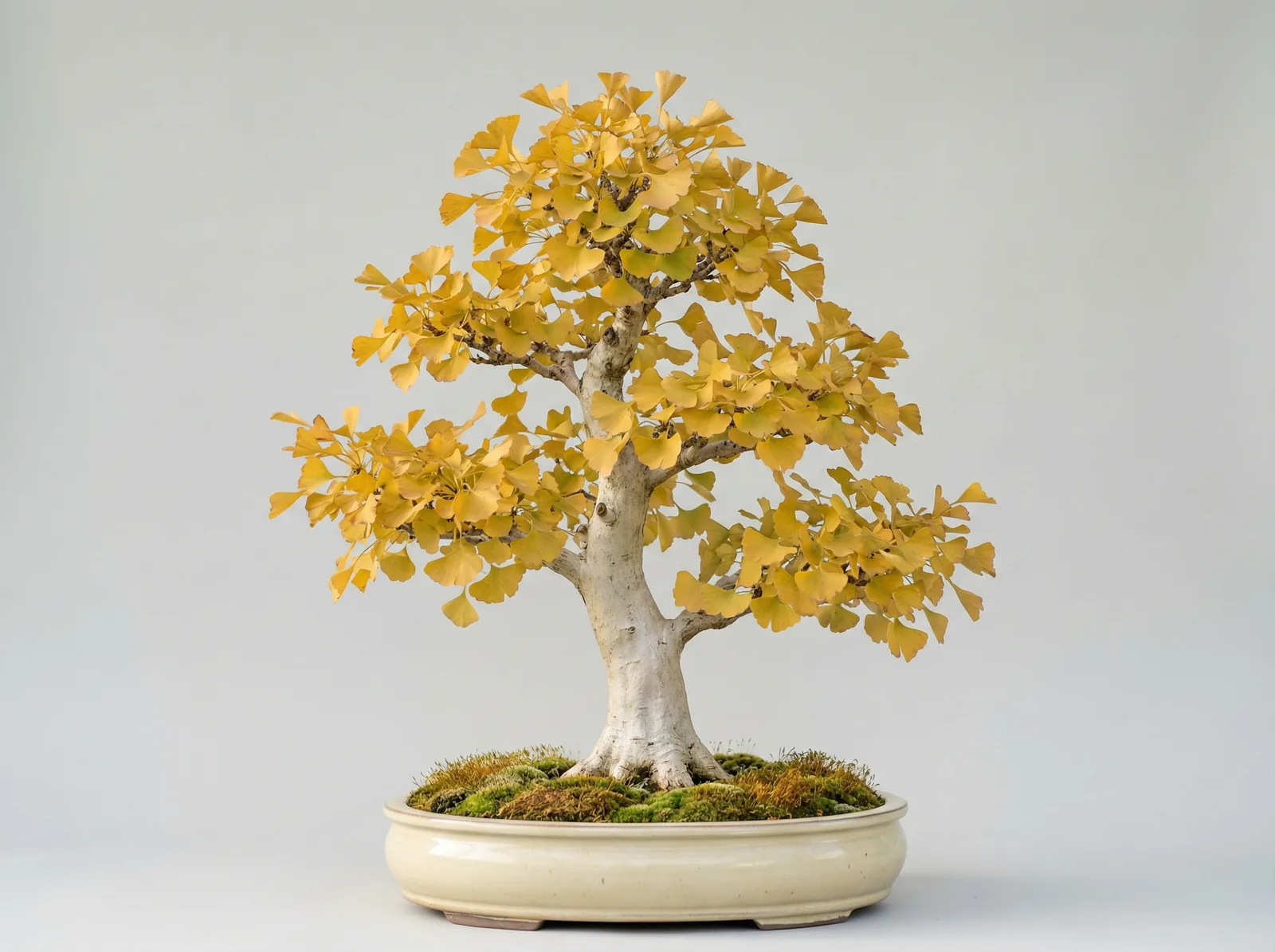
Deciduous trees yellow on purpose. A ginkgo turns pure gold in November; maples, elms, and hornbeams yellow before dropping for dormancy. Outdoors, in fall, this is the show — not a symptom.
Indoors, tropicals often yellow a handful of leaves in early winter as day length crashes. That's the light problem above, on a schedule: the tree sheds leaves it can't feed at December light levels. Brightest window in the house, away from radiator heat, and it holds the rest until spring.
What this means for your tree
Three checks, one minute: where is the yellow (bottom and inside vs. everywhere), what does the soil feel like 1/2 inch down (wet for days vs. bone dry vs. normal), and are the leaves sticky? Bottom-only: do nothing. Wet: water less often and check the drainage. Dry: soak today and tighten the rhythm. Sticky: start the soap-spray routine this week.
Yellow is the cheapest warning a tree gives — it shows up weeks before anything serious is at stake. Read it, adjust one thing, and give the tree a few weeks to answer. If leaves start dropping in volume, why is my bonsai dropping leaves picks up from there.
Species mentioned here
More on “Why is my bonsai turning yellow?”
Keep reading