Rhododendron spp.outdoor
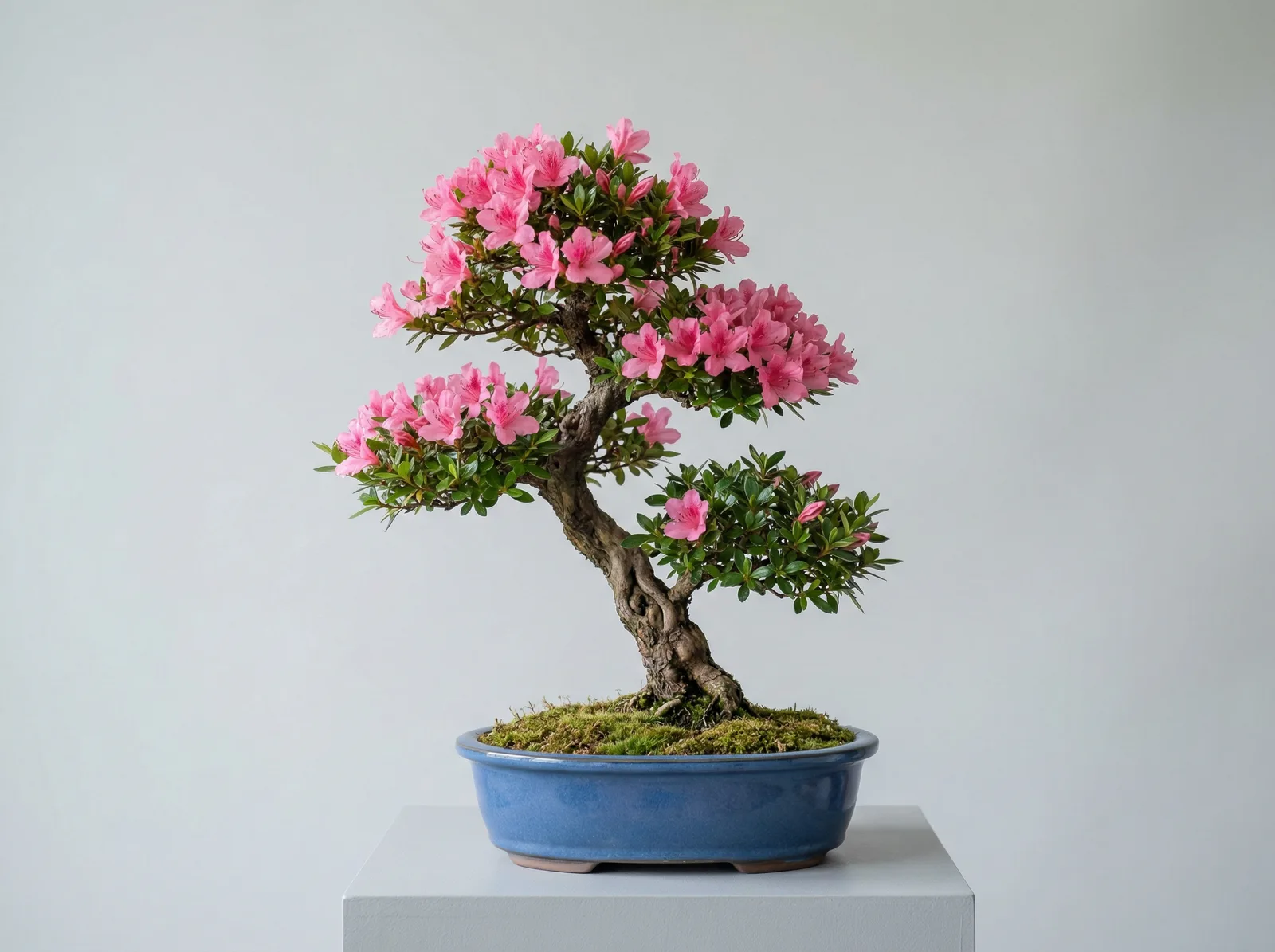
Azalea Bonsai
- care
- intermediate
- light
- partial shade
- zone
- 6–9
Serissa japonica · Rubiaceae
Why grow it
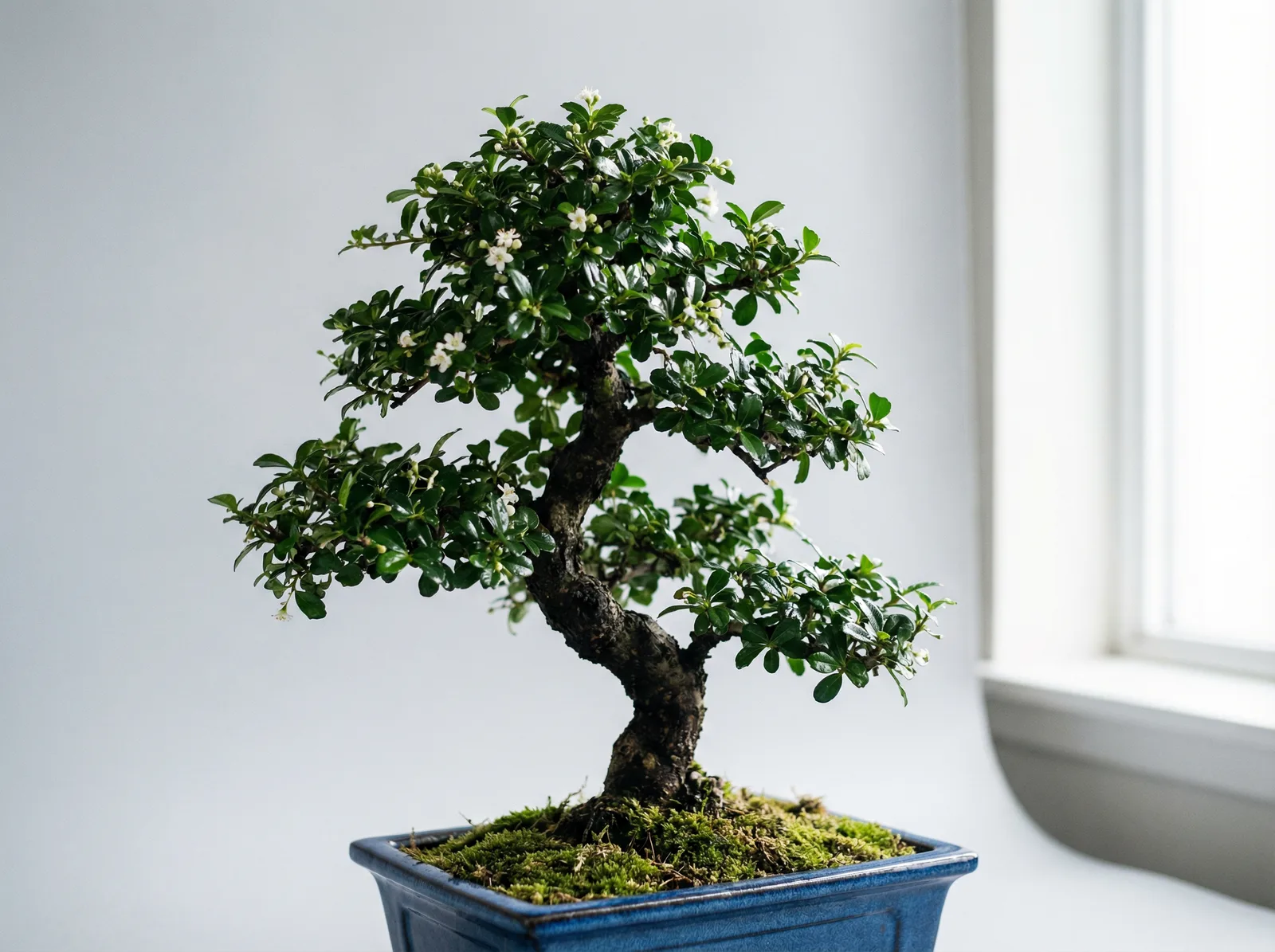
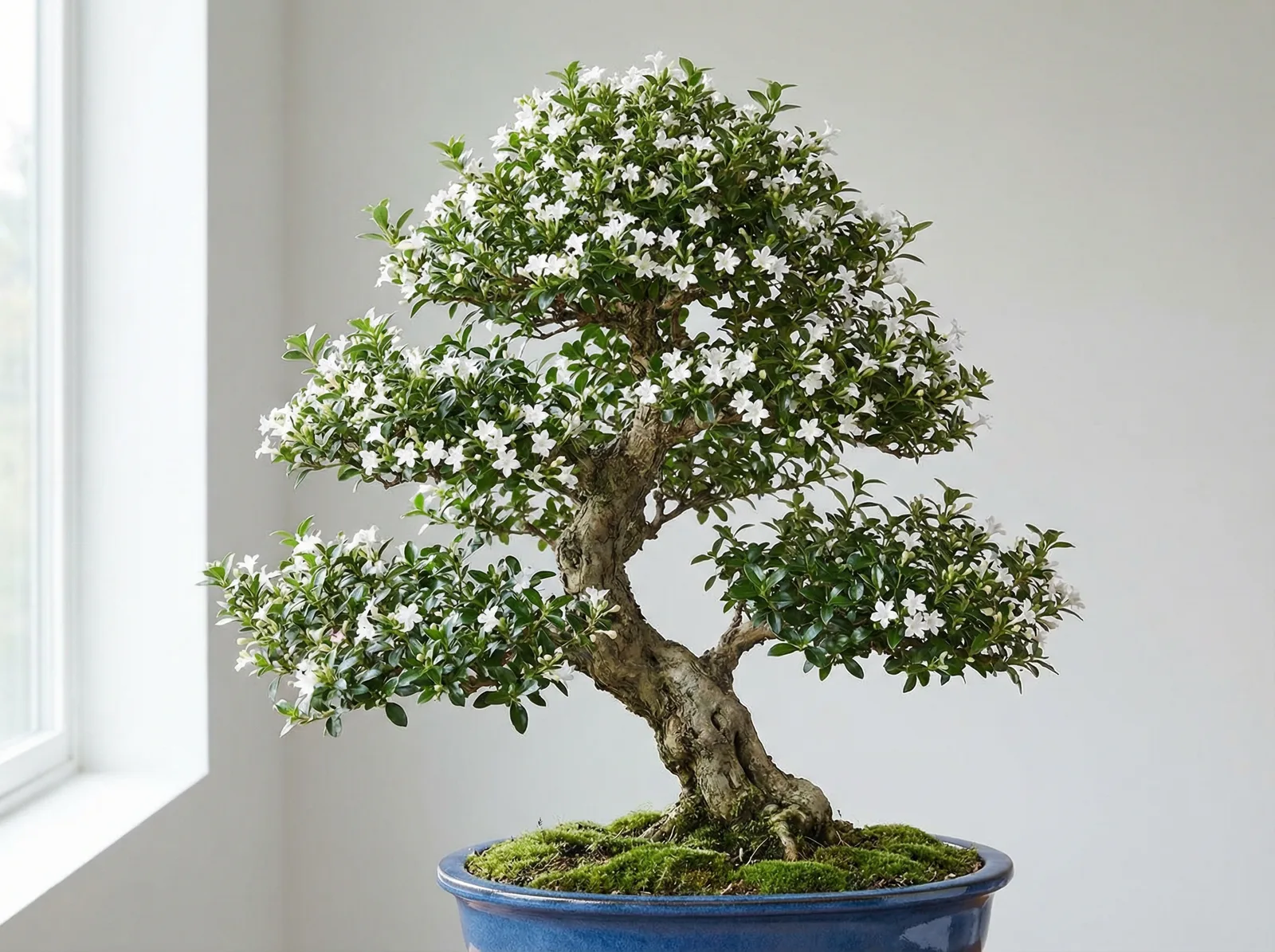
Serissa bonsai will test your patience and then reward it with a thousand tiny white flowers. Literally -- that's where the nickname "tree of a thousand stars" comes from. Serissa japonica -- still sold under its older name, Serissa foetida -- blooms almost nonstop from spring through fall when conditions are right. When conditions aren't right? It drops every leaf and makes you question your life choices.
The bark goes beautifully gnarly with age, developing a rough, craggy texture that makes even a small tree look ancient. Combined with leaves that are naturally miniature, serissa are perfect for shohin-sized bonsai. The variegated forms ('Mt. Fuji') layer cream and green into the mix.
Fair warning: these are not beginner trees. Moving a serissa across a room can trigger a full defoliation tantrum. But find the sweet spot -- consistent light, stable temps, good humidity -- and you'll have a tree that flowers for months on end with branching so fine it looks like lacework.
The routine
Forget everything you know about rotating your bonsai for even growth. With serissa, you pick a spot and you stay there. Every change -- new windowsill, different room, indoors to outdoors -- triggers leaf drop. Commit to a location and don't second-guess yourself.
Dry air is the silent killer. Humidity below 50% invites spider mites and causes the foliage to thin out and drop. A humidity tray with pebbles helps, but honestly, a small humidifier running nearby is the real fix. Misting buys you an hour of relief, not a solution.
Serissa (Snow Rose) looking rough right now?Skip to common problems below, or start with the symptom guide.Here's something nobody warns you about: the old species name "foetida" -- the one still printed on most nursery tags -- means stinking. Crush a leaf and you'll get why. It's not disease. It's not rot. It's just what serissa do when you damage the foliage. Don't panic.
Flowers form on new growth, so regular pinching actually gives you more blooms. Feed every two weeks with half-strength Biogold or similar organic fertilizer, give the tree 4-5 hours of bright light daily, and you'll see flowers from late spring through early fall. Some trees even throw out a few winter blooms indoors if you keep them happy.
Shaping
Serissa love the scissors. Pinch new shoots back to one or two leaf pairs once they've pushed about an inch beyond your silhouette. This constant nipping encourages dense branching and -- here's the bonus -- promotes flower bud formation on every new shoot that follows.
For heavier structural work, early spring is your window, right before growth takes off. Cut out crossing branches, anything growing downward, and shoots clogging the interior. Serissa back-bud reliably from old wood, so if the tree goes leggy on you, don't be afraid to cut a branch back to a half-inch stub. It'll pop new growth.
Dead interior branches are completely normal. The outer canopy gets so dense that inner branches starve for light and die off. Clip them flush. It's not a health problem -- it's just physics.
The naturally tiny leaves make serissa a no-brainer for shohin and mame sizes. You don't need leaf reduction techniques. Frequent pinching alone builds dense, perfectly scaled foliage pads.
Everything on a serissa is naturally miniature -- leaves, flowers, internodes -- which makes it one of the few species that looks believable at shohin and mame sizes, under 10 inches, right from the start. Style small and let the gnarly bark and the tangle of surface roots do the age-faking. A serissa doesn't need size to look old.
The catch is old wood. Young shoots are pliable and take wire easily during the growing season, setting in two to four months; once a branch hardens, it turns brittle and snaps rather than bends. Wire early or not at all -- the wire gauge tool at /tools/wire-gauge pairs wire to branch thickness -- and shape mature branches with pruning and directional cuts.
Root-over-rock is almost too easy here. Serissa throw aggressive surface roots that wrap stone convincingly: set young roots over lava rock or featherstone, plant the whole assembly, and by the end of the first season they'll have gripped.
Think about the design in terms of light. Branches that see good light produce the most flowers, so open the canopy enough for sun to reach the interior -- you'll be rewarded with blooms throughout the tree, not just at the tips.
When things go wrong
Leaf drop. It's the number one serissa complaint, and it sends more beginners to the forums in a panic than any other issue. Cold draft? Leaf drop. Overwatering? Leaf drop. Underwatering? Leaf drop. You moved the pot six inches to the left? Believe it or not -- leaf drop. The tree looks dead but usually isn't. Scratch a branch with your thumbnail. Green underneath? It's alive. Keep care steady and new leaves show up in two to four weeks.
Spider mites are obsessed with serissa, especially in dry indoor air below 40% humidity. You'll notice fine webbing between leaves and stippled, faded foliage. A strong weekly spray of water over the whole tree prevents most outbreaks. For an active infestation, follow the treatment schedule in our pest control guide at /guides/pest-control -- and don't skip the follow-up rounds that catch the eggs.
Root rot creeps in when drainage is bad or you're watering too frequently in winter. Serissa roots are hair-thin and rot fast. If the tree's dropping leaves and the soil smells sour or swampy, unpot immediately. Trim anything black and mushy, repot in fresh 50/30/20 akadama/pumice/bark mix, and back off the watering.
Whiteflies sometimes set up shop on leaf undersides. Disturb the foliage and they scatter in a tiny white cloud. Yellow sticky traps catch the adults. Insecticidal soap handles heavy infestations.
Garden centers carry serissa as small potted plants for $10-25 -- decent starter material if you pick carefully. Go for thick trunks and compact growth. Walk past the leggy, stretched-out specimens; they'll take a year just to recover from neglect.
For pre-styled serissa bonsai, expect $40-150 from online vendors. Wigert's Bonsai, Eastern Leaf, and Bonsai Boy stock them regularly in both the standard white-flowered variety and the pink 'Kyoto' cultivar. Variegated 'Mt. Fuji' forms cost slightly more but the cream-and-green foliage is worth the premium. Buy in spring or early summer when the trees are actively growing and ship better.
Some links may become affiliate links; our picks don't change.
Also on the bench