Ficus microcarpaboth
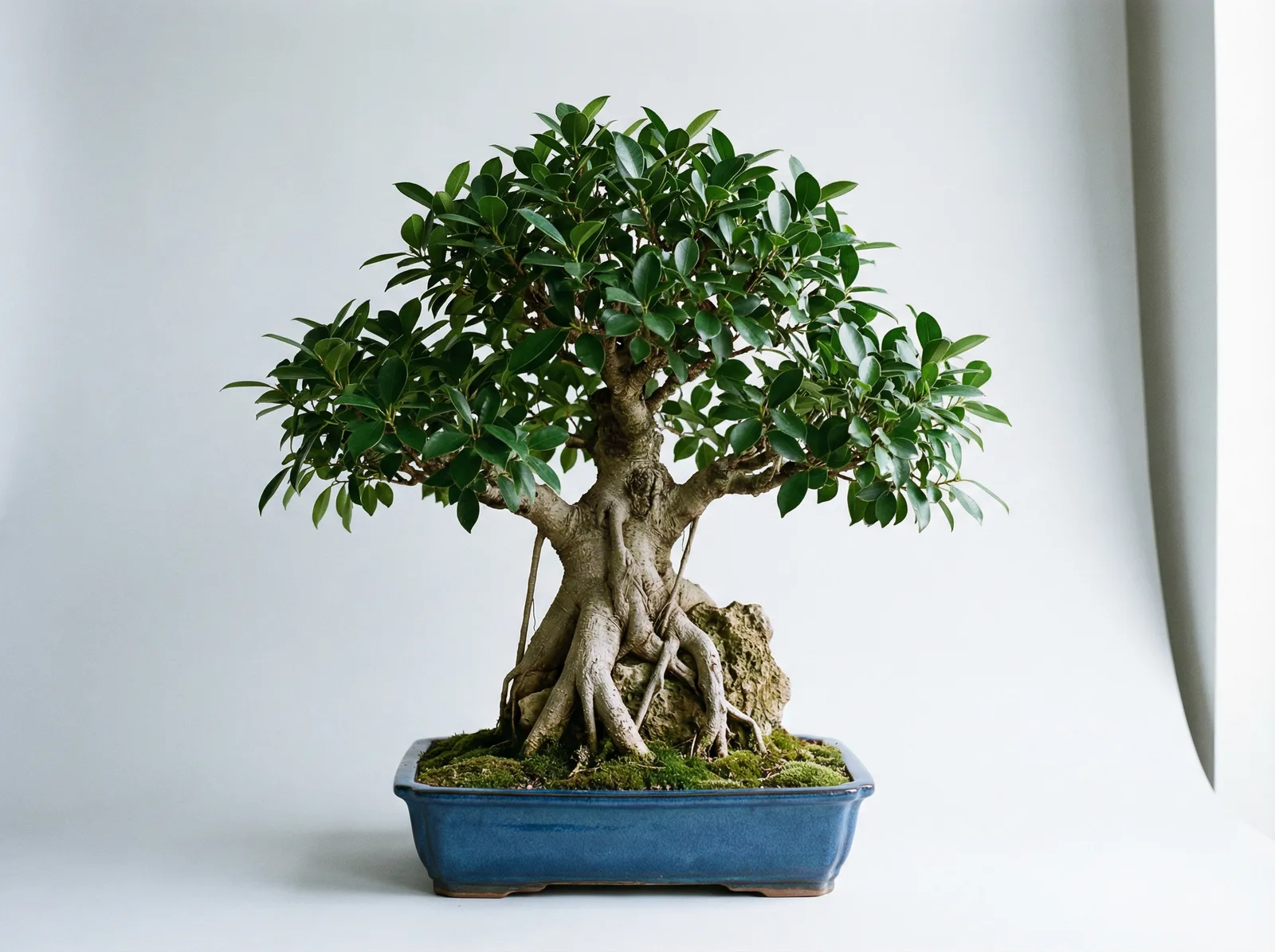
Ficus Bonsai
- care
- beginner
- light
- bright indirect
- zone
- 10–12
Podocarpus macrophyllus · Podocarpaceae
Why grow it
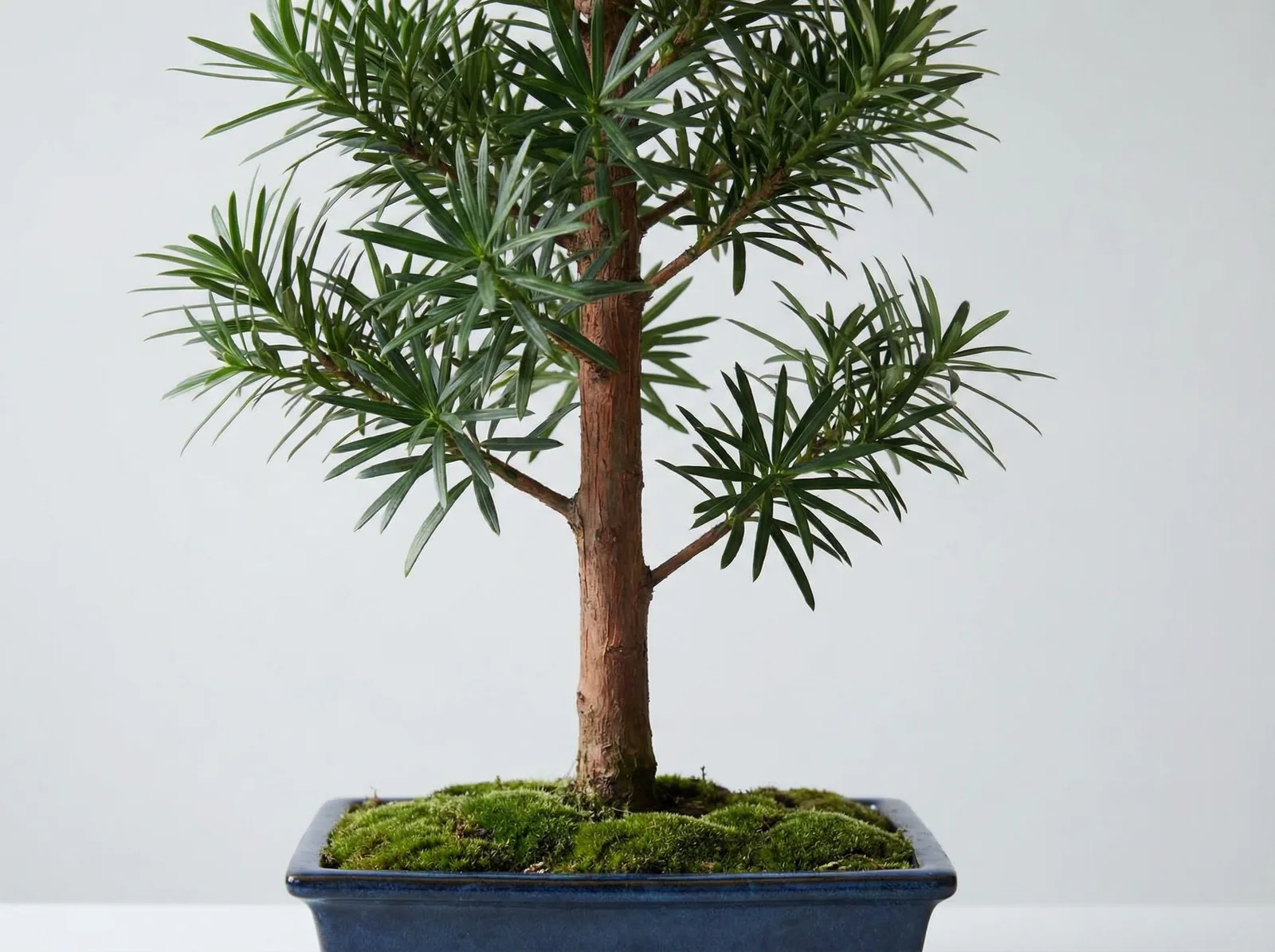
Podocarpus bonsai are the quiet achievers of the indoor bonsai world. While ficus gets all the beginner recommendations and jade gets the "unkillable" reputation, Podocarpus macrophyllus sits in the corner looking elegant and not dying. The dark green, needle-like leaves stay on year-round. Growth is slow and self-disciplined. And the light tolerance? Frankly absurd for a bonsai species.
The common name "Buddhist pine" comes from centuries of use in Asian temple gardens, though it's not a pine at all -- it's in its own family entirely. The narrow leaves give a conifer-like impression without any of a conifer's fussiness about humidity and watering. The growth habit is naturally upright and clean, requiring less corrective work than most species.
Slow growth gets a bad reputation in bonsai, but with podocarpus it's an advantage. You spend less time pruning, less time re-wiring, and less time fixing mistakes. The tree holds its shape for months between maintenance sessions. It looks refined at every stage of development. That quiet consistency is worth more than you'd think.
The routine
Light flexibility is the podocarpus superpower. An east-facing window with moderate light? Fine. Full outdoor sun? Also fine. That shady corner of the patio where nothing else thrives? Podocarpus will manage. They won't look their absolute best in low light, but they won't drop leaves and die either. If you're unsure whether your space can support a bonsai, start here.
Watering is the middle path. Not the constant moisture ficus wants. Not the drought-and-drench cycle jade requires. Just even, moderate moisture. Let the top quarter-inch of soil dry, then water thoroughly. In summer, that's every 2-3 days. In winter, every 4-5 days. Yellowing needles almost always mean too much water, not too little. If you tend to overwater, podocarpus will punish you for it.
Podocarpus looking rough right now?Skip to common problems below, or start with the symptom guide.No dormancy period needed. These trees grow slowly but steadily all year, making them genuine twelve-month indoor bonsai. You won't see dramatic growth spurts or seasonal leaf drops. Just quiet, incremental progress. Feed monthly with half-strength Biogold or balanced liquid fertilizer during spring and summer, backing off to every six weeks in winter.
Scale insects are the one pest to watch for. Small brown or white bumps on stems and needle undersides that don't move. Check once a month. Wipe with rubbing alcohol if you find any.
Shaping
Pinching is the primary technique. When new shoots extend 1-2 inches beyond the existing foliage pad, pinch them back to a few needles with your fingers. The tree responds with dense, compact growth below the pinch point. Do this throughout the growing season -- spring through fall -- and the foliage pads tighten up steadily over a couple of years.
Hard pruning is rarely necessary because the slow growth keeps the tree in shape naturally. But if you inherit a leggy podocarpus or need to restructure, cut back in spring. The tree will push new growth from old wood. Slowly. We're talking two to three months before you see buds breaking from interior wood. Don't panic during that wait -- the tree is working, just at podocarpus speed.
The needle-like leaves respond to tip pinching by keeping the canopy proportional. You're not reducing leaf size (they're needles, not leaves), but you're preventing the foliage from getting shaggy and unkempt. Over time, regular pinching creates dense, cloud-like pads that are the hallmark of a well-maintained podocarpus.
Podocarpus styling is a slow-motion game: branches need 6-12 months under wire to set, mistakes take years to grow out, and the tree holds whatever shape you give it for months at a stretch. That pace rewards planning over improvisation -- settle the structure in your head first, then execute without hurry.
The species grows straight and symmetrical on its own, so formal upright is the natural style and fighting it is usually a waste of time. A clean vertical trunk with three to five tiered foliage pads is classic, elegant, and plays to every strength this tree has. Build the pads by pinching rather than cutting -- regular tip-pinching creates the dense, cloud-like profile of a well-kept podocarpus.
Literati works for taller, slender specimens. Strip the lower branches to expose the trunk line and keep foliage sparse near the apex; the bark's subtle texture benefits from the exposure, and a literati podocarpus has a quiet, contemplative presence that suits the species.
Aluminum wire is plenty strong for these light branches -- match thickness at /tools/wire-gauge -- but the bark is thin, so check every couple of months for bite. Remove wire by cutting it off with jin pliers rather than unwinding, which tears the foliage at branch tips.
When things go wrong
Yellow needles dropping off? Overwatering. Full stop. It kills more podocarpus than every other problem combined. They want even moisture, not wet soil. If the drainage hole is constantly dripping, you're watering too often. Let the top layer dry between waterings, make sure your soil mix drains well (60% akadama and pumice, 40% bark), and the yellowing stops.
Scale is the only pest that regularly bothers podocarpus indoors. The bugs look like tiny brown or white bumps glued to stems -- easy to miss because they don't move. Run your fingers along the branches once a month. If you feel anything that doesn't belong, check closely. Individual scale can be wiped off with rubbing alcohol on a cotton swab; a real infestation calls for the treatments in the pest guide at /guides/pest-control.
A fully browned branch isn't always lost. Scratch a thin line in its bark: green underneath means the branch is alive and recovering at podocarpus speed -- give it months, not weeks -- while dry brown means prune back to live wood.
"My podocarpus isn't growing." It is. Just slowly. Don't try to force it with heavy fertilizer -- you'll burn the roots and still won't see much faster growth. Podocarpus set their own pace. Monthly half-strength fertilizer during the growing season is all they need. Accept the rhythm and appreciate a tree that holds its shape without constant intervention.
Podocarpus are sold as landscape plants at nurseries across warm climates. Grab a 1-3 gallon pot for $15-30 and look for a specimen with some trunk movement -- most will be straight sticks, but the occasional one has a slight curve or low branching that gives you a head start. Any landscape podocarpus can become bonsai material with patience.
Developed podocarpus bonsai run $50-150 from online bonsai vendors. They're not expensive compared to flowering or fruiting species because the demand is lower. That's a market inefficiency in your favor -- you're getting a quality indoor bonsai for less than a mediocre ficus. For this species, buying nursery stock and developing it yourself over a few years is the most satisfying and economical path.
Also on the bench