Bougainvillea glabraboth
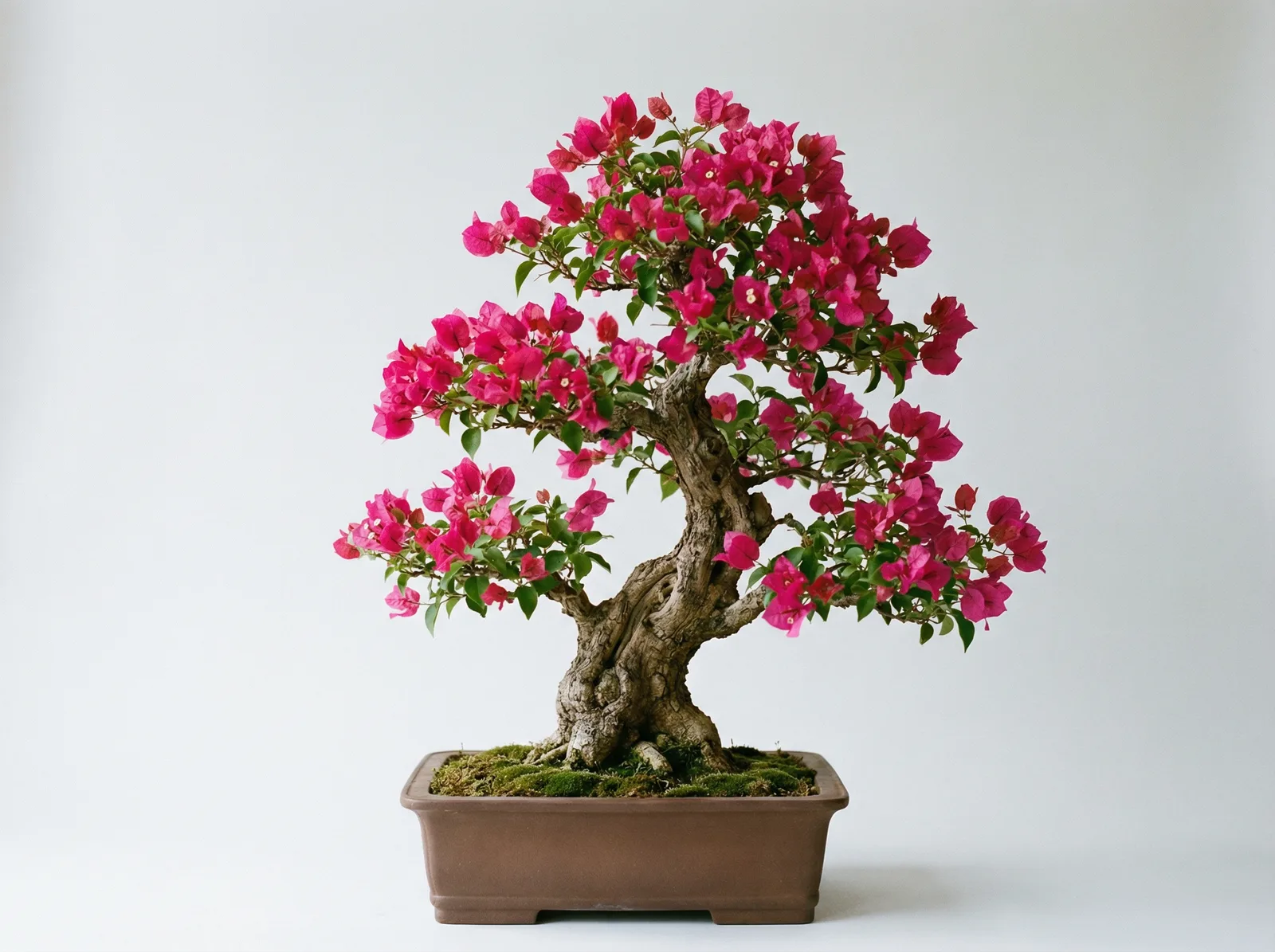
Bougainvillea Bonsai
- care
- intermediate
- light
- full sun
- zone
- 9–11
Bambusa ventricosa · Poaceae
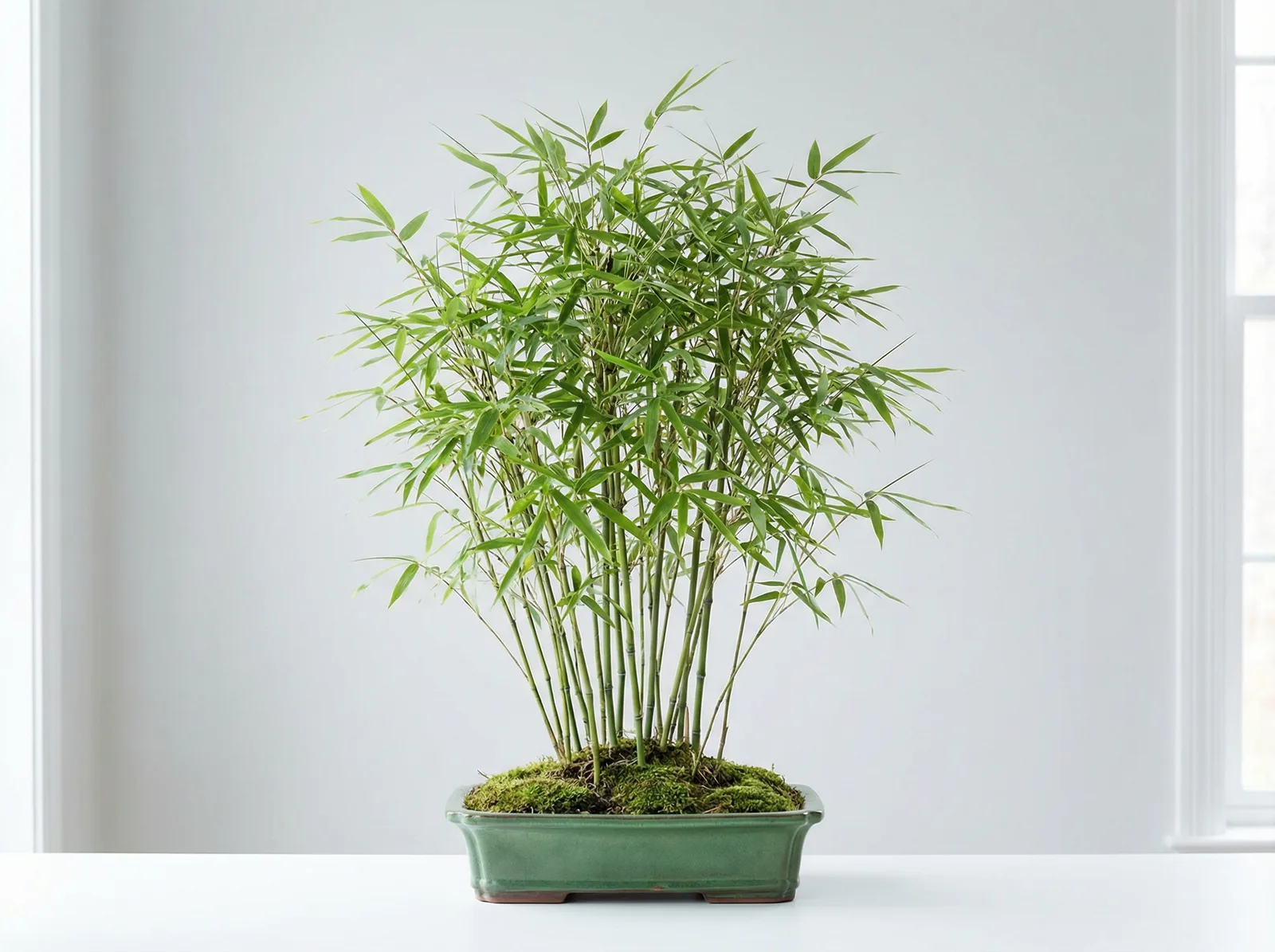
Why grow it
Bamboo bonsai break every rule in the book. They're not trees. They don't have branches in the traditional sense. You can't wire them. Standard bonsai techniques don't apply. And yet, Bambusa ventricosa -- Buddha's belly bamboo -- with its swollen, bulging internodes that look like a stack of green beads, is one of the most conversation-starting specimens you can put on a display table.
The belly effect is the whole point. Well-watered bamboo in open ground grows tall and straight. Restrict the roots, moderate the water, and the internodes swell into those distinctive pot-bellied nodes. It's one of the rare cases in bonsai where mild stress actually improves the aesthetic rather than just keeping the tree alive.
Forget everything you know about bonsai styling. There's no formal upright, no informal cascade, no jin or shari. You're curating a grove of culms -- selecting, removing, and spacing individual stems to create a composition. It's closer to floral arrangement than traditional bonsai technique. And that's what makes it interesting.
The routine
Water controls the belly shape, and it's more art than science. Too much water and the culms grow tall and skinny -- no belly development at all. Too little and the leaf tips brown and the plant struggles. The sweet spot is consistently moist soil that never gets truly soggy. In practice, that means watering when the top quarter-inch dries, which could be daily in summer. The goal is moderate moisture, not drought stress and not saturation.
Light affects both growth speed and culm form. Full outdoor sun produces compact growth with the most pronounced belly nodes. Indoor bright indirect light works but produces taller, thinner culms with less dramatic swelling. A south or west window is the minimum for indoor growing. Supplement with grow lights if you want better form.
Bamboo looking rough right now?Skip to common problems below, or start with the symptom guide.Here's what makes bamboo fundamentally different: new growth comes from the rhizome system underground, not from existing stems. A new culm shoots up, reaches its full height in a matter of weeks, and then that's it -- it never grows taller. It never thickens. All future development comes from the next culm. Wrapping your head around this changes how you manage the plant entirely.
Mealybugs hide in leaf sheaths. Spider mites show up when indoor air is dry. Neither is common if humidity stays reasonable. Inspect every couple of weeks and mist occasionally.
Shaping
Pruning bamboo has nothing in common with pruning trees. You're not shaping branches or building ramification. You're managing a colony. Old culms that have lost their color or look ragged? Cut them at the base. Dense clusters obscuring the belly nodes? Thin them out. A new culm shooting up that throws off your composition? Remove it while it's young and soft.
Leaf management is straightforward. Dead or brown leaves come off anytime. If you want to show off the belly nodes on a particular culm, strip the lower leaf sprays entirely. The bare culm section with those swollen green internodes should be the visual centerpiece -- don't hide it behind foliage.
Rhizome pruning at repotting time is non-negotiable. Bambusa ventricosa is a clumping bamboo, not a runner, so it won't invade your yard. But those rhizomes grow fast and hard, and they will crack a ceramic pot if you let them fill the container completely. At each repotting, cut back rhizomes that have reached the pot walls. Divide if the clump has gotten too dense. This isn't optional maintenance -- it's structural protection for your pot.
Throw out the bonsai style chart. Bamboo doesn't follow it. Instead, think like a garden designer. Select 3-7 culms of varying heights and diameters. Remove everything else. Odd numbers, asymmetric spacing, variation in thickness. The tallest culm sits off-center. A couple of medium culms nearby. Smaller ones at the edges.
A shallow rectangular or oval pot sells the "bamboo grove" illusion. Plant the culms so the belly nodes are visible at different heights across the composition. Front culms can be shorter, allowing the taller rear culms to create depth. It's basic perspective, applied to living stems.
Accent the belly. That's the entire design goal. Remove lower foliage from your featured culms so the swollen green internodes are completely exposed. Keep leafy canopy at the tops for a contrast between bare, sculptural culms below and soft, grassy foliage above. No wire. No bending. No jin. Just editing and spacing. Bamboo bonsai is sculpture by subtraction.
When things go wrong
Straight culms with no belly development is complaint number one. And it means you're being too generous. Too much water, too big a pot, or both. Restrict the root space by moving to a smaller container and cut back your watering slightly. Not drought -- just moderation. The belly effect comes from mild stress. Comfortable bamboo grows straight.
Brown leaf tips are usually a humidity or watering issue. Bamboo are grasses, and grasses want consistent moisture. If the tips are browning, you're either letting the soil dry too much between waterings or the indoor air is too dry. Increase watering frequency and mist the foliage a few times a week. Trim brown tips with sharp scissors for cosmetic improvement.
Rhizomes cracking your pot is a real thing—expanding clumps have ruined plenty of beautiful glazed ceramics. Bambusa ventricosa doesn't run, but the clumping rhizomes expand with surprising force. Check the root system every spring. If rhizomes are pressing against the pot walls, it's repotting time. Don't wait another season. A cracked pot is an expensive lesson in procrastination.
One test that doesn't transfer from tree bonsai: the bark scratch test. Culms are grass stems—there's no cambium layer under bark to check. A dying culm announces itself instead, yellowing from the top down and turning papery. Cut it at the base and let the rhizome send up a replacement.
Buddha's belly bamboo is a specialty plant, so don't expect to find it at Home Depot. Specialty nurseries, online bamboo retailers like Bamboo Web and Lewis Bamboo, and tropical plant sellers carry Bambusa ventricosa in 1-3 gallon pots for $20-60. Look for specimens that already show some belly development -- it confirms the genetics are there and the plant responds to container culture.
Bonsai-specific bamboo is uncommon at dedicated bonsai vendors. You'll almost certainly need to buy nursery stock and develop it yourself. The good news: bamboo grows fast. Pot a nursery plant into a bonsai container, moderate the watering, give it strong light, and you'll have display-worthy belly development within one or two growing seasons. It's one of the fastest paths from nursery stock to finished display in all of bonsai.
Also on the bench