Bougainvillea glabraboth

Bougainvillea Bonsai
- care
- intermediate
- light
- full sun
- zone
- 9–11
Pithecellobium tortum · Fabaceae
Why grow it
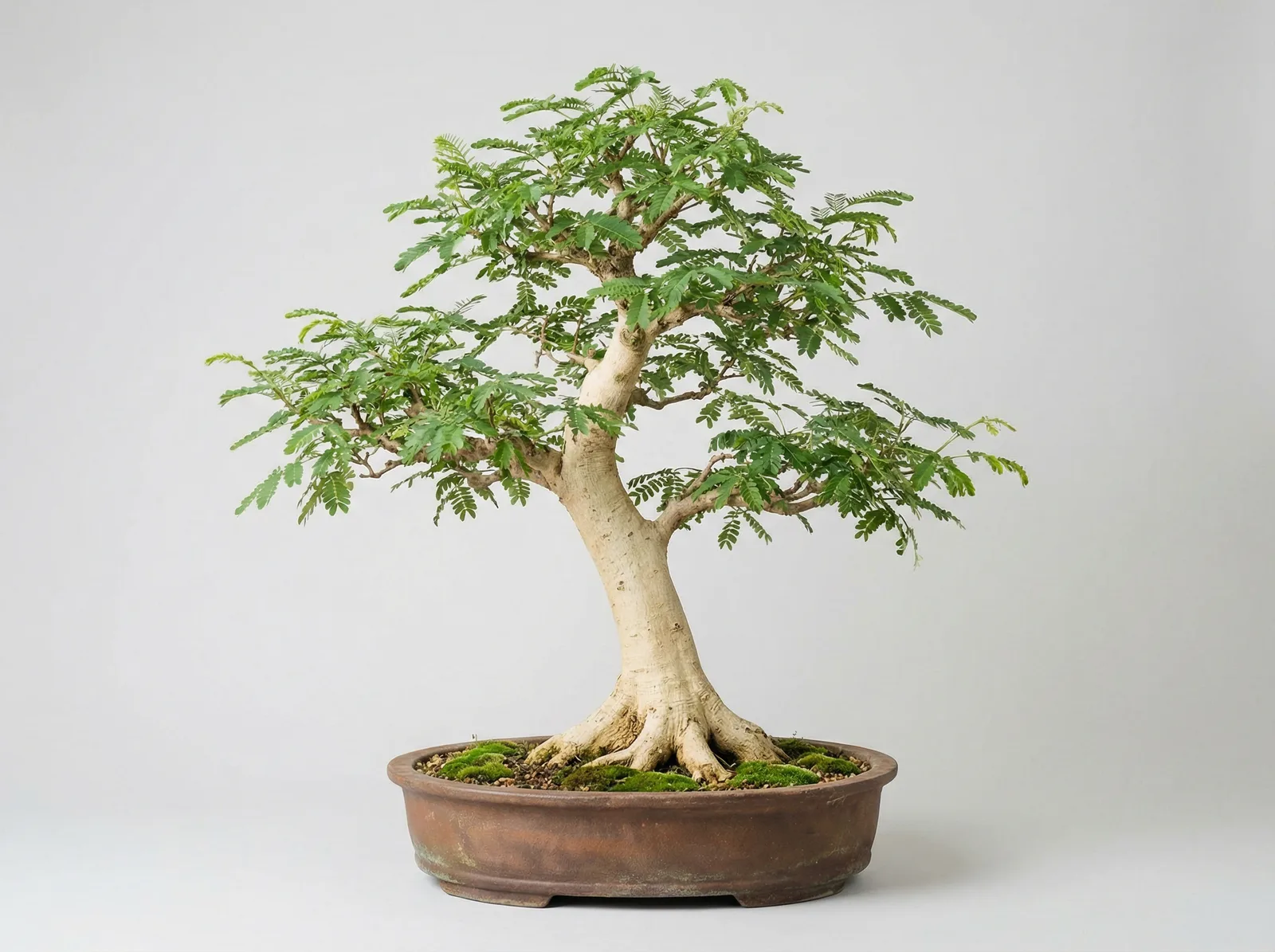
Brazilian rain tree bonsai do something no other species can: their compound leaves fold closed when you touch them and every night at sunset. It never gets old. Pithecellobium tortum also develops incredible exfoliating bark, puts on trunk girth fast in warm climates, and belongs to the legume family -- meaning it fixes its own nitrogen. This tree wants to grow.
The zigzag branching pattern is built-in. Every new shoot grows at an angle, creating natural movement without a single piece of wire. Florida bonsai artists have championed this species for decades, and for good reason -- in tropical conditions, it develops trunks and branch structure that rival anything from Japan.
In cooler climates, these are summer-outdoor, winter-indoor trees. Either way, you're getting a species with personality. Real personality. Not many bonsai make guests reach out and touch them.
The routine
Those folding leaves aren't just a parlor trick -- they're a diagnostic tool. Leaves fold at night? Normal. Leaves still folded during the day? Your tree is thirsty. Water immediately. They'll open within a couple hours.
Light drives everything. Full sun produces tight internodes and compact leaves. Low light means stretched, floppy growth that looks nothing like bonsai. If you're keeping one indoors, the brightest south-facing window you have plus a supplemental grow light is the minimum. Outdoors in zone 10+? Full sun, all day, no excuses.
Brazilian Rain Tree looking rough right now?Skip to common problems below, or start with the symptom guide.Growth speed will catch you off guard. In warm weather, you'll see visible growth every single week. New shoots push constantly. That vigor means frequent pruning, sure, but it also means rapid development. A $30 nursery plant becomes a convincing bonsai in two to three years with consistent work. That's fast.
Watch for thorns. They pop up on branches and -- this surprises people -- on the roots too. Not dangerous, but they'll poke you during repotting if you're not expecting them.
Shaping
Cut a Brazilian rain tree and it explodes with new growth. Literally, within days. Trim long shoots back to one or two leaf pairs and new buds push before the cut even calluses over. During summer, you might prune weekly. That's not an exaggeration.
The zigzag branching? Don't wire it out. That angular growth is the species' signature. Work with it. Select branches that enhance the movement, remove anything that straightens the line, and let the tree do what it does naturally.
Hard pruning? Absolutely. Cut back to a skeleton of main branches in spring and the tree fills in fast. In warm climates, recovery from heavy pruning takes weeks, not months.
Defoliation is your friend for leaf reduction. Strip all the compound leaves in late spring or early summer on a healthy tree and the new flush comes in noticeably smaller. In zone 10 or warmer, you can defoliate two or even three times per year. Just make sure the tree is vigorous and well-fed -- don't defoliate a tree that's struggling.
Brazilian rain tree wires itself. Every internode grows at a slight angle to the last, so the zigzag movement other species need years of wiring to fake comes standard on every shoot. Your job is selection, not bending: keep branches that amplify the angular line, remove anything that straightens it, and lean on informal upright or windswept forms that let the zigzag read clearly. Don't fight it with formal symmetry -- this tree resists straight lines on principle.
Exposed-root styles are spectacular because the root system itself is unusual: thorny, aggressive, and interesting to look at. Raise the tree slightly at each repotting to expose more of the root flare, and the bared roots develop bark texture that adds years to the tree's apparent age.
When wire does earn its place, use it on young green shoots only and check weekly -- growth is fast enough that wire bites in days, not months, and the tool at /tools/wire-gauge picks the right size. Woody branches get clip-and-grow or guy wires instead.
Basal shoots are free material. The tree throws them constantly, so a twin-trunk or clump design costs nothing but selection: keep one or two well-placed shoots, remove the rest before they thicken, and the shared root system drives every trunk hard.
When things go wrong
Leaves folded shut during the day? Water now. Not in an hour, not after lunch. Now. If they don't open up within a few hours of a thorough watering, the problem might be deeper -- check the roots for rot. But nine times out of ten, it's just dehydration.
Scale insects are the number one pest -- little brown bumps cemented onto branches and stems, slowly draining vigor. Wipe off small numbers with a cotton swab dipped in rubbing alcohol; for heavy infestations, follow our pest control guide at /guides/pest-control.
Leggy growth with oversized compound leaves? Not enough light. Move to full sun or add serious supplemental lighting. Prune back the stretched growth and the new shoots will be compact -- assuming the light is now adequate.
Cold damage shows up as blackened leaf tips and mass defoliation. This tree cannot handle anything below 55 degrees Fahrenheit. If you catch it early and get the tree back into warmth, it usually recovers, but it might drop every leaf first. Don't panic -- scratch a branch with a thumbnail, and green under the bark means live wood. New growth follows within weeks once the tree is warm.
Wigert's Bonsai in Florida is the definitive source. They grow Brazilian rain trees from seed and offer everything from $30-60 starters to mature specimens at $200-500. If you're buying one tree of this species, buy it from Wigert's.
Other online vendors ship them nationwide for $40-150 for pre-bonsai material. The trunk thickens fast in warm climates, so buying young and developing it yourself is viable if you have outdoor growing space and warm summers. In cooler climates, buy a more developed tree -- you'll save years of indoor growing time.
Some links may become affiliate links; our picks don't change.
Also on the bench