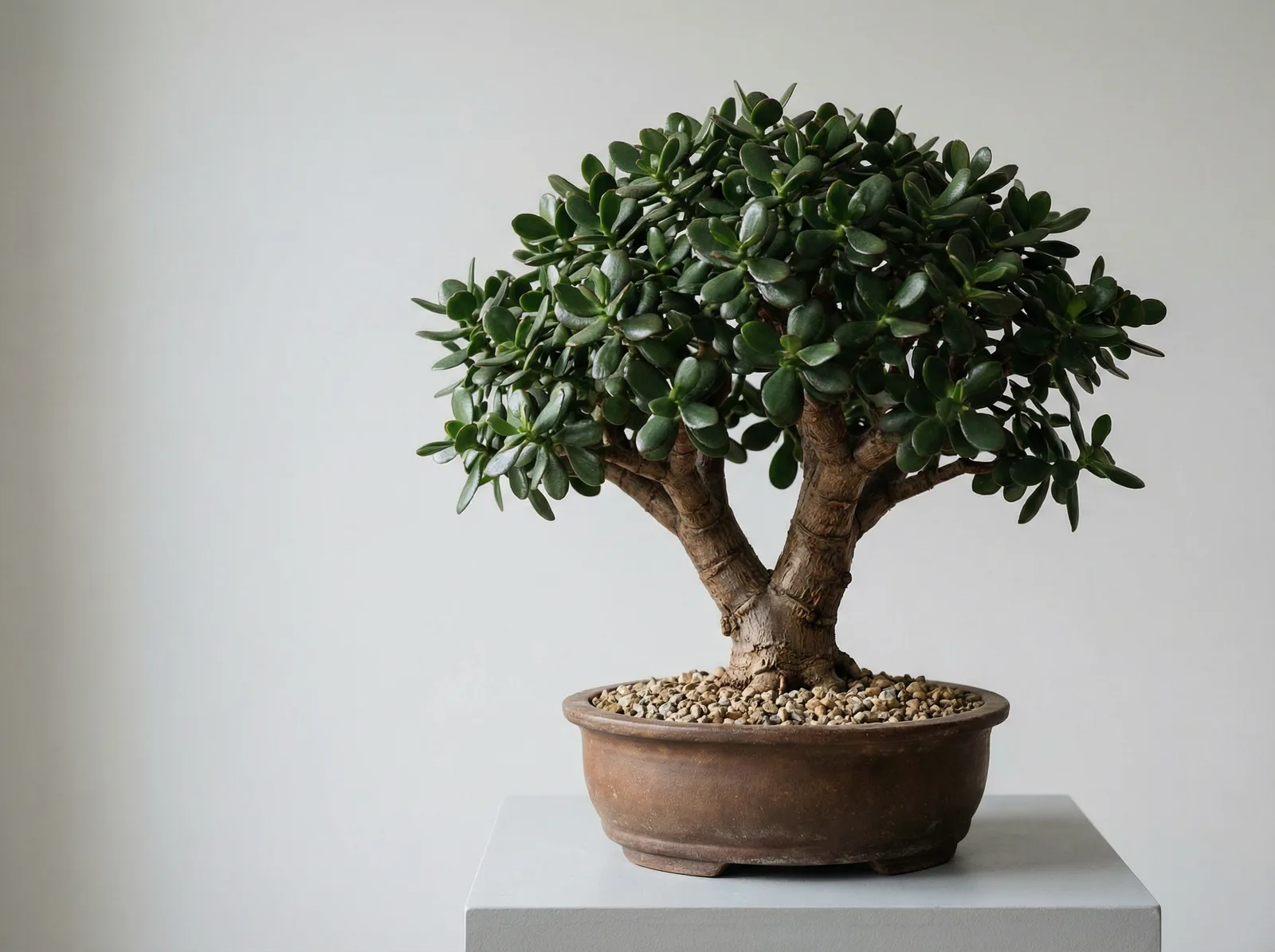
Portulacaria afraboth
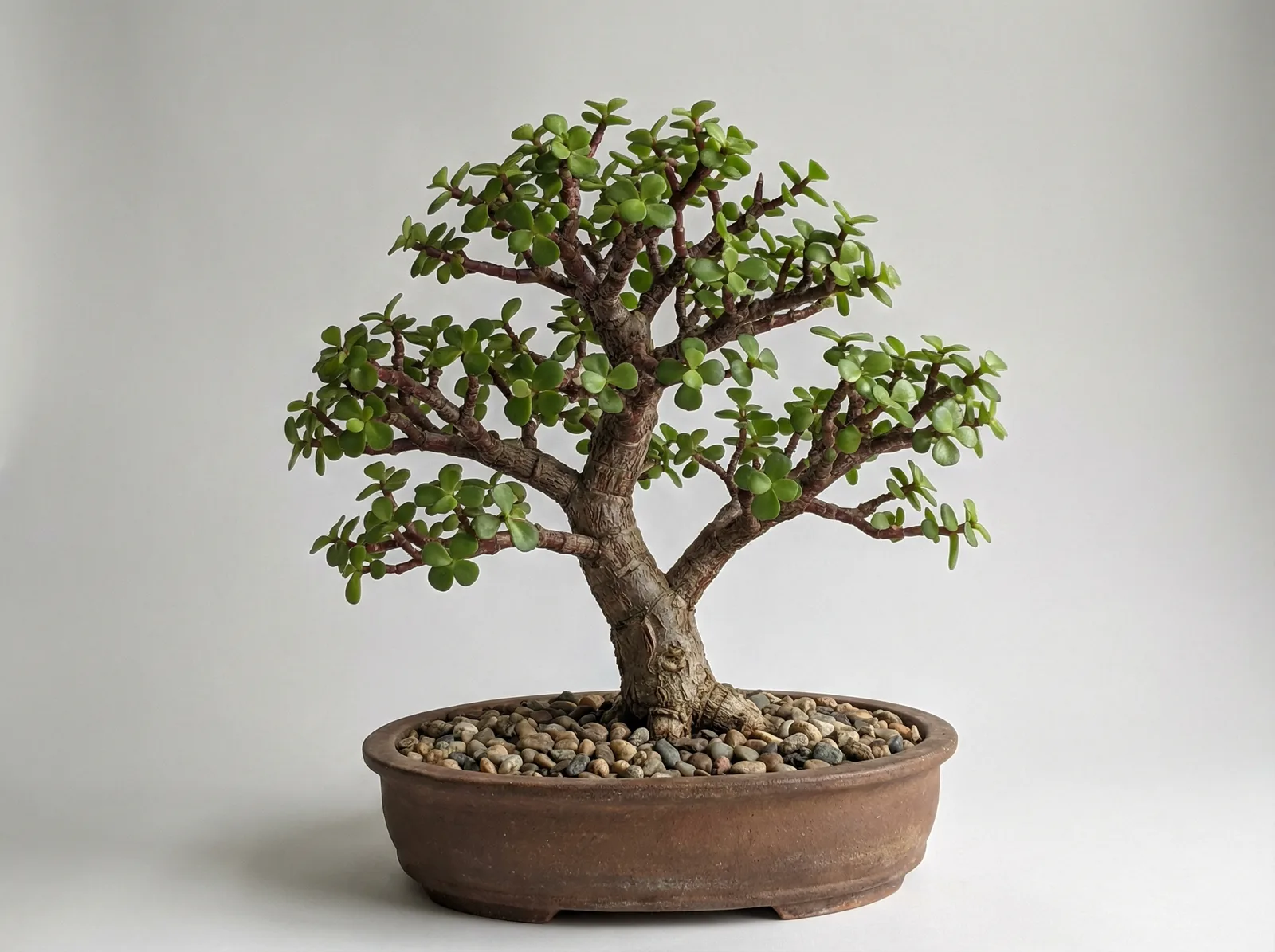
Dwarf Jade Bonsai
- care
- beginner
- light
- full sun
- zone
- 9–11
Schefflera arboricola 'Luseane' · Araliaceae
Why grow it
Hawaiian umbrella bonsai is probably the most forgiving indoor tree you can grow. Schefflera arboricola 'Luseane' tolerates low light, dry air, inconsistent watering, and the general neglect that comes with busy lives. If you want a bonsai on your office desk that won't be dead by Friday, start here.
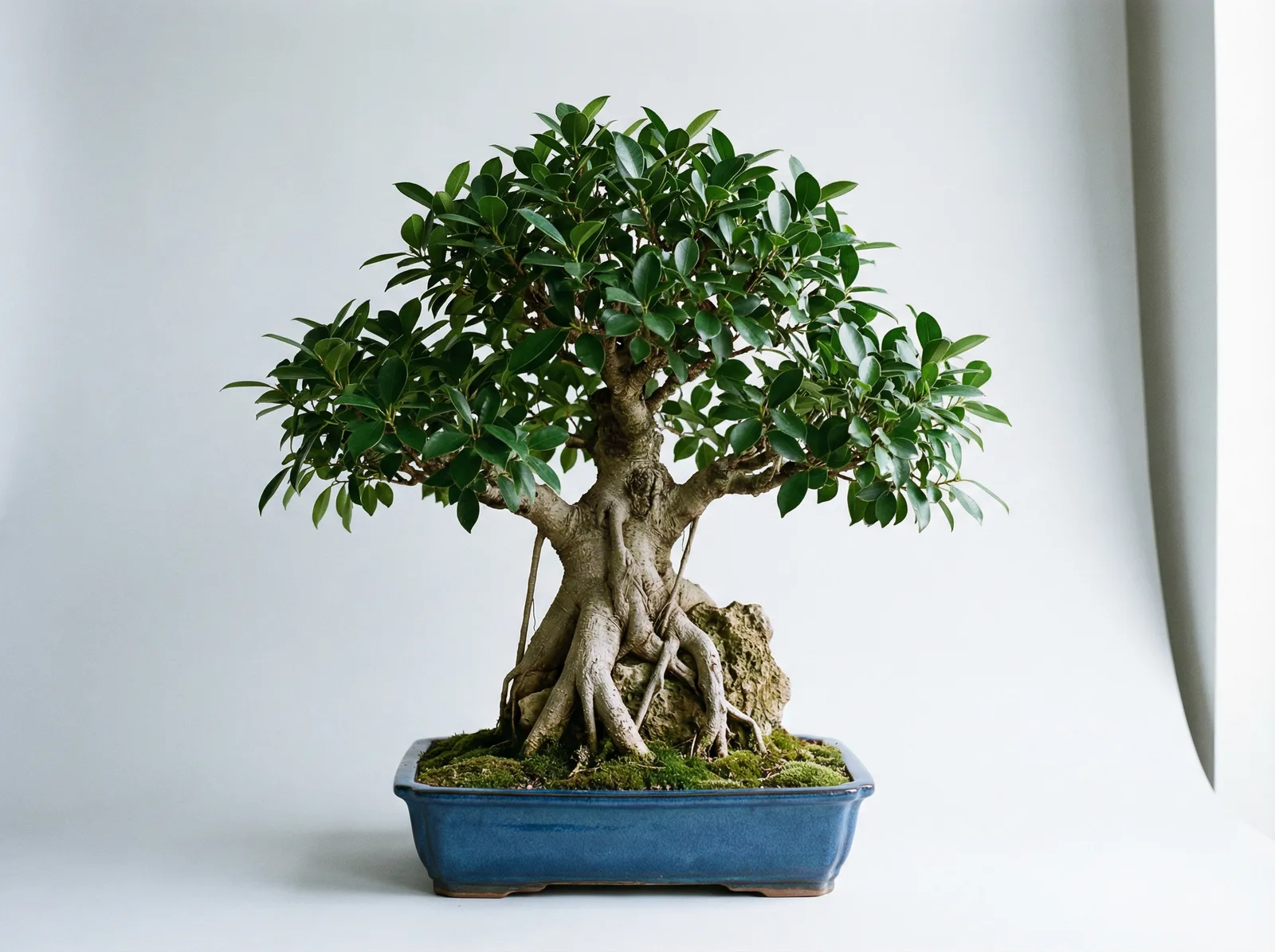
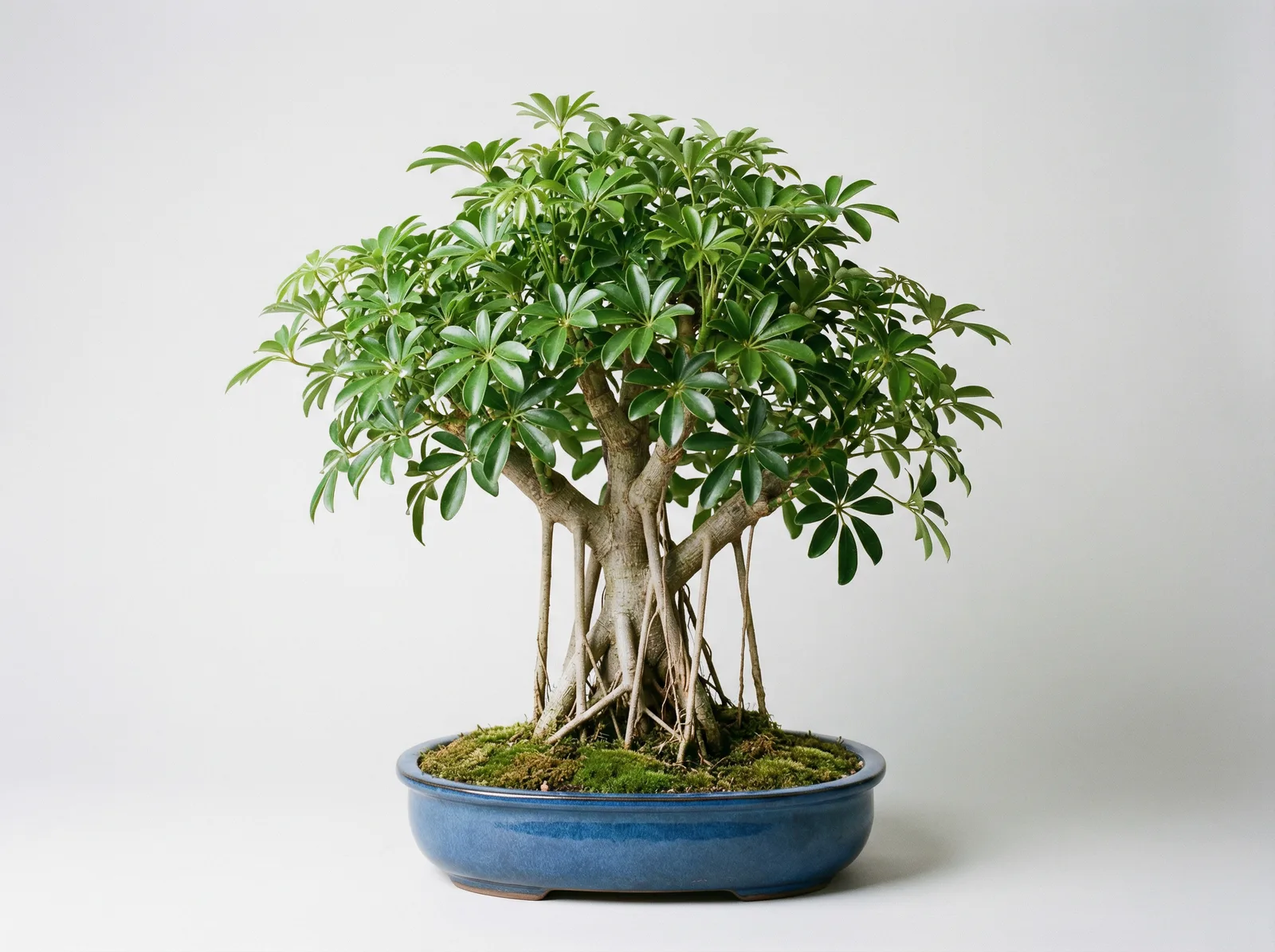
The 'Luseane' cultivar is a naturally dwarf form out of the houseplant trade that bonsai growers adopted for good reason: small glossy leaves, compact growth, proportional even at tiny sizes. The roots thicken quickly and develop impressive banyan-style bases when you train them over rock or let them spread at the surface. That aerial root development is genuinely exciting.
Don't confuse this with the full-size schefflera you see in office lobbies -- it's the same species, Schefflera arboricola, at a different scale, and we cover the standard form separately. The 'Luseane' dwarf stays compact and proportional. It won't randomly decide to become a six-foot houseplant on you.
The routine
Light matters less here than with almost any other bonsai species. A bright windowsill is ideal, sure, but these trees genuinely survive under fluorescent office lighting. You'll get denser growth and better ramification with more light, but the tree won't die in moderate conditions. That's the whole point of this species.
Watering is equally forgiving. Forget for a day or two and the leaves might droop slightly, but they bounce right back after a good soak. Overwatering is the bigger risk -- soggy roots lead to rot. When in doubt, wait a day. Water when the top half-inch of soil dries. In summer, that's roughly every three to four days. In winter, stretch to five or seven.
Hawaiian Umbrella looking rough right now?Skip to common problems below, or start with the symptom guide.Humidity helps but isn't a dealbreaker. A pebble tray adds ambient moisture. Misting is fine as a supplement but doesn't replace actual watering. If leaf tips brown, humidity is probably low -- a small humidifier nearby solves it.
Pest problems are rare. Spider mites can show up in very dry conditions. A weekly wipe of the leaves with a damp cloth prevents most issues and keeps the foliage glossy.
Shaping
Prune throughout the year whenever shoots extend past your design. Cut back to two or three leaves when shoots reach six to eight. New growth from the leaf axils appears fast -- you'll see buds within a week.
The tree handles hard cutbacks well. Got a leggy Hawaiian umbrella? Cut it back to the trunk. New buds push from old wood within a couple weeks. Do hard pruning in spring for the fastest recovery, but it works any time of year with decent light.
Selective leaf removal reduces leaf size over time. Pull off the largest leaves periodically and the replacements come in smaller. Full defoliation works but isn't usually necessary -- targeted removal gets the job done with less stress. Remove only a third of the leaves at a time for the safest approach.
The wire mostly stays in the drawer with this species. Hawaiian umbrella branches are semi-brittle and snap at moderate bends, so the real design work happens below the canopy, at the roots. Branches get clip-and-grow: let a shoot run, cut back to a bud pointing where you want the line to continue, and the fast regrowth fills in within weeks.
Banyan style is where 'Luseane' earns its keep. Wrap the trunk base in damp sphagnum moss and aerial roots will grow downward over a few months. Guide them into the soil and they thicken into secondary trunks within a couple of years -- a desk-sized tree with the architecture of a tropical strangler fig.
Root-over-rock is the other natural fit. Set young roots over a piece of textured lava rock and plant the assembly; the roots conform to the stone within a single growing season. Pick a rock with channels and grooves for the roots to follow.
When you do wire a young, still-flexible shoot, keep the bends gentle and size the wire with our wire gauge tool at /tools/wire-gauge. Any branch that resists, prune instead.
When things go wrong
Leaf drop is the first thing new owners worry about. Usually it's overwatering or a recent move. If you just brought the tree home or relocated it, give it two weeks to adjust before panicking. Check the roots -- brown and mushy means you're watering too much. Let the soil dry more between waterings.
A bald umbrella tree is usually still alive. Scratch a branch with a thumbnail -- green under the bark means it will rebud, typically within three or four weeks. Brown and dry means that branch is done; test lower on the trunk before giving up on the tree.
Yellowing lower leaves on branches is normal shedding. The tree drops older interior foliage as new growth extends at the tips. If yellowing hits new growth too, that's a watering problem.
Stretched, leggy growth means not enough light. Move to a brighter spot or add a grow light. New growth will come in compact, but the stretched sections won't shrink. Prune those back.
Scale insects occasionally show up as small brown bumps on stems. Scrape them off with a fingernail or a soft toothbrush dipped in rubbing alcohol. Check leaf undersides where they hide. For a larger outbreak, our pest control guide at /guides/pest-control covers treatment.
Hawaiian umbrella bonsai are widely available online and in nurseries for $20-50, often sold as starter trees in ceramic pots. Quality varies a lot. Look for trees with thick trunks and compact growth -- avoid tall, skinny specimens with sparse branching.
Brussel's Bonsai and Bonsai Boy carry consistently good-quality Hawaiian umbrellas. Garden centers and even some grocery stores stock them. For root-over-rock specimens, expect $40-80. These make solid gifts for people new to bonsai because they're genuinely hard to kill.
Some links may become affiliate links; our picks don't change.
Also on the bench