Ulmus parvifoliaboth
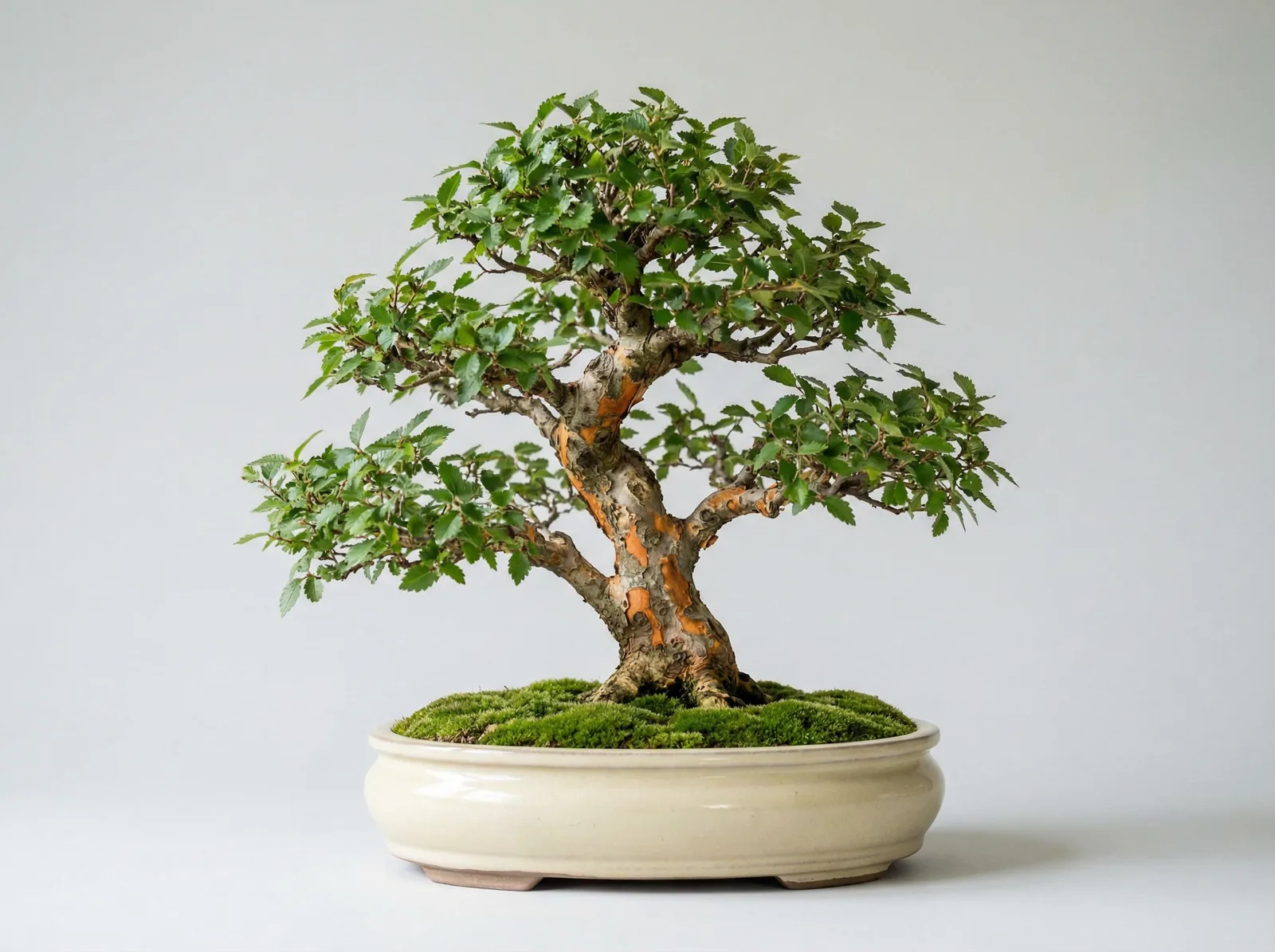
Chinese Elm Bonsai
- care
- beginner
- light
- full sun+
- zone
- 5–10
Citrus limon · Rutaceae
Why grow it
There is something genuinely funny about a lemon bonsai. The tree reduces beautifully — small glossy leaves, a trunk that corks and thickens, white flowers that scent an entire room — and then it produces a full-size lemon that weighs more than the branch holding it. The fruit does not shrink. Nobody's does. Growers just prop the branch and enjoy the absurdity.
It is a real fruiting tree rather than an ornamental, and that shapes the care. Lemon wants strong light, steady feeding with the right micronutrients, and a pot that drains fast. Meet those and it flowers repeatedly through the year and holds fruit for months. Fall short on any of them and you get a leggy green thing that never blooms.
Meyer lemon is the practical choice for a pot — it is a smaller, more cold-tolerant hybrid with thinner-skinned fruit and a naturally compact habit. A true Eureka or Lisbon lemon works too, but it is a larger, thornier plant that takes longer to settle into bonsai proportions. Either way, this is an intermediate project; if you want a fruiting tree that asks less, /species/pomegranate is the easier road.
The routine
Light first, always. Six to eight hours of direct sun outdoors from spring through fall, and the brightest window you have plus supplemental light through winter. Almost every failed lemon bonsai is a light failure wearing a watering costume.
Water by the soil, not the schedule. Outdoors in summer that lands around every 2-3 days; indoors in winter the pot may hold moisture for a week or more, so push a finger in and water only when the top inch has dried. Overwatering a cool, resting citrus is the fastest way to lose the roots. Use room-temperature water, because cold water on warm roots triggers leaf drop.
Lemon looking rough right now?Skip to common problems below, or start with the symptom guide.The move indoors in autumn is the risky moment of the year. Do it gradually over two weeks, before the heating comes on, and put the tree in its brightest spot immediately. A lemon dropped straight from a warm patio into a dim heated room sheds most of its leaves within days. /guides/indoor-growing covers the transition and the light math.
Feed every 2 weeks from March through October with a citrus fertilizer carrying iron, zinc, and manganese. Yellow leaves with green veins are the classic sign of the micronutrients missing, and a generic balanced feed will produce it within a season.
Shaping
Prune in late winter or early spring, before the first flush and before flowering. Lemon flowers on new wood, so cutting after the buds set costs you the crop, and pruning during a flush wastes the tree's energy.
Start by removing what does not belong: dead twigs, inward-growing shoots, and the vigorous water sprouts that shoot straight up from the trunk and old branches. Water sprouts are the biggest single drain on a potted citrus, and they never carry fruit worth keeping.
For structure, cut new shoots back to three or four leaves once they harden. Lemon back-buds well on old wood, so you can cut into bare branches with reasonable confidence that new shoots will follow. Thorns appear on vigorous growth — snip them off as you work, both for your hands and because they read as coarse on a small tree.
Fruit thinning is a pruning decision as much as a horticultural one. A 16-inch tree cannot ripen five lemons; it will drop them all trying. Choose one or two, remove the rest while they are pea-sized, and prop the branch that carries what is left.
Informal upright is the honest style, with a trunk that leans slightly and branches heavy enough to carry fruit. Do not build a delicate tree here — thin branches and a lemon are incompatible, and the design has to anticipate the weight it is meant to hold.
The fruit is the focal point, so place it low and toward the front where it reads against the foliage. That means keeping strong, well-positioned branches in the lower third rather than clearing them the way you would on a conifer. A lemon bonsai that follows classical conifer proportions ends up with fruit hanging in the wrong place.
Wiring works on young green shoots and stops working quickly. Citrus wood lignifies within a season and then snaps rather than bending, and the bark bruises under wire. Wire in spring on shoots that are still flexible, check every three weeks, and remove it within two months. Size it at /tools/wire-gauge and keep the bends shallow.
Most of the shaping is clip-and-grow with guy wires for anything heavier. Let a branch run to thicken it, cut back to a bud facing the direction you want, and repeat. The trunk corks and roughens on its own after five or six years, which does more for the tree's age than any styling technique will.
When things go wrong
Sudden leaf drop after the tree comes indoors is the classic autumn complaint, and the cause is shock — a drop in light, a jump in temperature, and dry heated air all at once. The tree is not dying. Put it in the brightest place you have, keep the watering restrained while it has no leaves to support, and it refoliates in four to six weeks. Move it gradually next year.
If a lemon has gone bare and you are not sure it survived, use the scratch test. Scrape a little bark from a thin branch with a thumbnail: green and moist means alive. Work back toward the trunk if the tips are brown. Citrus is a species that will sit leafless and apparently dead for two months and then push a full flush, so give a scratched-green tree a season before you give up on it — /questions/is-my-bonsai-dead has the full checklist.
Yellow leaves with green veins mean a micronutrient shortage, iron or zinc most often, and it is extremely common on citrus fed a generic fertilizer. Switch to a citrus formula that lists iron, zinc, and manganese, and the new growth comes in green within a few weeks.
Flowers that form and then drop without setting fruit usually mean the tree is short of light or was allowed to dry out during bloom. Indoors, hand-pollinating with a small brush also helps, since there are no insects to do it.
Scale and spider mites both love an indoor citrus in dry winter air. Wipe the leaves and check the undersides weekly through the heating season; /guides/pest-control has the treatment sequence for an infestation that is already running.
Buy a lemon as a nursery plant rather than as a bonsai. A 2- to 3-gallon Meyer lemon from a garden center costs $30-60 and comes with a thicker trunk and better roots than most trees sold in a bonsai pot at twice the price. Check the graft: nearly all citrus is grafted onto dwarfing rootstock, and you want the union low and well-healed, ideally hidden by soil once the tree is in a bonsai pot.
Avoid supermarket citrus in decorative pots — they are forced, often carrying fruit they cannot support, and they crash once the fruit comes off. Look instead for a plant with dark glossy leaves, no yellowing, and firm new growth. Wigert's Bonsai carries tropical and subtropical material including citrus. Developed lemon bonsai are uncommon and run $200-600 when they surface, which is a lot to pay for a head start you can grow yourself in three years.
Some links may become affiliate links; our picks don't change.
Also on the bench