
Are bonsai trees toxic to cats?
Short answer
Some are, some aren't — it depends entirely on the species. A bonsai is just a tree in a pot, so the risk is the plant's own toxicity. Junipers and ficus are mildly irritating; azaleas, desert rose, and yew are genuinely dangerous. Chinese elm, bamboo, and money tree are safe. Look up your exact species before you trust a cat around it.
Always confirm with your vet. This is a reference, not veterinary advice. “Unconfirmed” means we haven't verified it — treat it as potentially toxic until you have. If your pet eats any plant, call your vet or the ASPCA Animal Poison Control Center at (888) 426-4435.
It's the species, not the “bonsai”
There's nothing about being a bonsai that makes a tree toxic or safe. A ficus is a ficus whether it's in a nursery pot or a bonsai tray — same sap, same effect on a curious cat. So the only question that matters is: which species is your tree?
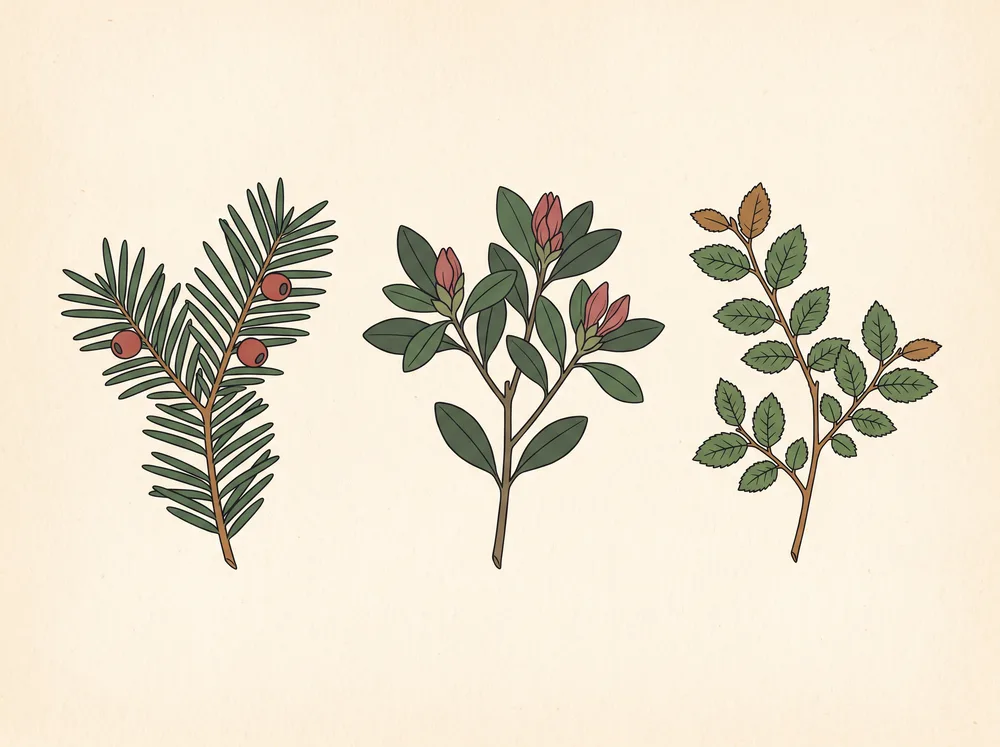
Use the lookup below to check yours against our list. It covers every species in our directory, sorted by risk. And read the disclaimer on it, because we mean it: this is a reference to steer by, not a substitute for your vet.
The genuinely dangerous ones
A handful of popular bonsai species are seriously toxic and worth keeping well out of reach — or skipping entirely — in a cat household:
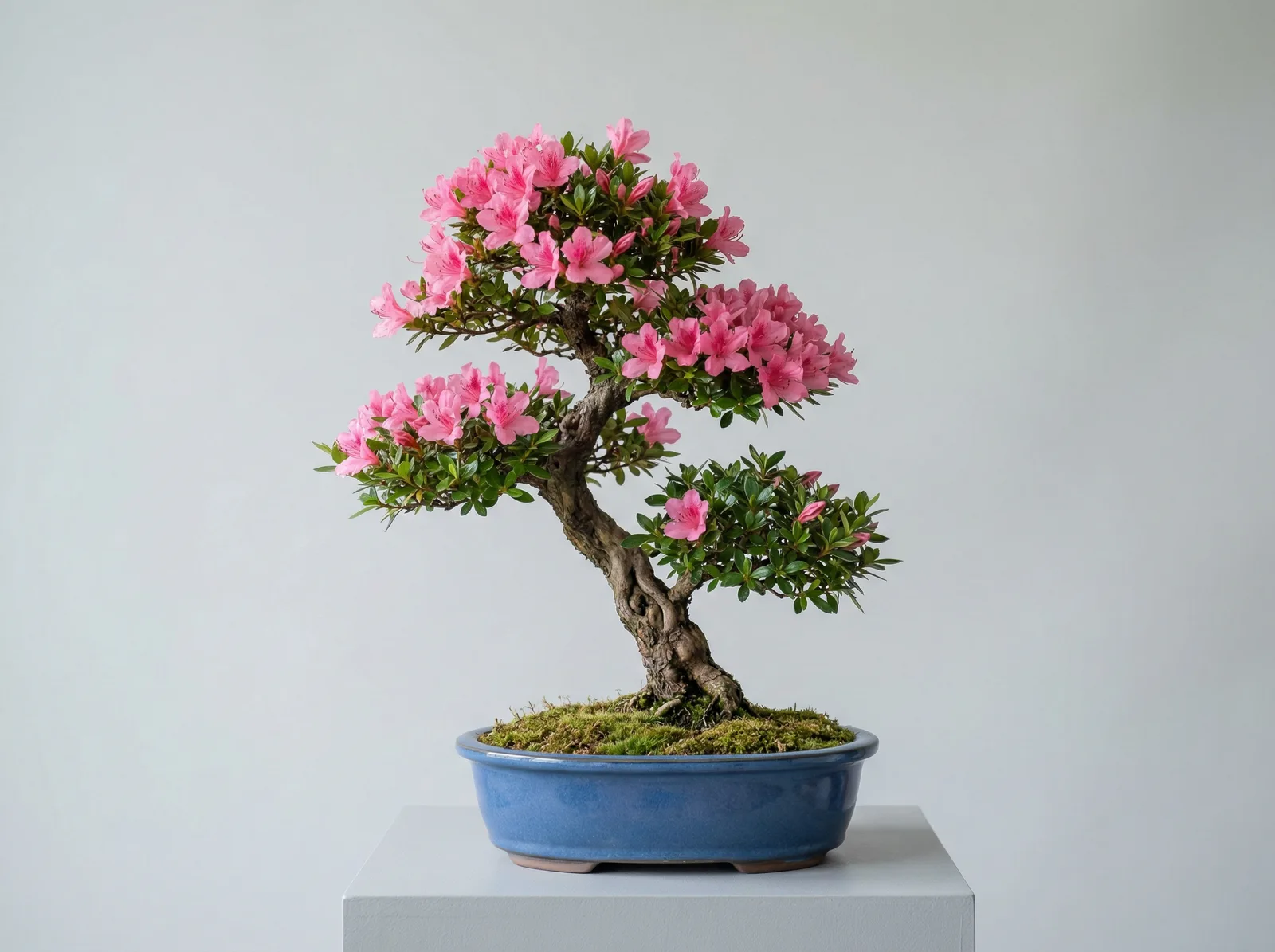
- Azalea and satsuki azalea — contain grayanotoxins; even a few leaves can cause vomiting, weakness, and heart problems.
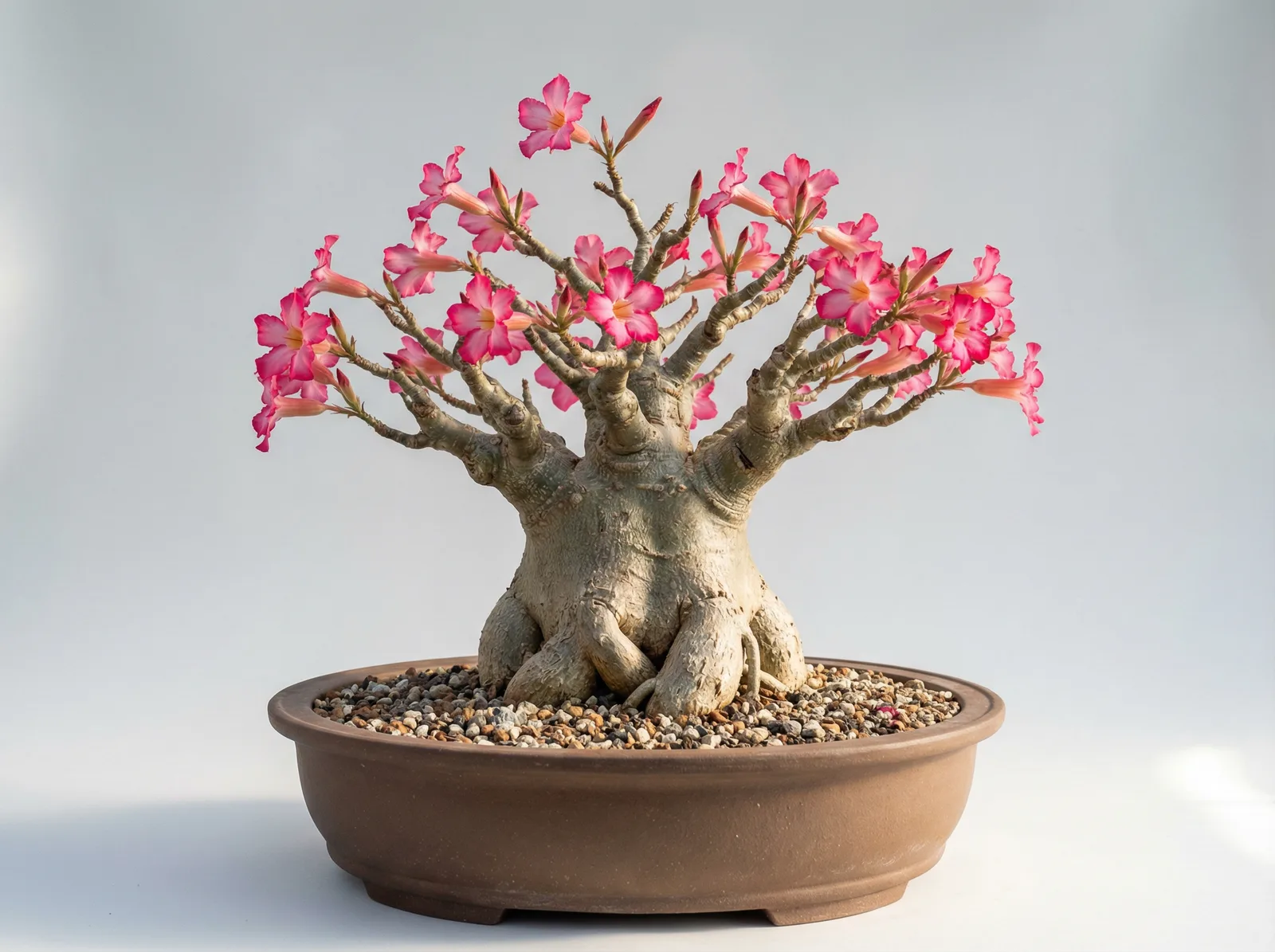
- Desert rose — its sap holds cardiac glycosides that affect the heart.
- Yew — among the most poisonous plants there is; every part except the red flesh is dangerous.
- Wisteria and boxwood — both toxic, wisteria's seeds and pods especially.
If you have a cat that chews plants and you want one of these, it needs to live somewhere the cat truly can't get to it.
The mildly toxic middle
Most of the classic “mall” bonsai fall into a milder category — not an emergency, but capable of causing drooling, mouth irritation, or an upset stomach if your cat takes a bite.
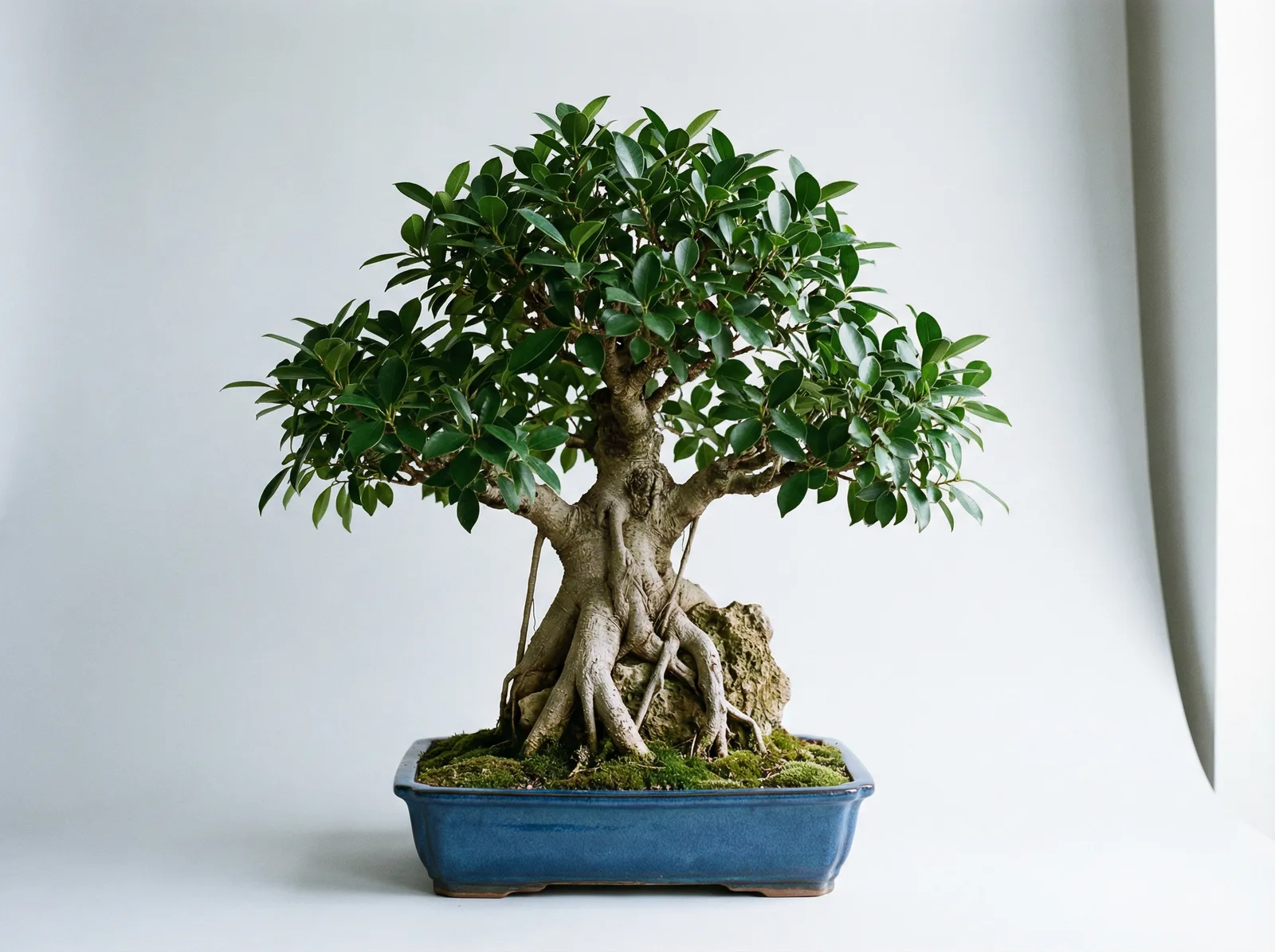
Ficus has a milky sap that irritates the mouth and skin. Juniper can cause mild stomach upset. Bougainvillea adds thorns to the mix. These aren't reasons to panic if you catch a nibble, but they're reasons to discourage chewing and to call your vet if your cat eats a real quantity.
Safe bets for a cat household
If you want a bonsai and a cat that shares the same shelf, a few species are genuinely non-toxic to cats and dogs:
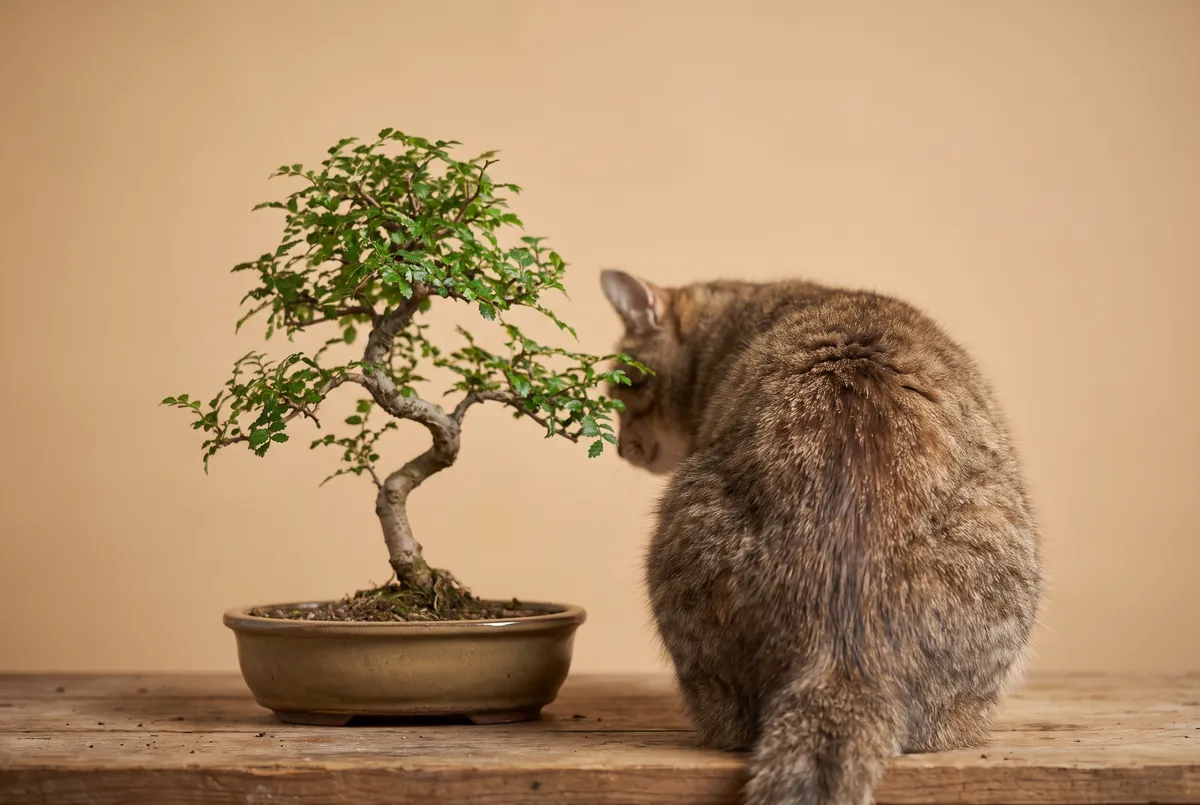
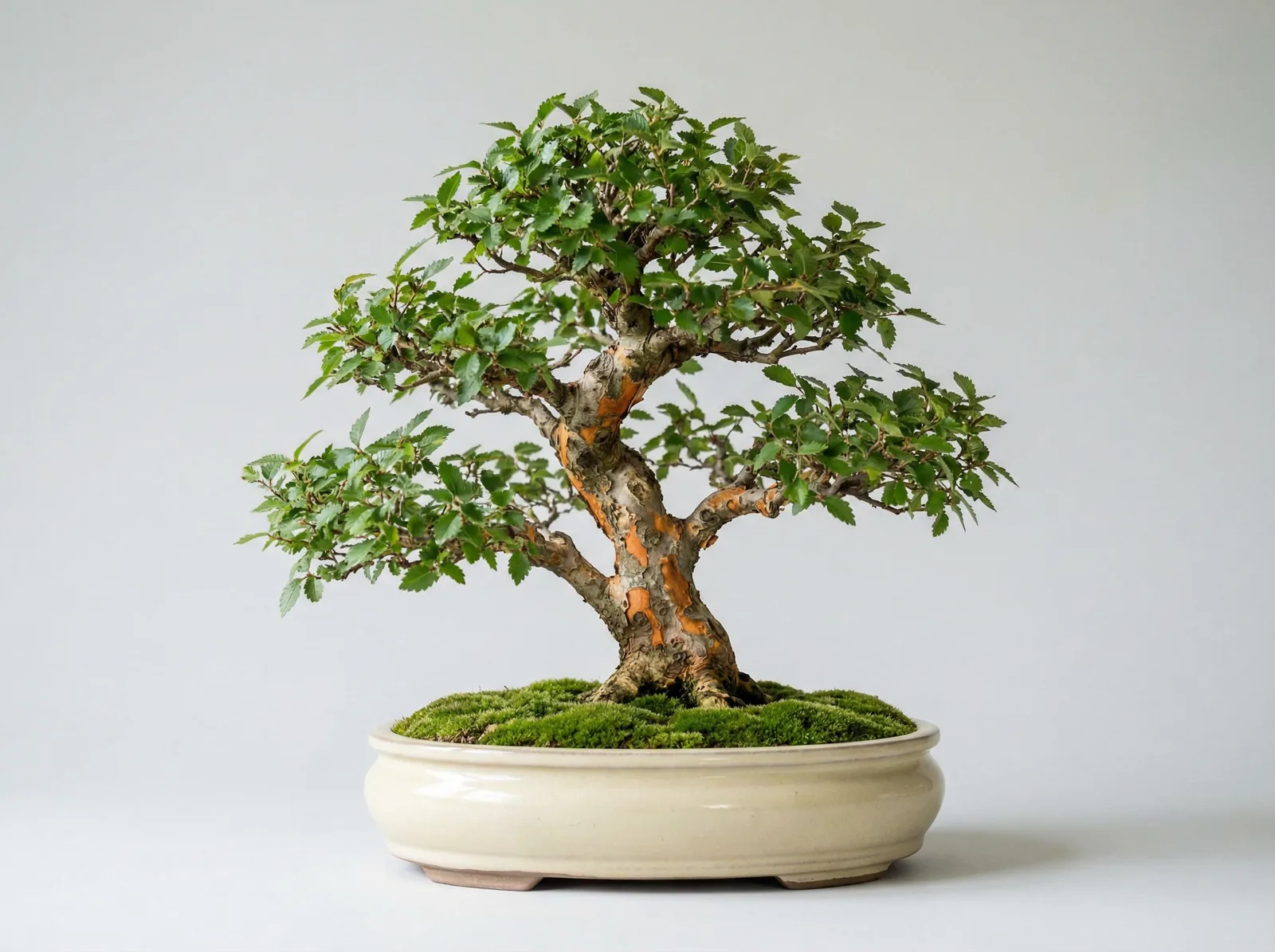
- Chinese elm — also our top pick for beginners, so this is an easy win.
- Bamboo and money tree — both safe and both handle indoor life.
- Japanese maple and trident maple — safe for cats and dogs (not a claim we'd make for horses).
- Olive and rosemary — safe, and rosemary even smells good.
Picking a safe species from the start is the cleanest solution — no gates, no guilt, no midnight vet call.
If your cat took a bite
Stay calm — most plant nibbles end in nothing worse than a little drool or a hairball-style vomit. But act on it.
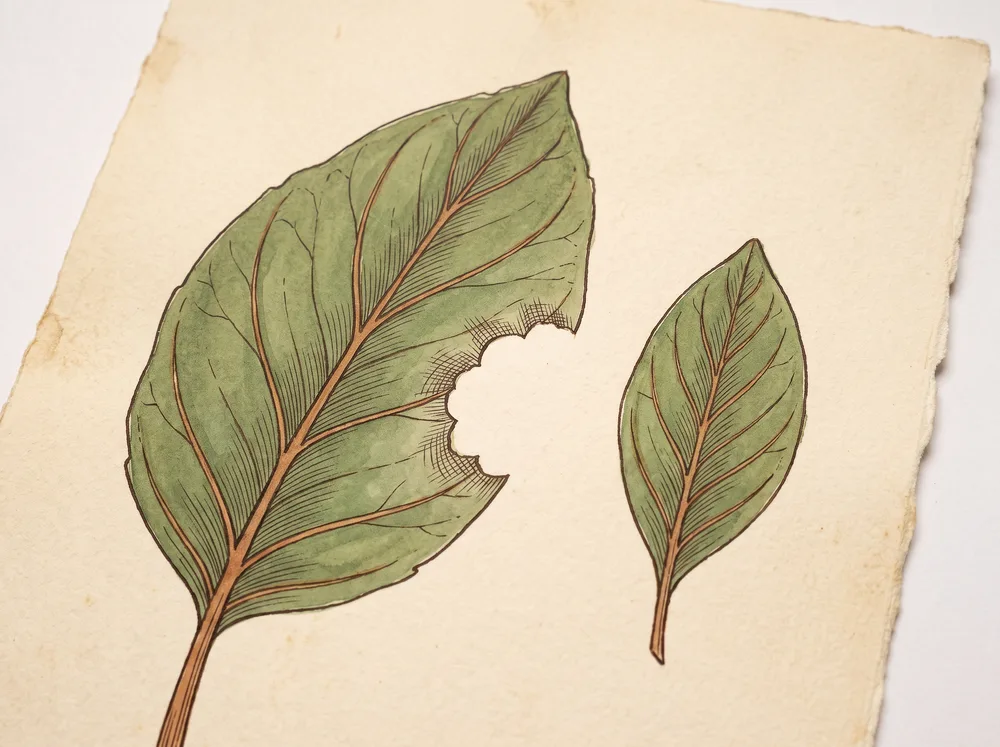
Identify the species, remove any plant matter from your cat's mouth, and watch for vomiting, drooling, lethargy, or loss of appetite. For a toxic species, or for any symptoms, call your vet or the ASPCA Animal Poison Control Center (888-426-4435) right away and tell them the plant. Don't wait to “see how it goes” with azalea or yew — those move fast.
What this means for your tree
You don't have to choose between bonsai and a cat — you just have to choose the right species or the right shelf. If you're still shopping, start with a safe, beginner-friendly tree like the Chinese elm; browse the full beginner list filtered in your head for the safe ones above.
If you already own a toxic species, keep it somewhere genuinely cat-proof — a high shelf a cat can reach doesn't count — and save the poison-control number in your phone now, not later.
Species mentioned here
More on “Are bonsai trees toxic to cats?”
Keep reading