Juniperus chinensisoutdoor
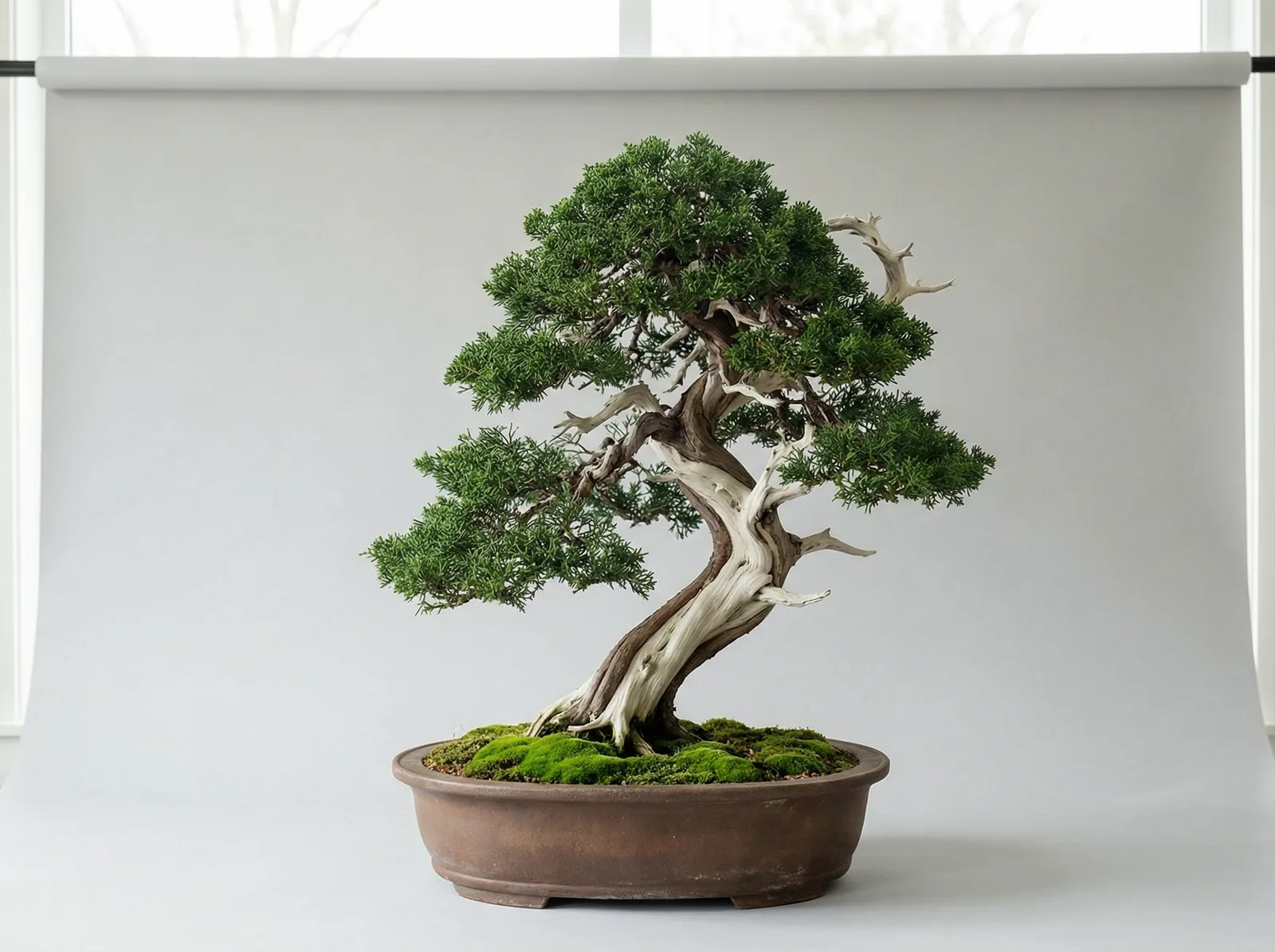
Juniper Bonsai
- care
- beginner
- light
- full sun
- zone
- 4–9
Buxus sempervirens · Buxaceae
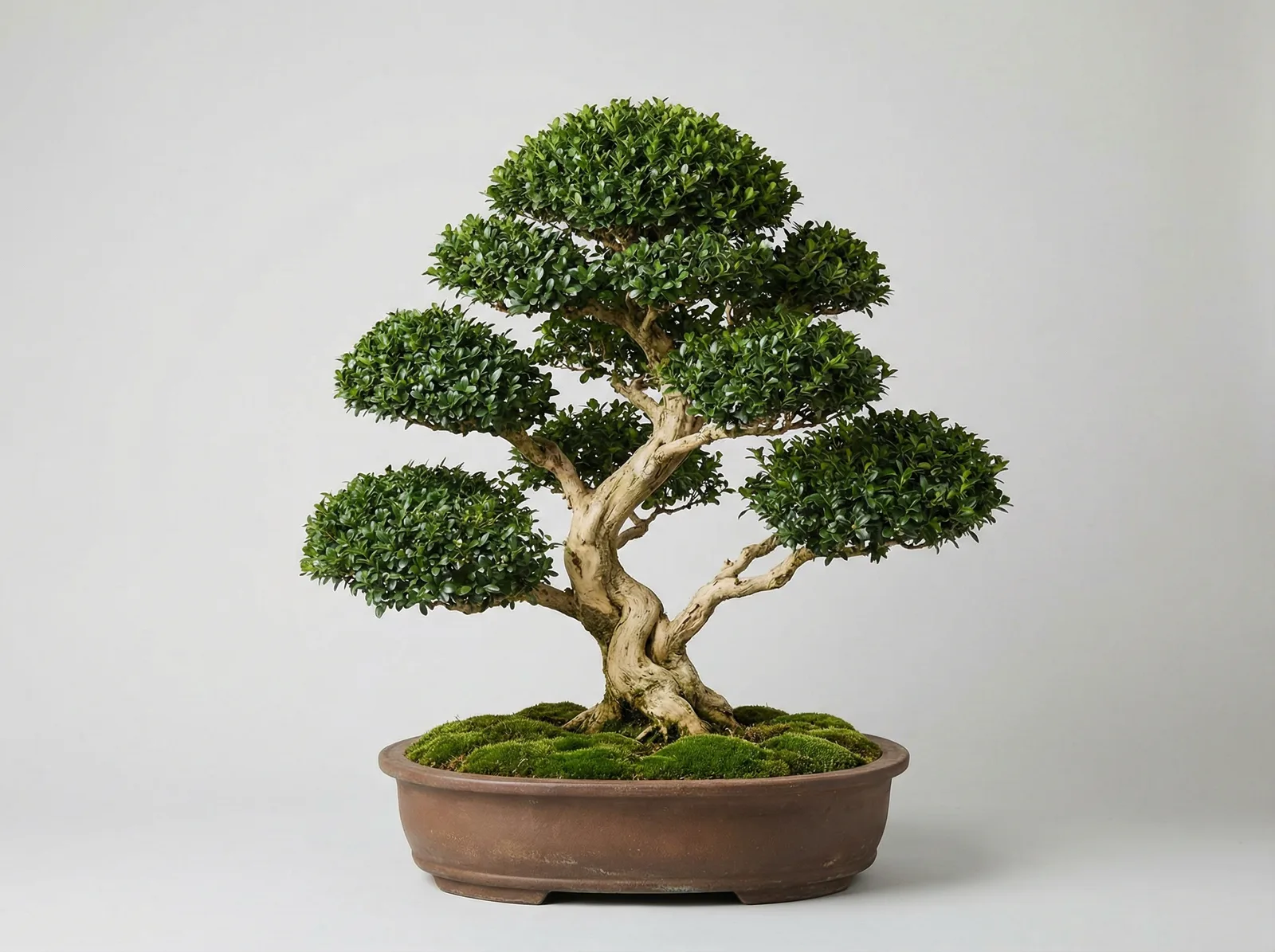
Why grow it
Boxwood bonsai don't get the credit they deserve. Buxus sempervirens has naturally tiny leaves, branching that builds dense pads without drama, and evergreen foliage year-round. They're cold-hardy into zone 5, shade-tolerant, and forgiving when you make a pruning mistake. If flashy tropical species are sports cars, boxwood are the reliable truck that starts every morning.
The bark goes rough and corky with age, and the trunk puts on girth steadily over years -- nothing explosive, but it adds up. Older specimens develop a gravitas that rivals anything in the hobby. Dense canopy, mature bark, compact profile. They just look right.
Boxwood have been shaped by European gardeners for centuries. Hedges, topiary, knot gardens -- all that willingness to be clipped translates directly to bonsai. And the starter material? Any garden center, $15-25 for a 1-gallon pot. That's hard to beat.
prune: spring through fall (clip); late winter (structure)
The routine
Here's the short version: consistent moisture, decent light, keep it outside, don't overthink it. Boxwood won't punish you for missing a watering or forgetting to fertilize for a couple weeks. They're not dramatic.
Winter is simple. Leave them outdoors -- they need the cold. In zones 5-6, wrap the pot with burlap or tuck it against a south-facing wall. The foliage might bronze in deep cold. That's not disease; it greens back up in spring.
Boxwood looking rough right now?Skip to common problems below, or start with the symptom guide.Air circulation matters more than people realize. Boxwood canopies are thick, and stagnant air breeds fungal problems. Don't shove your tree against a wall or sandwich it between other plants. Give it breathing room on the bench.
The slow growth rate is actually a feature, not a bug. You spend less time pruning and more time just enjoying the tree. If you're coming from ficus or Chinese elm, the pace will feel glacial. Accept it. A boxwood holds its shape between sessions better than almost anything else.
Shaping
Clip-and-grow is the boxwood way. Trim new growth back to one or two leaf pairs as it extends, and the tree pushes tight, dense growth from below every cut. Do this consistently for two or three seasons and you'll build the kind of refined foliage pads that people assume took decades.
Structural work goes best in late winter, before spring push. Remove anything crossing, dead, or growing inward. Thin the interior occasionally -- boxwood will shed inner leaves if they can't see light. You want air and light reaching the center of the tree.
Can you hard prune? Yes. Should you expect quick recovery? No. If you need to reshape dramatically, cut in early spring and give it a full growing season to fill back in. Don't combine hard pruning with heavy wiring in the same session. Too much stress at once.
Leaf size is rarely an issue. Boxwood leaves are already small enough for bonsai at any size. If leaves seem bigger than normal, bump up the light and dial back the nitrogen.
Boxwood asks you to trade the wire for the shears. Centuries of hedge and topiary clipping built a species that back-buds tightly from every cut -- while its older wood goes rigid and snaps under bending. So build boxwood by clip-and-grow: let a shoot run, cut back to a leaf pair aimed where you want growth, and repeat until the pad fills.
That dense, fine foliage supports precise, geometric pads, which is why formal upright comes so naturally -- layers built through steady clipping reach a refinement in three to five years that faster species need decades to match. Broom style is equally at home; the fine branching creates a convincing crown with almost no wire at all.
Wiring still has a place on young, flexible shoots. Do it in spring or early summer and check monthly -- May through July growth is the fastest. Anything more than a few years old, shape with cuts instead. Gauge advice lives in the wire calculator: /tools/wire-gauge.
Multi-trunk and group plantings play to boxwood's even growth habit. Because all trunks grow at similar rates, no single tree bulldozes the composition the way a maple or elm might.
When things go wrong
Boxwood blight is the nightmare scenario. Brown spots on leaves, black streaks up the stems, rapid leaf drop. It can take out an entire collection in a month. If you spot it, cut the affected branches immediately, sterilize every tool with rubbing alcohol between cuts, and spray with copper fungicide. Prevention is everything -- good airflow and dry foliage.
Boxwood leafminer larvae tunnel inside the leaves, creating blistered, yellowish patches you'll notice most in spring. Pick off affected leaves. For serious infestations, a systemic insecticide applied in May gets the larvae before they emerge as adults.
Bronze foliage in winter? Normal. It's cold stress. The leaves green back up in April. If you're seeing bronze in summer, though, the tree is getting scorched or underwatered.
Slow growth isn't a problem. It's who boxwood are. They're not fast. Period. The upside: less maintenance pruning, better shape retention, and a tree that looks polished between sessions.
And if a branch drops its leaves and leaves you guessing, scratch a bit of bark with a fingernail. Green underneath means wait -- boxwood re-leafs from live wood. Brown means prune back until you hit green.
Garden centers are your best friend here. Boxwood in 1-3 gallon pots run $10-30, and you're getting a cold-hardy, tiny-leaved species at landscape pricing. Look for thick trunks and low branching. 'Kingsville Dwarf' and 'Compacta' have the smallest leaves -- grab those if you find them.
Online bonsai vendors carry pre-bonsai boxwood for $50-200. Wigert's and Evergreen Gardenworks stock solid material. But here's a tip most people miss: old garden hedgerows. Collected boxwood from overgrown hedges can have spectacular trunk character and cost nothing if you ask the property owner. Check with your local bonsai club for collecting leads.
Some links may become affiliate links; our picks don't change.
Also on the bench