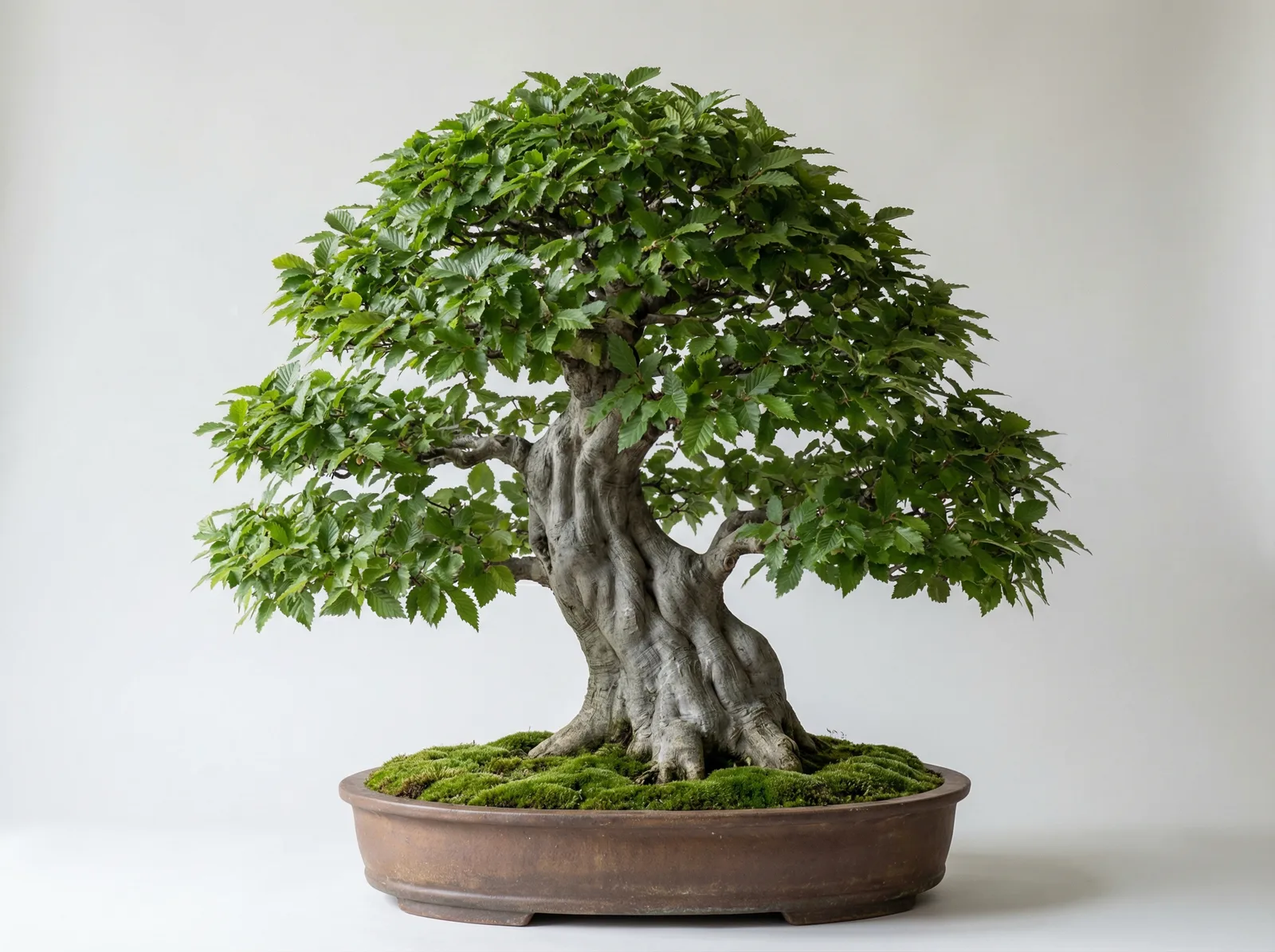
Ulmus parvifoliaboth
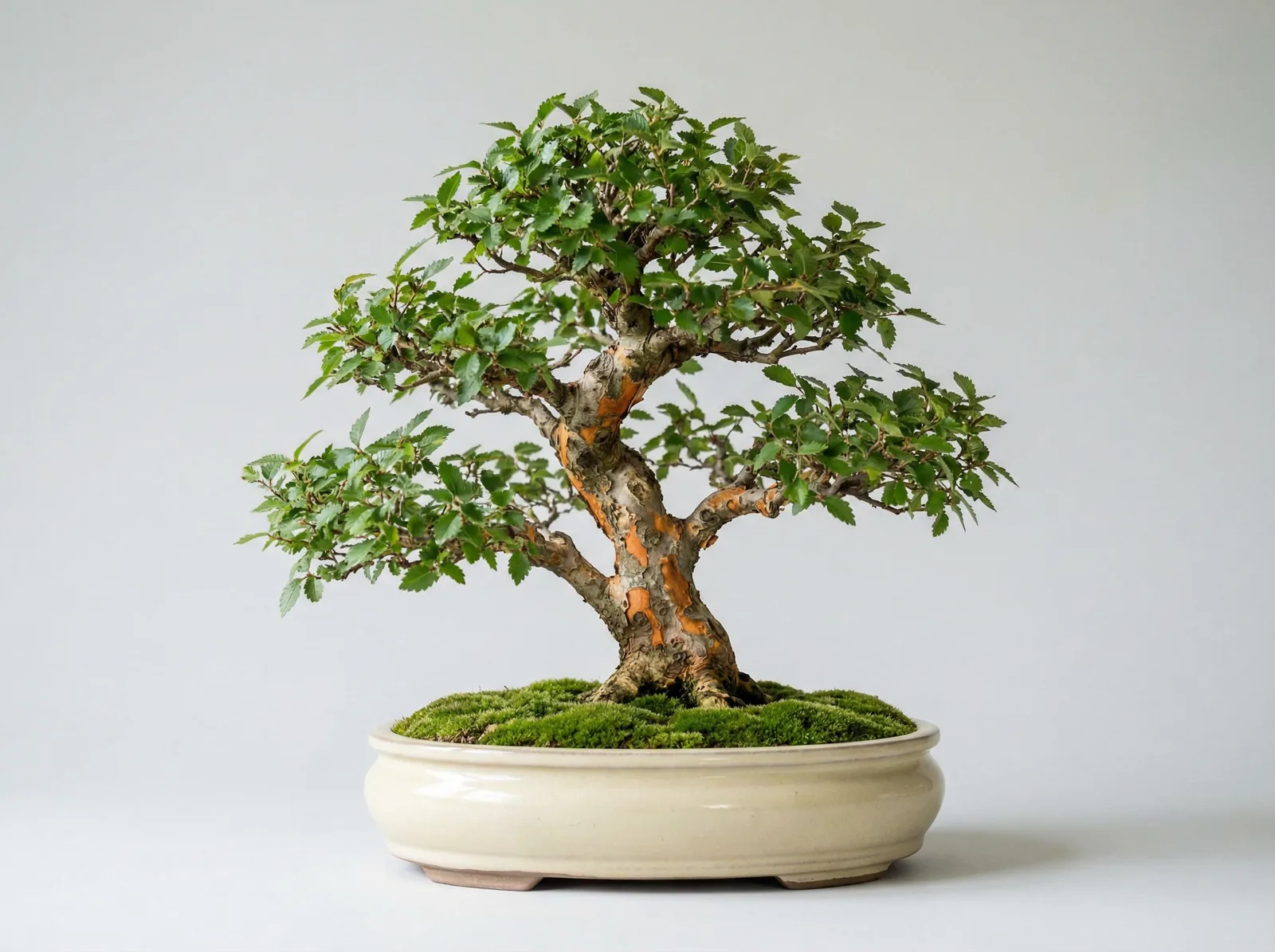
Chinese Elm Bonsai
- care
- beginner
- light
- full sun+
- zone
- 5–10
Acer rubrum · Sapindaceae
Why grow it
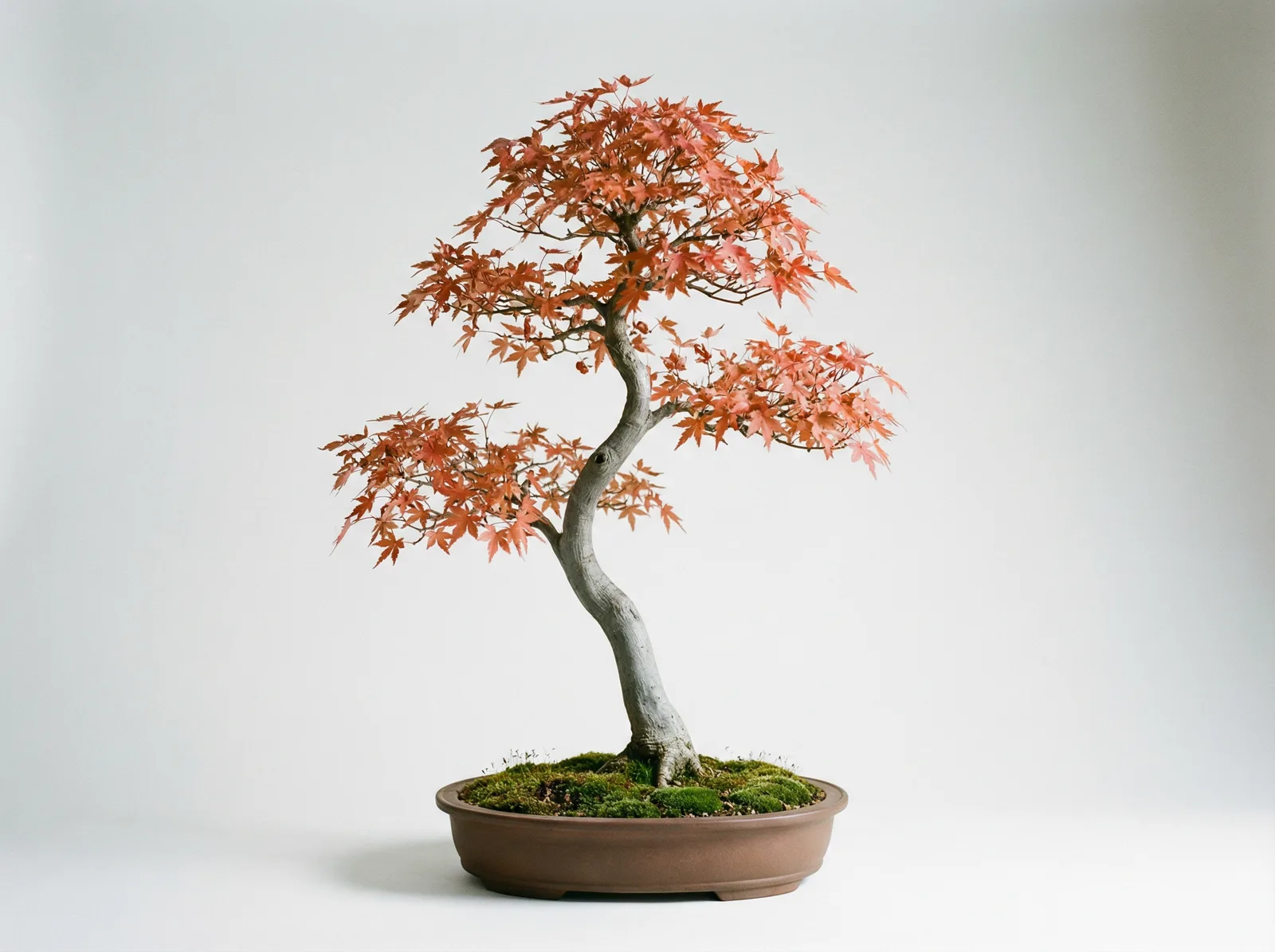
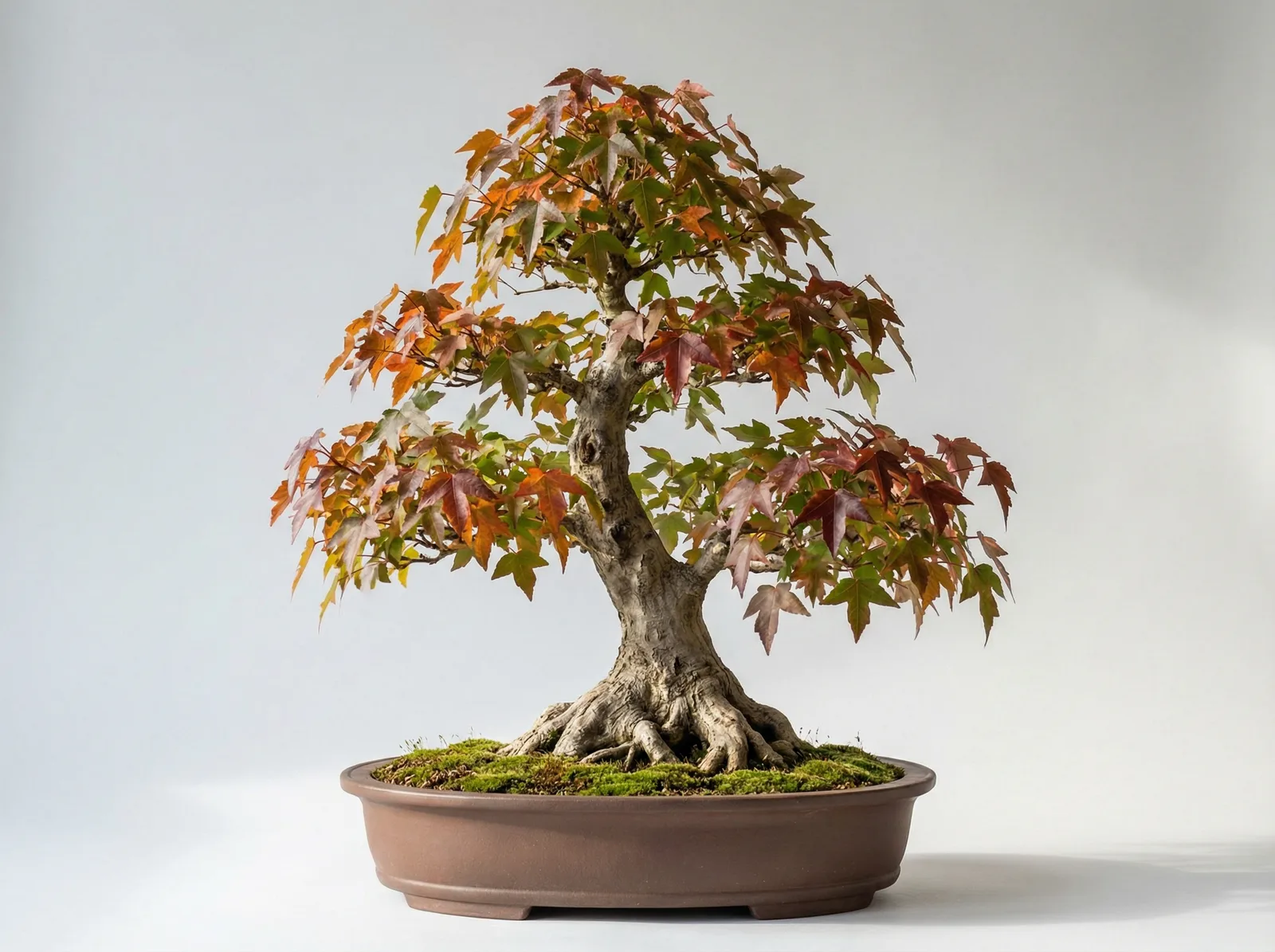
Red maple earns its name three times a year: red flower clusters on bare branches in March, red leaf stems all summer, and a fall display that runs from clean scarlet to orange depending on the individual tree. It is the most widespread hardwood in eastern North America, which means you can probably find one growing wild within a mile of your house.
The honest problem is leaf size. Acer rubrum leaves run three to five inches across, and defoliation and starvation only take them so far — expect to halve them, not quarter them. That makes this a species for larger bonsai. At 20 inches and up the proportions work; at six inches you are looking at a stick with dinner plates on it.
What you get in exchange is speed and toughness. Red maple thickens a trunk faster than a Japanese maple, shrugs off zone 4 winters, handles wet feet, and buds back readily on old wood so a hard cutback is recoverable. If a Japanese maple feels like a tree you have to negotiate with, this one just grows. Compare the two side by side at /species/japanese-maple before you choose.
The routine
Water like you mean it. Big leaves on a shallow pot transpire hard, and one dry afternoon in July scorches the leaf margins for the rest of the season. Daily in summer is the working baseline, moving to every 2-3 days in spring and fall. After leaf drop the tree still drinks, but slowly — check the soil with a finger and water when the top inch has dried instead of running a schedule.
Placement is a trade. Full sun gives you the best fall color and the tightest growth; afternoon shade gives you unscorched leaves. In zones 4-7 take the sun; in zones 8-9 take the shade. If leaf margins are browning by mid-July, the tree is telling you which one it needs.
Red Maple looking rough right now?Skip to common problems below, or start with the symptom guide.Winter care is about the pot, not the tree. Red maple wood takes -30°F without complaint, but the fine roots in a shallow container do not; mulch the pot in or move it into an unheated garage once nights fall below about 30°F. The full routine is in /guides/winter-care.
Feeding stops at midsummer on purpose. Late nitrogen on a species this vigorous means oversized leaves and long internodes next spring, and leaf size is already this tree's weak point.
Shaping
Time the structural cuts for early summer, once the first flush has hardened off. Red maple bleeds sap heavily when cut in late winter or early spring — it is not usually fatal, but it is messy and it weakens a small tree. Late winter is still the right window for removing whole branches on a dormant tree, provided you seal the cut; anything finer waits for June.
Through the growing season, cut new shoots back to one or two pairs of leaves as they extend. Doing this consistently is the only real lever you have on internode length, and internode length is what makes a big-leaved maple look proportional.
Partial defoliation in early summer is the leaf-size tool. Cut the largest leaves off at the petiole in June, leaving the smaller ones, and the replacement flush comes back smaller with a shorter internode. Do it once a season and only on a vigorous tree — a weak red maple defoliated twice will not recover the same year.
Red maple back-buds well on old wood, so a trunk chop on a thick nursery tree is a legitimate strategy. Cut it in late winter, let the shoots come, and select a new leader from them the following spring.
Broom style is the natural fit. Wild red maples build a rounded, evenly branched crown on a straight trunk, and a broom-style bonsai is essentially that shape rendered small. It also happens to be the style most tolerant of a larger leaf, since the crown reads as mass rather than as individual leaves.
Build the tree big enough to carry the foliage. Anything under about 16 inches will fight its own leaf size forever. In the 20-30 inch range, with a trunk you have thickened in the ground or a grow box for a few years, the proportions come together.
Wiring works on young shoots but has a narrow window. The bark is thin and marks easily, and red maple thickens fast enough to bury wire within a single season. Wire in early summer once the shoots have firmed, check every two to three weeks, and take it off at the first sign of pressure. Size it to the branch at /tools/wire-gauge, and use guy wires for anything thicker than a pencil.
Otherwise this is a clip-and-grow species. Directional pruning to a bud facing where you want the branch to go, repeated over several seasons, produces better taper and finer ramification than wire ever will on a maple.
When things go wrong
Brown, crisped leaf margins in midsummer are the most common complaint, and the cause is water stress — a rootball that dried, or full afternoon sun on a hot day, usually both. The scorched leaves stay scorched until autumn; there is no fixing them. Move the tree into afternoon shade, water daily, and the next flush comes in clean.
If the whole tree looks dead in April while the neighbors are leafing out, do the scratch test before you panic. Scrape a sliver of bark from a small branch with a thumbnail: green and moist underneath means dormant, brown and dry means work back toward the trunk. Red maple leafs out early, so a tree that is still bare in May is genuinely in trouble — /questions/is-my-bonsai-dead has the rest of the checks.
Verticillium wilt is the serious one. A single branch wilts and dies in midsummer while the rest of the tree looks fine, and the cut wood shows dark streaking. There is no cure. Remove the affected branch well below the streaking, sterilize the tool between cuts, and keep the tree vigorous; some trees wall it off and live for years.
Aphids cluster on new shoots in spring and leave a sticky film on the leaves below. A hard spray of water knocks them off, and repeating it for three days usually ends the problem; /guides/pest-control covers what to do if they keep coming back.
Leaves that stay oversized season after season mean too much nitrogen, too much shade, or not enough pruning. Stop feeding at midsummer, move the tree brighter, and cut every extending shoot back to two pairs of leaves.
Red maple is the cheapest good bonsai material in North America. Landscape nurseries sell 3- to 7-gallon trees for $30-80, and those trunks are far thicker than anything sold as bonsai at the same price. Look for low branching, a trunk that flares at the soil line, and no graft union — most named cultivars like 'October Glory' are grafted, and the graft scar sits exactly where the nebari should be. Seedling-grown plain Acer rubrum is the better buy for bonsai.
Even cheaper: red maple seedlings turn up as weeds in gardens across the eastern states, and a two-year seedling collected in early spring costs nothing. Developed bonsai are uncommon in the trade and run $200-600 when they appear. Evergreen Gardenworks carries field-grown deciduous material worth checking. Whatever the source, buy the biggest trunk you can, because the leaves will need it.
Some links may become affiliate links; our picks don't change.
Also on the bench