Portulacaria afraboth
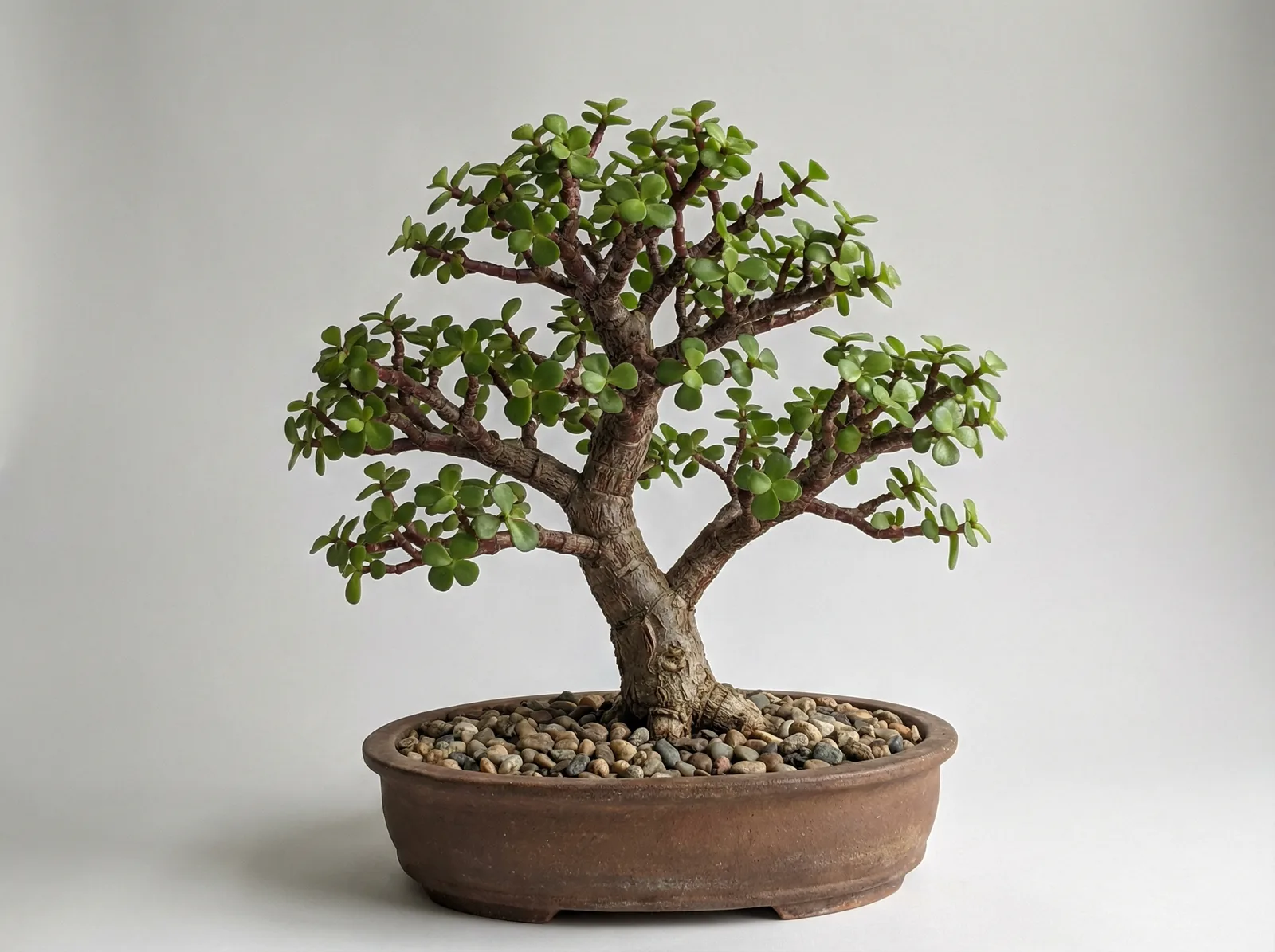
Dwarf Jade Bonsai
- care
- beginner
- light
- full sun
- zone
- 9–11
Salvia rosmarinus · Lamiaceae
Why grow it
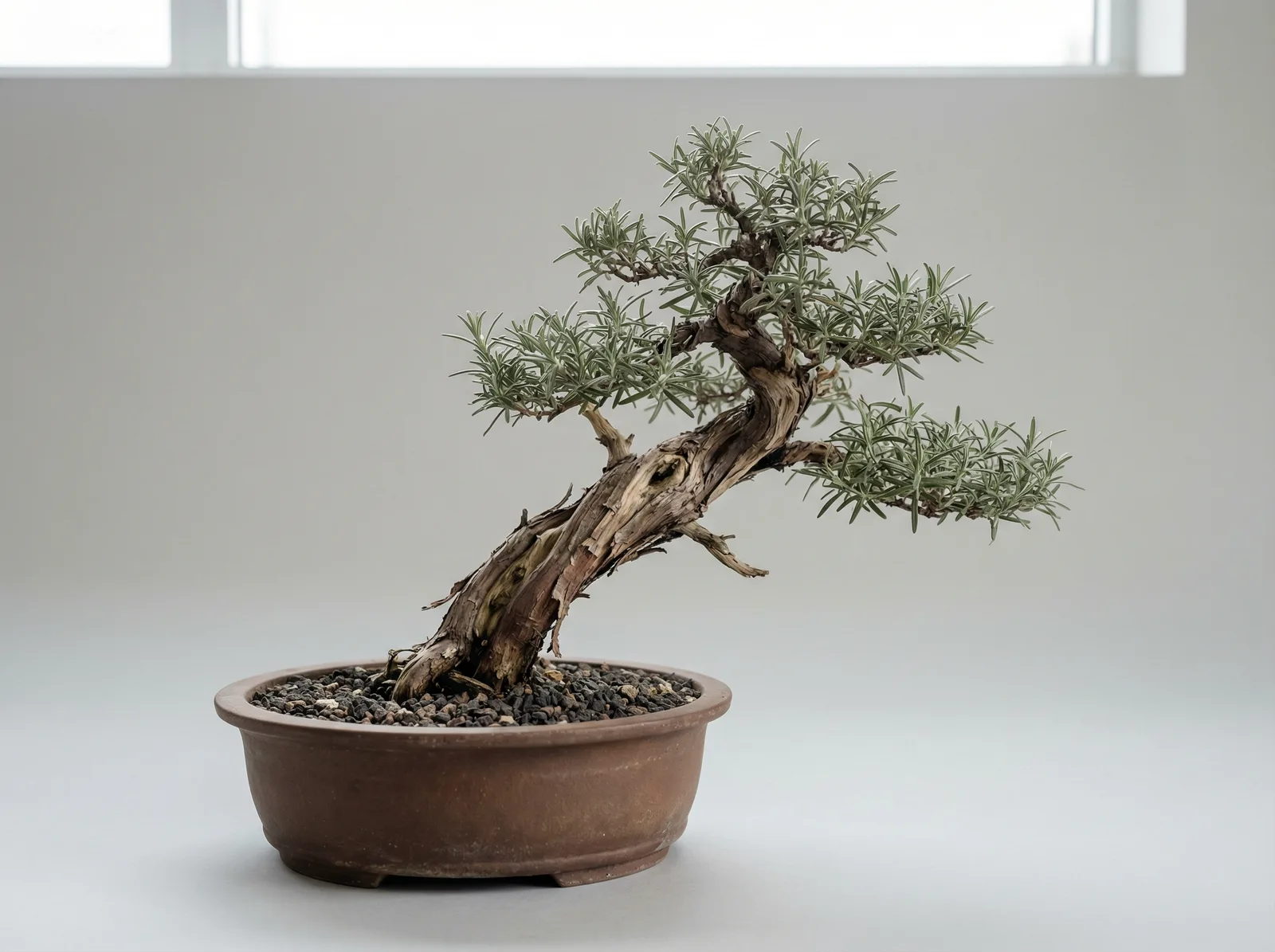
Rosemary bonsai catches people off guard. A kitchen herb as bonsai? But spend a few minutes with a well-developed Salvia rosmarinus specimen and the skepticism disappears. The woody stems build bark and character fast, the small aromatic needles stay in perfect proportion, and the natural growth pattern creates movement that looks intentional. You can also pinch a sprig for tonight's roast chicken. Try that with your juniper.
Older rosemary plants develop some of the best natural deadwood in bonsai. The trunk twists and flares, sections of bark die back to reveal pale driftwood-like grain, and live veins run alongside dead wood in natural shari. No carving needed -- it just happens over time.
For growers in warm climates, rosemary bonsai is hard to beat. It forgives missed waterings, doesn't need fancy soil, and responds well to pruning. The main killer? Overwatering. Keep it dry, keep it sunny, and you'll have a great-looking bonsai that smells fantastic.
The routine
When in doubt, don't water. That's the golden rule with rosemary. This plant comes from rocky Mediterranean hillsides where summer rain is nearly nonexistent. Soggy soil is its sworn enemy. Overwatering kills more rosemary than every other cause combined.
Drainage has to be excellent. If water pools on the soil surface for more than a couple seconds, repot immediately into something grittier. A mix of 70% pumice and 30% pine bark works well. The roots need oxygen between waterings -- think rocky hillside, not forest floor.
Rosemary looking rough right now?Skip to common problems below, or start with the symptom guide.Sunlight drives compactness. Rosemary in full sun stays tight and bushy. In low light, it gets thin, scraggly, and eventually drops interior needles. Growing indoors? Supplement with a grow light during winter months. Even a basic shop light with daylight bulbs helps.
Winter care depends on your zone. Zones 9-11, keep it outside year-round. Zones 7-8, protect from hard freezes -- a bright, unheated garage works perfectly. Colder zones, bring it inside to the brightest, coolest room you have. Heated indoor air in winter is rosemary's second-biggest enemy.
Shaping
Pinch growing tips constantly through the season. Every time a shoot extends two to three inches, cut it back by half. This promotes branching and keeps the plant bushy. Rosemary that isn't regularly pinched gets leggy fast -- within a month, you've lost your shape.
Structural pruning in spring removes leggy or crossing branches. Rosemary handles hard cuts and pushes new growth from old wood, though thick branches recover slower. Always cut back to a node or branching point. Sharp bypass pruners make cleaner cuts than concave cutters on this species.
The naturally dying-back sections of trunk create deadwood over time. Don't remove these -- they're one of rosemary's best features. Clean them up with a small brass brush and treat with lime sulfur to preserve the wood and give it that bleached driftwood look.
Harvesting sprigs from areas that need thinning anyway is the perfect two-for-one. Your cooking and your bonsai both benefit.
Rosemary's best styling feature is the part of the plant that's dead. As the trunk matures, sections of bark die back naturally while live veins keep running alongside—shari and jin forming on their own, no tools involved. Position the live vein for maximum contrast and let the pale driftwood grain show. Most species need years of carving to fake what rosemary does for free.
The living part has opinions too. Branches naturally arch and droop, spilling over the pot rim, which makes cascade and semi-cascade feel built-in. Windswept and literati suit the same tendency toward character and movement. The small aromatic needles stay in proportion without any leaf-reduction tricks—regular pinching keeps them dense.
Treat wiring as a last resort. Mature rosemary branches snap without warning, so wire only young, green growth, wrapped over raffia—/tools/wire-gauge picks the size if you need it. For anything older, clip-and-grow gets better results with zero breakage risk.
When things go wrong
Root rot from overwatering. This is the number one killer. Full stop. If your rosemary suddenly wilts despite wet soil, the roots are already rotting. Unpot immediately, trim dead roots, and repot into fast-draining mix. Water half as often going forward.
Powdery mildew shows up as a white dusty coating on needles. It thrives in humid conditions with stagnant air. Improve circulation, reduce humidity, and spray with a diluted milk solution -- one part milk to nine parts water. Sounds weird. Works great.
Spider mites thrive in dry indoor conditions, which is ironic for a drought-tolerant plant. If needles look dusty or you spot fine webbing, that's your culprit. Blast them off with water and raise the humidity slightly to keep them from returning; for stubborn cases, the pest-control guide at /guides/pest-control has the full treatment rundown.
Winter dieback indoors usually means the air is too hot and too dry. Rosemary prefers cool winter conditions, 45-55°F ideally. If you must keep it in a heated room, keep it far from vents and consider a small humidifier nearby.
Dead rosemary goes gray and brittle fast, which at least makes triage easy. If a branch looks questionable, scratch it: green under the bark means it's alive—prune back and let it push. Gray-brown wood that snaps cleanly is gone; cut back to living growth and rework the design from there.
Grocery stores and garden centers sell rosemary for $5-15. These make perfectly good bonsai starters. Look for plants with thick, woody stems and interesting trunk movement -- not the young, green, tender ones. Upright varieties like 'Tuscan Blue' give you height; cascading types like 'Prostratus' lend themselves to cascade styling.
Nursery stock with thick trunks runs $15-40 and gives you a real head start. The thickest-trunked specimens often show up at herb farms and Mediterranean plant specialists, not bonsai shops. Dedicated bonsai rosemary is rare at specialty nurseries, but honestly, why pay a premium? Develop your own from a $10 herb plant and you'll learn more in the process.
Also on the bench