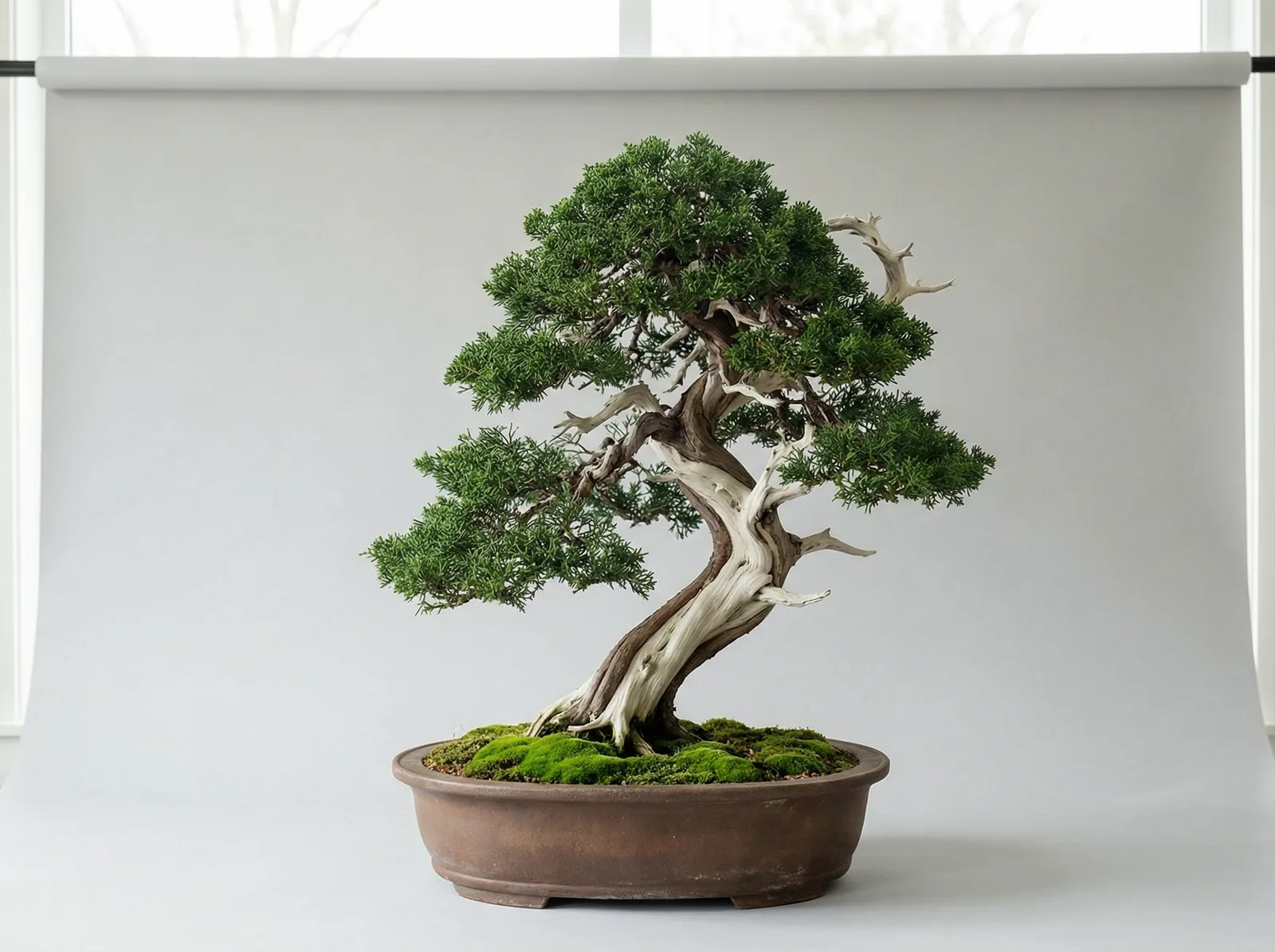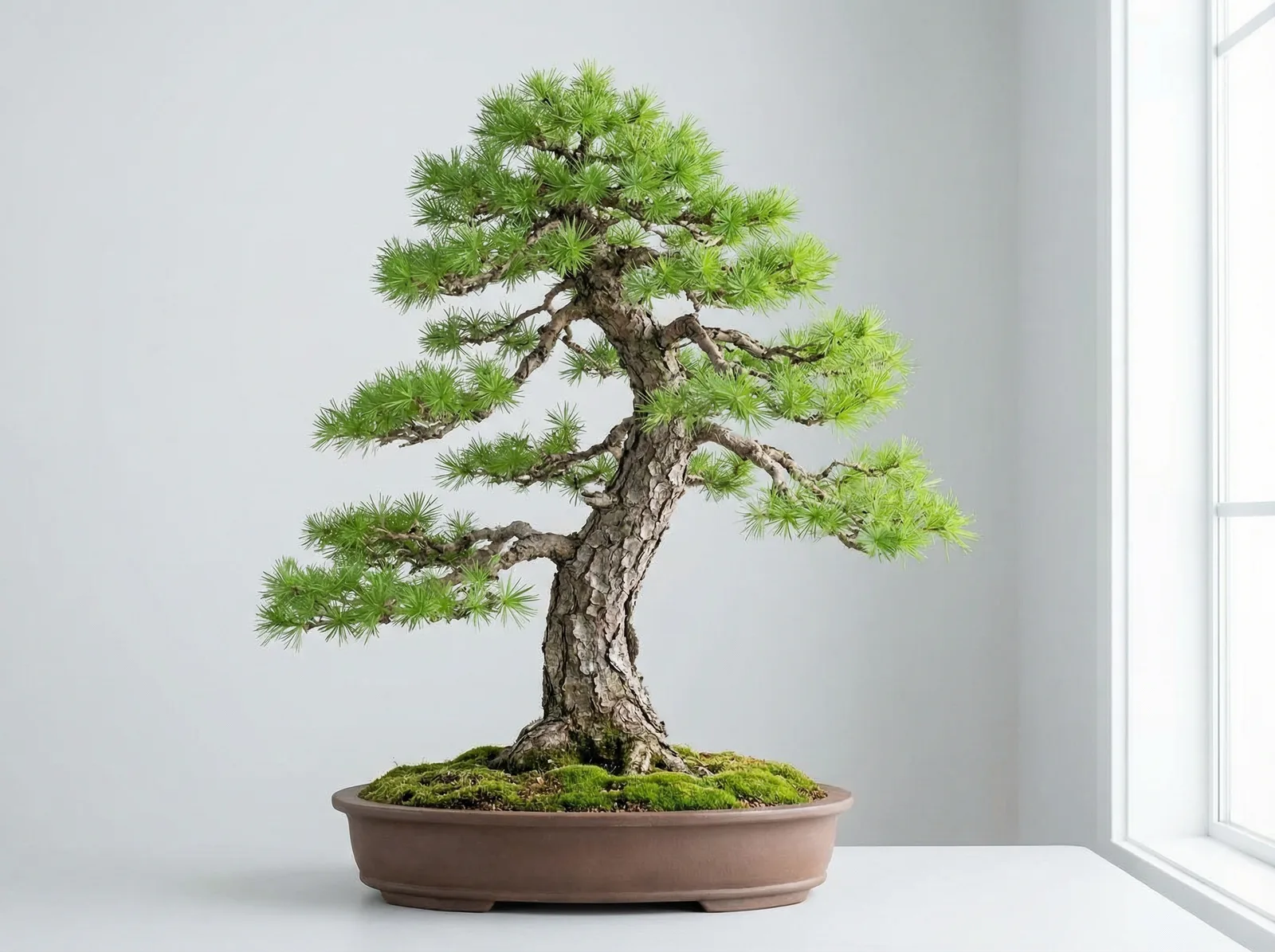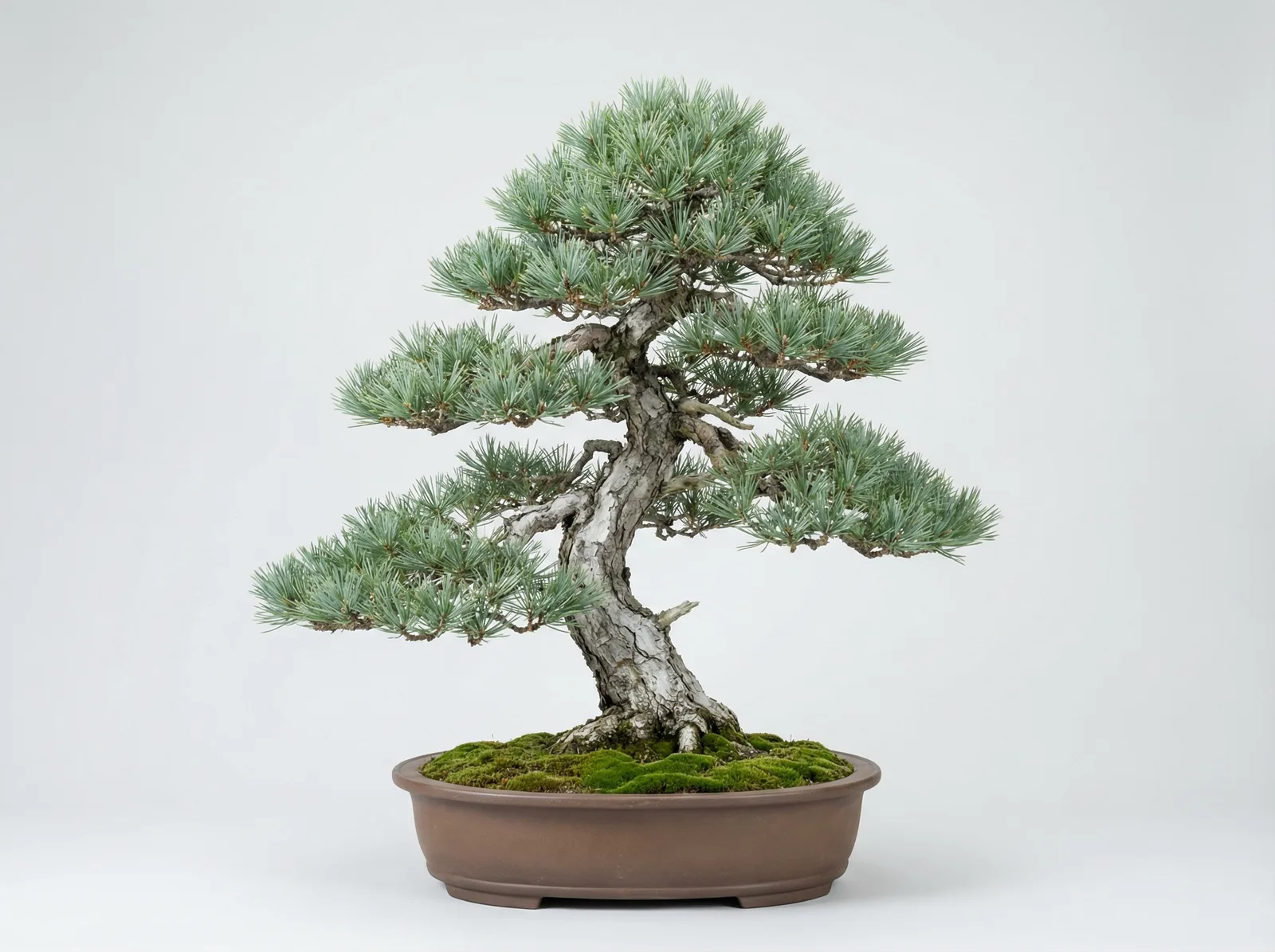
Pinus thunbergiioutdoor
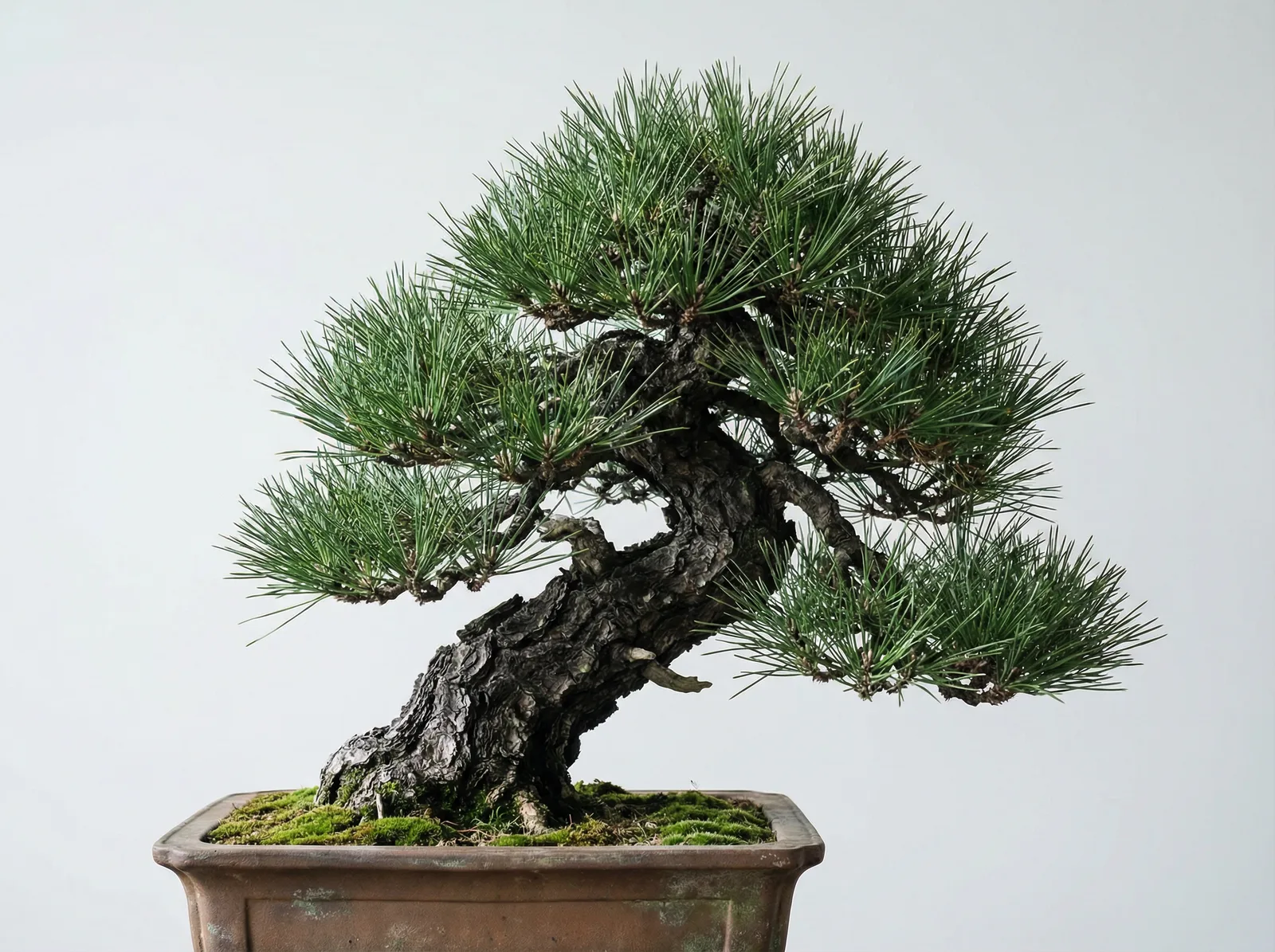
Black Pine Bonsai
- care
- advanced
- light
- full sun
- zone
- 5–9
Pinus mugo · Pinaceae
Why grow it
Mugo pine is the pine you can buy at a hardware store for twenty dollars, and the only pine most people should start with. Garden centers sell it everywhere as a landscape shrub, the dwarf forms already have short needles and low branching, and it survives beginner mistakes that would kill a Japanese black pine outright.
The thing that matters most about it is also the thing most often gotten wrong: mugo pine produces one flush of growth a year, not two. Everything you read about decandling — cutting the candles off in early summer so a second, shorter flush replaces them — is written for black pine, and doing it to a mugo just costs you the year's growth. Mugo work is candle shortening in late spring and needle thinning in early fall.
What it gives you is character. A collected or long-neglected mugo has flaking plated bark, dense clustered needles, and the kind of gnarled asymmetric trunk that takes decades to fake on a nursery tree. It is slow — this is a species that rewards a ten-year plan — but it is nearly impossible to kill through neglect, and that combination is rare.
The routine
Sun and drainage are the whole recipe. Mugo pine wants every hour of direct light it can get and a soil that dries out between waterings. Get those right and the tree essentially takes care of itself.
Watering is where beginners go wrong, because the instinct built on tropical bonsai does not transfer. Let the surface go dry and pale before you water, then water thoroughly. Every 2-3 days in summer heat, every 4-5 days in spring and fall. In winter it is dormant and drinking almost nothing, so lift the pot to feel its weight or push a chopstick into the soil and water only when it has actually dried — /questions/how-often-to-water-a-bonsai covers reading a pot instead of a calendar.
Mugo Pine looking rough right now?Skip to common problems below, or start with the symptom guide.Winter is easy for this species and easy to overthink. It is hardy to about -40°F in the ground and it needs the cold. Protect the pot below about 20°F by mulching it in or moving it to a cold frame, and shelter it from drying winter wind, which does more damage than low temperatures do. Details are in /guides/winter-care.
Feed every 4 weeks from April through September, and keep it modest. Long, dark, floppy needles usually mean too much nitrogen or not enough sun, not a healthy tree.
Shaping
Mugo pine grows in a single annual flush, and every timing decision follows from that. Do not decandle it the way you would a black pine — cutting the candles off entirely leaves a mugo with no growth for the year and weakens it.
The main work happens in late spring, when the candles have extended but before the needles open. Pinch or cut each candle back, leaving roughly a third on strong candles at the top and two-thirds on weak ones at the bottom. That imbalance is deliberate: it slows the vigorous apex and lets the weak lower branches catch up, which is how a pine stays full at the base.
Early fall is the second window. Pull or cut the old needles from the previous year, leaving six to ten pairs on each shoot, and take more from the strong upper branches than the weak lower ones. Opening the interior to light is what makes a mugo back-bud, and back-budding on old wood is the whole game with pines.
Structural cuts — removing a whole branch — also go in during early fall, when the tree is storing energy and the sap is not running hard. Seal larger cuts. Mugo pine buds back better than most pines, so a branch you remove can often be replaced by growth you encourage from the trunk over two or three seasons.
Mugo pine wants to be a mountain tree, because that is what it is. Informal upright with a twisting trunk, windswept, and literati all suit it. The one style to avoid is formal upright — a ruler-straight mugo looks like exactly what it is, a landscape shrub in a pot.
Start by finding the tree inside the shrub. A nursery mugo is a mass of low branches with no visible trunk; the first job is to clear the interior, find a trunk line with movement, and remove everything competing with it. That single afternoon of work turns a $25 shrub into raw bonsai material, and it is best done in early fall.
Wire is genuinely useful on this species, unlike on many pines. Branches stay flexible for years, the bark is tough enough to take copper, and a wired bend holds. Apply wire in fall or winter when the tree is not actively growing, leave it on for a full year, and check twice a season for bite — mugo grows slowly enough that this is a low-risk operation. Size the wire to the branch at /tools/wire-gauge.
Deadwood suits it. Jin on a stub you have removed and shari down a line of the trunk look convincing on an alpine species that lives through avalanches and lightning in the wild. Work the deadwood in fall and let it weather for a season before you decide whether it needs lime sulfur.
When things go wrong
Yellowing needles from the inside out, on a tree that has been watered generously, mean root rot. It is the number one killer of mugo pine bonsai and it comes from a fine soil that stays wet. By the time the needles yellow, roots have already been lost — unpot the tree, cut away anything brown and mushy, repot into pure pumice, and water sparingly until new growth shows.
A browning mugo that might simply be dead needs the scratch test, with one pine-specific caveat: a dead pine holds green needles for weeks or even months, so needle color proves nothing. Scratch a sliver of bark from a small branch with a thumbnail and look for green, moist tissue underneath. Work down toward the trunk until you find it. If the trunk base scratches brown and dry, the tree is gone regardless of how good the foliage looks.
Old interior needles turning yellow and dropping in autumn is not a problem. Pines shed their third-year needles every fall, from the inside of the branch outward. If the current year's needles are green and the tips are firm, the tree is fine.
Long, sparse, floppy needles with bare interior branches mean too little light, too much nitrogen, or no candle work. Move the tree into full sun, cut the feeding back, and start shortening candles each spring.
Pine needle scale shows as small white flecks along the needles, and spider mites leave a dull stippled look in hot dry weather. Both are manageable on a healthy tree; /guides/pest-control covers timing and treatment, and with scale the timing against the crawler stage matters more than which product you use.
Garden centers are the right place to buy a mugo pine, not bonsai vendors. A 2- to 5-gallon landscape shrub costs $20-60 and often hides a genuinely good trunk under the foliage. Dig into the center with your hands before you buy: you want low branching, a base that flares, and some natural movement in the trunk. Skip anything that is a tight symmetrical ball with a straight stem — that is a hedge plant and it will always look like one.
End-of-season clearance in early fall is the best value in bonsai. Nurseries discount overgrown, leggy mugos precisely because they have lost their tidy shape, and those neglected plants are exactly the ones with character. Named dwarf cultivars such as 'Pumilio' and 'Mops' have naturally short needles, which is worth paying for. Developed bonsai run $150-800; Evergreen Gardenworks and other specialty growers list field-grown pine material periodically.
Some links may become affiliate links; our picks don't change.
Also on the bench