Bougainvillea glabraboth
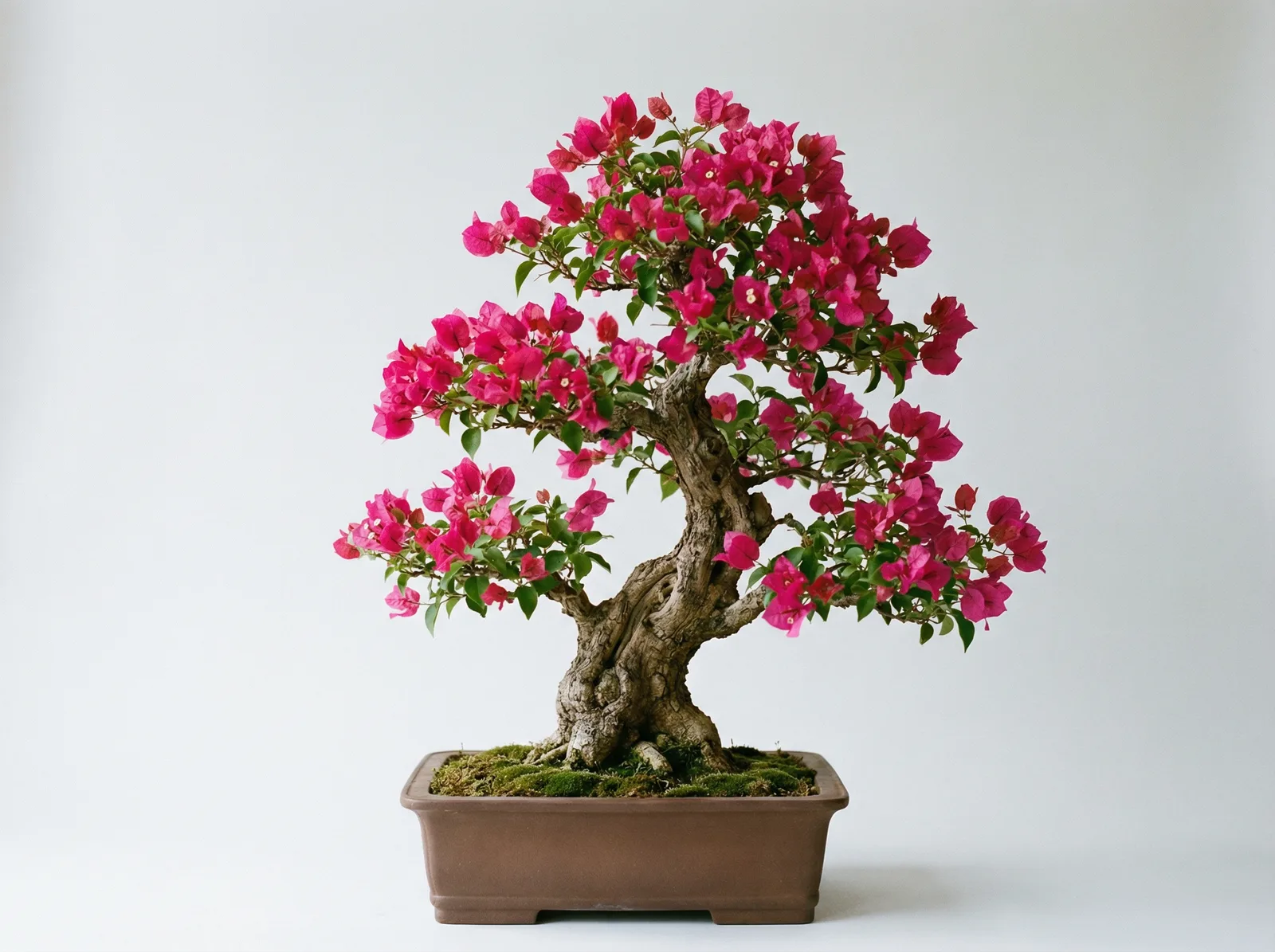
Bougainvillea Bonsai
- care
- intermediate
- light
- full sun
- zone
- 9–11
Jacaranda mimosifolia · Bignoniaceae
Why grow it
Jacaranda bonsai exist for one reason: those impossible purple-blue flowers. Nothing else in bonsai comes close. When a mature Jacaranda mimosifolia blooms in late spring, clusters of tubular violet flowers blanket the canopy before the foliage even fully unfurls. It stops people in their tracks.
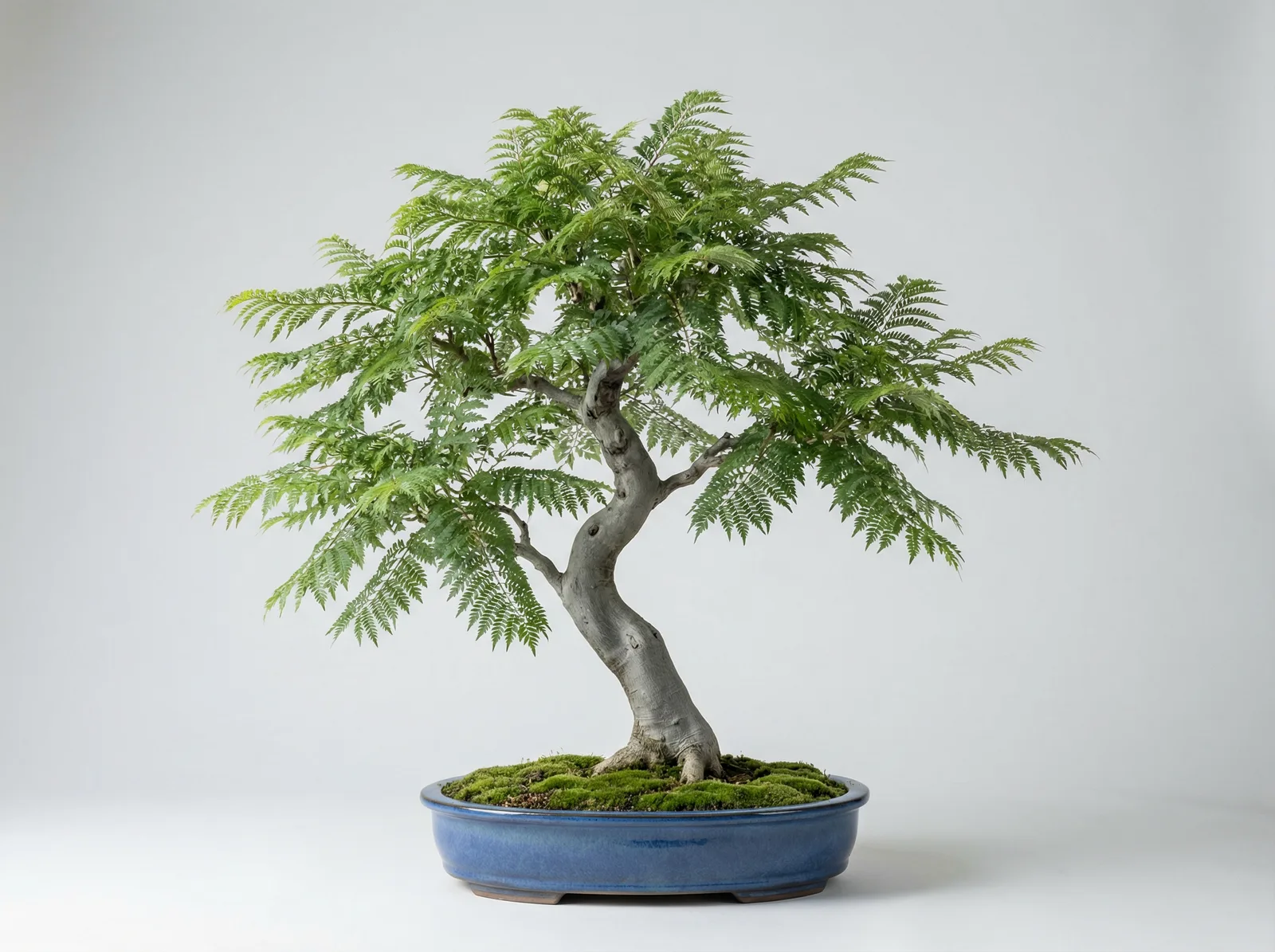
The bipinnate compound leaves deserve more credit than they get. They look like fern fronds -- airy, fine-textured, and elegant. That delicate foliage gives jacaranda bonsai a sense of scale most tropical species can't touch. Even at 14 inches tall, it reads as a full-grown tree.
Will yours bloom? That's the real question. Jacaranda needs maturity (five years minimum), strong light, a cool winter rest around 55-60°F, and a light hand with late-season fertilizer. Not every tree cooperates. But even a non-blooming jacaranda, with that ferny silhouette and graceful form, earns its spot on the bench.
The routine
Sunlight drives everything with jacaranda. These trees evolved under equatorial sun, and they'll punish you for skimping. Leggy internodes, pale leaves, zero flowers -- all light problems. South-facing window indoors, full exposure outdoors. No exceptions.
Bring it inside when nights dip below 50°F. Jacaranda makes a decent houseplant near a bright window, though growth slows considerably. Supplemental grow lights -- even a cheap full-spectrum LED panel -- help bridge the gap from November through March.
Jacaranda looking rough right now?Skip to common problems below, or start with the symptom guide.Watering shifts with the seasons. Summer? These fast growers are thirsty. Water every day or two when the top inch dries. Winter indoors? Metabolism crawls and the soil stays wet way longer than you'd expect. Root rot from winter overwatering kills more indoor jacarandas than every pest combined.
Here's the trick for flowers: a brief cool period, 55-60°F for four to six weeks, during winter can trigger spring bloom. A cool garage or unheated sunroom works. Don't freeze the tree -- just let it feel winter. And ease off the fertilizer from late summer on: lush nitrogen-fed growth comes at the expense of flower buds. (Skip the 'bloom booster'—loading phosphorus doesn't force flowers. Light, age, and that cool rest are what decide it.)
Shaping
Prune right after flowering to shape the tree and push branching. Cut new shoots back to two or three leaf pairs once they've stretched to five or six. Jacaranda grows fast in warm weather, so expect to prune every couple of weeks during peak season.
Those compound leaves run large for bonsai scale. Strong light and regular pruning keep leaf size manageable. You can also do partial defoliation in early summer -- remove just the largest leaves and the second flush comes in noticeably smaller.
Structural work happens in late winter before the spring push. Remove crossing branches, thin crowded zones, and set your framework. Use a sharp concave cutter for clean cuts. Jacaranda heals fast and seals wounds within weeks. Don't hold back -- hard pruning triggers vigorous new growth from dormant buds all along the branches.
Scale is the design challenge with jacaranda, and it decides everything else. The compound leaves—gorgeous as they are—can overwhelm anything under 12 inches. Work at medium to large sizes where the fine leaflets stay proportional; at 16 inches and up, that feathery foliage actually suggests enormous scale, like a full canopy seen from a distance. That's your sweet spot.
Within those proportions, the species' slightly irregular growth habit creates movement without much coaxing—an informal, naturally graceful line suits it best. If you've got good branching, a broom-style canopy builds the wide crown that shows off flowers beautifully when they come.
Wiring is straightforward on young wood. Apply in spring and check monthly, because fast growth means wire bites in sooner than you'd expect—sometimes within six weeks. Remove before it scars, and size it with the wire-gauge tool at /tools/wire-gauge.
When things go wrong
Leggy growth with long internodes? Always a light problem. Always. Move the tree somewhere brighter or add a grow light. Hard prune to reset, then maintain the new placement. This is the single most common complaint with indoor jacaranda.
Leaf drop after moving the tree between environments is classic jacaranda drama. Outdoors to indoors, indoors to a different window -- it'll protest by dropping half its foliage. Don't panic. It recovers in two to three weeks. Minimize sudden changes and the tree settles down. If you're worried, scratch a small spot of bark: green underneath means the tree is sulking, not dying.
No flowers is the heartbreaker. Your jacaranda needs to be at least five years old, getting intense light, and given a real winter cool period—and it can't be overfed late in the season. Even then, flowering isn't guaranteed every year. Patience.
Whitefly and spider mites love jacaranda indoors. Check leaf undersides weekly—fine webbing and stippled leaflets mean mites; a cloud of tiny white insects when you brush the foliage means whitefly. A blast of water knocks most of them off; for anything persistent, the pest-control guide at /guides/pest-control covers treatment.
Jacaranda seedlings are cheap and widely available -- $10-20 from online tropical plant sellers or even Amazon. Growing from seed works too, though germination takes two to four weeks. The trade-off: seedlings need five-plus years before the trunk has any bonsai presence.
Pre-bonsai jacaranda is harder to track down than other tropicals. Check specialists in Florida, Southern California, and Hawaii. Expect $40-150 for established material with some trunk character. Grafted specimens from mature trees flower sooner than seed-grown stock, and that's worth paying extra for if blooms are your goal.
Also on the bench