Taxodium distichumoutdoor
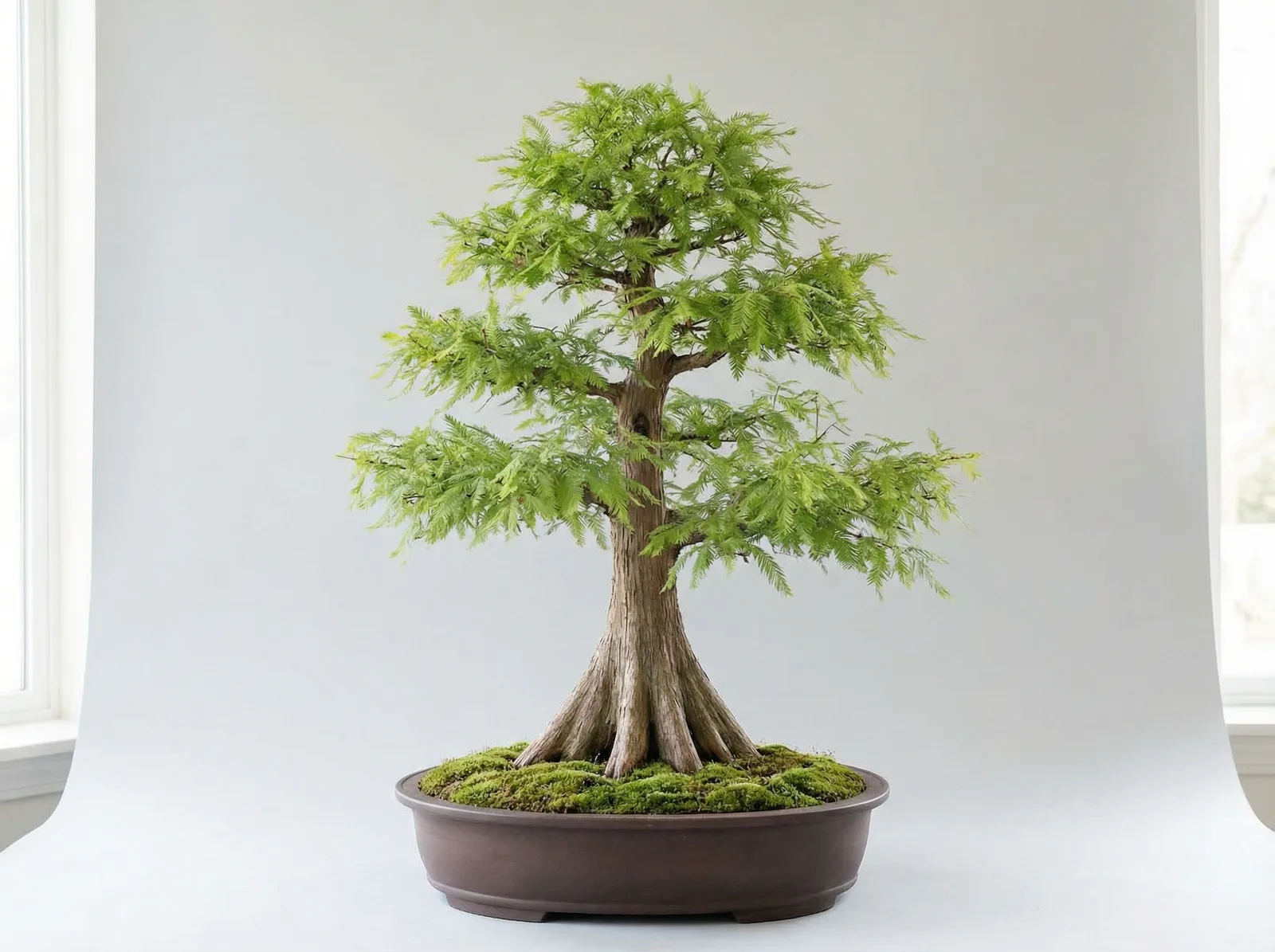
Bald Cypress Bonsai
- care
- intermediate
- light
- full sun
- zone
- 4–10
Salix babylonica · Salicaceae
Why grow it
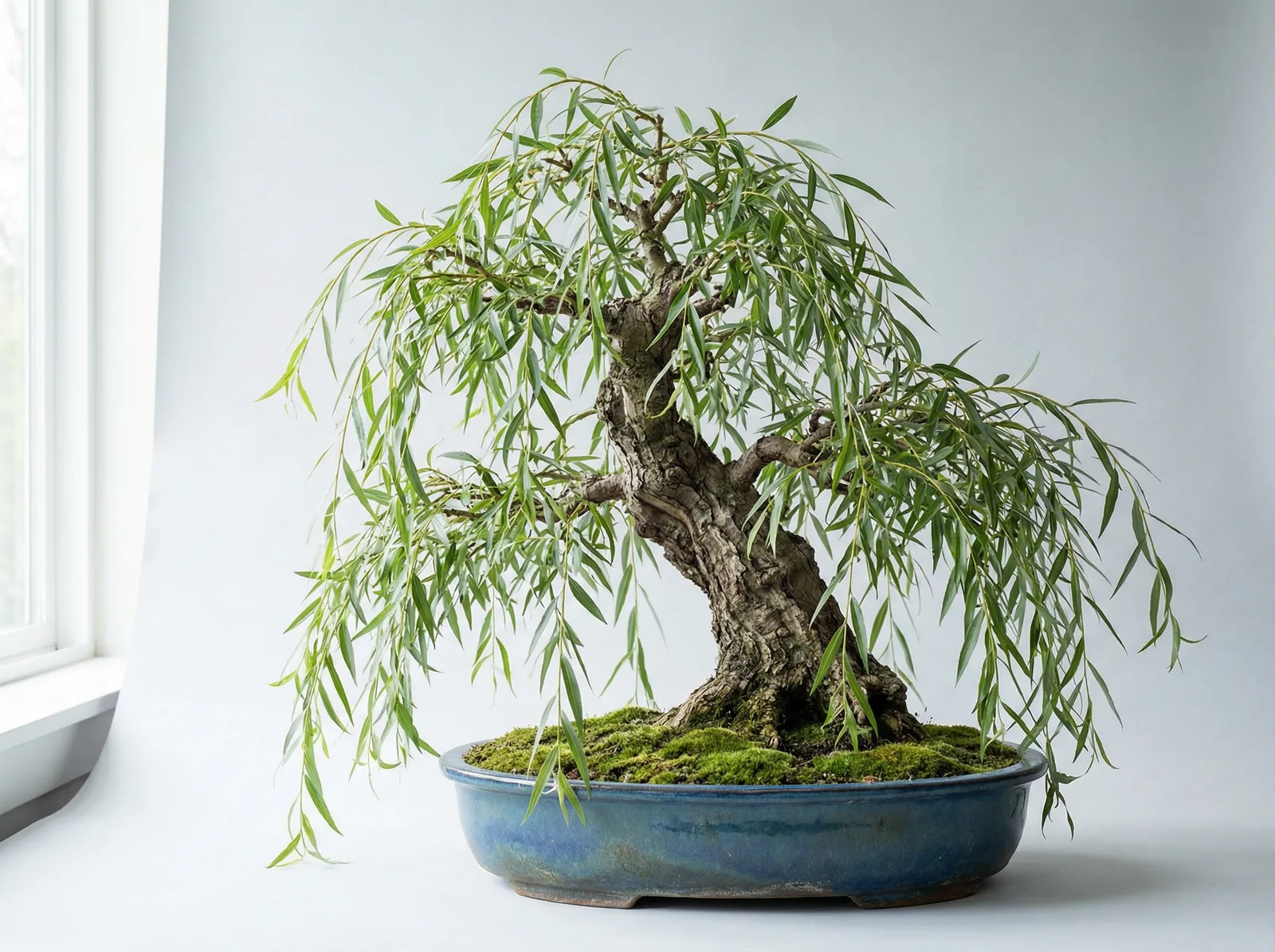
No bonsai moves like a weeping willow. Salix babylonica captures the grace of those massive lakeside trees in miniature -- long, pendulous branches swaying in the slightest breeze, creating a living curtain of green that nothing else in the hobby replicates.
Willows grow faster than almost anything you'll put on a bonsai bench. Trunk thickening, branch extension, weeping character -- all of it happens at a pace that'll surprise you. You'll see dramatic results in a single growing season. If patience isn't your thing, willows are your tree.
The trade-off? Maintenance. That explosive growth means constant pruning, heavy watering, and frequent repotting. Willows are the opposite of a set-it-and-forget-it bonsai. You're trading effort for speed, and the effort is real. But if you're willing to put in the work, few species develop as quickly or look as distinctive when they do.
The routine
Water. More water. Then water again. Willows drink more than anything else on a bonsai bench. In summer, you're watering at least once a day, sometimes twice. A humidity tray or a shallow dish of water under the pot is practically mandatory. Going away for the weekend? Arrange a plant-sitter or set up drip irrigation. A willow won't survive two dry summer days.
Full sun is non-negotiable for the weeping habit you're after. In shade, willows grow upward instead of weeping. The pendulous character develops in bright light where the tree has surplus energy to push long, trailing growth. Stick it in the sunniest spot you've got.
Willow looking rough right now?Skip to common problems below, or start with the symptom guide.Fair warning about the roots. Willows root aggressively and escape through drain holes into whatever surface the pot sits on. Wooden bench? Roots will find the cracks. Ground soil? Roots anchor in within weeks. Use a pot stand, check drain holes monthly, and rotate placement.
Pests are almost a non-issue. The occasional spring aphid colony gets washed off with a spray of water. Willows grow so hard and fast that pest damage barely registers.
Shaping
Willows need pruning like they need water -- constantly. Let new shoots run out to five or six leaf pairs, then cut back to one or two. Repeat every couple of weeks through the growing season. This builds the density and weeping silhouette. Skip pruning for a month and you'll have an ungovernable tangle.
Structural work happens in late winter while the tree is bare and dormant. Remove unwanted branches, adjust the framework, redefine the design. The leafless silhouette shows you exactly what you're working with. Cut back hard -- willows push aggressive spring growth from every cut point.
The weeping effect comes from secondary branches hanging off horizontal main branches. Build horizontal scaffolds first, then let secondary growth cascade down. Trim hanging branches to a uniform length for a manicured look, or leave them at varied lengths for a wilder, more natural feel.
Willows seal pruning wounds faster than almost any other species in the hobby. Large cuts close over in a single growing season. Don't bother with cut paste -- the tree's own growth rate handles wound closure. This fast healing means you can prune more aggressively than you'd dare with slower species.
Weeping style is the whole point, and the challenge is that nothing on a willow stays put: young shoots grow feet per season, wired branches set quickly and then thicken past their wire, and old wood turns too brittle to bend at all. So build the permanent part -- a strong trunk and a few horizontal main branches -- while the wood is young, and treat the hanging curtain as an annual crop you regrow and trim rather than a structure you keep.
Informal upright with weeping branches is the most practical framework. The trunk curves naturally and the drooping foliage softens everything. Formal upright fights the willow's entire nature -- hard pass.
Wire young branches in spring -- light aluminum is enough, and /tools/wire-gauge will size it to the branch. Wire sets fast on willow: check weekly during active growth and remove it before it bites in. Give the pendant branches room, too; a taller pot or a stand keeps the curtain off the bench.
Root-over-rock is the sleeper option. Willows grip rock hard and thicken fast -- wire young roots over a stone and you'll see real results within a single growing season. No other species roots over rock that quickly.
When things go wrong
Wilting. It's always water. Willows wilt dramatically and immediately when the roots dry out. The leaves go limp and sad within hours. Water right away and they bounce back. But if you let them wilt repeatedly, branches die back and the tree weakens overall. Don't play that game.
After a bad wilt, sort live wood from dead with a thumbnail scratch: live willow shows bright green under the bark and bends without complaint; dead willow scratches dry brown and snaps like a cracker. Cut back to green wood -- the tree regrows at willow speed, so even ugly losses fill in within a season.
Older branches snap. Mature willow wood is brittle and won't bend without cracking. Don't try to wire or reposition old branches -- work with young, flexible growth for wiring and use directional pruning cuts for older wood.
Runaway roots escape through every drain hole and into every surface -- through wooden bench slats and into concrete cracks. Check monthly. Trim anything escaping. If the pot sits on soil, the roots anchor into the ground within a couple of weeks.
Fungal issues pop up occasionally in humid, still conditions. Willow scab creates dark blotches on leaves. Good air circulation and avoiding evening overhead watering are the best prevention. Remove spotted leaves; if it keeps spreading, the pest guide at /guides/pest-control covers fungicide options.
Garden centers sell weeping willow in 1-5 gallon pots for $15-40. These need heavy trunk work over several years, but the raw growth speed means development is faster than you'd think. Look for the thickest trunk available.
Here's the cheapest option in all of bonsai: cuttings. Willow cuttings root almost absurdly easily. Take a branch from a mature weeping willow in spring, stick it in wet soil, and it roots within weeks. You'll have a small tree by fall. Total cost: zero dollars. For faster results with some initial styling, online vendors carry pre-bonsai willow for $40-120.
Also on the bench