Best Bonsai Starter Kits (2026)
Our stance
The best starter kit is a living tree plus three things you'll actually use — not a box of seeds.
Short answer
A good bonsai starter kit is a live tree, a bag of granular soil, and one pair of shears — roughly $50 to $95 for all three. Buy the tree first and let it decide the rest. Skip any kit that ships seeds instead of a tree: that's a five-year project sold as a starter kit.
Most things sold as a "bonsai starter kit" are one of two products. The good version is a live tree in a training pot with a little soil and a pair of shears. The bad version is a printed box holding four seed packets, a peat pellet, and a plastic pot — no tree at all.
The price is often identical. That's the whole problem, and it's why we say skip the seed kits on every page where the question comes up.
So this page is a shopping list rather than a product roundup: the tree, the soil, the one tool. Buy those three and you have a bonsai you can work on this weekend. If you're still deciding which species suits you, the beginner shortlist and the choosing your first bonsai guide get you there faster than any kit description will.
Our picks at a glance
| # | Pick | What for | Typical price |
|---|---|---|---|
| 1 | Chinese elm starter tree, 6–10 inches | Live starter tree | $35–65 |
| 2 | Ficus retusa starter tree | Live starter tree — indoor | $30–70 |
| 3 | Dwarf jade starter tree | Live starter tree — low water | $25–50 |
| 4 | Two dry quarts of granular bonsai soil | Soil | $18–30 |
| 5 | One pair of bonsai shears | Tool | $22–40 |
| 6 | Juniper starter tree — outdoors only | Live starter tree — outdoor | $30–70 |
Some links here are, or will become, affiliate links. If you buy through one we earn a commission. It doesn't change your price, and it doesn't change our picks — we'd still tell you to skip the seed kits.
Live starter tree
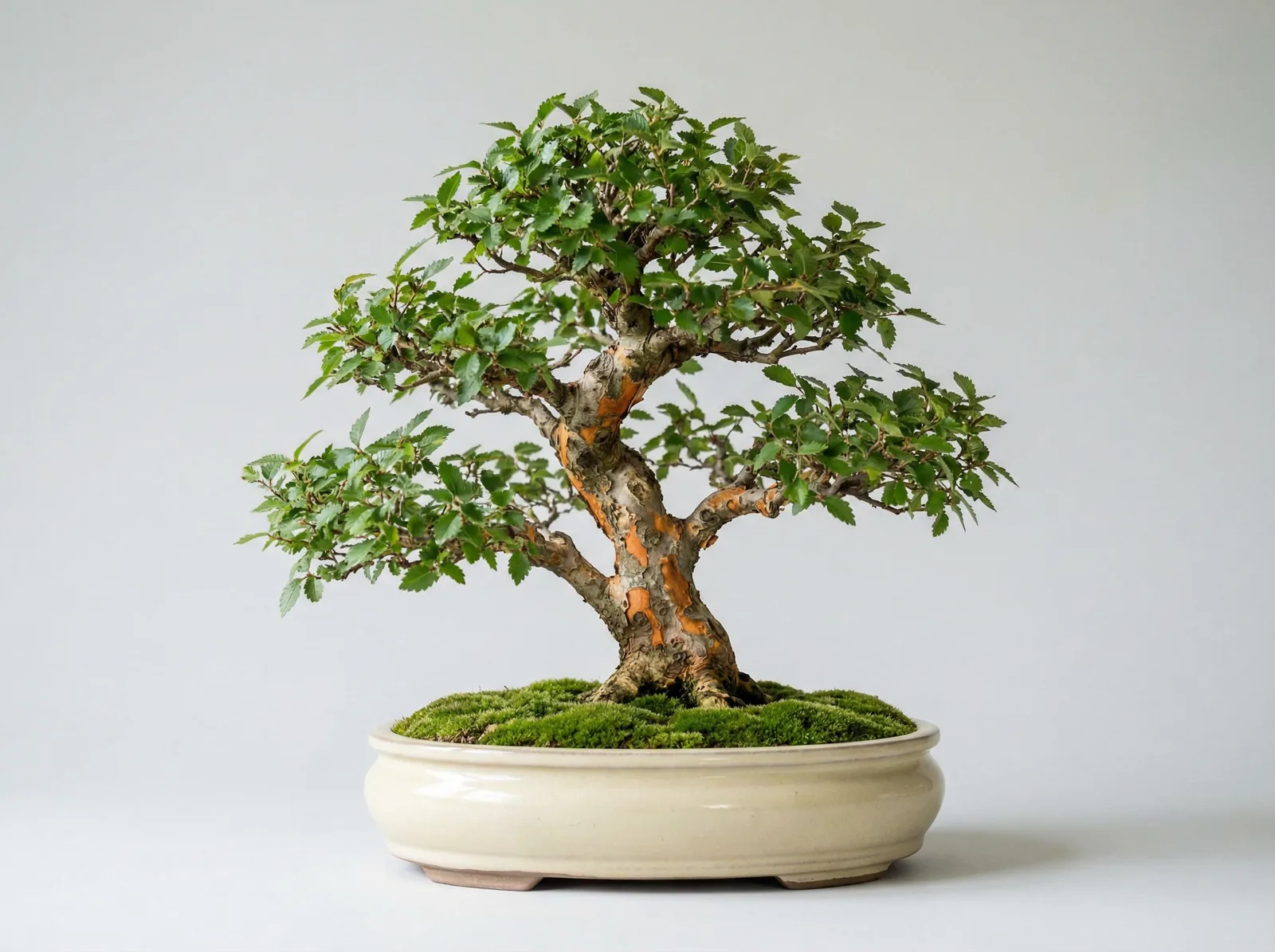
Chinese elm starter tree, 6–10 inches
$35–65typical
- What it is
- A two- to four-year-old Ulmus parvifolia, usually already trunk-chopped, with branching started and a visible root flare.
- Why we picked it
- It's the most forgiving tree in this price band. It handles a missed watering, it pushes new growth after a bad haircut, and it tolerates a bright indoor spot in winter without sulking. It's also fast — you see the results of your pruning inside one season, which matters when you're new.
- Who it's wrong for
- Someone who wants an evergreen that looks the same in January as in July. Chinese elms are semi-deciduous and will thin out or drop leaves when the light changes.
Live starter tree — indoor
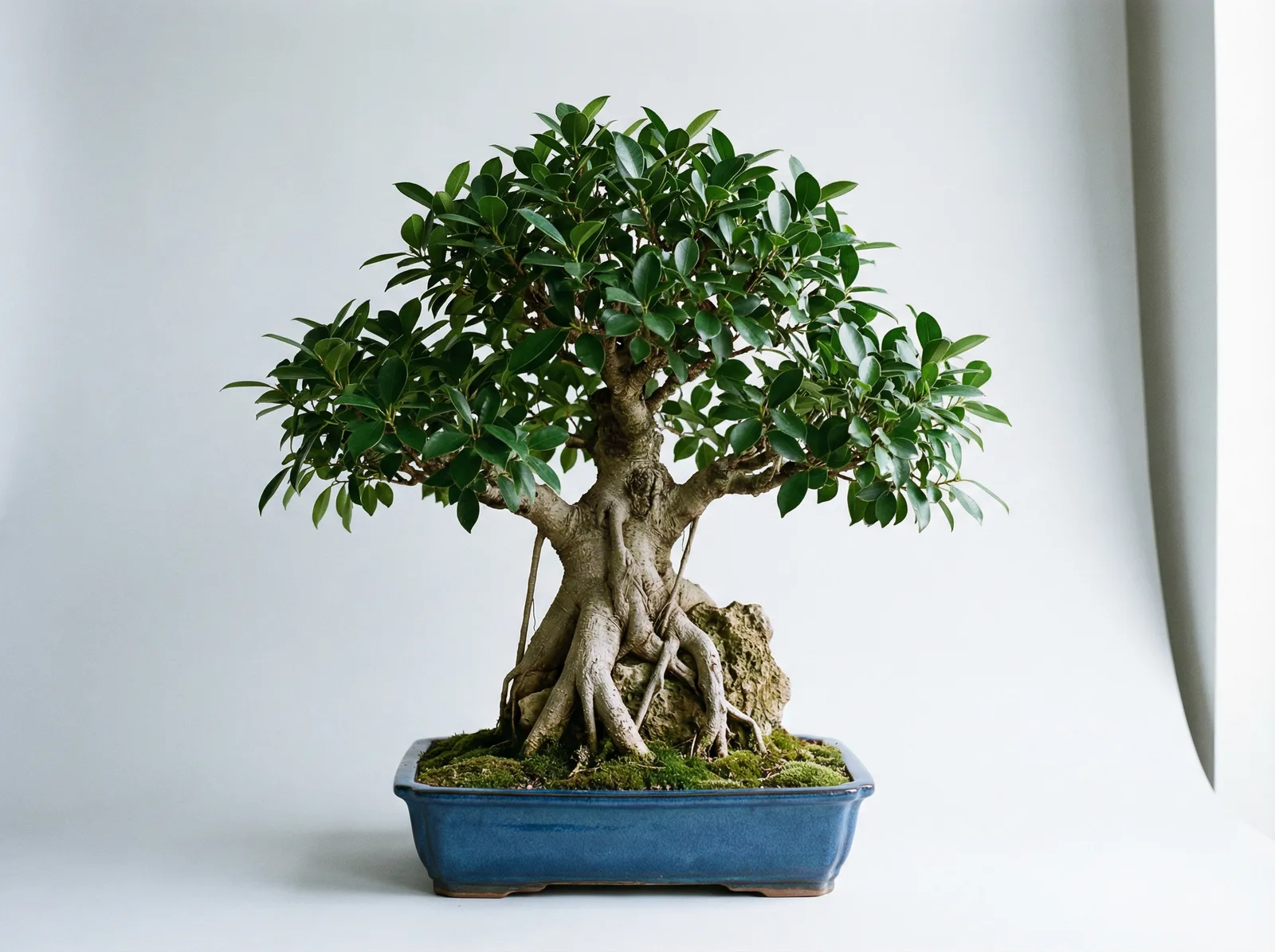
Ficus retusa starter tree
$30–70typical
- What it is
- Ficus microcarpa (often sold as Ficus retusa), a tropical fig grown in Florida, often with aerial roots or a fused banyan-style trunk, sold at 6 to 12 inches tall.
- Why we picked it
- It's the one tree on this list that genuinely lives indoors year-round, because it never needs a cold dormancy. It also tells you when it's unhappy — leaves yellow and drop, then regrow once you fix the light or the watering. That feedback loop is worth a lot to a first-time owner.
- Who it's wrong for
- A cold, draughty room. Below about 55°F a ficus starts shedding, and a window sill in a northern winter can sit colder than the rest of the room.
Live starter tree — low water
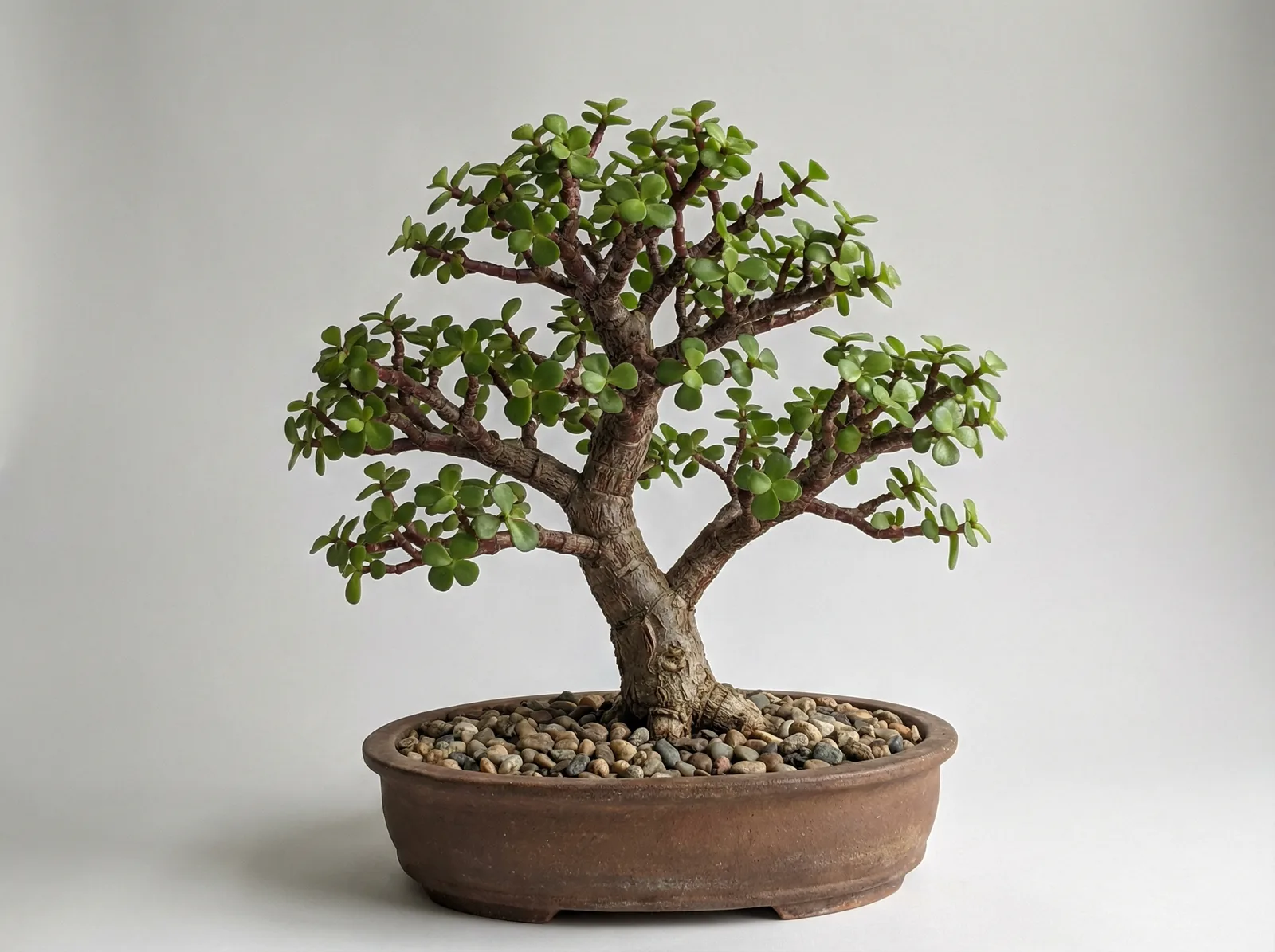
Dwarf jade starter tree
$25–50typical
- What it is
- Portulacaria afra, a South African succulent shrub with small round leaves and a trunk that thickens quickly.
- Why we picked it
- It's the pick for anyone who knows they'll forget. It stores water in its leaves and trunk, so a skipped week is survivable, and it roots from cuttings so easily that your pruning scraps become more trees. Under a bright window it grows fast enough to stay interesting.
- Who it's wrong for
- A dim corner or a heavy hand with the watering can. Overwatered jade goes soft at the base, and that's usually terminal. Dwarf jade has no ASPCA listing, so it isn't confirmed safe for cats and dogs.
Soil
Two dry quarts of granular bonsai soil
$18–30typical
- What it is
- A pre-mixed gritty substrate — typically pumice, lava, and calcined clay sifted to roughly 1/8 to 1/4 inch particles.
- Why we picked it
- Two dry quarts repots a small tree twice over, and the granular structure is the single biggest difference between a tree that lives and one that rots. If you only upgrade one thing from what the tree shipped in, make it this.
- Who it's wrong for
- A tree you're not repotting yet. Don't repot a tree the week it arrives — let it settle first, and repot in its proper season.
Tool
One pair of bonsai shears
$22–40typical
- What it is
- Long-handled shears with narrow blades, made to reach inside a canopy and cut a shoot without crushing the branch beside it.
- Why we picked it
- This is the only tool a first-year tree actually needs. Kitchen scissors bruise the stem and leave a stub that dies back; a $25 pair of shears makes a clean cut that closes. Everything else on the tool wall can wait a year.
- Who it's wrong for
- Cutting wire — that ruins the blades in one snip. Wire gets its own cutter, covered on our tools page.
Live starter tree — outdoor
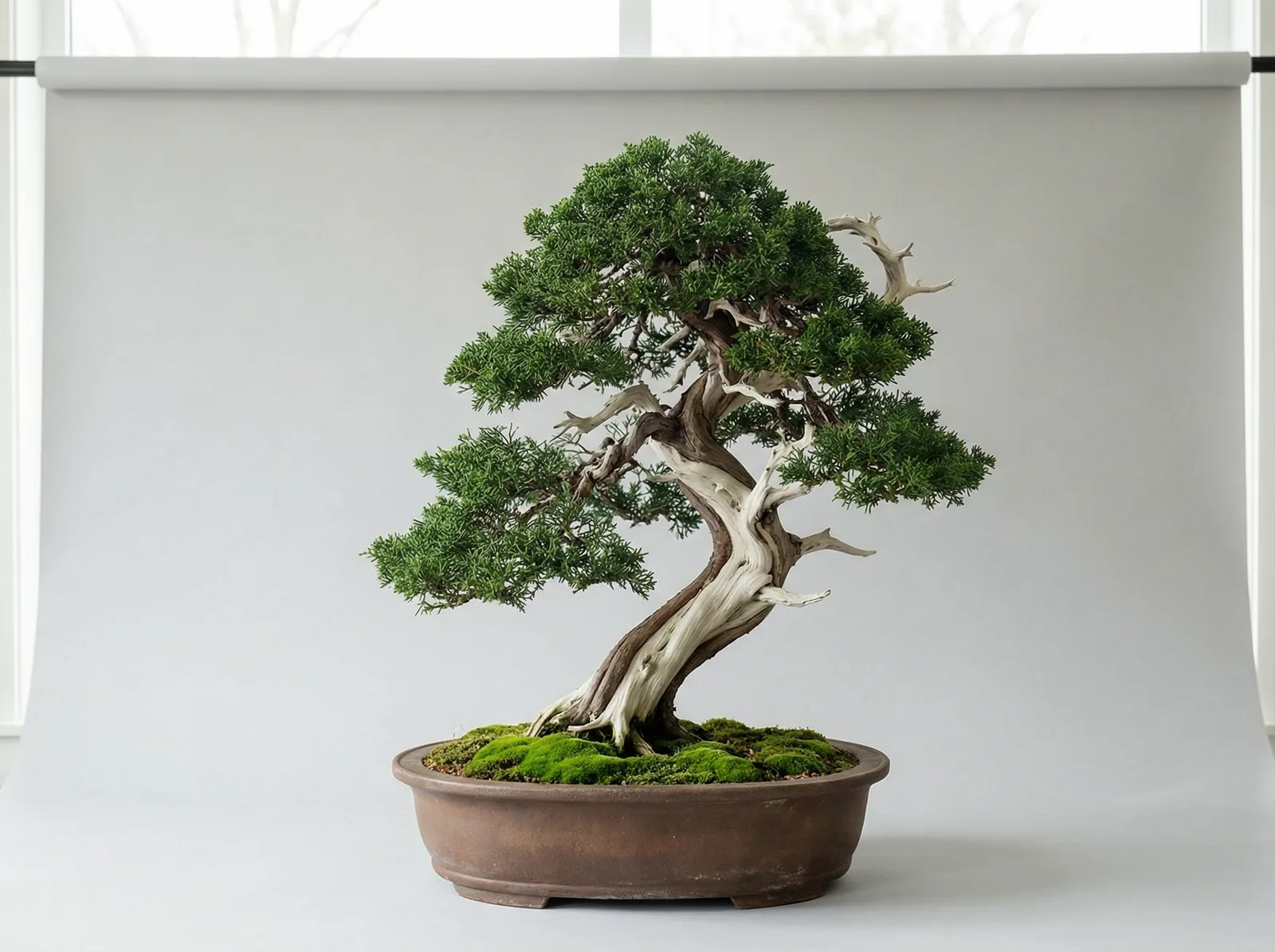
Juniper starter tree — outdoors only
$30–70typical
- What it is
- A young shimpaku or procumbens juniper, the classic mall-bonsai species, usually sold at 6 to 10 inches with foliage pads already forming.
- Why we picked it
- Junipers take wiring better than anything else at this price and hold a shape for years. Buy one if you have a balcony, a porch, or a yard — outdoors, they're genuinely tough.
- Who it's wrong for
- Anyone without outdoor space. A juniper indoors dies slowly over about six months while still looking green, and it's the most common beginner heartbreak we see. Junipers are not indoor trees.
What to avoid
Kits that ship seeds instead of a tree
Bonsai from seed is a 5- to 10-year project. A kit that arrives with four seed packets and a peat pellet is a gardening experiment, not a starter kit, and the recipient of a gift almost never wants one.
"Assorted bonsai" listings that never name the species
Care depends entirely on which tree it is. A listing that won't say whether it's a juniper or a ficus can't tell you whether it belongs on a windowsill or a balcony — and those two answers are opposites.
Kits that describe a juniper as an indoor tree
It's the single clearest sign the seller doesn't grow what they sell. Junipers need outdoor light and a cold winter. Any kit that pairs one with a "perfect for your desk" line is copy written by someone who has never kept one alive.
The 12-piece tool roll
You will use three of them. The other nine sit in the roll, and the money would have bought one good pair of shears instead of twelve mediocre pieces.
Pots with glued gravel over the soil
The decorative gravel crust on cheap gift trees is bonded with adhesive. It sheds water sideways instead of letting it soak in, so the tree reads as watered while the root ball stays dry. Peel it off on day one.
How we choose
We have not hand-tested these products, and we won't pretend otherwise. What we can tell you is what each thing is made of, who grows or makes it, and what buyers consistently report — plus the horticulture, which is the part that doesn't change with the brand.
Picks are chosen against one question: what does a first-year owner actually use? That rules out most bundle contents. A tree, granular soil, and one cutting tool cover the first twelve months; anything past that is a purchase you can make later with better information.
Species picks come from the same care data as the rest of the site — light needs, watering tolerance, and how a tree responds to beginner mistakes. Vendors are named because they grow or stock the item, not because of any commercial arrangement. When we think you shouldn't buy something, we say so on the page that would earn the commission.
Species on this page